Quick Answer
English slang changes decade by decade because new technology, music, migration, and youth culture constantly create new in-group words. This guide walks through major US and UK slang trends from the 1920s to the 2020s, shows what survived, and explains how to learn slang safely through real context like movies, TV, and social media.
English slang changes decade by decade because it is a fast, social layer of language: new generations coin new words to signal identity, and media and technology decide which ones spread. If you want to understand slang from the 1920s to the 2020s, focus less on memorizing lists and more on patterns: where the slang came from, what tone it carries, and which contexts make it sound natural.
English is also unusually good at exporting slang. Ethnologue estimates about 1.5 billion English speakers worldwide (including L2 speakers), which means a term can be born in one city and become global within a week if it fits the internet’s attention economy.
If you are building everyday listening skills alongside slang, start with high-frequency basics first, then add informal speech. Our English slang guide pairs well with a core list like 100 most common English words, because slang only helps when you already understand the sentence around it.
How to read this guide (and not get tricked by slang)
Slang is not just vocabulary, it is timing and social positioning. The same word can sound playful, rude, ironic, or dated depending on who says it.
Three rules that keep learners safe
-
Recognize before you produce. Understanding slang is higher value than using it.
-
Track audience. A word that is fine with friends can be risky at work.
-
Prefer “alive” slang. If a term only appears in nostalgia posts, it will sound like costume language.
⚠️ A quick safety filter
If you are not sure whether a slang term is insulting, sexual, or tied to a specific group identity, do not use it. Learn a neutral synonym first, then watch how native speakers use the slang in real dialogue.
Why decades matter (even when words overlap)
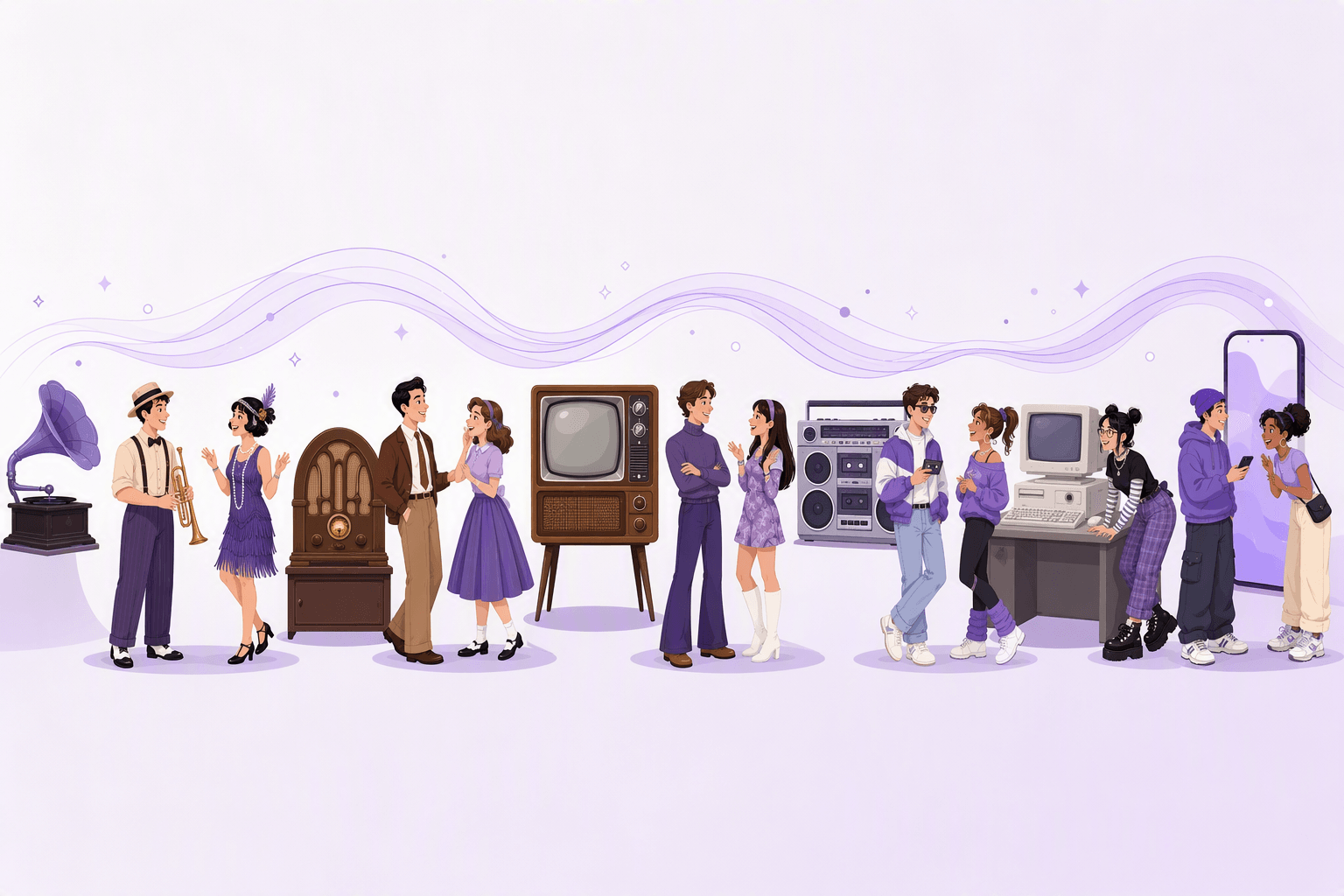
Decades are a useful shortcut because slang clusters around major cultural forces: Prohibition and jazz, postwar consumer culture, TV, hip-hop, the early internet, smartphones, and then algorithm-driven short video.
The linguist Michael Adams, in his work on slang and its social function, treats slang as a moving boundary between standard language and in-group talk. That boundary shifts faster when society shifts faster.
The big engines of slang: media, migration, and youth culture
Slang spreads through channels. In the 1920s it was songs, newspapers, and vaudeville. In the 1980s it was MTV. In the 2010s it was Twitter, YouTube, and memes. In the 2020s it is TikTok audio, gaming chat, and influencer speech.
Pew Research Center’s reporting on social media use shows how quickly platforms can reach a majority of adults in some countries, and how usage differs by age. That age gradient matters because slang is strongly youth-driven.
Why movies and TV are still the best “slang lab”
Movies and TV give you tone, facial expression, and consequences. You see who can say what to whom.
If you want a structured way to do this, use a watchlist from our best movies to learn English and treat slang as “bonus comprehension,” not the main goal.
1920s: Jazz Age slang and the rise of “cool”
The 1920s in the US are associated with jazz clubs, Prohibition, and tabloid culture. A lot of slang is playful, coded, and performance-driven.
Typical patterns:
- Rhyming and sound play
- Euphemisms for alcohol and nightlife
- Fast-moving “scene” vocabulary
Words that still echo today include cool (KOOL), which later becomes one of the most durable slang words in modern English. The OED tracks “cool” in multiple senses, including its long-running slang sense of approval (OED, accessed 2026).
What to learn from the 1920s
This decade teaches a key lesson: slang survives when it is short, flexible, and emotionally useful. “Cool” can describe a person, a plan, a reaction, or a style.
1930s: Depression-era toughness and radio influence
The 1930s add a different flavor: hardship, crime stories, and radio. Slang leans into resilience and streetwise identity.
You also see more slang traveling through mass media. Radio creates shared catchphrases, which is an early version of what memes do today.
What to learn from the 1930s
Pay attention to how slang can be “performative.” People use it to sound brave, unbothered, or experienced, even when they are not.
1940s: War, bureaucracy, and clipped expressions
World War II generates huge amounts of jargon and slang. Soldiers coin terms, abbreviations spread, and some words move into civilian life afterward.
Typical patterns:
- Acronyms and clipped forms
- Irony and understatement
- New meanings for old words
A lot of this slang is context-bound, but the mechanism matters: intense shared experience creates dense in-group language quickly.
What to learn from the 1940s
Modern internet communities behave similarly. Gaming guilds, fandoms, and group chats create “micro-slangs” that make no sense outside the group.
1950s: Teen culture, consumer life, and “square” vs “hip”
The 1950s push teen identity into the mainstream. Slang becomes a way to draw a line between youth and adults.
Classic oppositions:
- hip (HIP) vs square (SKWAIR)
- “cool kids” vs “parents”
Jonathon Green’s work documenting slang across centuries is useful here because it shows how often slang is built around social contrast: insiders vs outsiders (Green’s Dictionary of Slang, accessed 2026).
What to learn from the 1950s
A lot of slang is not about meaning, it is about stance. Calling something “square” is less about describing it and more about rejecting it.
1960s: Counterculture, protest language, and new intensifiers
The 1960s bring counterculture movements, civil rights activism, and new music scenes. Slang expands through festivals, campuses, and underground press.
You see:
- New intensifiers (words that mean “very”)
- More taboo-pushing
- More political identity language
What to learn from the 1960s
Slang often rides on top of values. If you do not understand the value system of the group, you will misread the tone.
1970s: Urban scenes, disco, and the roots of modern “cool talk”
The 1970s are a bridge into modern slang. You get strong influence from Black American English in music and street culture, and UK youth scenes develop their own vocab through class and neighborhood identity.
This is also when “catchphrase culture” becomes more visible through TV and stand-up.
What to learn from the 1970s
Slang is not “incorrect English.” It is often rule-governed within a dialect or community. Treat it as a register, not a mistake.
1980s: MTV, mall culture, and quotable teen slang
The 1980s are a golden age for movie-quotable slang. Teen comedies and high school films export vocabulary far beyond the US.
Common features:
- Hyperbole and enthusiasm
- Short evaluative words
- Catchphrases designed to be repeated
This is one reason movie dialogue is so useful for learners: it is engineered to be memorable.
What to learn from the 1980s
Slang can be “scripted.” Some terms feel natural only because a movie made them feel natural. When you copy movie slang, check whether people still use it in real conversation.
1990s: Hip-hop mainstreaming and the early internet
The 1990s are two revolutions at once: hip-hop becomes globally mainstream, and the internet starts shaping everyday writing.
You see:
- More slang traveling through lyrics
- Regional slang becoming national
- Early chat abbreviations and emoticons
Merriam-Webster’s usage notes are helpful for learners because they often flag register and tone, which matters more than literal definition for slang (Merriam-Webster, accessed 2026).
What to learn from the 1990s
The decade teaches “channel awareness.” A word that is normal in lyrics can sound forced in a meeting. A word that is normal in chat can sound odd out loud.
2000s: Texting, reality TV, and internet-born slang
The 2000s are when texting becomes everyday behavior. Slang becomes shorter because keyboards are small and attention is fragmented.
You see:
- Acronyms and initialisms (LOL, BRB)
- “Reality TV voice” influencing everyday talk
- Online forum slang spreading into speech
If you want a deep list of abbreviations and how they read in tone, pair this article with English internet abbreviations.
What to learn from the 2000s
Acronyms are not neutral. Some feel friendly, some feel dismissive, and some feel dated. Tone is the whole game.
2010s: Meme culture, Twitter phrasing, and “ironic” slang
The 2010s are defined by shareable phrasing. A good slang term is one you can quote, caption, and remix.
You see:
- “Reaction” language (words that function like an eye-roll)
- Ironic understatement
- Fast semantic shifts, where a word flips meaning depending on context
The OED and Merriam-Webster both increasingly document internet-driven changes, but dictionaries always lag behind actual usage. Use them for grounding, then verify with real examples.
What to learn from the 2010s
Do not treat slang as stable. In this decade especially, the same term can be affectionate in one community and insulting in another.
2020s: TikTok audio, gaming chat, and global remixing
The 2020s accelerate everything. Slang spreads through short video audio, comment sections, and live streams. A phrase can become global without ever appearing in a traditional “text” format first.
You see:
- Audio-driven catchphrases
- “Algorithm slang,” terms boosted because they are repeatable
- Faster cycles of “cringe” and replacement
Pew Research Center’s work on platform adoption helps explain why this decade produces so many micro-trends: when huge numbers of people share the same feed mechanics, language converges quickly, then splinters into niches.
What to learn from the 2020s
Slang is now multimodal. You often need the intonation, the pause, and the facial expression. That is why clip-based learning can outperform word lists for modern slang comprehension.
For related “edge language,” read our English swear words guide, because many learners confuse slang with profanity. They overlap sometimes, but they are not the same category.
What survives vs what dies: a practical checklist
Some slang lasts for a century. Some dies in six months. The difference is usually utility.
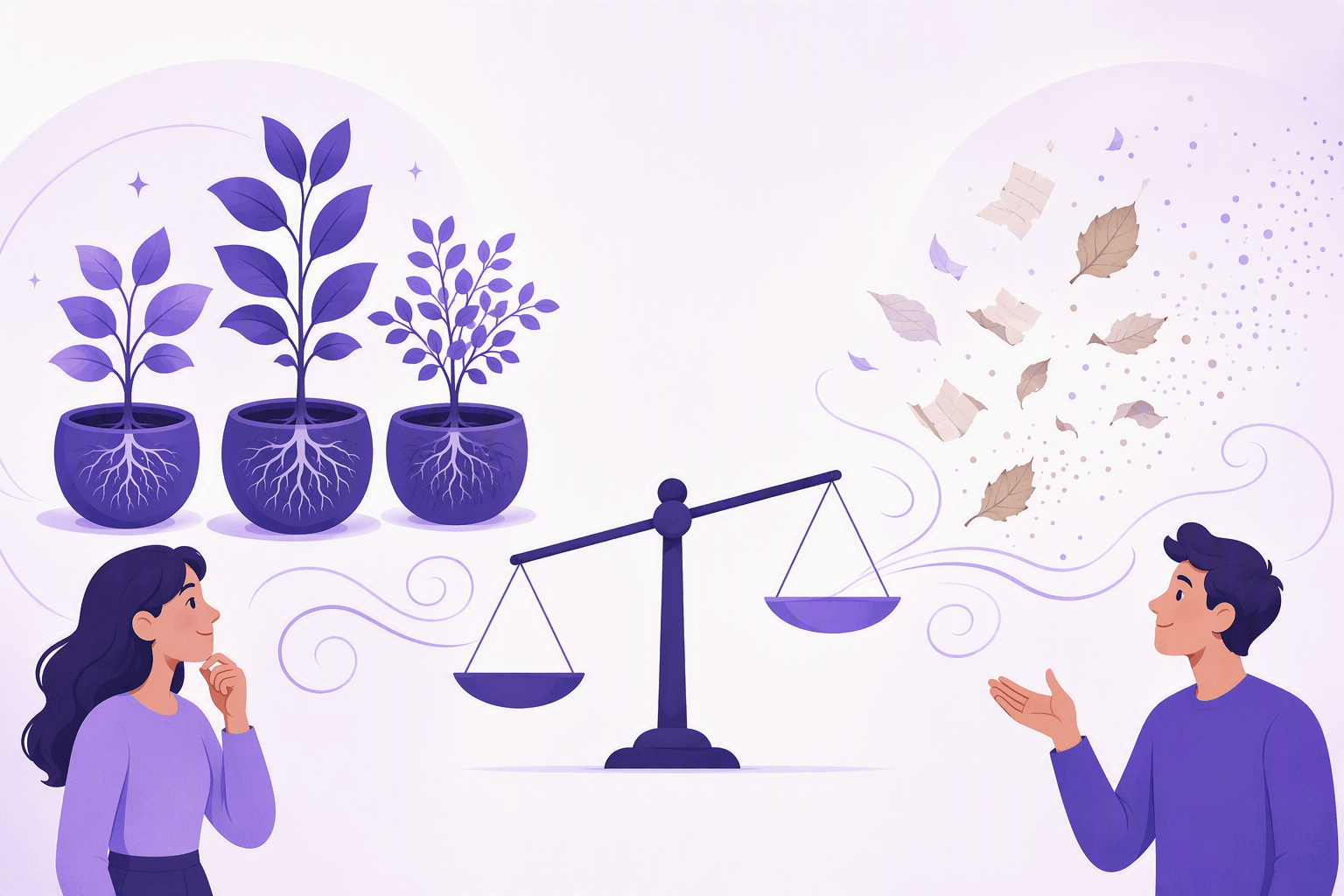
Slang that survives tends to be:
- Short: one syllable or two
- Flexible: works as adjective, interjection, or verb
- Emotionally useful: expresses approval, disapproval, surprise, or belonging
- Not too tied to one brand or platform
Slang that dies tends to be:
- Too specific to a single show, meme, or celebrity
- Too long to say out loud
- Too dependent on a visual format
How to learn decade-based slang without memorizing lists
If you try to memorize “1920s words” you will forget them. Instead, learn the skill of reading slang.
Step 1: Build a neutral base
If you still struggle with basic function words, slang will not help. Use a frequency list like 100 most common English words and make sure you can follow ordinary dialogue first.
Step 2: Learn “slang roles,” not just words
Most slang does one of these jobs:
- Greeting and bonding
- Approval and praise
- Disapproval and insult
- Surprise and reaction
- Intensifying (“very” language)
- Softening (making something less direct)
Once you know the role, you can choose a safe standard alternative when slang feels risky.
Step 3: Use clips, then shadow the rhythm
Slang is rhythm. If you say the right word with the wrong timing, it sounds unnatural.
A practical method is:
- Watch a short clip.
- Repeat one line, matching stress and speed.
- Swap the slang word for a neutral word and notice how the vibe changes.
If you want more listening-first practice, our best movies to learn English list is a good starting point because it favors clear audio and everyday scenes.
US vs UK slang: why the same word can feel different
“English slang” is not one thing. It is many overlapping ecosystems.
The scale of variation
English is used across dozens of countries, and Ethnologue’s global speaker estimate helps explain why slang now travels so easily: the audience is huge, and many learners adopt slang from media rather than local community speech (Ethnologue, 27th edition, 2024).
A practical learner tip
If you learned a term from an American show, assume it may sound odd in the UK, and vice versa. When you move countries, listen for two weeks before you start using local slang.
If you are curious about systematic differences beyond slang, see American vs British English.
Slang and numbers: why “one” word can change the whole tone
Modern slang often uses numbers and number-like patterns: “24/7,” “10/10,” “caught a 1-star review,” “top 3,” “level 100,” and so on.
If numbers still slow you down, fix that bottleneck. Our numbers in English guide helps you understand fast speech like “twenty-four seven” (TWEN-tee for SEH-ven) and ratings language that shows up constantly in slangy conversations.
A learner’s “slang radar”: five questions to ask
Before you use a slang word, ask:
- Is it mild or could it be insulting?
- Is it spoken slang or mostly written?
- Is it regional?
- Is it age-marked (teen-coded, older-coded)?
- Is it already fading?
These questions do more for your fluency than any list.
🌍 Why older slang can sound 'theatrical'
When you use slang from older decades, you are not just using a word, you are signaling a persona. Native speakers often hear it as cosplay language because they associate it with film genres, not daily life. That can be fun in jokes, but risky in serious conversation.
Using Wordy-style clip learning for slang (without turning it into a gimmick)
Slang is one of the few areas where “authentic input” is not optional. You need to hear it used naturally, with real speed and real consequences.
A clip-based routine works best when you keep it narrow:
- Pick one show or genre.
- Track a small set of recurring slang roles (approval, reaction, teasing).
- Rewatch the same scenes until your ear catches the phrase before the subtitles do.
If you want more strategies for learning from real media, see our immersion method language learning guide.
Conclusion: the point of decade slang is pattern recognition
Learning English slang decade by decade is useful because it trains you to notice how slang is born: in groups, spread by media, and stabilized by usefulness. If you can identify tone, audience, and channel, you can understand slang quickly without copying it blindly.
If you want to keep going, read our English slang guide for modern everyday terms, then practice with dialogue from our best movies to learn English list and build your “slang radar” one scene at a time.
Frequently Asked Questions
Why does English slang change so fast?
Is slang mostly American or British?
What slang from older decades is still used today?
How can I learn slang without sounding awkward?
Is it risky to use slang at work or in class?
Sources & References
- Ethnologue, 27th edition, 2024
- Oxford English Dictionary (OED), entries for selected slang terms, accessed 2026
- Merriam-Webster, slang and usage notes for selected terms, accessed 2026
- Pew Research Center, Social Media Use reports, accessed 2026
- Green, Jonathon, Green's Dictionary of Slang, accessed 2026
Start learning with Wordy
Watch real movie clips and build your vocabulary as you go. Free to download.


