Common Italian Names: 70+ First Names, Nicknames, and How Italians Actually Use Them
Quick Answer
The most common Italian names tend to be traditional, Catholic-influenced, and nickname-rich, with clear rules for formality: you use the full name in official settings and a shortened form among friends. This guide lists 70+ widely recognized Italian first names (with pronunciation), explains how diminutives work (like -ino/-ina), and shows what choices feel modern vs classic across Italy.
Italian has a deep pool of common names, but the ones you will hear most often are classic, family-linked choices like Marco, Luca, Francesco, Giulia, Anna, and Maria, usually paired with easy everyday nicknames (Ale, Fra, Vale) and clear formality rules for when to use the full name vs the short form.
Italy has about 59 million residents, and Italian is also spoken widely outside Italy through migration and communities. Ethnologue estimates roughly 60 million native speakers of Italian worldwide (Ethnologue, 27th edition, 2024), which helps explain why these names show up in films, football, and pop culture far beyond Italy.
If you are learning Italian for travel or relationships, combine names with greetings and leave-taking: see how to say hello in Italian and how to say goodbye in Italian to sound natural when you meet someone new.
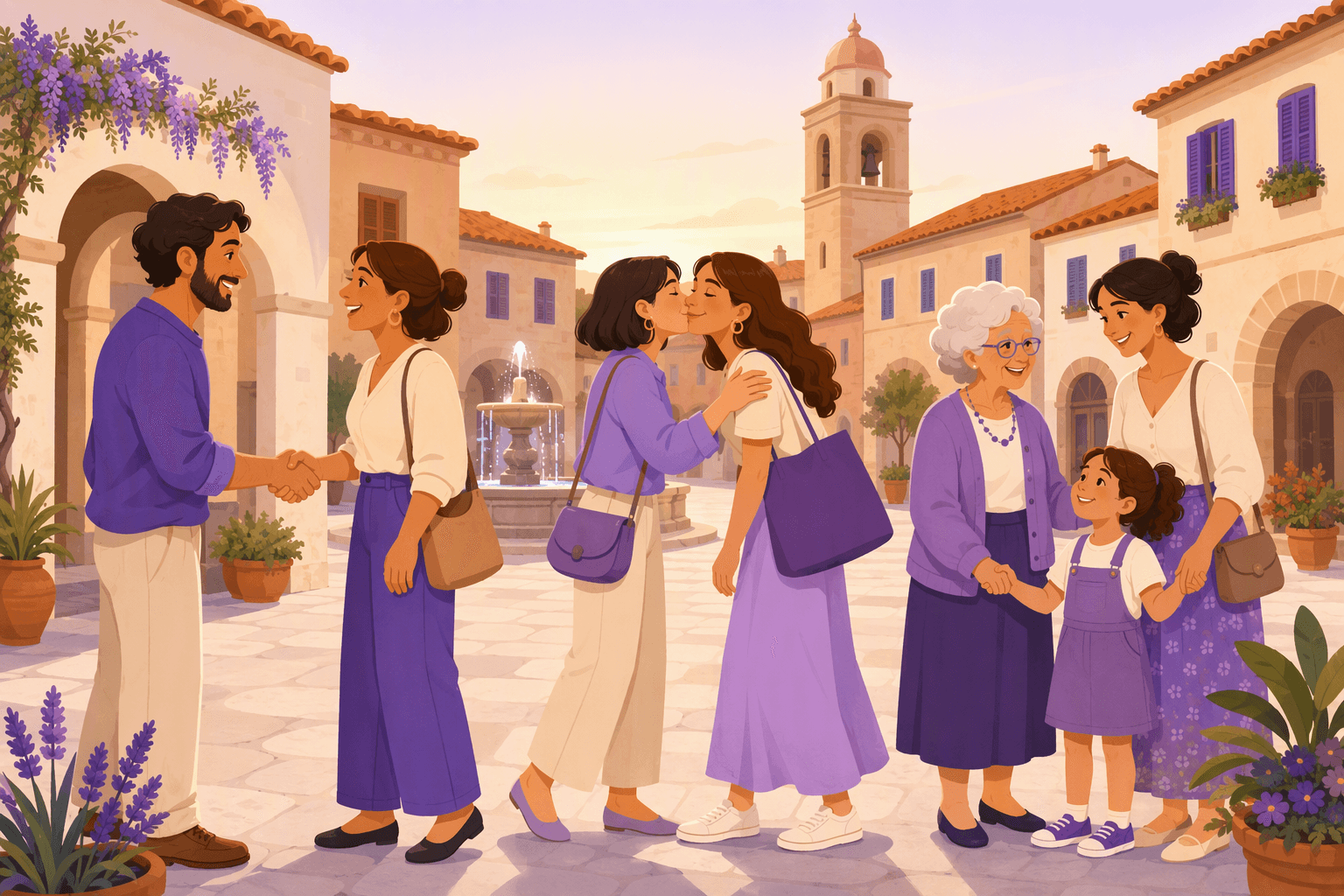
How Italian names work in real life
Italian naming culture is practical: the legal name matters for documents, but the spoken name matters for relationships.
First name vs nickname vs diminutive
A nickname can be a simple clipping (Fra from Francesco), a short form with -i (Gio for Giovanni), or a diminutive that adds warmth (Paolino from Paolo). Diminutives are not “baby talk” by default, they are a social signal: closeness, affection, sometimes irony.
As linguist Tullio De Mauro wrote extensively about everyday Italian usage and variation, what counts as “normal” Italian often depends on context and community, and names behave the same way. The same person can be “Dottor Rossi” at work and “Ale” at aperitivo.
Formal address: when the full name matters
In formal contexts, Italians often keep distance through titles and surnames. You will hear Signor (seen-YOR) and Signora (seen-YOH-rah), and in some settings Dottore/Dottoressa (dot-TOH-reh / dot-toh-REHS-sah) even when the person is not a medical doctor.
If you are unsure, start formal. Once someone says “Dammi del tu” (DAHM-mee del too), meaning “Use tu with me,” that is your cue to switch to a more casual style.
💡 A safe default in Italy
If you meet someone through work, school administration, or an older relative, use the full first name (or title plus surname) until they introduce a nickname. In friend groups, people often introduce themselves with the short form immediately.
Why so many Italian names feel “Catholic”
Many common Italian names come from saints, biblical figures, and devotional traditions. This is not just history, it is still visible in naming patterns and in the frequency of names like Maria, Giuseppe, Giovanni, and Antonio.
ISTAT’s name frequency tools and datasets show how persistent these classics are across generations (ISTAT, accessed 2026). Even when modern names rise, traditional ones remain widely recognized.
Pronunciation rules that make Italian names easier
Italian spelling is consistent, so if you learn a few rules you can pronounce most names confidently.
- C before e/i is “ch”: Cecilia is cheh-CHEE-lyah.
- Ch is “k”: Chiara is KYAH-rah.
- Gi is soft “j”: Giulia is JOO-lyah.
- Gn is “ny”: Giorgio is JOR-joh, but Gianluca starts with JAHN-loo-kah.
- Stress is often on the second-to-last syllable: Matteo is maht-TEH-oh.
For more sound-level help, pair this with an Italian pronunciation resource and lots of listening. Movie dialogue is especially useful because you hear names shouted, whispered, and shortened in real time. If you like this approach, you may also enjoy how to learn a language with movies.
Common Italian male names (with pronunciation and natural notes)
Below are widely recognized male first names you will meet across Italy. Some are especially common in certain age groups, but all are “normal” names that Italians will not find strange.
| Italian | Pronunciation | Note |
|---|---|---|
| Alessandro | ah-lehs-SAHN-droh | Common nickname: Ale (AH-leh). |
| Andrea | ahn-DRAY-ah | Male in Italy. Often confuses English speakers. |
| Antonio | ahn-TOH-nyoh | Classic, widely used. Nickname: Toni (TOH-nee). |
| Carlo | KAR-loh | Traditional, still common. |
| Davide | DAH-vee-deh | Italian form of David. |
| Enrico | ehn-REE-koh | Often shortened to Enri (EHN-ree). |
| Federico | feh-deh-REE-koh | Nickname: Fede (FEH-deh). |
| Filippo | fee-LEEP-poh | Double p is held longer. |
| Francesco | frahn-CHEHS-koh | Nickname: Fra (FRAH). |
| Gabriele | gah-bree-EH-leh | Nickname: Gabry (GAH-bree). |
| Giovanni | joh-VAHN-nee | Classic. Nickname: Gio (JOH). |
| Giuseppe | joo-ZEHP-peh | Very traditional. Nickname: Peppe (PEHP-peh). |
| Lorenzo | loh-REHN-tsoh | Nickname: Lore (LOH-reh). |
| Luca | LOO-kah | Modern-classic, very common. |
| Marco | MAR-koh | Short, pan-Italian. |
| Matteo | maht-TEH-oh | Strong in younger generations. |
| Michele | mee-KEH-leh | Male in Italy. Not 'Michelle'. |
| Nicola | NEE-koh-lah | Male in Italy. Nickname: Nico (NEE-koh). |
| Paolo | PAH-oh-loh | Nickname: Pao (PAH-oh) or Paolino (pah-oh-LEE-noh). |
| Pietro | PYEH-troh | Classic, biblical root. |
| Riccardo | reek-KAR-doh | Nickname: Ricky (REE-kee) in some circles. |
| Roberto | roh-BEHR-toh | Nickname: Roby (ROH-bee). |
| Salvatore | sahl-vah-TOH-reh | Very common in the South. Nickname: Totò (toh-TOH). |
| Simone | see-MOH-neh | Male in Italy. |
| Stefano | STEH-fah-noh | Nickname: Ste (STEH). |
Two “false friends” for English speakers: Andrea and Michele
Andrea (ahn-DRAY-ah) is typically male in Italy, while in English it is usually female. Michele (mee-KEH-leh) is also typically male, and the female form is Michela (mee-KEH-lah).
This is one of the quickest ways to avoid awkward introductions, especially if you are meeting Italians through international work or study.
Common Italian female names (with pronunciation and natural notes)
These are widely used and widely recognized female first names. Many have affectionate short forms that show up in friend groups and family chats.
| Italian | Pronunciation | Note |
|---|---|---|
| Alessia | ah-LEHS-syah | Nickname: Ale (AH-leh) or Lessi (LEHS-see). |
| Anna | AHN-nah | Classic, timeless. |
| Beatrice | beh-ah-TREE-cheh | Nickname: Bea (BEH-ah). |
| Camilla | kah-MEEL-lah | Double l is held longer. |
| Chiara | KYAH-rah | Very common. 'Ch' is a hard k sound. |
| Claudia | KLOW-dyah | Common across age groups. |
| Elena | EH-leh-nah | Nickname: Ele (EH-leh). |
| Elisa | eh-LEE-zah | Often short already. |
| Emma | EHM-mah | International, popular with younger generations. |
| Federica | feh-deh-REE-kah | Nickname: Fede (FEH-deh). |
| Francesca | frahn-CHEHS-kah | Nickname: Fra (FRAH) or Franci (FRAHN-chee). |
| Giada | JAH-dah | Modern-feeling, common. |
| Giulia | JOO-lyah | Very common. Nickname: Giù (JOO). |
| Ilaria | ee-LAH-ryah | Often shortened to Ila (EE-lah). |
| Laura | LOW-rah | Classic, pan-European. |
| Lucia | loo-CHEE-ah | In Italian, 'ci' is 'chee'. |
| Martina | mar-TEE-nah | Common with younger adults. |
| Maria | mah-REE-ah | Extremely common, often used as a second name too. |
| Sara | SAH-rah | Short, very common. |
| Silvia | SEEL-vyah | Classic. |
| Sofia | soh-FEE-ah | International, very popular. |
| Valentina | vah-lehn-TEE-nah | Nickname: Vale (VAH-leh). |
Maria: first name, second name, and compound name
You will meet many women named Maria, but you will also meet people whose legal name includes Maria as a second element. This reflects long-standing religious and family traditions.
In conversation, Italians usually use the everyday call name, not the full legal chain. If someone is “Maria Teresa” on paper, friends may still call her “Teresa” or “Mery,” depending on the family.
Nickname patterns Italians actually use
Nicknames are where Italian names become social. They can be affectionate, practical, or both.
Shortening to one or two syllables
Common patterns include:
- Ale (AH-leh) from Alessandro, Alessia
- Fra (FRAH) from Francesco, Francesca
- Vale (VAH-leh) from Valentina
- Gio (JOH) from Giovanni, Giorgia
These are especially common among younger adults, in sports teams, and in group chats.
Diminutives: -ino, -ina, -etto, -etta
Diminutives can signal affection or “smallness,” but in names they mostly signal closeness.
- Paolo → Paolino (pah-oh-LEE-noh)
- Giorgio → Giorgino (jor-JEE-noh)
- Anna → Annetta (ahn-NEHT-tah)
- Carlo → Carletto (kar-LEHT-toh)
Treccani’s onomastic and dictionary entries are useful for seeing how suffixes behave in Italian word formation beyond names (Treccani, accessed 2026).
🌍 Why diminutives can feel intimate
A diminutive is a relationship move. If you call a new colleague "Paolino" on day one, it can sound overly familiar or teasing. In families, it is normal. In workplaces, wait until you hear others use it first.
Regional and generational patterns (without stereotypes)
Italy is linguistically diverse, and names reflect that diversity. The official language is Italian, but many people also grow up with regional languages or dialects, which can influence pronunciation and nickname style. Ethnologue lists multiple regional languages spoken in Italy alongside Italian (Ethnologue, 27th edition, 2024).
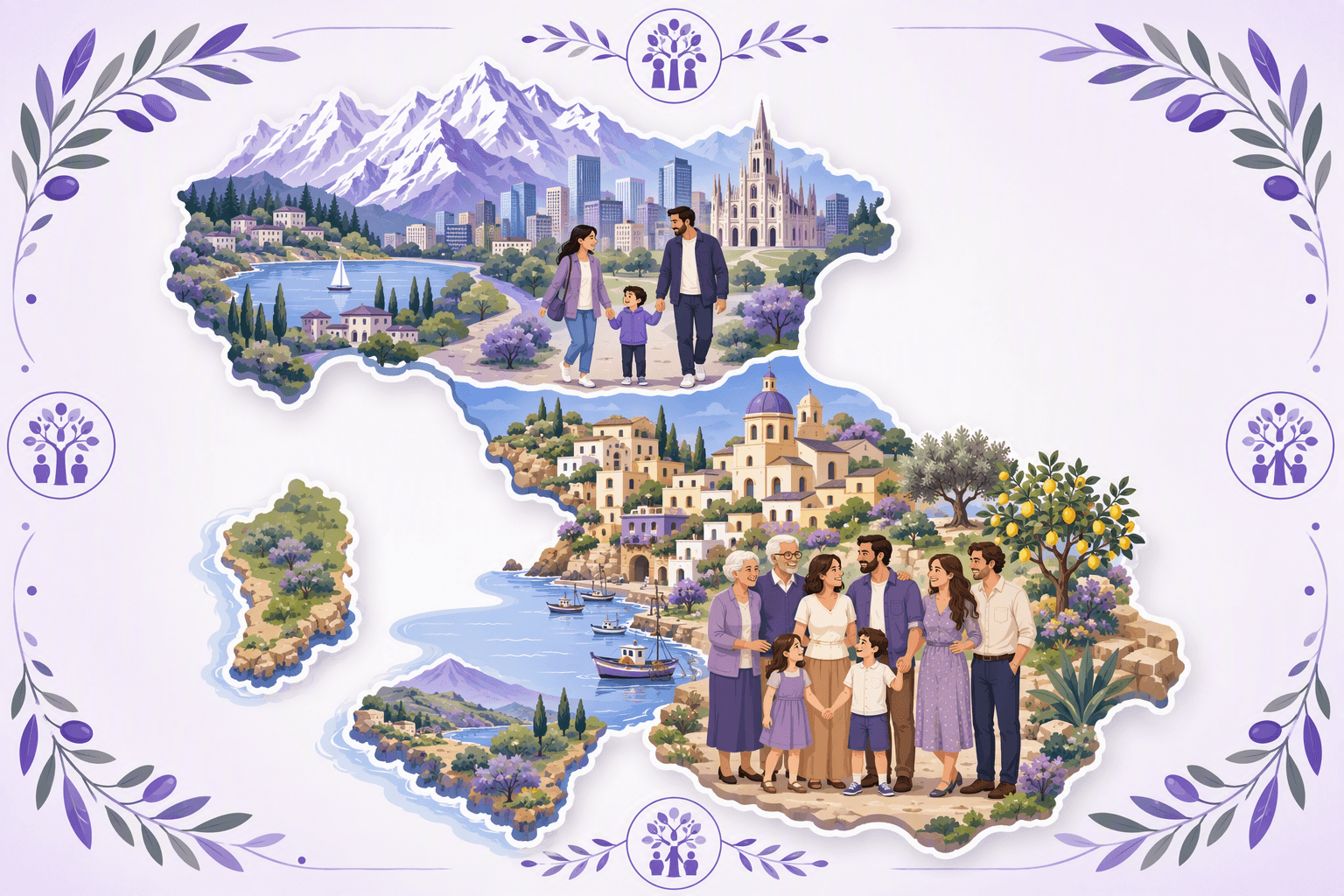
North vs South tendencies
You will find “classic” names everywhere, but some tendencies are noticeable:
- In many southern families, recycling a grandparent’s name is common, which keeps older saint names in circulation.
- In northern cities, you may hear slightly more international or pan-European choices in younger generations.
These are tendencies, not rules. Mobility inside Italy is high, and media culture is shared nationally.
Modern vs traditional “feel”
Names like Giuseppe and Antonio often read as traditional, while Sofia, Emma, Matteo, and Giada often read as more modern. ISTAT’s frequency tools help confirm these generational shifts (ISTAT, accessed 2026).
How to choose an Italian name for yourself (and not sound odd)
If you are picking an Italian name for class, gaming, or a new identity online, aim for “plausible and pronounceable.”
Match your vibe and age
A very traditional name can be fun, but it also signals a certain generation. If you are 22 and choose “Gennaro,” it can sound like a deliberate character choice, not a neutral pick.
If you want neutral: Marco, Luca, Matteo, Giulia, Sara, Chiara are safe.
Avoid “Italian-looking” inventions
Italians notice when a name is built from Italian pieces but does not exist. If you want authenticity, pick from real lists and then learn the nickname patterns that go with it.
If you want more everyday Italian for introductions, pair this with how to say hello in Italian and practice a full line like “Ciao, sono Luca” (CHOW, SOH-noh LOO-kah).
Names in movies and TV: why you keep hearing the same ones
Film and TV tend to reuse familiar names because they are instantly readable to the audience. A “Marco” or “Giulia” requires no explanation, while a rare regional name might carry unintended stereotypes.
This is one reason learning through clips works well: you repeatedly hear the same high-frequency names in emotional contexts, which makes them stick. If you are building core vocabulary alongside names, start with 100 most common Italian words.
Common mistakes learners make with Italian names
Mispronouncing Chiara and Giulia
Chiara is KYAH-rah, not “chee-AR-ah.” Giulia is JOO-lyah, not “goo-LEE-ah.”
A small spelling rule fixes both: ch is hard k, gi is soft j.
Overusing nicknames too early
Nicknames are friendly, but they are earned through interaction. If someone introduces herself as “Francesca,” calling her “Fra” immediately can feel pushy unless the setting is clearly casual.
As sociolinguist Penelope Eckert’s work on communities of practice shows, social meaning is built inside groups through repeated interaction. Names and nicknames are one of the fastest signals of whether you are “in” the group yet.
Confusing Italian politeness with coldness
Formal address is not distance for its own sake, it is a default respect strategy. The Accademia della Crusca has multiple public-facing articles discussing Italian usage norms and forms of address (Accademia della Crusca, accessed 2026), and the key idea is context: formality is situational, not personal.
If you want to learn affectionate language that is clearly “close,” see how to say I love you in Italian. Italians can be very warm, they just switch registers carefully.
A practical mini-script for introductions
Use this as a template and swap in your name.
- Ciao, sono Marco. Piacere. (CHOW, SOH-noh MAR-koh. pya-CHEH-reh.)
- Piacere, Marco. Io sono Giulia. (pya-CHEH-reh, MAR-koh. EE-oh SOH-noh JOO-lyah.)
If the context is formal:
- Buongiorno, sono la dottoressa Rossi. Piacere. (bwohn-JOR-noh, SOH-noh lah dot-toh-REHS-sah ROS-see. pya-CHEH-reh.)
A quick note on “bad words” and names
Some Italian nicknames can sound like insults in another language, and some surnames resemble slang. Do not assume it is rude, it is often just coincidence.
If you are curious about what is actually offensive vs playful, read Italian swear words with the cultural warnings in mind.
⚠️ Do not translate insults into nicknames
In Italian, a teasing nickname inside a friend group can be normal, but translating an English insult and using it as a nickname usually lands badly. If you did not hear Italians use it first, skip it.
Practice tip: learn names the way Italians hear them
Names are often heard in fast speech, with emotion, and with truncation. Practice by listening for:
- The stressed syllable
- The nickname form
- The “calling” intonation when someone shouts it across a room
This is exactly why short video clips help. If you want a structured approach, start with greetings, then names, then everyday verbs, and keep recycling them in context.
For more Italian culture and language guides, browse the Wordy blog and focus on topics that show up in real conversations, not just textbook lists.
Conclusion: the “most common” Italian names are common for a reason
Common Italian names are common because they are socially versatile: they work on forms, in classrooms, in football chants, and in family kitchens, and they come with built-in nickname systems that Italians use to signal closeness.
If you pick a name from the lists above and learn its natural short form, you will sound more grounded in real Italian. Then pair it with a strong greeting and a clean introduction, and you are ready for your next conversation.
Frequently Asked Questions
What are the most common Italian names?
Do Italians use nicknames a lot?
How do you address someone politely in Italian: first name or last name?
Is Maria only a girls' name in Italy?
Are Italian names different in the North vs the South?
Sources & References
- ISTAT, Nomi più frequenti (database), accessed 2026
- Treccani, Enciclopedia e Vocabolario (onomastica entries), accessed 2026
- Ethnologue, 27th edition, 2024
- Accademia della Crusca, articles on Italian usage and forms of address, accessed 2026
Start learning with Wordy
Watch real movie clips and build your vocabulary as you go. Free to download.


