Quick Answer
Learning a second language pays off in measurable ways: it improves communication skills, strengthens attention and memory, expands career options, and makes travel and relationships easier. Research in cognitive science and applied linguistics also links bilingual experience to better executive control and greater cultural understanding, especially when you learn through real-world input.
Learning a second language is worth it because it changes what you can do in daily life, work, and travel, and it also trains attention and memory through sustained practice. The strongest benefits show up when you move beyond apps-only study and start using the language with real people and real media, so your brain learns patterns, not just rules.
| English | English | Pronunciation | Formality |
|---|---|---|---|
| A second language | L2 | EL-too | casual |
| Bilingual | bilingual | bye-LING-gwuhl | casual |
| Fluent | fluent | FLOO-uhnt | casual |
| Proficiency | proficiency | pruh-FISH-uhn-see | formal |
| Accent | accent | AK-sent | casual |
| Code-switching | code-switching | KOHD-SWITCH-ing | formal |
Why learning a second language pays off in 2026
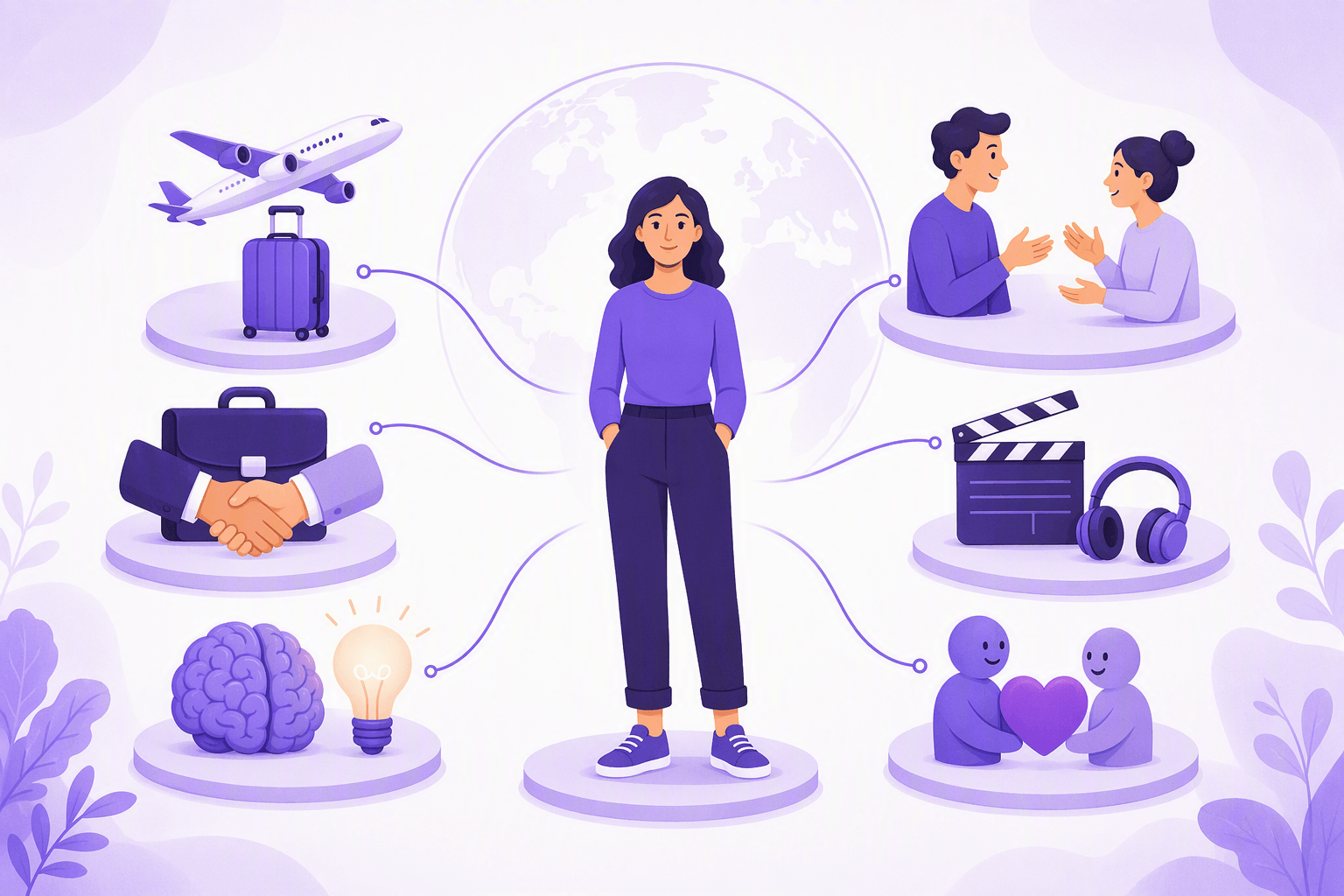
In 2026, language learning is less about collecting vocabulary and more about access. Access to jobs, communities, entertainment, and information that simply does not exist in translation.
English is still the biggest global bridge language, with roughly 1.5 billion speakers when you include native and second-language users (Ethnologue, 2024). But the internet, migration, and remote work mean your “local” life can be multilingual even if you never move.
A second language also protects you from “translation lag.” News, memes, and cultural moments often hit one language first, then spread.
If your goal is English specifically, pair this article with English slang to understand modern informal speech, and keep English swear words bookmarked so you can recognize tone and avoid accidental rudeness.
The 12 benefits of learning a second language (with real-world examples)
1) You can participate in more of the world
A second language increases the number of people you can talk to, and the number of places where you can handle life without help.
Spanish is an official language in 20 countries, French in 29, and Arabic across more than 20 states and territories depending on classification. Even if you never aim for “native-like,” A2 to B1 proficiency is enough to order food, ask for directions, and build friendly relationships.
This matters because travel is not just tourism. It is navigating airports, renting apartments, reading signs, and dealing with problems.
2) You get better at noticing patterns and meaning
Language learning forces you to track sound, rhythm, and context at the same time. That is pattern recognition under pressure.
You start hearing what is “normal” in a language: which words cluster together, which phrases signal politeness, and which intonation means “I’m joking.”
This is why learning through authentic clips works so well: you see the same pattern across different scenes, emotions, and speakers. If you like learning from media, browse the blog index for clip-friendly topics you can stack into a routine.
3) Stronger executive control (attention switching)
A consistent finding in bilingualism research is that managing two languages is linked to executive control skills, like switching attention and inhibiting distractions (Bialystok, Craik, and Luk, 2012). The effect size and conditions vary across studies, but the mechanism is intuitive: you practice selecting one system while suppressing another.
That practice resembles real life. You focus in a noisy room, switch tasks at work, and ignore irrelevant information.
"The bilingual experience is not simply about knowing two languages, it is about using them, and that use recruits attention and control processes in everyday communication."
Professor Ellen Bialystok, bilingualism researcher (Trends in Cognitive Sciences, 2012)
4) Better listening skills, even in your first language
When you learn a new sound system, you become a more careful listener. You stop assuming you heard correctly and start verifying with context.
That habit transfers back to your first language. Many learners report they interrupt less, ask clearer questions, and notice ambiguity more quickly.
This is especially true if you train with fast, messy speech, the kind you hear in movies and TV.
5) More career options and credibility
Language ability is a hard skill that also signals soft skills. It tells employers you can learn, adapt, and communicate across differences.
In the US, Spanish is a major advantage in healthcare, education, hospitality, and customer support. In Europe, multilingualism is often expected, not exceptional, because cross-border work is common.
If you want a practical starting point, build “work fluency” around what you actually do: meetings, emails, numbers, dates, and small talk. For English learners, numbers in English and months in English are surprisingly high-impact because scheduling and money talk happen everywhere.
6) You become harder to “filter-bubble”
If you only consume information in one language, you inherit that language’s media ecosystem. A second language widens your sources.
You can compare how different countries frame the same event. You can read local perspectives, not just translated summaries.
That is not just “culture,” it is information literacy.
7) Deeper cultural understanding (the hidden rules)
Culture is not only food and holidays. It is also conversational rules: how direct you can be, how you disagree, how you apologize, and how you show respect.
For example, English often uses softeners like “kind of,” “maybe,” and “I was wondering if…” to make requests feel less forceful. Learners who translate directly from more direct languages can sound rude without intending to.
A second language teaches you these invisible norms because you feel the social consequences in real time.
🌍 Culture tip: politeness is grammar plus timing
In many languages, the "polite" form is not just a word, it is a whole package: verb form, titles, distance, and when you speak. Copying the exact phrase without copying the timing can still feel off. Learn requests and apologies as full mini-scenes, not isolated sentences.
8) More confidence in unfamiliar situations
Language learning is controlled discomfort. You repeatedly do something you are not good at yet, then improve.
That builds a specific kind of confidence: “I can handle being imperfect in public.” It shows up when you negotiate rent, ask for help, or join a new group.
This is one reason language learners often become better travelers and better newcomers in any community.
9) Stronger memory for names, details, and sequences
You memorize vocabulary, but you also memorize sequences: verb endings, word order, collocations, and set phrases.
That is memory training with constant retrieval. It is not magic, but it is real practice.
If you want to maximize this benefit, use spaced repetition and keep your vocabulary tied to situations you actually live.
10) You enjoy more entertainment without waiting for translation
Subtitles and dubbing help, but they change timing, jokes, and tone. A second language gives you direct access.
Comedy is the clearest example. Humor depends on word choice, rhythm, and cultural references, and those often do not survive translation.
If you learn with clips, you also learn “performance language”: sarcasm, flirting, anger, awkwardness, and apology language that textbooks sanitize.
11) Better relationships across languages
Relationships are built on small moments: checking in, teasing, comforting, and apologizing.
A second language lets you do that with more people, and it changes the quality of those interactions. Even basic effort can be meaningful, because it signals respect.
This is also where you learn what not to say. Slang and taboo words are social landmines in every language, so recognition matters even if you never plan to use them. For English, English slang and English swear words are practical “comprehension safety” guides.
12) You help protect language diversity
UNESCO has long warned that many languages are endangered, and language loss reduces cultural and scientific knowledge embedded in local terms, oral histories, and ecological vocabulary (UNESCO language diversity resources).
Learning a second language will not “save” a language by itself, but it can support communities, increase visibility, and create demand for education and media.
Even choosing to learn a regional language, not just a global one, is a cultural act.
What “learning a second language” actually means (CEFR and ACTFL)
Many people quit because they aim at a vague target: “fluency.” Use a scale instead.
The CEFR scale (A1 to C2) is widely used in Europe and beyond (Council of Europe, 2020). ACTFL proficiency guidelines are common in the US (ACTFL, 2012).
Here is a practical translation into everyday goals:
| Level | What you can do | What it feels like |
|---|---|---|
| A1 | Basic phrases, introductions | Slow, scripted |
| A2 | Simple daily tasks, short chats | Manageable with repetition |
| B1 | Handle common situations, tell stories simply | You can “live” in the language |
| B2 | Discuss abstract topics, follow normal media with support | Real independence |
| C1 | Work and study effectively, understand nuance | Professional-level |
| C2 | Near-native flexibility | Rare, not required for most goals |
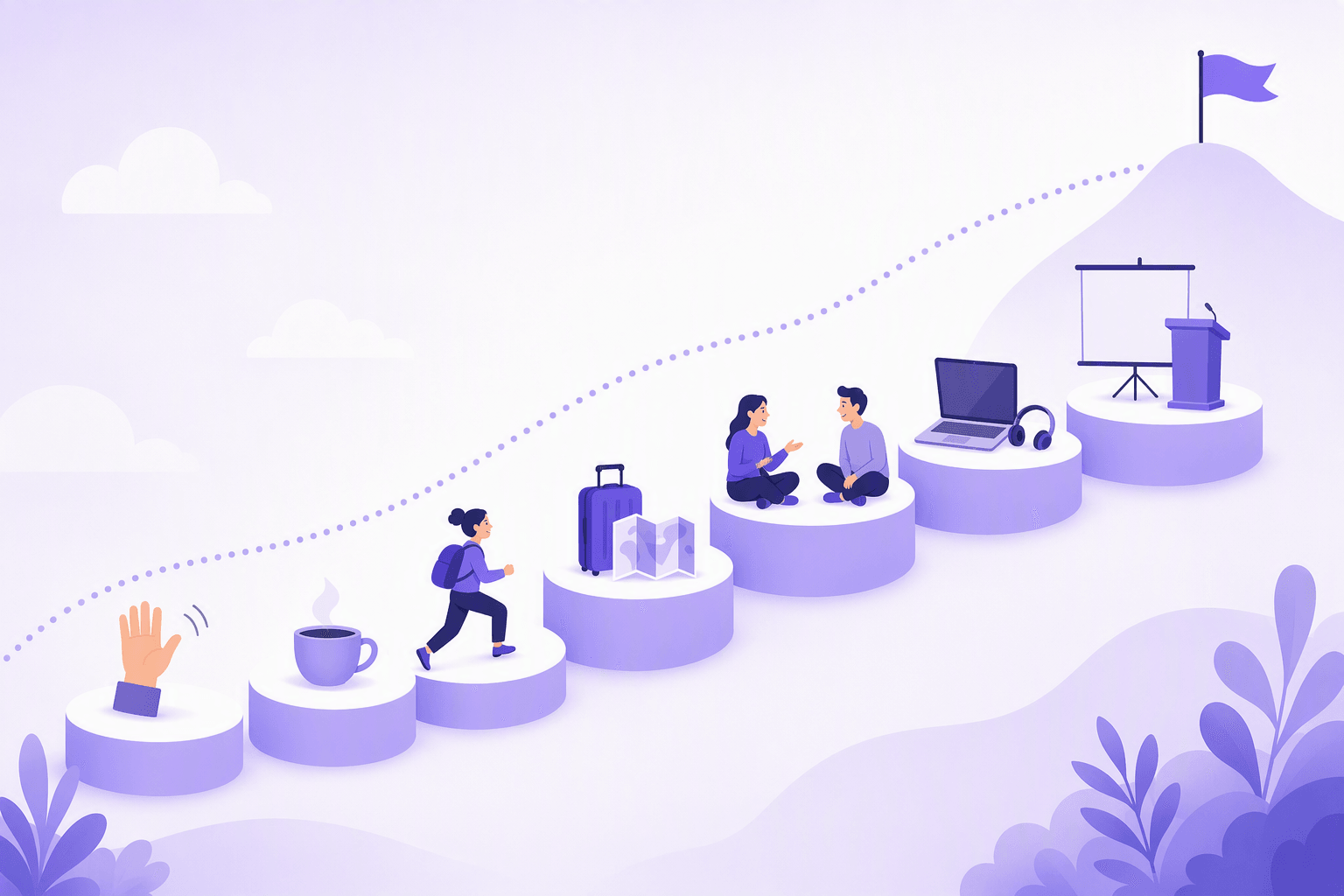
Most benefits in travel and daily life show up around A2 to B1. Most career benefits show up around B1 to B2, depending on the job.
💡 A better goal than 'fluency'
Pick one domain: travel, work, dating, gaming, or school. Then build a B1 goal inside that domain, like "handle a hotel problem" or "run a 15-minute meeting." You will progress faster and feel the payoff earlier.
The science in plain English: why bilingual practice changes the brain
Your brain adapts to what you repeatedly do. Language learning is repeated attention, repeated retrieval, and repeated prediction.
When you listen, you predict what comes next. When you speak, you plan and monitor. When you switch languages, you select and inhibit.
Research reviews in cognitive science describe bilingualism as an experience that can shape attention and control networks, especially when both languages are actively used (Bialystok, Craik, and Luk, 2012). The key word is “use,” not “study.”
So if you want the cognitive benefits, build habits that require real-time processing:
- Listening to fast speech (clips, podcasts, live conversation)
- Speaking with time pressure (short responses, roleplays)
- Reading with context (news, chats, comments)
- Writing for a purpose (messages, emails, posts)
Unique cultural insights: what a second language teaches you that grammar cannot
You learn what people avoid saying directly
Many cultures use indirectness to protect relationships. English does this with hedging, but other languages do it with honorifics, passive constructions, or set phrases.
Once you see this, you stop judging people as “cold” or “too direct.” You start asking: what is the social goal of this phrasing?
You learn how status and closeness shape speech
In some languages, you cannot speak without choosing a social distance. In others, you can, but the choice still exists through vocabulary, tone, and titles.
This makes you more socially precise. You become better at reading rooms, not just sentences.
You learn that “rude” often means “wrong register”
Learners often worry about mistakes, but the biggest social mistakes are register mistakes: using slang in a formal context, or using formal language with close friends.
That is why media-based learning is powerful. Movies and TV show you register shifts scene by scene.
How to get the benefits faster: a practical plan that works
Step 1: Choose a “high-frequency” language routine
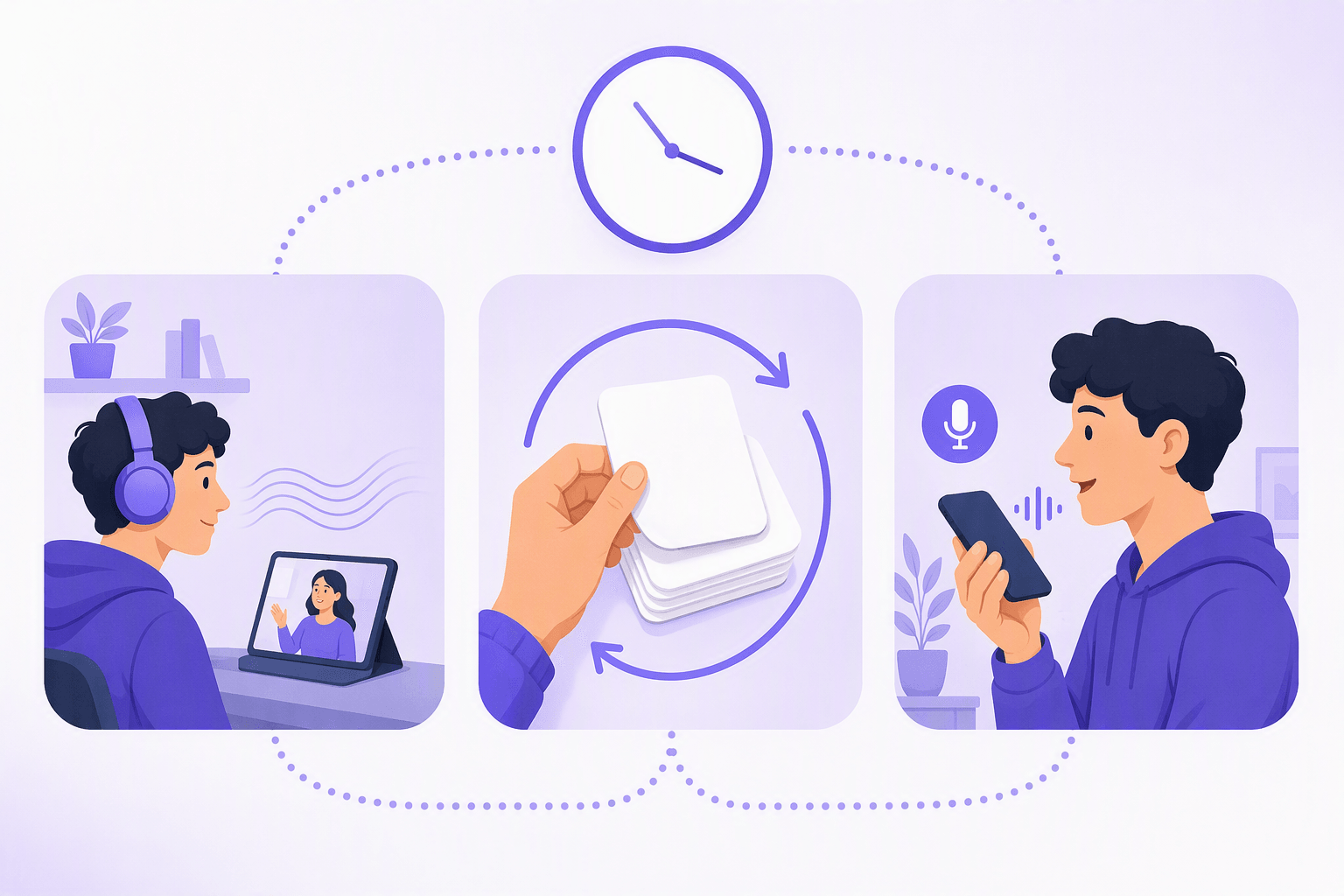
Consistency beats intensity. Aim for 20 to 30 minutes per day, five days a week.
Make it a mix:
- 10 minutes listening (clips with subtitles)
- 10 minutes vocabulary review (spaced repetition)
- 5 to 10 minutes speaking (shadowing or short voice notes)
Step 2: Learn phrases as actions, not translations
Instead of “word equals word,” learn “phrase equals job.”
Examples of “jobs”:
- Start a conversation
- Ask for clarification
- Buy time to think
- Disagree politely
- End a conversation smoothly
This is also how actors learn lines: they learn intention, not just text.
Step 3: Track the boring essentials (numbers, dates, time)
Numbers and dates are where learners freeze, even at B2. Fixing this gives you instant confidence.
For English learners, practice with numbers in English and months in English, then add your own real data: your rent, your schedule, your deadlines.
Step 4: Use “comprehension safety” for slang and taboo language
You do not need to speak slang or swear words, but you should recognize them. It helps you understand tone, avoid repeating something offensive, and interpret character relationships in media.
For English, use English slang for modern expressions and English swear words for severity and context.
⚠️ Do not copy what you hear without context
Movies and TV exaggerate conflict, flirting, and insults. If you repeat a line because it sounded cool, you can accidentally sound aggressive or inappropriate. Learn the meaning, the relationship between speakers, and the setting first, then decide if it fits your real life.
Step 5: Measure progress with “can-do” tests
Do a monthly self-check:
- Can I understand a 30-second clip without subtitles?
- Can I explain my day in 60 seconds?
- Can I ask a follow-up question naturally?
- Can I recover when I do not understand?
These are real-world skills, and they map well to CEFR and ACTFL descriptors (Council of Europe, 2020; ACTFL, 2012).
Common myths that slow learners down
Myth: “I need perfect pronunciation first”
You need intelligibility first. Pronunciation improves with exposure and feedback, and your accent will likely remain, which is normal.
If you want pronunciation to improve faster, do short daily shadowing: repeat a line immediately after a native speaker, matching rhythm and stress.
Myth: “I’m bad at languages”
Most people are bad at languages the way most people are bad at piano: they do not practice in a way that matches the skill.
Language is a performance skill. You get better by doing it, not by thinking about it.
Myth: “Apps are enough”
Apps are useful for structure and repetition. But the benefits in confidence, listening, and real communication require authentic input and interaction.
If you are comparing tools, see best language learning apps for an honest breakdown of what different methods are good at.
The bottom line
The benefits of learning a second language are real, practical, and cumulative: you communicate with more people, gain cultural precision, and train attention and memory through repeated use. The fastest path is consistent practice with authentic input, especially media and real conversations, plus targeted drills for essentials like numbers and dates.
If you want a steady stream of real-world English, start with English slang for modern speech, keep English swear words for comprehension safety, and lock in the basics with numbers in English and months in English.
Frequently Asked Questions
What are the main benefits of learning a second language?
Does learning a second language make you smarter?
Can learning a second language help your career?
Is it too late to learn a second language as an adult?
How long does it take to see benefits from learning a language?
Sources & References
- Ethnologue (SIL International). Ethnologue: Languages of the World, 27th edition, 2024.
- Bialystok, E., Craik, F. I. M., & Luk, G. Bilingualism: Consequences for Mind and Brain. Trends in Cognitive Sciences, 2012.
- UNESCO. Atlas of the World's Languages in Danger (and language diversity resources), latest updates.
- Council of Europe. Common European Framework of Reference for Languages (CEFR), Companion Volume, 2020.
- American Council on the Teaching of Foreign Languages (ACTFL). Proficiency Guidelines, 2012 (and updates).
Start learning with Wordy
Watch real movie clips and build your vocabulary as you go. Free to download.


