Quick Answer
TL;DR means "too long; didn't read." It's used online to say a message was lengthy, often followed by a short summary. Depending on tone, it can be helpful (a quick recap) or rude (dismissing what someone wrote), so context and phrasing matter.
TL;DR means "too long; didn't read," and it is used online to flag that something is lengthy, usually followed by a short summary of the main point. It can be a helpful formatting tool when you write the TL;DR yourself, but it can sound rude when you use it to dismiss someone else’s message.

| English | English | Pronunciation | Formality |
|---|---|---|---|
| Meaning | TL;DR = too long; didn't read | TEE-EL-DEE-AR | slang |
| Helpful use | TL;DR: Here's the summary. | TEE-EL-DEE-AR | casual |
| Dismissive use | TL;DR. | TEE-EL-DEE-AR | slang |
| Polite alternative | In brief: ... | in BREEF | polite |
| Work-friendly label | Summary: ... | SUM-uh-ree | formal |
What TL;DR communicates (and why people use it)
TL;DR is not just a definition, it is a social signal. It tells the reader: "There is a lot here, so I am giving you the shortcut."
Online, attention is scarce, and long posts compete with endless feeds. TL;DR became a practical convention for compressing information, similar to an abstract in academic writing or an executive summary in business.
It also has a second, sharper meaning: "I did not read this because it was too long." That version is about judgment, not formatting.
The two main meanings in real life
1) TL;DR as a summary label (usually polite):
- You wrote a long post, then add "TL;DR:" and a one or two sentence recap.
- You are helping readers scan quickly and decide whether to read the full text.
2) TL;DR as a reaction (often rude):
- Someone else wrote a long message, and you reply "TL;DR" to criticize length.
- It implies their writing was not worth your time.
If you are learning modern English for online spaces, this difference matters as much as the literal words.
For more internet-era vocabulary, see our English slang guide and compare how tone changes meaning.
Pronunciation and punctuation: TL;DR vs TLDR
Most people say the letters out loud: "TEE-EL-DEE-AR". Some speakers also say the full phrase "too long, didn’t read," especially when joking.
The semicolon is part of the classic form: TL;DR. It visually separates "too long" from "didn't read," like a mini sentence.
In fast texting, you will often see TLDR without punctuation. Meaning stays the same, but TL;DR looks more "standard" and intentional, especially in longer posts or professional contexts.
💡 If you want it to sound helpful
Write "TL;DR:" and then a neutral summary. Avoid using TL;DR as a standalone reply to someone else unless you are joking with close friends.
Where TL;DR came from (origin and mainstream adoption)
TL;DR is strongly linked to early internet forums, comment threads, and long-form posts where readers wanted a quick takeaway. Over time, it became a recognizable marker for "summary below" or "summary above."
Major dictionaries now include TL;DR, which is a good test for whether a piece of internet language has become mainstream. Both the Oxford English Dictionary and Merriam-Webster record it as an established initialism, not just niche slang.
That dictionary recognition matters culturally. It shows that online writing conventions now influence standard English, not just the other way around.
Why English internet abbreviations spread so widely
English is the dominant language of many global platforms, so English abbreviations travel fast. Ethnologue estimates English has over 1.4 billion speakers worldwide when you combine native and second-language speakers (Ethnologue 2024).
That scale means a tiny piece of internet shorthand can become global in a few years. TL;DR is a clear example: it is short, easy to type, and solves a real communication problem.
If you are building core English foundations alongside internet language, our guides to numbers in English and months in English help you cover the basics that show up constantly in posts and summaries.
When TL;DR is useful (and when it backfires)
TL;DR works best when it improves readability. It backfires when it becomes a status move, meaning "I am too important to read your message."
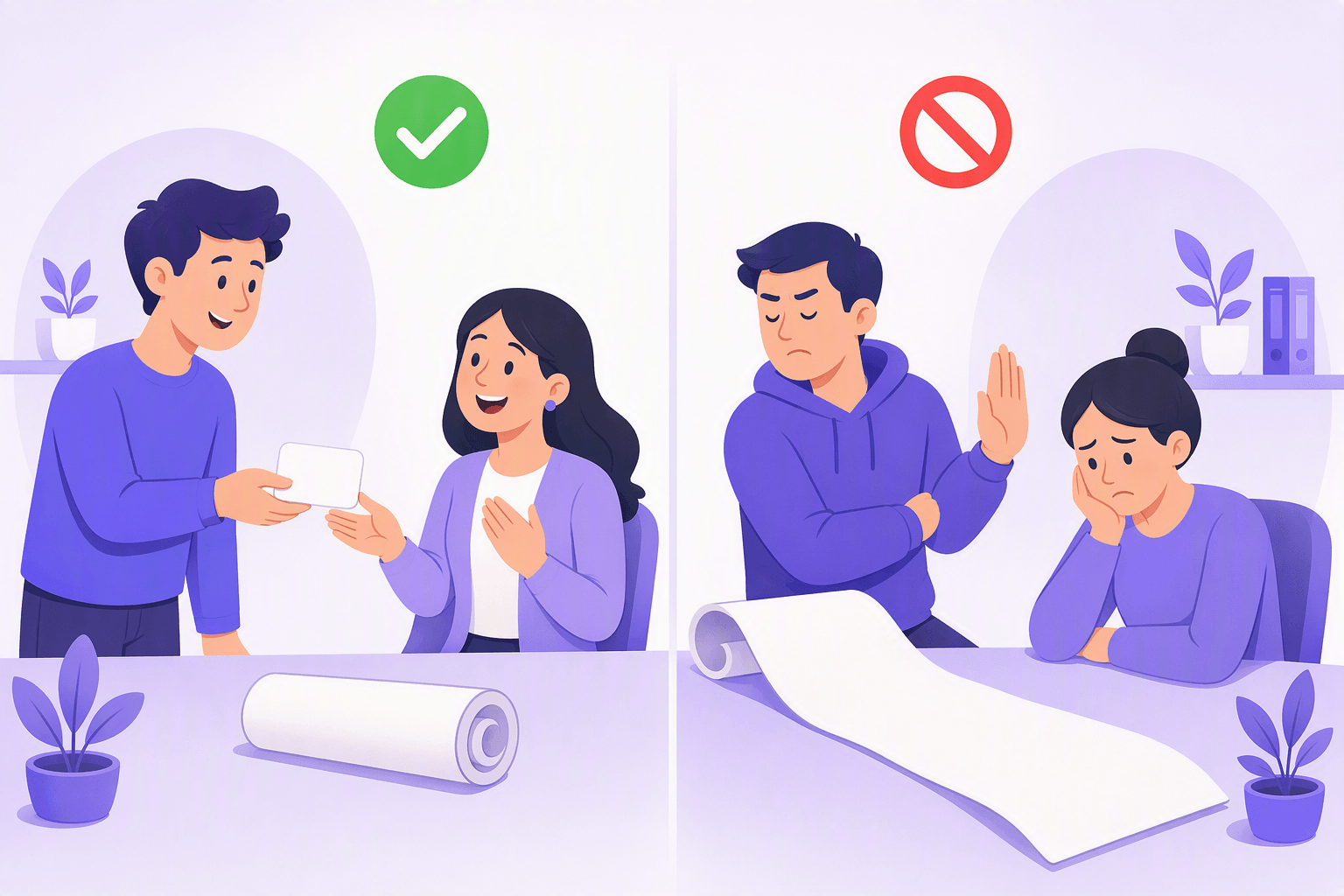
Good uses: reader-friendly TL;DR
Use TL;DR when:
- Your post is longer than a typical scroll, especially on mobile.
- You have multiple points and want to highlight the conclusion.
- You are sharing a story but want to respect the reader’s time.
A good TL;DR is not a vague teaser. It is a real summary with the decision, result, or key claim.
Example formats that feel natural:
- "TL;DR: We should ship option B because it is cheaper and faster."
- "TL;DR: The bug happens only on Android 14, workaround is to clear cache."
- "TL;DR: I can’t make Friday, can we do Monday at 3?"
Risky uses: TL;DR as a put-down
Avoid replying with:
- "TL;DR."
- "TL;DR, nobody cares."
- "TL;DR, learn to write."
These are not neutral. They are face-threatening, meaning they attack the other person’s competence or social standing.
"Politeness is not something we add on to language from the outside, it is built into the choices speakers make to manage social relationships."
Stephen C. Levinson, linguist, in Pragmatics (Cambridge University Press)
That principle explains why TL;DR is so sensitive. The same letters can either support the reader or insult the writer.
⚠️ Workplace rule
In emails, Slack, and project docs, prefer "Summary:" or "Key points:" unless your team already uses TL;DR in a friendly, consistent way.
How to write a good TL;DR (templates you can copy)
A TL;DR should be short, specific, and complete. Think of it as the answer to: "What should I remember if I read nothing else?"
Template 1: Decision TL;DR
Use this when you need approval or a choice.
TL;DR: Decision needed by [date]. Recommend [option] because [reason].
Example:
- "TL;DR: Decision needed by Tuesday. Recommend vendor A because it meets security requirements and costs 20% less."
Template 2: Update TL;DR
Use this for status updates.
TL;DR: [What changed]. Next step is [action] by [time].
Example:
- "TL;DR: We fixed the login issue. Next step is QA testing by 5 PM."
Template 3: Story TL;DR
Use this for long personal posts.
TL;DR: [Outcome]. [One key detail].
Example:
- "TL;DR: I got the job. Start date is April 1."
Template 4: Advice TL;DR
Use this for long explanations.
TL;DR: If you only do one thing, do [action].
Example:
- "TL;DR: If you only do one thing, back up your photos before updating."
Common variants and related slang
TL;DR has cousins and spin-offs. These are not all equally polite.
TL;DW
TL;DW means "too long; didn’t watch." You might see it under long videos.
It is often used the same way as TL;DR, either as a request for a summary or as a complaint.
TL;DC
TL;DC can mean "too long; didn’t care." This one is more openly dismissive.
If you are not sure about tone, avoid it. It reads like an insult in most contexts.
Summary-first culture on different platforms
Different platforms reward different writing styles:
- On Reddit and forums, TL;DR is a familiar convention at the end of long posts.
- On X-style short posts, TL;DR is less common because the content is already compressed.
- On LinkedIn, "TL;DR" appears, but "Key takeaways" and "In summary" often sound more professional.
This is why you will sometimes see creators write "TL;DR" even when the post is not that long. It signals "I respect your time," which is valuable in feed culture.
TL;DR in movies and TV dialogue (how it shows up in real speech)
You will occasionally hear characters say "TL;DR" out loud, especially in modern comedies and workplace shows. When spoken, it usually carries attitude.
In dialogue, it often means:
- "Give me the short version."
- "Stop talking and get to the point."
- "I’m not reading that."
That spoken usage is closer to the dismissive meaning, so be careful copying it into real conversations.
If you are learning English through scenes, pay attention to the character relationship. Friends can tease. Coworkers and strangers usually cannot.
For more on tone boundaries, our English swear words guide is useful even if you never plan to swear, because it teaches register and social risk.
Cultural insight: why TL;DR is a "power move" in English
In English-speaking internet culture, brevity is often treated as intelligence or efficiency. That is not always fair, but it is a real norm.
Using TL;DR as a reaction can be a subtle power move: it positions the speaker as the judge of what is worth reading. That is why it can escalate conflict quickly in comment sections.
Using TL;DR as a summary label does the opposite. It gives power back to the reader by offering a choice: skim or read fully.
The "I read it" signal
A small tweak changes everything:
- "TL;DR." implies you did not read.
- "TL;DR (I read it): ..." implies you did read, and you are helping.
If you want to be extra clear, write:
- "TL;DR: Here’s the main point if you’re in a hurry."
That framing is cooperative, and it matches how English speakers often soften directness in mixed-audience spaces.
Alternatives to TL;DR (and when to use them)
Sometimes TL;DR is the wrong tool. These alternatives keep the benefit without the attitude.
| Context | Better than TL;DR | Why it works |
|---|---|---|
| Work email | "Summary:" | Neutral and standard |
| Project updates | "Key points:" | Scannable and action-focused |
| Academic tone | "Abstract:" | Familiar in research writing |
| Customer support | "In brief:" | Polite and clear |
| Social posts | "Quick recap:" | Friendly, low slang |
If you are writing for a mixed audience, "Summary" is the safest choice. TL;DR is best when you know the community norms.
🌍 A small punctuation detail that signals intent
Writing "TL;DR:" with a colon looks like a formatting label, similar to "Summary:" Writing "TL;DR" alone looks like a reaction. Readers notice this, even if they cannot explain why.
Mini style guide: TL;DR etiquette by situation
In a comment thread
Do:
- "TL;DR: The fix is to update the driver."
- "TL;DR: They broke the rule because the deadline changed."
Avoid:
- "TL;DR, learn to write."
- "TL;DR, who asked?"
In group chat
Do:
- "TL;DR: I’m running late, start without me."
- "TL;DR: Can’t tonight, free tomorrow."
Avoid:
- "TL;DR" to shut someone down unless it is clearly playful.
In professional settings
Do:
- "Summary: Decision needed by Friday."
- "Key points: timeline, cost, risk."
If you use TL;DR at work, keep it purely functional:
- "TL;DR: Please approve option A by EOD."
Learn TL;DR the Wordy way (with real dialogue)
The fastest way to internalize internet English is to see it in context, especially when tone is doing most of the meaning. Wordy teaches this through short movie and TV clips, so you can hear how characters signal impatience, cooperation, or sarcasm.
If you want a broader foundation for modern usage, start with English slang, then build practical everyday competence with numbers in English and months in English. You can also practice listening and real-world phrasing on the English learning page.
TL;DR (the real takeaway)
TL;DR means "too long; didn’t read," but in practice it has two lives: a helpful summary label and a dismissive reaction. If you write the TL;DR yourself and make it specific, it reads as considerate. If you use it to judge someone else’s writing, it often reads as rude, especially outside close-friend banter.
For more practical English you will actually see online, browse the Wordy blog and keep building your register awareness across contexts.
Frequently Asked Questions
What does TL;DR mean in texting?
Is TL;DR rude?
Should you write TL;DR or TLDR?
Where did TL;DR come from?
What is the best alternative to TL;DR at work?
Sources & References
- Oxford English Dictionary (OED), entry for 'TL;DR', updated edition
- Merriam-Webster, 'TL;DR' definition and usage notes, latest access
- Cambridge Dictionary, 'internet abbreviation' and register notes, latest access
- Ethnologue (27th ed., 2024), English language overview and speaker estimates
- Crystal, David. The Cambridge Encyclopedia of the English Language (3rd ed.). Cambridge University Press, 2019
Start learning with Wordy
Watch real movie clips and build your vocabulary as you go. Free to download.


