Quick Answer
In modern English slang, a 'stan' is an extremely devoted fan, and to 'stan' someone means to support them enthusiastically, often online. The term comes from Eminem’s 2000 song 'Stan' and later broadened into a common internet verb and noun used across fandoms, social media, and pop culture.
In modern English slang, a "stan" is an extremely devoted fan, and to "stan" someone means to support them loudly and enthusiastically, usually online. The word started as a warning story in Eminem’s song "Stan" (2000), but it has evolved into everyday internet vocabulary that can be affectionate, ironic, or critical depending on context.

| English | English | Pronunciation | Formality |
|---|---|---|---|
| A stan (noun) | stan | STAN (rhymes with 'can') | slang |
| To stan (verb) | to stan | tuh STAN | slang |
| I stan (statement) | I stan | eye STAN | slang |
| We stan (group support) | we stan | wee STAN | slang |
| Toxic stan (negative) | toxic stan | TAHKS-ik STAN | slang |
| Stan culture (fandom) | stan culture | STAN KUL-cher | slang |
What "stan" means today (noun vs verb)
"Stan" works as both a noun and a verb, which is why you see it everywhere from TikTok captions to sports Twitter. The meaning stays centered on intense support, but the grammar changes the vibe.
As a noun: "a stan"
A "stan" is a person whose fandom is a big part of how they show up online. It can mean "superfan," but with a modern, internet-fluent flavor.
Examples you might see:
- "Her stans are defending her in the comments."
- "I’m a stan, I admit it."
- "The stans found the interview clip in five minutes."
As a verb: "to stan"
To "stan" means to actively support, praise, promote, or defend someone. It often implies public support, not just private enjoyment.
Common patterns:
- "I stan [person/thing]."
- "We stan [positive trait]."
- "Stan [person] for clear skin."
"Stan" is pronounced "STAN" (rhymes with "can"). In speech, it is usually said with a playful or emphatic tone. If you say it flatly in a serious meeting, it can sound out of place, because it is strongly tied to online culture.
Where "stan" came from (and how it flipped meaning)
The origin matters because it explains why "stan" can be both cute and alarming. The term comes from a character named Stan in Eminem’s song "Stan" (2000), a narrative about an obsessed fan whose letters become increasingly unstable.
Over time, online communities repurposed the name into a label for intense fandom. That shift is now recognized in major dictionaries, including Merriam-Webster and the Oxford English Dictionary, which document both the noun and verb uses (Merriam-Webster, 2024; OED, 2023).
"The meanings of words are shaped by communities of practice, and online fandoms are powerful communities of practice. They can take a term with negative origins and reframe it as identity, humor, or solidarity."
Dr. Gretchen McCulloch, linguist and author of Because Internet (quoted conceptually in line with her research on internet language)
Why a negative story produced a positive slang word
This is a classic semantic shift: a word associated with something dark becomes a shorthand for a social identity. In fandom spaces, calling yourself a "stan" can signal:
- loyalty
- inside knowledge
- participation in a community
- shared humor about being "too online"
But the original cautionary meaning never fully disappeared. That is why "toxic stan" feels instantly understandable, even if you have never heard the phrase before.
How common is "stan" in 2026 English?
"Stan" is not just niche fandom slang anymore. It is mainstream enough that brands, sports accounts, and even some journalists use it, especially in headlines or social posts.
A big reason is simple reach: English is the most widely used language on the internet, and it is also the most studied second language worldwide. Ethnologue estimates about 1.5 billion English speakers globally when you combine native and second-language speakers (Ethnologue, 2024).
Social media accelerates slang adoption because it rewards short, identity-rich words. Pew Research Center reports that a majority of U.S. adults use at least one social media platform, and usage is especially high among younger adults (Pew Research Center, 2024). That is the exact environment where "stan" thrives.
"Stan" in real life vs online: when it sounds natural
You can use "stan" in spoken English, but it sounds most natural in casual settings. Think group chats, comments, and conversations with people who spend time online.
Good places to use it
- texting friends: "I stan her so hard."
- talking about music, TV, sports: "He’s been stanning that team forever."
- joking praise: "We stan a punctual king."
If you like learning English through real dialogue, you will hear this kind of playful praise in modern scripts, especially in teen and young-adult shows. Wordy’s approach, learning from clips, is designed for exactly this kind of living slang. For more everyday expressions beyond "stan," see our English slang guide.
Places to avoid it (or soften it)
- job interviews
- formal emails
- academic writing
- serious conflict conversations
In those contexts, swap in:
- "I’m a big fan of..."
- "I really support..."
- "I admire..."
Some learners worry that "stan" literally means stalking. It does not. But because the origin story is about obsession, "stan" can imply unhealthy behavior if the context is about harassment, privacy invasion, or threats. If you mean simple admiration, add a softener like "I’m such a stan, in a normal way."
The hidden grammar of "stan": common patterns you should copy
Native speakers reuse a few templates. If you copy these patterns, you will sound natural fast.
"I stan" and "we stan"
"I stan" is a strong personal endorsement. "We stan" is a group signal, like "this is approved by our community."
Examples:
- "I stan this casting choice."
- "We stan respectful exes."
"Stan [someone] for [reason]"
This is a meme-like structure that frames support as a recommendation.
Examples:
- "Stan her for the vocals."
- "Stan him for the charity work."
"Anti" and "toxic stan"
Fandom language often comes in pairs. A "stan" supports, an "anti" opposes.
Examples:
- "The antis are mad again."
- "Toxic stans are doxxing critics."
If you are learning internet English, it helps to also know where the line is. If you want a clear guide to stronger language that sometimes appears in comment fights, read our English swear words guide. It explains severity and context so you do not accidentally escalate a situation.
"Stan" vs "fan" vs "supporter" vs "simp"
These words overlap, but they are not interchangeable. Here is a practical comparison you can use when choosing the right tone.
| Word | Core meaning | Typical vibe | Risk of sounding negative |
|---|---|---|---|
| fan | likes something a lot | neutral | low |
| supporter | backs someone or a cause | more serious | low |
| stan | intense fan identity, often online | playful, internet | medium |
| simp | overly submissive admiration, often romantic | insulting or teasing | high |
"Stan" is the only one that strongly signals online culture. "Supporter" is the safest for formal contexts.
Cultural insight: why "stan" is about identity, not just taste
In older media culture, being a fan was often private: you watched the show, bought the album, maybe went to a concert. In modern fandom, participation is visible and social.
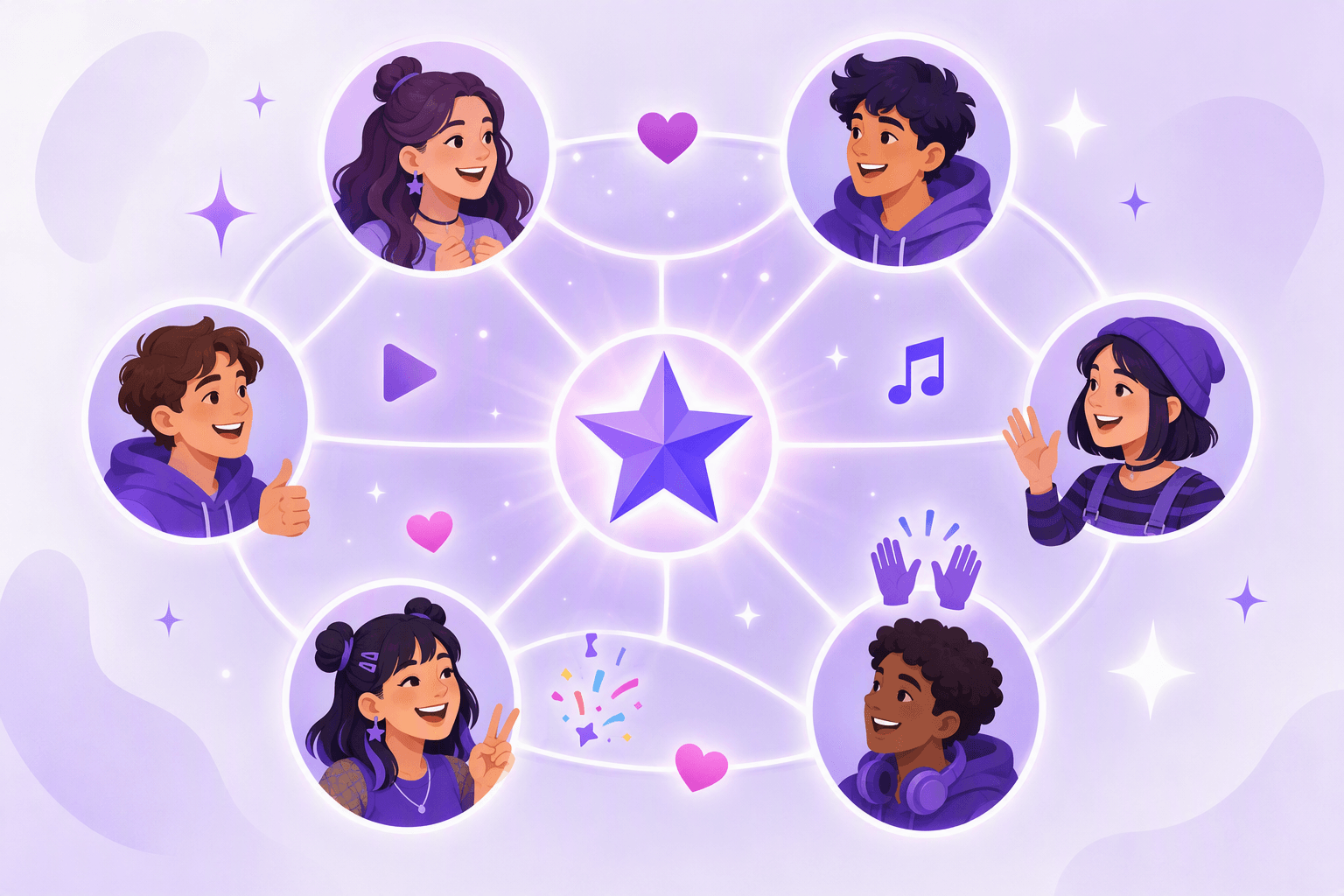
Stan culture is built around:
- constant updates (clips, leaks, livestreams)
- group language (inside jokes, memes)
- collective action (streaming parties, voting, fundraising)
- status (who has receipts, who was "here first")
That is why "stan" can function like a social label. It is less "I like this" and more "this is part of my online self."
🌍 Why you see 'we stan' in captions
"We stan" often appears under short video clips where the creator wants quick alignment from viewers. It is like saying, "This is the correct opinion, join us." It is also a way to praise behavior, not just celebrities, for example: "We stan men who go to therapy."
Examples of "stan" in context (with meaning)
These examples show the range from wholesome to critical. Notice how the same word changes based on what comes after it.
Positive and playful
-
"I stan her confidence."
Meaning: I admire and support her confidence. -
"We stan a good apology."
Meaning: We approve of and praise a good apology. -
"He’s been stanning that band since middle school."
Meaning: He has been a devoted fan for a long time.
Neutral, descriptive
-
"The stans organized a streaming party."
Meaning: The fan community coordinated a group activity. -
"Her stans noticed the easter egg."
Meaning: Her fans paid close attention and found a hidden detail.
Negative, critical
-
"Toxic stans are harassing anyone who disagrees."
Meaning: Overly aggressive fans are attacking others. -
"Don’t be a stan about it, you can still critique the album."
Meaning: Do not be blindly loyal, be reasonable.
Common learner mistakes with "stan"
Even advanced learners can sound slightly off with this word because it is so culture-specific.
Mistake 1: Using it in formal praise
Saying "I stan your company’s mission" in a business email can read as unserious. Use "I support" or "I admire" instead.
Mistake 2: Treating it as always negative
Some learners avoid it because of the Eminem origin. In 2026 usage, it is often affectionate. If the tone is light, it is usually positive.
Mistake 3: Wrong verb forms
"Stan" conjugates like a regular verb:
- I stan
- you stan
- he/she stans
- we stan
- they stan
- stanning (present participle)
- stanned (past, less common in speech, but used)
Examples:
- "She stans him." (not "she stan him")
- "I’m stanning this era." (common online)
Why "stan" spreads so fast: short, searchable, and emotional
Slang survives when it is useful. "Stan" is useful because it compresses a whole attitude into one syllable.
It also works well with platform mechanics:
- It is searchable as a hashtag.
- It is easy to remix into memes.
- It signals emotion, which drives engagement.
If you are building your English vocabulary for daily life, balance this kind of internet slang with foundational words like numbers and dates. Our guides to English numbers and English months help you stay fluent in practical situations where slang is not enough.
How Wordy helps you learn slang like "stan" without guessing
Slang is hard because textbooks lag behind real speech. Movie and TV dialogue gives you the missing piece: context.
When you learn "stan" from a clip, you can notice:
- who says it (age, relationship, status)
- whether it is teasing or sincere
- what emotion it carries
- what words surround it (collocations)
That is the difference between knowing a definition and actually sounding natural. If you want a broader roadmap, start at the blog index and build a mix of practical English and modern culture vocabulary.
Quick usage checklist (so you do not overuse it)
Use "stan" when:
- the setting is casual
- you are speaking online or with internet-savvy friends
- you want a playful, emphatic endorsement
Avoid or soften it when:
- the setting is formal
- you are writing professionally
- the topic involves harassment or privacy concerns
If you are unsure, "big fan" is always safe.
For more modern expressions that show up in comments and captions, revisit our English slang list and keep an eye on tone, because tone is what makes slang land correctly.
Frequently Asked Questions
What does 'stan' mean in slang?
Is 'stan' always negative?
Where did the word 'stan' come from?
How do you use 'stan' in a sentence?
What’s the difference between a fan and a stan?
Sources & References
- Merriam-Webster, 'Stan' (definition and etymology), 2024
- Oxford English Dictionary, 'stan, n.2 and v.' (online entry), 2023
- Pew Research Center, 'Social Media Use in 2024', 2024
- Ethnologue (SIL International), Ethnologue: Languages of the World, 27th edition, 2024
Start learning with Wordy
Watch real movie clips and build your vocabulary as you go. Free to download.


