Quick Answer
SMH means 'shaking my head.' People use it in texts and social posts to show disappointment, disbelief, or mild frustration, often with a sarcastic tone. It is casual internet slang, so it fits friends and informal chats, but can sound rude in professional messages.
SMH means "shaking my head," and it is used online to show disappointment, disbelief, or mild frustration, often with a sarcastic edge.
| English | English | Pronunciation | Formality |
|---|---|---|---|
| Meaning | SMH = 'shaking my head' | ESS-em-AYCH | slang |
| Typical vibe | Disbelief, disappointment, 'really?' | N/A | slang |
| Best for | Texts, comments, casual group chats | N/A | slang |
| Avoid in | Work emails, customer support, formal messages | N/A | slang |
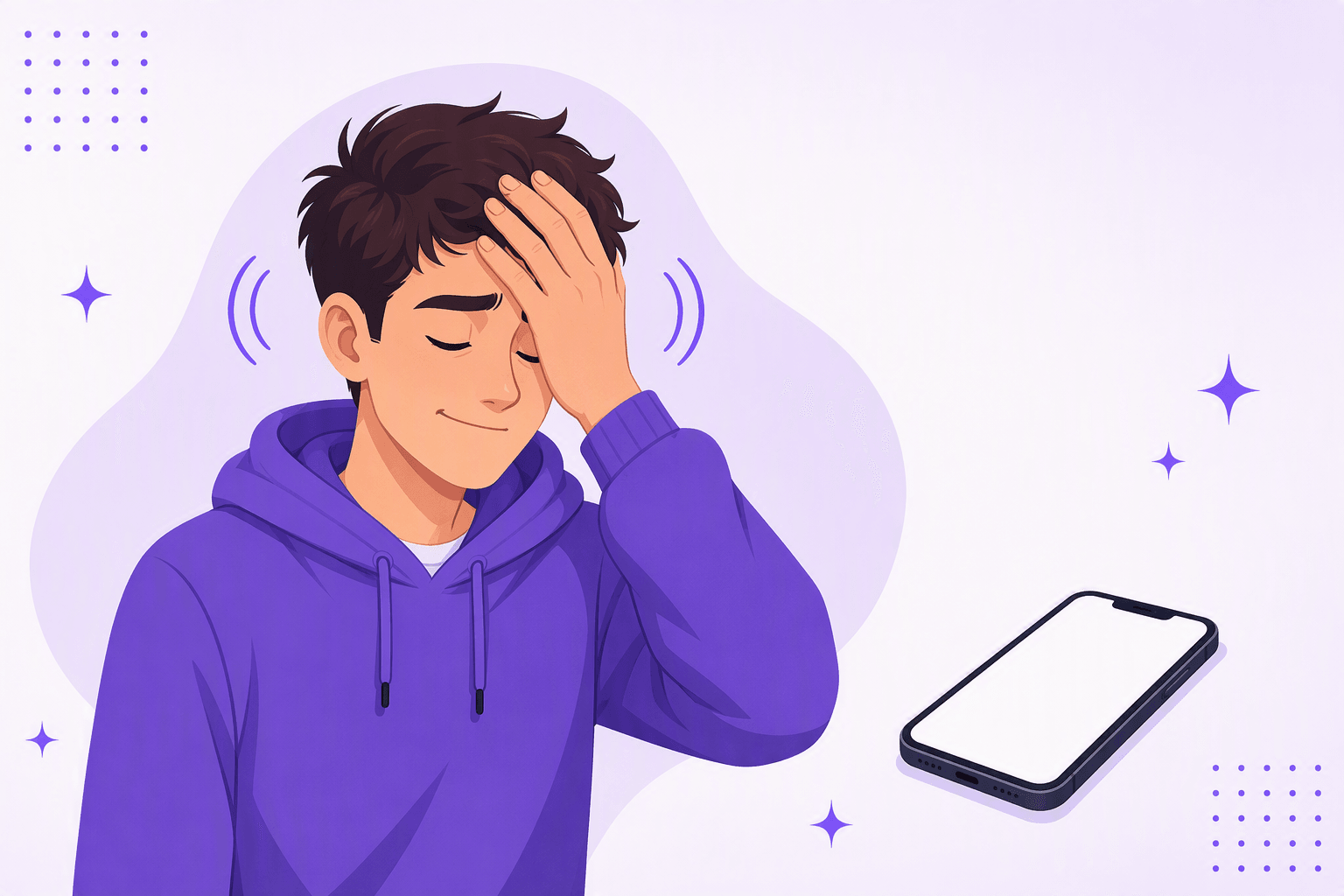
If you are learning modern English, SMH is one of those abbreviations you will see constantly in memes, comment sections, and group chats. It sits in the same family as reaction shorthand like "LOL" and "IDK," but it carries more judgment.
For more everyday internet expressions, see our English slang guide.
What SMH actually communicates (beyond the literal meaning)
Literally, SMH describes a physical gesture: shaking your head side to side. Online, it works as a reaction marker.
It usually means one of these:
- "That was a bad decision."
- "I cannot believe this is happening."
- "This is disappointing, but I am not shocked."
- "You are being ridiculous" (this is where it can turn rude)
SMH is short, but it is not neutral. It almost always contains evaluation.
Pronunciation: how people say SMH out loud
When spoken, SMH is typically read as letters: "ess-em-aitch" (ESS-em-AYCH). Some people also say the full phrase "shaking my head."
In real conversation, you might hear it as a joke, like: "SMH, man."
Why SMH feels so common in 2026
English is the most widely used language online. Ethnologue estimates about 1.5 billion people speak English worldwide when you combine native and second-language speakers (Ethnologue, 2024).
That scale matters because internet slang spreads fastest in high-contact spaces: social media, gaming, and short-form video comments.
Pew Research Center reports that in the US, a large majority of adults use at least one social media platform, and usage is especially high among younger adults (Pew Research Center, 2024). More social media use means more "reaction language," and SMH is basically a reaction in three letters.
The tone spectrum: playful to harsh
SMH can be friendly teasing or it can be a small slap. The difference is usually in who the target is.
SMH at a situation (usually safer)
This is the most common and least aggressive use.
Examples:
- "The train got canceled again, smh."
- "I forgot my keys inside, SMH."
Here, the speaker is annoyed at events or at themselves.
SMH at a person (riskier)
When you aim it at someone, it can sound like: "I am judging you."
Examples:
- "You did not read the instructions? SMH."
- "SMH, you always do this."
If you are not close friends, this can escalate quickly.
⚠️ A quick politeness rule
If you would not shake your head at someone in person, do not type SMH at them. In text, you lose facial expression and warmth, so the judgment lands harder.
SMH vs similar abbreviations and reactions
SMH overlaps with other internet reactions, but the emotional color is different. Here is a practical comparison you can use when choosing what to type.
| Expression | What it usually means | Typical tone | Risk level |
|---|---|---|---|
| SMH | Disappointed, disapproving, "really?" | Judgmental, sarcastic | Medium |
| LOL | Something is funny (or awkward) | Light, sometimes passive-aggressive | Low to medium |
| IDK | "I do not know" | Neutral | Low |
| WTF | Shock or anger | Strong, can be offensive | High |
| FML | "My life is terrible right now" | Self-pity, dark humor | Medium |
If you want to understand stronger language that sometimes appears near SMH in comment threads, read our English swear words guide.
Real examples: how SMH appears in messages
SMH is flexible. It can be a full message, a tag at the end, or a mid-sentence reaction.
SMH as a full message
This is common when the context is obvious.
- Friend: "I just spilled coffee on my laptop."
- You: "SMH"
This can be supportive or mocking depending on your relationship.
SMH at the end of a sentence
This is the most typical structure.
- "They raised the price again, smh."
- "He said he was 'too busy' but posted all day, SMH."
Lowercase "smh" often feels more casual and less aggressive than uppercase "SMH," which can feel like emphasis.
SMH with emojis and punctuation
People often pair SMH with:
- "smh..." (signals tired disbelief, but avoid ellipses in your own writing if you want to be clear)
- "smh 🤦" (facepalm reinforces the vibe)
- "SMH!!!" (stronger judgment)
In professional contexts, these combinations look even more informal.
When SMH is appropriate (and when it is not)
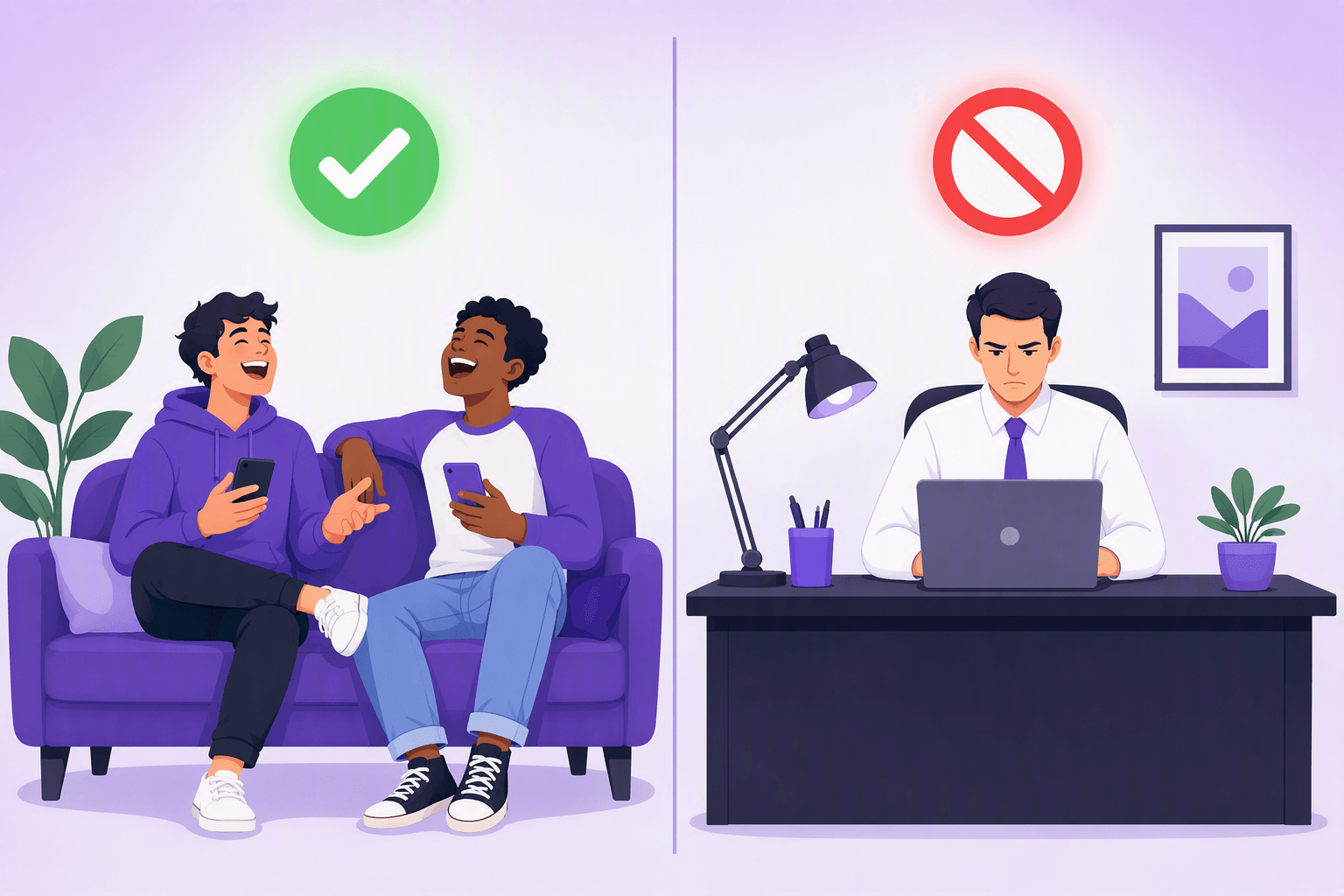
Use SMH when you want to sound like a real internet user, not a textbook. Avoid it when you need clarity, diplomacy, or professionalism.
Good contexts
- Friends and family group chats
- Meme comments and casual replies
- Gaming chats and Discord servers
- Reacting to public news in informal spaces
Bad contexts
- Job applications, interviews, and work emails
- Customer support messages
- Talking to teachers, doctors, or officials
- Any situation where you need to preserve trust
🌍 Why SMH can feel 'colder' than you expect
In many English-speaking online spaces, short reactions are efficient, but they can also be read as emotionally distant. SMH is not just a reaction, it is a mini verdict. If you are writing to someone from a different culture, they may interpret it as stronger criticism than you intended.
A linguist-backed insight: why abbreviations carry extra attitude
Abbreviations like SMH do more than save time. They also signal group membership and stance.
"Speakers use linguistic choices to take stances, to align with others, and to position themselves socially."
John W. Du Bois, linguist, "The Stance Triangle" (2007)
SMH is a stance marker. It tells the reader where you stand emotionally, and often where you stand socially, relative to the person or idea you are reacting to.
Common learner mistakes with SMH
Even advanced learners can misfire with internet slang because the grammar is simple but the pragmatics are not.
Mistake 1: Using SMH as a polite disagreement
SMH is not a gentle "I disagree." It is closer to "I disapprove" or "this is ridiculous."
Try instead:
- "I do not think that is right."
- "I see it differently."
Mistake 2: Using SMH with strangers
With strangers, SMH can look like you are talking down to them. If you want to comment without sounding hostile, add explanation.
Example:
- Harsher: "SMH, learn to drive."
- Softer: "That was dangerous. Please be careful."
Mistake 3: Overusing it
If you use SMH constantly, you can sound cynical. Native speakers notice this.
A good rule is to treat it like salt: useful, but not for every sentence.
SMH in movies and TV: what it maps to in real dialogue
In spoken dialogue, characters rarely say "SMH" unless the show is intentionally online-aware. But the meaning shows up all the time.
SMH often corresponds to lines like:
- "Unbelievable."
- "Are you serious?"
- "I cannot with you right now."
- "Come on."
This is why learning with clips helps. You can connect the abbreviation to the real-life intonation and facial expression that it is trying to compress.
If you are building your listening skills, Wordy focuses on short, repeatable scenes where reactions are clear and memorable. Start on the English learning page.
Regional and generational notes (US, UK, and beyond)
SMH is widely understood across English-speaking countries because it spread through global platforms, not through local dialects. That said, how often people use it varies.
US and Canada
In North American texting culture, SMH is common, especially among people who grew up with social media. It is also frequent in sports and pop-culture commentary.
UK and Ireland
It is understood, but you may also see other reaction words competing with it, like "mate" plus a judgmental phrase, or British understatement.
Example equivalents:
- "Oh, for God’s sake."
- "You are having a laugh."
Global English as a second language
In international workplaces, SMH is risky because it can be misread as disrespect. Many second-language speakers learn it from memes, then accidentally use it in formal chats.
💡 A safer substitute for international contexts
If you want the meaning without the attitude, write the full thought: "That is frustrating" or "That is disappointing." You will sound clear, not sarcastic.
Mini practice: choose the right reaction
Try these and decide if SMH fits. If not, choose a clearer alternative.
- Your friend says: "I failed the test again."
- Better than SMH: "That sucks. Want to study together?"
- Your friend says: "I forgot my passport at home."
- SMH can work if you are close: "SMH, turn around now."
- A coworker says: "I did not read the document, can you summarize?"
- Avoid SMH. Better: "Sure, but please read pages 1 to 2 first."
- You see a price increase on a subscription.
- SMH works: "Another price hike, smh."
SMH and numbers: what you might see together
SMH often appears next to numbers when people complain about prices, time, or statistics.
Examples:
- "Waited 45 minutes, smh."
- "They want $12 for this now, SMH."
If numbers still trip you up, our English numbers guide can help you read and say them naturally.
SMH and time words: months, deadlines, and "again"
A very common SMH pattern is "again," especially when talking about repeated problems.
Examples:
- "Canceled in March again, smh."
- "Same issue every month, SMH."
If you want to get comfortable with month names and date talk, see months in English.
A practical "do and do not" checklist
Do
- Use SMH when you are reacting to a situation or your own mistake.
- Use it with friends who share your humor style.
- Add context if there is any chance of misunderstanding.
Do not
- Use SMH in professional writing.
- Use it to criticize someone you do not know well.
- Use it as a replacement for a real explanation when the stakes are high.
Learn slang the way native speakers do: through scenes, not lists
Slang is not just vocabulary, it is timing, tone, and relationship. A phrase like SMH can be friendly in one scene and insulting in another.
That is why learning from real dialogue matters. You hear the social situation, not just the definition.
For more modern expressions that show up in texts and shows, go back to our English slang list, then practice spotting them in context on Wordy’s English page.
Frequently Asked Questions
What does SMH mean in texting?
Is SMH rude?
Does SMH always mean 'shaking my head'?
How do you respond to SMH?
Can I use SMH at work?
Sources & References
- Merriam-Webster, 'SMH' (Definition), 2026
- Oxford English Dictionary (OED), 'SMH' (Entry), 2025
- Pew Research Center, 'Social Media Use in 2024', 2024
- Ethnologue, 'English' (Language Facts), 27th ed., 2024
Start learning with Wordy
Watch real movie clips and build your vocabulary as you go. Free to download.


