Quick Answer
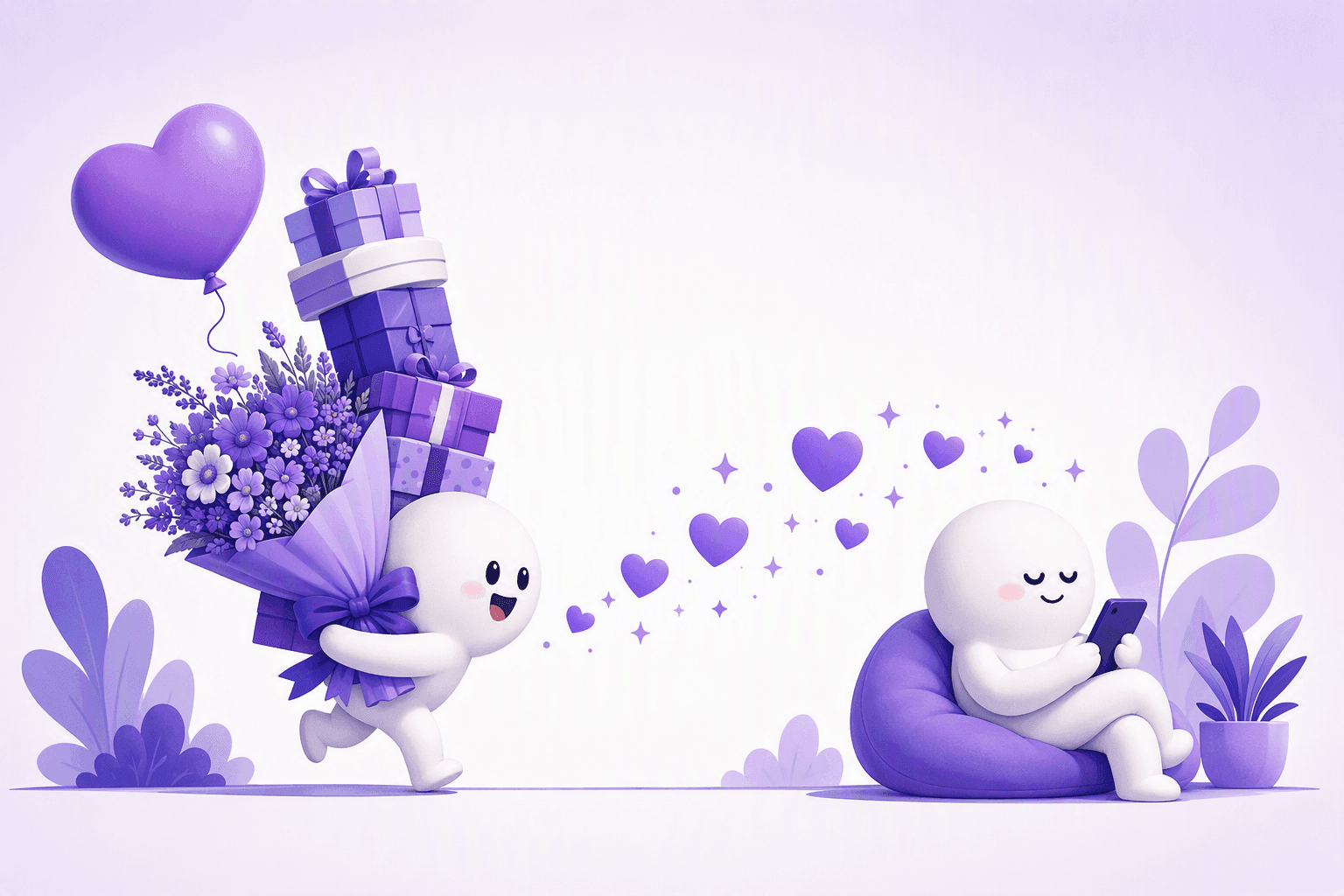
In modern slang, a 'simp' is someone who is seen as trying too hard to get attention or affection, often by flattering or doing favors, especially for a romantic interest. It’s usually used as an insult or teasing label online, but meaning and intensity depend heavily on context, tone, and the relationship between speakers.
In modern English slang, "simp" means someone who is seen as trying too hard to win another person’s attention or affection, often through excessive flattery or favors, especially in a romantic context. It’s usually meant as a put-down, but it can also be used jokingly, and the real meaning depends on tone, relationship, and the platform.
| English | English | Pronunciation | Formality |
|---|---|---|---|
| Meaning (slang) | simp | SIMP | slang |
| Playful self-label | I'm simping | im SIM-ping | slang |
| Insulting label | Don't be a simp | dohnt bee uh SIMP | slang |
| Neutral alternative | He's really into her | heez REE-lee IN-too her | casual |
| Healthier framing | He's being considerate | heez BEE-ing kuhn-SID-er-it | polite |
Why "simp" became so common online
"Simp" is a classic internet accelerant: it’s short, punchy, and easy to drop into comments. It also compresses a whole judgment into one syllable, which is perfect for fast-moving platforms.
English is uniquely positioned for this kind of slang spread because it’s a global lingua franca online. Ethnologue estimates about 1.5 billion English speakers worldwide when you include native and second-language speakers, which means English slang can travel across countries and communities quickly (Ethnologue, 2024).
A platform effect: short comments reward short labels
On TikTok, Twitch, YouTube comments, and X, short labels outperform long explanations. "Simp" works like a tag: it signals "this dynamic looks one-sided" without having to argue.
It also fits meme grammar. People can remix it into "simping," "simp behavior," or "certified simp" with minimal effort.
Slang is social, not just vocabulary
Slang is a social tool for signaling group membership and attitudes. Linguist Connie Eble, who studied how slang works in peer groups, emphasizes that it is tied to identity and in-group behavior, not just "new words."
"Slang is not simply vocabulary. It is a social process, a way of negotiating relationships and group identity."
Connie Eble, Slang and Sociability (1996)
That’s why "simp" can feel harsher than its dictionary definition. It’s often doing social work: ranking behavior as cool or uncool.
What "simp" means in practice (not just in dictionaries)
Dictionaries now record the modern sense of "simp" (Merriam-Webster, 2020; Cambridge Dictionary; OED). But everyday usage has a few recurring patterns.
The core idea: perceived one-sided effort
Calling someone a "simp" usually implies at least one of these:
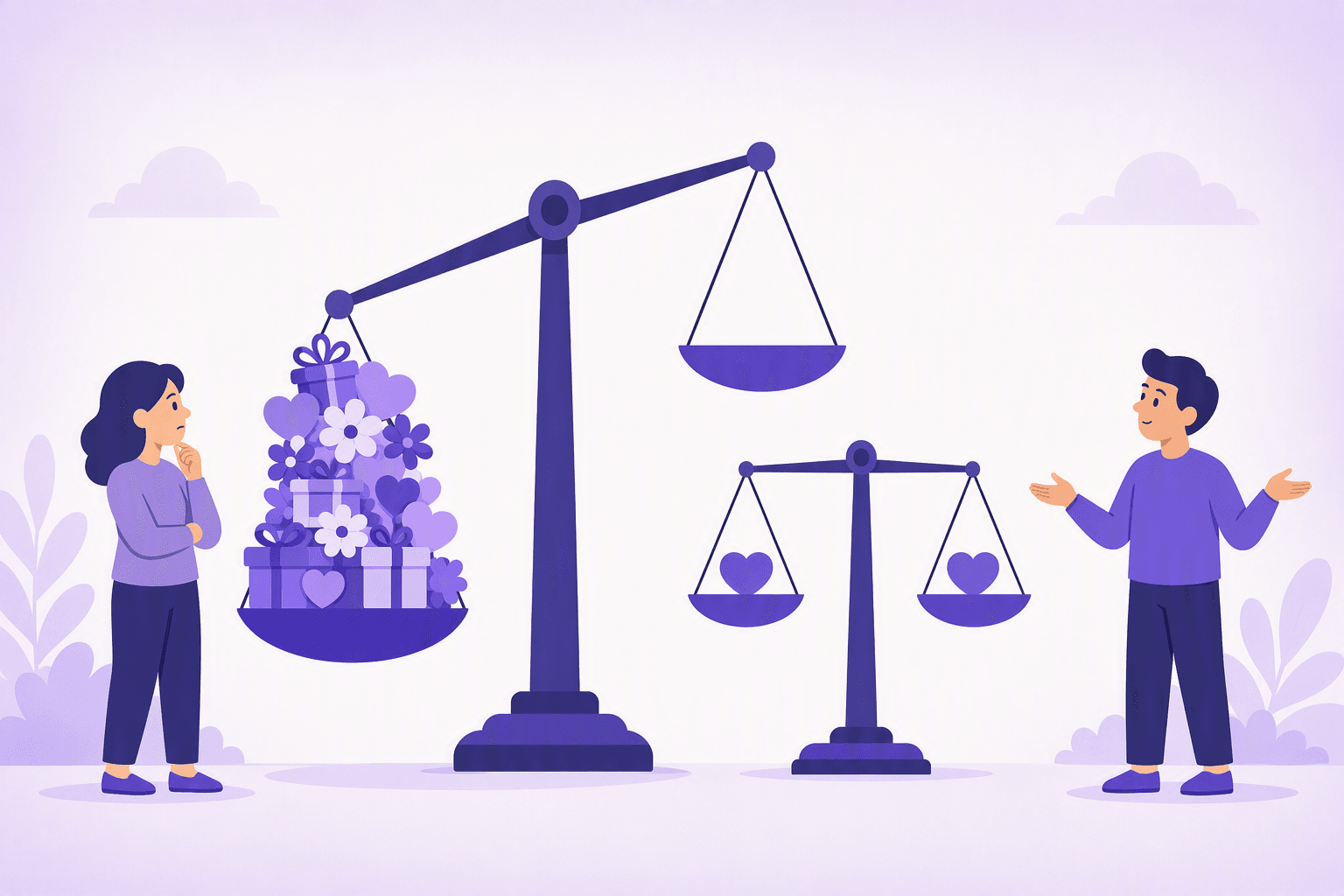
- They’re investing more than the other person.
- They’re doing favors with an expectation of attention or romance.
- They’re ignoring disrespect, rejection, or boundaries.
- They’re performing devotion publicly to gain approval.
Importantly, the accusation is about perception. The person being called a simp might simply be kind, generous, or supportive.
"Simp" vs kindness: the hidden moral argument
A lot of fights about "simp" are really fights about what kindness should look like. In some online spaces, any visible admiration gets framed as weakness.
In healthier offline norms, doing something thoughtful is not automatically "simping." The difference is whether the behavior is mutual, wanted, and aligned with self-respect.
💡 A quick self-check
If you are wondering whether something is 'simping', ask: "Would I still do this if romance was off the table?" If the answer is yes, it’s probably just kindness. If the answer is no, you may be bargaining for attention.
How to use "simp" naturally (and understand it when you hear it)
Because this is English-about-English, the key is not pronunciation, it’s pragmatics: who says it, where, and why.
Below are the most common ways you’ll see it used.
As an insult (most common)
This is the classic usage: someone criticizes another person for being "too eager" or "too available."
Examples you might see:
- "Bro, you’re a simp."
- "Stop simping in her comments."
- "He bought her gifts again? Simp."
In this mode, "simp" is meant to shame. It can be mild teasing among friends, or it can be genuinely hostile in public.
As playful teasing between friends
Among close friends, the word can be a joke about having a crush.
- "You made her coffee? Simp."
- "Look at you, simping."
The same words can be friendly or mean depending on tone. Online, tone is easy to misread, which is why "simp" starts arguments.
As a self-label ("I’m simping")
People also use it ironically to own the behavior and defuse criticism.
- "I’m simping, I don’t care."
- "Let me simp in peace."
This usage is closer to "I’m really into them" than "I’m pathetic." It’s often paired with humor.
As a community norm on streaming platforms
On Twitch and similar spaces, "simp" can be aimed at viewers who donate money or give compliments to streamers. Sometimes it’s joking, sometimes it’s policing.
This is where the word can become unfair: it can imply that supporting creators is inherently desperate, even when it’s just normal patronage.
🌍 Why 'simp' hits harder in public comments
Public labeling changes the stakes. In a group chat, "simp" can be affectionate teasing. In a comment section, it can be a status attack, because it invites strangers to pile on. The same word becomes more face-threatening when it’s performative.
When "simp" is sexist, and when it’s just slang
"Simp" is not a slur, but it can carry gendered assumptions. In many online communities, it’s used to shame men for showing care, admiration, or emotional openness.
That matters because it can reinforce a narrow idea of masculinity: that respect is "weak" unless it’s transactional or detached.
The "kindness is a trick" assumption
A lot of "simp" accusations assume the person is being nice only to get something. Sometimes that’s true.
But sometimes it’s projection, or it’s a cynical reading of normal behavior.
Women and "simp"
Women can be called simps too, especially in fandom spaces. But the term is used less consistently, and it often overlaps with other labels like "pick-me" or "stan."
If you’re learning English slang, this is a good reminder: slang words often reflect the values and biases of the communities that popularize them.
If you want more context on how English slang shifts by community, see our broader English slang guide.
"Simp" vs related words: a practical comparison
Many learners get stuck because "simp" overlaps with other labels. Here is how native speakers often separate them.
| Word | Core meaning | Typical vibe | What it judges |
|---|---|---|---|
| simp | overly eager to please for attention/affection | mocking, sometimes harsh | self-respect, one-sided effort |
| fan | likes someone’s work or persona | neutral | taste, interest |
| stan | intense fan, sometimes obsessive | playful or critical | intensity, identity |
| people-pleaser | tries to keep others happy, often at own expense | sympathetic | boundaries, anxiety |
| doormat | lets others treat them badly | harsh | boundaries, self-worth |
"Simp" is the most internet-coded and the most likely to be used as a quick insult.
The origin story: from "simpleton" to modern internet slang
Historically, "simp" has been used as a clipped form connected to "simpleton" in English, and the Oxford English Dictionary tracks how senses evolve over time (OED).
The modern sense took off online and became mainstream enough that major dictionaries added or updated entries around 2020 (Merriam-Webster, 2020; Cambridge Dictionary).
Why dictionary recognition matters
When a slang term enters major dictionaries, it signals that:
- It has sustained usage, not just a brief meme.
- It appears across multiple sources and contexts.
- Editors can define a stable core meaning.
That does not mean the word is "approved," only that it’s real English now.
Real-life situations: when you should avoid saying it
If you’re an English learner, "simp" is high-risk in real life because it’s easy to sound rude.
Avoid using it in:
- Workplace conversations
- Classroom discussions
- Talking to strangers
- Any situation where you are not sure the other person will read it as a joke
⚠️ A safer rule for learners
If you would not say it to a teacher, manager, or customer, do not say it to someone you just met. "Simp" is casual internet slang and can sound insulting even when you mean it lightly.
If you want a clearer boundary between casual and offensive English, our English swear words guide helps you understand severity and context.
Better alternatives that sound natural (and less toxic)
Sometimes you want to describe the behavior without shaming the person. These alternatives are common and more precise.
Neutral descriptions
- "He’s really into her."
- "He has a crush on her."
- "He’s trying to impress her."
- "He’s going out of his way for her."
These focus on observable behavior, not moral judgment.
If you mean "one-sided"
- "It feels one-sided."
- "He’s doing too much."
- "She’s not matching his energy."
- "He’s over-investing."
These communicate the same concern without the internet insult.
If you mean "bad boundaries"
- "He’s not setting boundaries."
- "He’s letting her treat him badly."
- "He’s ignoring red flags."
This is often what people actually mean when they say "simp."
How "simp" shows up in movies and TV dialogue
You will hear "simp" most often in:
- teen and young adult dialogue
- comedy scenes about dating
- streamer or gamer characters
- group chats shown on-screen
Writers use it because it instantly signals a social judgment. It also creates conflict fast, which is useful in scripted banter.
Wordy’s approach, learning through real clips, helps here because you can hear whether the line is teasing or contemptuous based on intonation and reaction shots. If you’re building overall English fluency, pair slang with fundamentals like numbers and time words, for example our guides to English numbers and English months.
A quick cultural read: what calling someone a "simp" is really doing
"Simp" often functions as a status move. The speaker positions themselves as more detached, more in control, or more socially savvy.
That’s why it spreads in comment sections: it’s a cheap way to look superior.
The irony: it can punish healthy behavior
In many real-world relationships, showing care is normal. Online, "simp" can punish:
- public compliments
- emotional vulnerability
- generosity
- loyalty
This is not a language rule, it’s a culture pattern. Knowing that helps you interpret the word without absorbing the attitude behind it.
🌍 A useful translation in your head
When you see "simp" online, mentally translate it as: "I think your effort is too visible and too one-sided." That captures the social meaning better than any single dictionary gloss.
Mini examples: interpret the same sentence in different contexts
Context changes meaning more than vocabulary does. Here are three common scenarios.
Friends joking
- "You watched her whole livestream? Simp."
Meaning: playful teasing about a crush.
Public pile-on
- "Imagine donating to her, simp."
Meaning: shaming, trying to recruit others to mock.
Self-aware humor
- "Yeah, I’m simping, she’s amazing."
Meaning: proud admiration, not self-hate.
How to respond if someone calls you a simp
If you are learning English, having a response ready prevents awkwardness.
If it’s friendly teasing
- "Let me live."
- "Guilty."
- "Mind your business."
If it’s rude
- "That’s unnecessary."
- "I’m just being nice."
- "We don’t have to talk like that."
If you want to de-escalate
- "I hear you. I’ll chill."
- "Fair, I’m doing a lot."
Pick based on whether you want to joke, set a boundary, or end the conversation.
Key takeaways (so you can use it correctly)
- "Simp" is slang for someone perceived as trying too hard for attention or affection, often romantically.
- It can be teasing among friends, but it’s frequently an insult online.
- The word often carries gendered judgment, especially about men showing admiration.
- In real-life settings, neutral alternatives are safer and usually clearer.
- Understanding tone and context matters more than memorizing a definition.
If you’re building a broader slang vocabulary without sounding awkward, start with our English slang overview and use movies and TV clips to learn how people actually say these lines in context.
Frequently Asked Questions
What does 'simp' mean in slang?
Is calling someone a simp always rude?
Where did the word 'simp' come from?
What’s the difference between being a simp and being respectful?
Can women be called simps too?
Sources & References
- Oxford English Dictionary, 'simp' (entry and senses), updated regularly
- Merriam-Webster, 'Simp' (definition and usage notes), 2020
- Cambridge Dictionary, 'simp' (meaning in English), updated regularly
- Ethnologue (27th ed.), English, 2024
- Eble, C. (1996). Slang and Sociability: In-group Language among College Students. University of North Carolina Press
Start learning with Wordy
Watch real movie clips and build your vocabulary as you go. Free to download.


