Quick Answer
Spanish stem-changing verbs change their vowel in most present-tense forms, such as pensar becoming pienso and dormir becoming duermo. Learn the three main patterns, the nosotros exception, common irregular verbs, and how to recognize them in real conversations.
Spanish stem-changing verbs are verbs that change a vowel in their stem when conjugated, usually in the present tense. For example, pensar /penˈsaɾ/, meaning “to think,” becomes pienso /ˈpjenso/, and dormir /doɾˈmiɾ/, meaning “to sleep,” becomes duermo /ˈdweɾmo/. The endings remain mostly regular, but the middle of the verb changes in predictable patterns.
You will hear these verbs constantly in everyday Spanish. They appear in basic exchanges such as quiero /ˈkjeɾo/, “I want,” puedo /ˈpweðo/, “I can,” and entiendo /enˈtjendo/, “I understand.” Before practicing greetings like those in our guide to saying hello in Spanish, get comfortable with these high-frequency forms.
Spanish is an official language in 20 sovereign countries, and the Instituto Cervantes reported more than 600 million potential Spanish speakers worldwide in 2024. Regional accents differ, but stem-changing verb patterns are shared across the Spanish-speaking world.
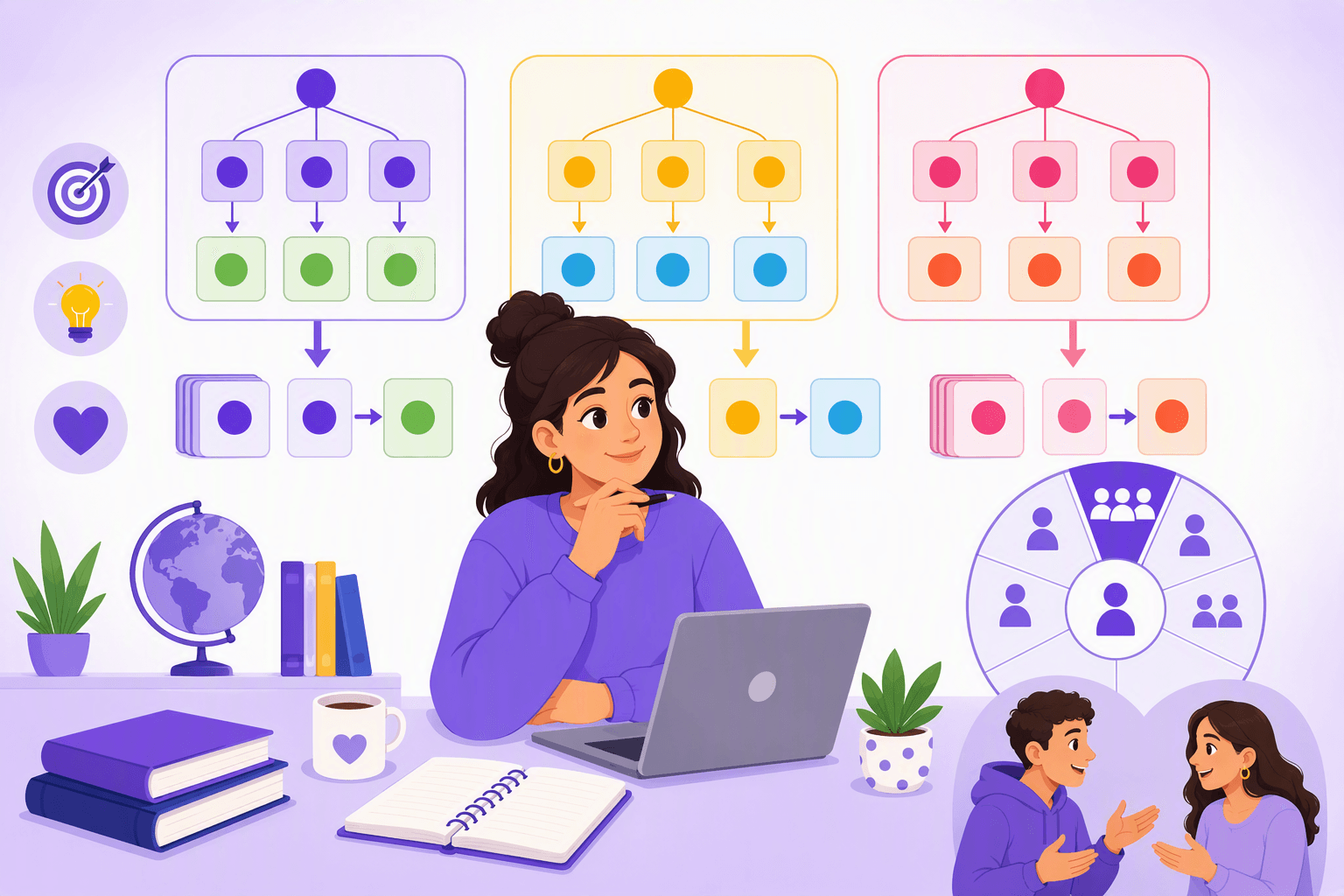
What is a Spanish stem-changing verb?
A Spanish infinitive has two main parts: the stem and the ending. In pensar /penˈsaɾ/, the stem is pens- /pens/ and the infinitive ending is -ar /aɾ/.
A regular present-tense conjugation keeps the stem stable. For example, hablar /aˈblaɾ/, “to speak,” becomes hablo /ˈaβlo/, hablas /ˈaβlas/, and hablamos /aˈblamos/. The vowel in habl- stays the same.
A stem-changing verb changes the stressed vowel of the stem in certain forms:
| Infinitive | Meaning | Changed form | Meaning |
|---|---|---|---|
| pensar /penˈsaɾ/ | to think | pienso /ˈpjenso/ | I think |
| querer /keˈɾeɾ/ | to want, to love | quieres /ˈkjeɾes/ | you want |
| poder /poˈðeɾ/ | to be able to, can | puede /ˈpweðe/ | he, she, you can |
| pedir /peˈðiɾ/ | to ask for | pido /ˈpiðo/ | I ask for |
| jugar /xuˈɣaɾ/ | to play | juego /ˈxweɣo/ | I play |
The change happens because Spanish stress falls on the stem in these forms. In pensamos /penˈsamos/, the stress moves to the ending, so the stem stays pens- /pens/.
This is why learners often call them “boot verbs.” On a traditional conjugation chart, the changing forms make the outline of a boot, while nosotros /noˈsotɾos/ and vosotros /boˈsotɾos/ sit outside it.
The present-tense boot pattern
The present indicative is the first pattern to master. For most stem-changing verbs, the vowel changes in every form except nosotros /noˈsotɾos/ and vosotros /boˈsotɾos/.
| Person | Pensar, to think | Poder, to be able to | Pedir, to ask for |
|---|---|---|---|
| yo | pienso /ˈpjenso/ | puedo /ˈpweðo/ | pido /ˈpiðo/ |
| tú | piensas /ˈpjensas/ | puedes /ˈpweðes/ | pides /ˈpiðes/ |
| él, ella, usted | piensa /ˈpjensa/ | puede /ˈpweðe/ | pide /ˈpiðe/ |
| nosotros | pensamos /penˈsamos/ | podemos /poˈðemos/ | pedimos /peˈðimos/ |
| vosotros | pensáis /penˈsais/ | podéis /poˈðeis/ | pedís /peˈðis/ |
| ellos, ellas, ustedes | piensan /ˈpjensan/ | pueden /ˈpweðen/ | piden /ˈpiðen/ |
Latin American Spanish generally uses ustedes /usˈteðes/ rather than vosotros /boˈsotɾos/ for plural “you.” The stem change remains the same: ustedes pueden /usˈteðes ˈpweðen/.
In parts of Argentina, Uruguay, Paraguay, and elsewhere, speakers may use vos /bos/ instead of tú /tu/. With stem-changing verbs, the form often keeps the change: vos podés /bos poˈðes/ and vos querés /bos keˈɾes/. Notice that these forms have stress on the ending, so they may not behave exactly like the familiar tú puedes /tu ˈpweðes/ pattern.
The four main stem-changing patterns
e to ie
The most common pattern changes e /e/ to ie /je/ in stressed forms. With pensar /penˈsaɾ/, the vowel sound becomes a glide plus vowel in pienso /ˈpjenso/.
| Infinitive | Meaning | Example changed form |
|---|---|---|
| cerrar /seˈraɾ/ | to close | cierro /ˈsjero/ |
| comenzar /komenˈsaɾ/ | to begin | comienza /koˈmjensa/ |
| empezar /empeˈsaɾ/ | to start | empiezo /emˈpjeso/ |
| entender /entenˈdeɾ/ | to understand | entiendo /enˈtjendo/ |
| pensar /penˈsaɾ/ | to think | pienso /ˈpjenso/ |
| preferir /pɾefeˈɾiɾ/ | to prefer | prefiero /pɾeˈfjeɾo/ |
| querer /keˈɾeɾ/ | to want, to love | quiero /ˈkjeɾo/ |
| sentir /senˈtiɾ/ | to feel, regret | siento /ˈsjento/ |
The verb querer /keˈɾeɾ/ is especially valuable. Te quiero /te ˈkjeɾo/ often means “I love you” in family, friendship, and romantic contexts, while te amo /te ˈamo/ can sound more intense in many regions. See our full guide on how to say I love you in Spanish for the social nuance.
o to ue
This pattern changes o /o/ to ue /we/ in stressed forms. It includes several of the most useful Spanish verbs.
| Infinitive | Meaning | Example changed form |
|---|---|---|
| contar /konˈtaɾ/ | to count, tell | cuento /ˈkwento/ |
| costar /kosˈtaɾ/ | to cost, be difficult | cuesta /ˈkwesta/ |
| dormir /doɾˈmiɾ/ | to sleep | duermo /ˈdweɾmo/ |
| encontrar /enkonˈtɾaɾ/ | to find | encuentro /enˈkwentɾo/ |
| poder /poˈðeɾ/ | to be able to, can | puedo /ˈpweðo/ |
| recordar /rekorˈðaɾ/ | to remember | recuerdo /reˈkweɾðo/ |
| volver /bolˈbeɾ/ | to return | vuelvo /ˈbwelbo/ |
The difference between poder /poˈðeɾ/ and saber /saˈbeɾ/ matters. Puedo nadar /ˈpweðo naˈðaɾ/ means “I am able to swim,” while sé nadar /se naˈðaɾ/ means “I know how to swim.” Only poder /poˈðeɾ/ is a stem-changing verb.
e to i
The e /e/ to i /i/ group appears mainly in -ir /iɾ/ verbs. The sound becomes simpler than the e /e/ to ie /je/ pattern, but the conjugation shape is the same in the present indicative.
| Infinitive | Meaning | Example changed form |
|---|---|---|
| competir /kompeˈtiɾ/ | to compete | compito /komˈpito/ |
| conseguir /konseˈɣiɾ/ | to get, achieve | consigo /konˈsiɣo/ |
| pedir /peˈðiɾ/ | to ask for | pido /ˈpiðo/ |
| repetir /repeˈtiɾ/ | to repeat | repito /reˈpito/ |
| seguir /seˈɣiɾ/ | to follow, continue | sigo /ˈsiɣo/ |
| servir /seɾˈbiɾ/ | to serve | sirvo /ˈsiɾβo/ |
| vestir /besˈtiɾ/ | to dress | visto /ˈbisto/ |
Some verbs bring an additional spelling adjustment. Seguir /seˈɣiɾ/ becomes sigo /ˈsiɣo/, not sego /ˈseɣo/. The u disappears to preserve the hard g /ɡ/ sound before o /o/.
u to ue
The main verb in this smaller group is jugar /xuˈɣaɾ/, “to play.” It changes from u /u/ to ue /we/ in stressed forms.
| Person | Jugar, to play |
|---|---|
| yo | juego /ˈxweɣo/ |
| tú | juegas /ˈxweɣas/ |
| él, ella, usted | juega /ˈxweɣa/ |
| nosotros | jugamos /xuˈɣamos/ |
| vosotros | jugáis /xuˈɣais/ |
| ellos, ellas, ustedes | juegan /ˈxweɣan/ |
Do not confuse jugar /xuˈɣaɾ/ with tocar /toˈkaɾ/. Both can translate as “to play,” but jugar /xuˈɣaɾ/ is for games and sports, while tocar /toˈkaɾ/ is used for playing an instrument.
Why nosotros does not usually change
The short answer is stress. In pienso /ˈpjenso/, the stress lands on the stem, so the vowel changes. In pensamos /penˈsamos/, the stress lands on -a- /a/, which is part of the ending.
Spanish verb patterns are strongly linked to stress placement. José Ignacio Hualde’s work on Spanish phonology explains why syllable structure and stress are central to how Spanish sounds are organized. For learners, this gives a practical rule: when the present-tense stress moves away from the stem, expect the original vowel to return.
Compare these forms aloud:
| Verb | Stem-changing form | No stem change |
|---|---|---|
| pensar /penˈsaɾ/ | pienso /ˈpjenso/ | pensamos /penˈsamos/ |
| poder /poˈðeɾ/ | puedes /ˈpweðes/ | podemos /poˈðemos/ |
| dormir /doɾˈmiɾ/ | duermen /ˈdweɾmen/ | dormimos /doɾˈmimos/ |
| pedir /peˈðiɾ/ | pide /ˈpiðe/ | pedimos /peˈðimos/ |
💡 Use stress as your memory cue
Say the changed form and the nosotros form together: quiero, queremos /ˈkjeɾo keˈɾemos/; puedo, podemos /ˈpweðo poˈðemos/. Hearing the stressed syllable move is more useful than trying to memorize a visual boot shape alone.
Stem changes beyond the present tense
Stem-changing verbs are not limited to the present indicative. Their behavior changes by tense, so avoid applying one rule everywhere.
Present subjunctive
The present subjunctive uses the first-person singular present stem. That is why pensar /penˈsaɾ/ becomes piense /ˈpjense/ and poder /poˈðeɾ/ becomes pueda /ˈpweða/.
| Verb | Yo present | Present subjunctive example |
|---|---|---|
| pensar /penˈsaɾ/ | pienso /ˈpjenso/ | Espero que pienses /esˈpeɾo ke ˈpjenses/ |
| poder /poˈðeɾ/ | puedo /ˈpweðo/ | Ojalá puedas venir /oxaˈla ˈpweðas beˈniɾ/ |
| pedir /peˈðiɾ/ | pido /ˈpiðo/ | Quiero que pidas ayuda /ˈkjeɾo ke ˈpiðas aˈʝuða/ |
For -ir /iɾ/ verbs, the nosotros /noˈsotɾos/ subjunctive has a reduced change. Pedir /peˈðiɾ/ becomes pidamos /piˈðamos/, while dormir /doɾˈmiɾ/ becomes durmamos /duɾˈmamos/. This is a frequent advanced-level error because learners expect the regular present-indicative form pedimos /peˈðimos/ or dormimos /doɾˈmimos/.
Preterite
Most present stem changes disappear in the preterite. You say pensé /penˈse/, pudiste /puˈðiste/, and volvimos /bolˈbimos/, not forms with ie /je/ or ue /we/ stem changes.
But some -ir /iɾ/ verbs change in the third-person preterite forms only:
| Infinitive | Él, ella, usted | Ellos, ellas, ustedes |
|---|---|---|
| dormir /doɾˈmiɾ/ | durmió /duɾˈmjo/ | durmieron /duɾˈmjeɾon/ |
| pedir /peˈðiɾ/ | pidió /piˈðjo/ | pidieron /piˈðjeɾon/ |
| sentir /senˈtiɾ/ | sintió /sinˈtjo/ | sintieron /sinˈtjeɾon/ |
John Butt and Carmen Benjamin’s A New Reference Grammar of Modern Spanish treats these changes as part of broader verb-system patterns. That is the useful perspective: do not memorize every form as isolated trivia. Learn the present pattern first, then add the -ir /iɾ/ preterite exception.
Common mistakes and how to avoid them
Changing the stem in nosotros
Incorrect: nosotros piensamos /noˈsotɾos pjenˈsamos/.
Correct: nosotros pensamos /noˈsotɾos penˈsamos/.
The same correction applies to podemos /poˈðemos/, dormimos /doɾˈmimos/, and pedimos /peˈðimos/ in the present indicative.
Treating every similar-looking verb as stem-changing
Not every verb with an e /e/ or o /o/ changes. For example, beber /beˈbeɾ/, “to drink,” is regular: bebo /ˈbeβo/, bebes /ˈbeβes/, bebemos /beˈβemos/.
Check a trusted dictionary entry rather than guessing from spelling. The Real Academia Española dictionary identifies conjugations and is a useful reference when you meet a new verb.
Forgetting that meaning can affect the verb choice
The verb recordar /rekorˈðaɾ/ means “to remember,” but Spanish speakers commonly say me acuerdo /me aˈkweɾðo/, literally closer to “it comes to my mind.” Both use the o /o/ to ue /we/ change.
A natural exchange is ¿Te acuerdas? /te aˈkweɾðas/, “Do you remember?” followed by Sí, recuerdo esa película /si reˈkweɾðo esa peˈlikula/, “Yes, I remember that movie.” Real dialogue exposes you to these choices better than isolated lists.
🌍 Stem-changing verbs in real conversation
Spanish speakers use querer /keˈɾeɾ/, poder /poˈðeɾ/, pensar /penˈsaɾ/, and sentir /senˈtiɾ/ to soften requests, express feelings, and show politeness. Quisiera /kiˈsjeɾa/, a conditional form of querer /keˈɾeɾ/, is especially common in shops and restaurants because it sounds less direct than quiero /ˈkjeɾo/.
A practical way to learn stem-changing verbs
Start with ten verbs you can use daily: querer /keˈɾeɾ/, poder /poˈðeɾ/, pensar /penˈsaɾ/, entender /entenˈdeɾ/, tener /teˈneɾ/, venir /beˈniɾ/, dormir /doɾˈmiɾ/, pedir /peˈðiɾ/, sentir /senˈtiɾ/, and volver /bolˈbeɾ/.
Then make short, useful sentences instead of drilling a full chart without context:
- No puedo hoy /no ˈpweðo oi/, “I can’t today.”
- Quiero aprender español /ˈkjeɾo apɾenˈdeɾ espaˈɲol/, “I want to learn Spanish.”
- ¿Entiendes? /enˈtjendes/, “Do you understand?”
- Pido un café /ˈpiðo uŋ kaˈfe/, “I’m ordering a coffee.”
- Vuelvo mañana /ˈbwelbo maˈɲana/, “I’ll come back tomorrow.”
Listen for these verbs in Spanish films and series, pause after the line, and repeat the whole sentence. This builds the connection between grammar, stress, and meaning. When you are ready to practice social phrases, pair this grammar with natural Spanish goodbyes and notice forms such as nos vemos /nos ˈβemos/, “see you.”
The core rule is simple: in the present indicative, change the stem vowel when it is stressed, but normally do not change it in nosotros /noˈsotɾos/ or vosotros /boˈsotɾos/. Learn high-frequency verbs in complete sentences, and the patterns become familiar rather than mechanical.
Frequently Asked Questions
What are stem-changing verbs in Spanish?
Why are Spanish stem-changing verbs called boot verbs?
Do stem-changing verbs change in the preterite tense?
How do I know if a Spanish verb is stem-changing?
Does nosotros always avoid the stem change in Spanish?
Sources & References
- Real Academia Española and Asociación de Academias de la Lengua Española, Nueva gramática de la lengua española
- Real Academia Española, Diccionario de la lengua española, accessed 2026
- Instituto Cervantes, El español: una lengua viva, 2024
- John Butt and Carmen Benjamin, A New Reference Grammar of Modern Spanish, Routledge
- José Ignacio Hualde, The Sounds of Spanish, Cambridge University Press
Start learning with Wordy
Watch real movie clips and build your vocabulary as you go. Free to download.


