Quick Answer
To use a post office in Spanish, start with Quisiera enviar este paquete, ask Cuánto cuesta enviarlo, and choose options such as correo certificado for tracked mail. This guide gives you practical phrases for stamps, parcels, customs forms, delivery problems, and collecting a package.
| English | Spanish | Pronunciation | Formality |
|---|---|---|---|
| I would like to send this package | Quisiera enviar este paquete | kee-SYEH-rah em-byar ESS-teh pah-KEH-teh | polite |
| How much does it cost to send it? | ¿Cuánto cuesta enviarlo? | KWAHN-toh KWEHS-tah em-byar-loh | polite |
| I need stamps | Necesito sellos | neh-seh-SEE-toh SEH-yohs | casual |
| I want tracked mail | Quiero correo certificado | KYEH-roh koh-RREH-oh ser-tee-fee-KAH-doh | polite |
| Where can I collect my package? | ¿Dónde puedo recoger mi paquete? | DOHN-deh PWEH-doh reh-koh-HER mee pah-KEH-teh | polite |
| It has not arrived | No ha llegado | noh ah yeh-GAH-doh | casual |
If you need to mail a letter, send a parcel, buy stamps, or collect a delivery in a Spanish-speaking country, the most useful sentence is Quisiera enviar este paquete /kiˈsjeɾa emˈbjaɾ este paˈkete/, meaning “I would like to send this package.” Follow it with ¿Cuánto cuesta enviarlo? /ˈkwanto ˈkwesta emˈbjaɾlo/ to ask the price, and request correo certificado /koˈreo seɾtifiˈkado/ when you need tracking or proof of posting.
Spanish has more than 600 million potential speakers worldwide according to Instituto Cervantes, and it is an official language in 20 sovereign countries. Postal procedures differ by country, but the basic vocabulary in this guide will work from Spain to Mexico, Colombia, Argentina, Peru, and beyond.
Before your visit, review basic Spanish greetings. A clear Buenos días /ˈbwenos ˈdias/ and a polite request make a busy counter interaction much easier.
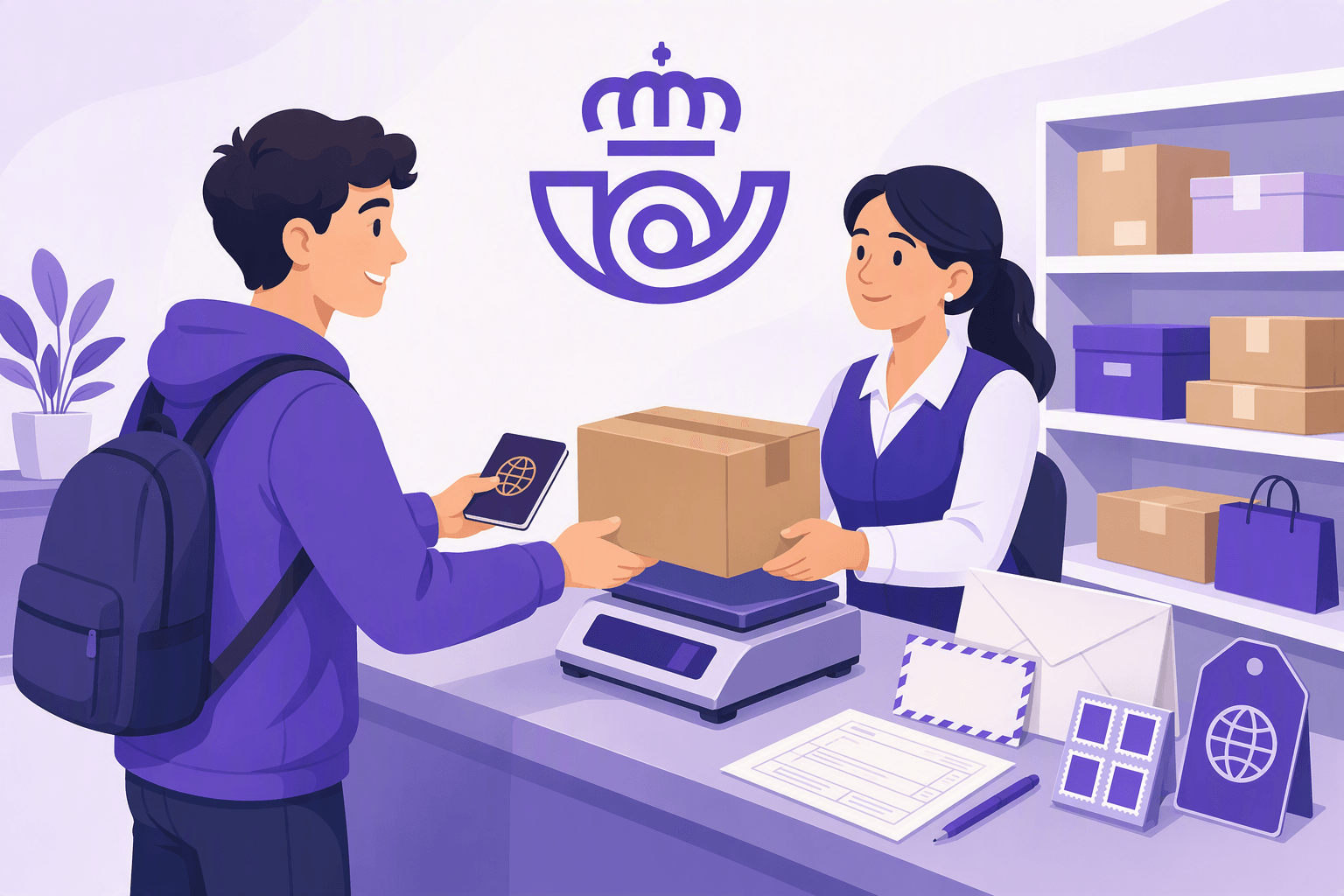
The phrases you need first
At a post office, polite indirect requests are especially useful. Quisiera /kiˈsjeɾa/, literally “I would like,” sounds more considerate than a bare command and works with strangers, clerks, and customer-service staff.
Enviar
Enviar /emˈbjaɾ/ means “to send.” It is the central verb for letters, packages, forms, and documents.
/kee-SYEH-rah em-byar ESS-teh pah-KEH-teh/
Literal meaning: I would like to send this package
“Quisiera enviar este paquete a Chile.”
I would like to send this package to Chile.
A safe, courteous opening for a postal clerk in any Spanish-speaking country.
You can replace este paquete /ˈeste paˈkete/ with esta carta /ˈesta ˈkaɾta/, “this letter,” or estos documentos /ˈestos dokuˈmentos/, “these documents.”
Useful variations include:
- Quiero enviar una carta. /ˈkjeɾo emˈbjaɾ una ˈkaɾta/, “I want to send a letter.”
- ¿Puedo enviar esto hoy? /ˈpweðo emˈbjaɾ ˈesto oj/, “Can I send this today?”
- ¿Cuánto tarda en llegar? /ˈkwanto ˈtaɾða en ʎeˈɣaɾ/, “How long does it take to arrive?”
- ¿Llega antes del viernes? /ˈʎeɣa ˈantes del ˈbjeɾnes/, “Will it arrive before Friday?”
The Real Academia Española lists enviar as the standard verb for dispatching something to a destination. In everyday speech, people may also say mandar /manˈdaɾ/, “to send,” especially in Latin America. Both are natural: Quiero mandar un paquete /ˈkjeɾo manˈdaɾ um paˈkete/ is perfectly understandable.
Paquete
Paquete /paˈkete/ means “package” or “parcel.” It can refer to a small box, a padded envelope, or a larger wrapped item.
/KWAHN-toh KWEHS-tah em-byar-loh/
Literal meaning: How much costs to send-it
“¿Cuánto cuesta enviarlo por correo certificado?”
How much does it cost to send it by registered mail?
Postal prices depend on weight, size, destination, delivery speed, and tracking. Ask before sealing a package if the clerk may need to inspect it.
For a feminine noun, change enviarlo /emˈbjaɾlo/ to enviarla /emˈbjaɾla/. For example, ¿Cuánto cuesta enviarla? refers to a letter, carta /ˈkaɾta/.
Use these questions when the price or method is unclear:
- ¿Cuánto pesa? /ˈkwanto ˈpesa/, “How much does it weigh?”
- ¿Hay una opción más económica? /aj ˈuna opˈsjon mas ekonoˈmika/, “Is there a cheaper option?”
- ¿Cuál es la opción más rápida? /kwal es la opˈsjon mas ˈrapiða/, “Which is the fastest option?”
- ¿Incluye seguimiento? /iŋˈkluje seɣiˈmjento/, “Does it include tracking?”
- ¿Tengo que pagar aduana? /ˈteŋɡo ke paˈɣaɾ aˈðwana/, “Do I have to pay customs?”
Stamps, labels, and addresses
Postal vocabulary becomes more useful when you can identify what you need at the counter. A sello /ˈseʎo/ is a stamp, while an etiqueta /etiˈketa/ is a label.
Sellos
Sellos /ˈseʎos/ means “stamps.” In most Spanish-speaking regions, the double ll is pronounced /ʝ/, although some regional accents use /ʎ/.
/meh goos-tah-REE-ah kohm-PRAR SEH-yohs/
Literal meaning: It would please me to buy stamps
“Me gustaría comprar sellos para tres cartas.”
I would like to buy stamps for three letters.
Me gustaría is a courteous request that works well in shops, stations, and post offices.
Other useful stamp-related questions are:
- ¿Cuántos sellos necesito? /ˈkwantos ˈseʎos neseˈsito/, “How many stamps do I need?”
- ¿Este sello sirve para envíos internacionales? /ˈeste ˈseʎo ˈsiɾβe paɾa emˈbios inteɾnasjoˈnales/, “Does this stamp work for international mail?”
- ¿Puedo pagar con tarjeta? /ˈpweðo paˈɣaɾ kon taɾˈxeta/, “Can I pay by card?”
Dirección
Dirección /diɾekˈsjon/ means “address.” Write it carefully before reaching the counter, especially for international mail.
A typical Spanish-language address uses the recipient’s name, street and number, apartment if relevant, postal code, city, and country. The exact sequence can vary by country, so follow the destination country’s postal rules when possible.
Say ¿Está bien escrita la dirección? /esˈta βjen esˈkɾita la diɾekˈsjon/, meaning “Is the address written correctly?” This is useful if you are unsure about the format.
💡 Write the country in capitals
For international mail, write the destination country clearly, preferably in capital letters. Keep the address in the format expected by the destination country, even if the rest of your conversation is in Spanish.
The term código postal /ˈkoðiɣo posˈtal/ is widely understood for “postal code.” In some places you may see código ZIP /ˈkoðiɣo sip/, particularly where local systems use the word ZIP informally.
Tracking, registered mail, and delivery speed
If a document is valuable, time-sensitive, or difficult to replace, ask for tracking. The standard phrase is correo certificado /koˈreo seɾtifiˈkado/, often translated as registered mail.
Correo certificado
Correo certificado /koˈreo seɾtifiˈkado/ generally means a postal service with documented acceptance and delivery handling. The exact level of tracking and signature requirements depends on the national carrier and service tier.
/kee-SYEH-rah em-byar-loh por koh-RREH-oh ser-tee-fee-KAH-doh/
Literal meaning: I would like to send-it by registered mail
“Quisiera enviarlo por correo certificado y con seguimiento.”
I would like to send it by registered mail and with tracking.
Ask whether a signature is required on delivery, because registered services are not identical across countries.
Seguimiento /seɣiˈmjento/ means tracking. You may also hear rastreo /rasˈtɾeo/, especially in some Latin American services.
Ask these questions:
- ¿Tiene número de seguimiento? /ˈtjene ˈnumeɾo ðe seɣiˈmjento/, “Does it have a tracking number?”
- ¿Me puede dar el recibo? /me ˈpweðe ðaɾ el reˈsiβo/, “Can you give me the receipt?”
- ¿Necesita firma al recibirlo? /neseˈsita ˈfiɾma al resiˈβiɾlo/, “Does it need a signature when received?”
- ¿Puedo asegurar el paquete? /ˈpweðo aseɣuˈɾaɾ el paˈkete/, “Can I insure the package?”
- ¿Cuándo llega aproximadamente? /ˈkwando ˈʎeɣa apɾoksimaðaˈmente/, “When does it arrive approximately?”
The principles described by Penelope Brown and Stephen Levinson in Politeness explain why forms such as quisiera and me gustaría are so effective. They soften a request without making it vague, which suits short interactions with staff you do not know.
International packages and customs
International parcels often require a customs declaration. The standard word is aduana /aˈðwana/, “customs,” and declaración de aduana /deklaɾaˈsjon de aˈðwana/ means “customs declaration.”
Aduana
Aduana /aˈðwana/ is where imported goods may be checked and assessed for duties or restrictions. Never guess about a form: ask the clerk what the service requires.
Useful customs phrases include:
- Es un regalo. /es un reˈɣalo/, “It is a gift.”
- Son artículos personales. /son aɾˈtikulos პერსoˈnales/, “They are personal items.”
- ¿Tengo que rellenar este formulario? /ˈteŋɡo ke reʎeˈnaɾ ˈeste foɾmuˈlaɾjo/, “Do I have to fill out this form?”
- ¿Qué debo declarar? /ke ˈðeβo deklaˈɾaɾ/, “What do I need to declare?”
- ¿Hay artículos prohibidos? /aj aɾˈtikulos pɾoiˈβiðos/, “Are there prohibited items?”
Be precise when describing contents. Ropa /ˈropa/, “clothes,” libros /ˈliβɾos/, “books,” and documentos /dokuˈmentos/, “documents,” are clear descriptions. Avoid saying only cosas /ˈkosas/, “things,” because the clerk may need a more specific category.
🌍 Postal systems share vocabulary, not identical rules
Spain’s public postal operator is known as Correos, but other Spanish-speaking places use different national operators and courier networks. Linguist Francisco Moreno Fernández emphasizes that Spanish is pluricentric: one shared language contains legitimate regional norms. Use standard words such as paquete, sello, dirección, and seguimiento, then listen for local service names.
Collecting a package or reporting a problem
You may receive a delivery notice instead of a package at your door. At the branch, staff commonly ask for identificación /identifikaˈsjon/, “identification,” and sometimes a receipt or collection notice.
Recoger
Recoger /rekoˈxeɾ/ means “to pick up” or “collect.” It is particularly useful when a delivery is waiting at a post office.
/DOHN-deh PWEH-doh reh-koh-HER mee pah-KEH-teh/
Literal meaning: Where can I collect my package
“Tengo un aviso. ¿Dónde puedo recoger mi paquete?”
I have a notice. Where can I collect my package?
Bring official identification and your tracking code or delivery notice when collecting a parcel.
For missing or delayed mail, state the issue calmly:
- Mi paquete no ha llegado. /mi paˈkete no a ʎeˈɣado/, “My package has not arrived.”
- El seguimiento no se actualiza. /el seɣiˈmjento no se aktwaliˈsa/, “The tracking is not updating.”
- Recibí un aviso de entrega. /resiˈβi un aˈβiso de enˈtɾeɣa/, “I received a delivery notice.”
- El paquete llegó dañado. /el paˈkete ʎeˈɣo daˈɲado/, “The package arrived damaged.”
- Quiero presentar una reclamación. /ˈkjeɾo pɾesentaɾ ˈuna reklamaˈsjon/, “I want to make a claim.”
A reclamación /reklamaˈsjon/ is a formal complaint or claim. Keep your receipt, tracking number, and photographs of damage if relevant.
A realistic post office conversation
Here is a short exchange you can adapt:
You: Buenos días. Quisiera enviar este paquete a Argentina.
Clerk: Claro. ¿Quiere envío estándar o urgente?
You: ¿Cuánto cuesta cada opción?
Clerk: El estándar tarda entre diez y quince días.
You: Quisiera enviarlo por correo certificado con seguimiento.
Clerk: De acuerdo. Necesito que rellene esta declaración de aduana.
You: ¿Qué debo declarar?
Clerk: El contenido y el valor aproximado.
This exchange uses a practical pattern: greeting, purpose, price question, service choice, then customs clarification. For broader travel language, keep Spanish travel phrases alongside these postal expressions.
Pronunciation and politeness tips
Spanish spelling is relatively consistent, but a few sounds matter at the counter. In paquete /paˈkete/, pronounce every vowel clearly. In dirección /diɾekˈsjon/, the written accent shows that the final syllable carries the stress.
Do not rush the key details: names, house numbers, postal codes, country names, and tracking numbers. If you need repetition, say ¿Puede repetirlo, por favor? /ˈpweðe repetˈiɾlo poɾ faˈβoɾ/, “Can you repeat it, please?”
If the clerk speaks quickly, ask ¿Puede hablar más despacio? /ˈpweðe aˈβlaɾ mas desˈpasjo/, “Can you speak more slowly?” These are the same high-value repair phrases used in shops, airports, and hotels.
Practice with real Spanish dialogue
Memorizing a list helps, but postal interactions involve natural follow-up questions about weight, delivery, customs, and identification. Watch short scenes, repeat one line at a time, and answer aloud as if you were at the counter.
Start with the four essentials: Quisiera enviar este paquete /kiˈsjeɾa emˈbjaɾ este paˈkete/, ¿Cuánto cuesta enviarlo? /ˈkwanto ˈkwesta emˈbjaɾlo/, Quiero seguimiento /ˈkjeɾo seɣiˈmjento/, and ¿Dónde puedo recogerlo? /ˈdonde ˈpweðo rekoˈxeɾlo/. Then build outward to customs and delivery problems.
For more everyday Spanish that helps you open and close any customer-service conversation naturally, review how to say goodbye in Spanish and explore Spanish scenes and clips at Wordy’s Spanish learning page.
Frequently Asked Questions
How do I say I want to send a package in Spanish?
What is correo certificado in Spanish?
How do I ask for stamps in Spanish?
Do Spanish-speaking countries use the same postal vocabulary?
How do I ask where my package is in Spanish?
Sources & References
- Instituto Cervantes, El español: una lengua viva, 2024
- Real Academia Española, Diccionario de la lengua española, accessed 2026
- FundéuRAE, Recomendaciones sobre lenguaje claro y atención al público, accessed 2026
- Moreno Fernández, Variedades de la lengua española, Routledge
- Brown and Levinson, Politeness: Some Universals in Language Usage, Cambridge University Press
Start learning with Wordy
Watch real movie clips and build your vocabulary as you go. Free to download.


