Quick Answer
Korean pronunciation gets much easier once you learn three things: how Hangul maps to sounds, how 받침 (batchim, final consonants) behave, and how sound changes happen between syllables in real speech. This guide gives practical rules, English-friendly pronunciations, and a short practice plan so you can speak clearly and understand native audio faster.
Korean pronunciation is easiest when you stop treating Hangul like a code and start treating it like a sound map: learn the core vowel and consonant values, then learn how 받침 (batchim, final consonants) and common sound changes link syllables in real speech. With those rules, you can pronounce new words reliably and understand spoken Korean faster, especially in dramas, variety shows, and everyday conversations.
Korean is also a high-impact language to learn: Ethnologue estimates about 82 million speakers worldwide across South Korea, North Korea, and large diaspora communities (Ethnologue, 27th edition, 2024). That means you will hear many accents and speaking styles, but the underlying pronunciation rules stay consistent.
If you already know a few phrases, you can test your pronunciation right away with greetings like 안녕하세요 (ahn-NYUHNG-hah-seh-yoh). For more everyday examples, see how to say hello in Korean and how to say goodbye in Korean.
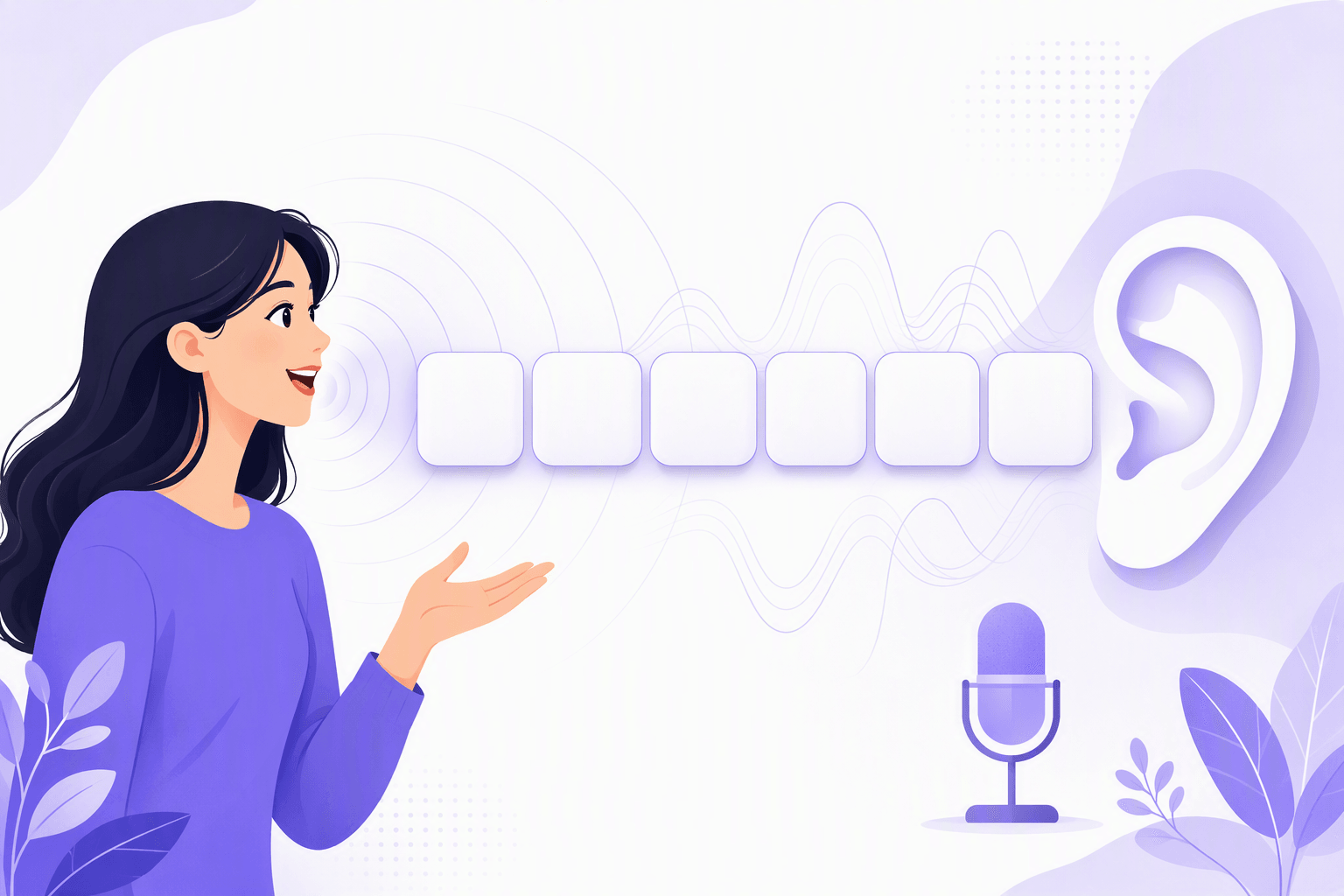
Start with the big idea: Hangul is phonetic, but speech is connected
Hangul was designed to represent sounds clearly, and it does a better job than most writing systems. Still, Korean pronunciation is not “say every letter exactly as written”.
The reason is simple: Korean is syllable-based in writing, but phrase-based in speech. Sounds influence each other across syllable boundaries, and 표준 발음법 (Standard Pronunciation Rules) describes those patterns (National Institute of Korean Language, accessed 2026).
What “connected speech” means in Korean
In real Korean, you will hear linking, simplification, and strengthening. These changes are not slang or laziness, they are the normal phonology of the language.
If you learn Korean through TV and movies, you will notice this immediately. A line that looks “easy” in subtitles can sound fast and blended in audio, especially in emotional scenes, arguments, or flirting.
💡 A practical goal
Aim for “clear and natural” rather than “perfect.” If you can produce the right vowel, the right consonant type (plain vs aspirated vs tense), and the right batchim behavior, native listeners will understand you even with an accent.
The Korean sound inventory you actually need (without IPA overload)
You do not need to memorize the entire International Phonetic Alphabet to speak Korean, but it helps to know what you are aiming for. The International Phonetic Association’s handbook is a useful reference for how languages map sounds to symbols (International Phonetic Association).
For learners, the most important Korean categories are vowels, and the three-way consonant contrast.
Vowels: focus on the contrasts that change meaning
Korean vowels are relatively stable across contexts. Your biggest risk is confusing pairs that sound “close” to English ears.
Here are the contrasts that most often cause misunderstandings:
- ㅓ (eo) vs ㅗ (o)
- ㅡ (eu) vs ㅜ (u)
- ㅐ (ae) vs ㅔ (e), which are close in many modern accents
English-friendly approximations help you start, but you still need audio. The King Sejong Institute materials are good for beginner-friendly listening models (King Sejong Institute Foundation, accessed 2026).
Consonants: plain vs aspirated vs tense
Korean has three main “types” for many consonants:
- Plain: ㄱ ㄷ ㅂ ㅅ ㅈ
- Aspirated: ㅋ ㅌ ㅍ ㅊ
- Tense: ㄲ ㄸ ㅃ ㅆ ㅉ
This is the single most important pronunciation concept for sounding understandable. English has aspiration, but it does not use it to create as many meaning contrasts, so English speakers often flatten these categories.
A quick listening cue for tense consonants
Tense consonants are not just “stronger.” They are tighter, shorter, and have less breathy release. If you add extra air, you often drift toward aspirated consonants instead.
A good drill is to record yourself saying minimal pairs and compare to native audio. You do not need to sound identical, but you should be consistently different across the three categories.
Syllable blocks and timing: why Korean can feel “fast”
Hangul groups letters into syllable blocks, but Korean rhythm is driven by syllables and phrase chunks. Learners often pause between blocks because the writing visually separates them.
Native speech does not pause there. It flows through blocks, especially when 받침 meets a following vowel.
This is why shadowing works so well: you are training timing and linking, not just individual sounds. If you want a structured listening routine, movie-clip learning makes this easier because you can replay one line until your mouth matches the timing.
받침 (batchim): the rule set that unlocks Korean pronunciation
Batchim is the final consonant position in a syllable block. It matters because many consonants are neutralized in final position, and because the next syllable can change it.
In standard pronunciation, many different spellings collapse to a smaller set of final sounds (National Institute of Korean Language, accessed 2026). That is why batchim feels tricky at first.
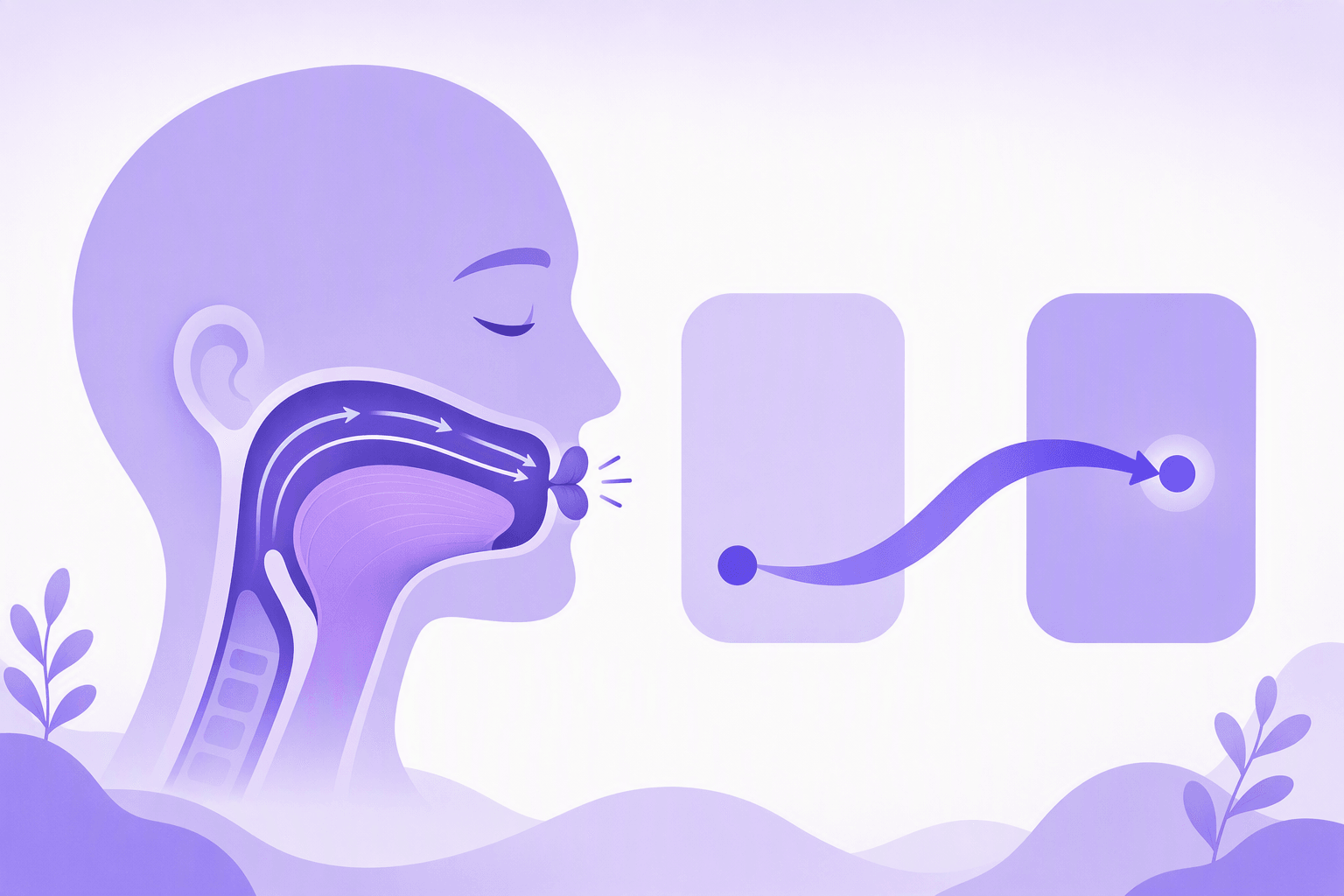
The “seven final sounds” idea (learner-friendly)
A practical way to learn batchim is to remember that many final consonants are pronounced as one of these categories:
- ㄱ sound (k-like)
- ㄴ (n)
- ㄷ sound (t-like)
- ㄹ (l/r-like)
- ㅁ (m)
- ㅂ sound (p-like)
- ㅇ (ng)
This is not a perfect linguistic description, but it is a strong learner shortcut. It explains why endings can sound similar even when spelled differently.
Don’t release final stops too much
English speakers often release final consonants with a puff of air. Korean final stops (like ㄱ ㄷ ㅂ in batchim) are typically unreleased.
That means your mouth closes, but you do not “burst” the sound. This one adjustment instantly makes your Korean sound more natural.
⚠️ Common mistake
If you pronounce final ㄱ like a strong “k” release, 국 can sound like “kook.” Aim for a closed ending: more like “guk” with no extra burst.
Liaison (linking): when batchim meets a vowel
The most important real-speech pattern is linking. If a syllable ends in a consonant and the next syllable begins with a vowel, Korean often moves the consonant sound forward.
You can think of it as resyllabification: the consonant “attaches” to the next syllable for pronunciation.
This is why beginners sometimes say Korean “too carefully” and sound robotic. They are pronouncing each block separately instead of linking.
How to practice linking without getting overwhelmed
Pick short, high-frequency phrases and practice them as one unit. Greetings are perfect for this, because you will repeat them often.
If you are learning relationship vocabulary, romantic lines are also great for drilling natural rhythm. See how to say I love you in Korean and listen for how syllables connect in fast speech.
Nasalization: why ㄱ can sound like “ng” near ㄴ or ㅁ
Nasalization is a common sound change where a consonant becomes nasal near a nasal consonant (ㄴ or ㅁ). This is not random, it is a predictable articulation shortcut.
For example, a ㄱ-like sound before ㄴ can shift toward an ㅇ-like sound. Learners often think they misheard the word, but it is simply standard connected speech.
This matters a lot for listening comprehension. Once you expect nasalization, you stop “searching” for the written consonant in the audio.
Tensification (sound strengthening): why some consonants get “tighter”
Another frequent pattern is tensification, where a following consonant becomes tense in certain environments. You will hear this in many compound words and common grammatical patterns.
Learners often describe this as “suddenly it sounds like ㄲ/ㄸ/ㅃ/ㅆ/ㅉ.” That is a good instinct. Your job is to learn the most common contexts, then confirm with real audio.
If you want a safe place to notice this, listen to everyday lines in dramas, not just textbook recordings. Textbook audio is often slower and more careful.
ㅎ (h) effects: disappearing, blending, and changing neighbors
ㅎ is one of the most “active” consonants in Korean phonology. Depending on position, it can:
- be pronounced clearly as an h-like sound
- weaken or disappear in fast speech
- influence nearby consonants, often making them sound more aspirated
You do not need to master every rule at once. Start by noticing that ㅎ can change the feel of a consonant cluster, then imitate what you hear in native audio.
The ㄹ sound: not English “R” and not English “L”
ㄹ is a classic learner pain point. In Korean, it behaves differently depending on position:
- Between vowels, it often sounds like a light “r” flap.
- In final position, it often sounds more like “l.”
If you force a strong American “r,” it will sound foreign. If you force a heavy “l” everywhere, it will also sound off.
A good target is a quick tongue tap for the between-vowels case. Keep it light and fast.
Vowel contractions and casual speech: why “textbook Korean” sounds different
Korean has plenty of reductions in everyday speech, especially in casual conversation. You will hear contractions, shortened particles, and blended endings.
This is one reason learners feel confident reading, but lost listening. Reading gives you the careful form, while audio gives you the reduced form.
Claire Kramsch’s work on language and culture emphasizes that meaning is built in context, not just in isolated forms. Pronunciation is part of that context: the same sentence can sound polite, distant, playful, or annoyed depending on how it is delivered.
🌍 A Korean-specific listening habit
Korean speakers often signal stance and emotion through sentence endings and prosody. If you only focus on dictionary forms, you miss the social meaning. Train your ear on endings in real scenes, especially apologies, requests, and disagreements.
Romanization: useful as a crutch, risky as a map
Romanization systems try to represent Korean sounds with Latin letters. They are helpful for signs and quick references, but they can mislead learners.
The main problem is that English letters carry English sound expectations. For example, “eo” and “eu” are not intuitive to many learners, and “g/k” alternations can look inconsistent even when pronunciation is rule-governed.
Use romanization to find a word quickly, then switch back to Hangul plus audio.
A practical pronunciation workout (10 minutes a day)
You do not need hours of drills. You need consistent, targeted repetition with feedback.
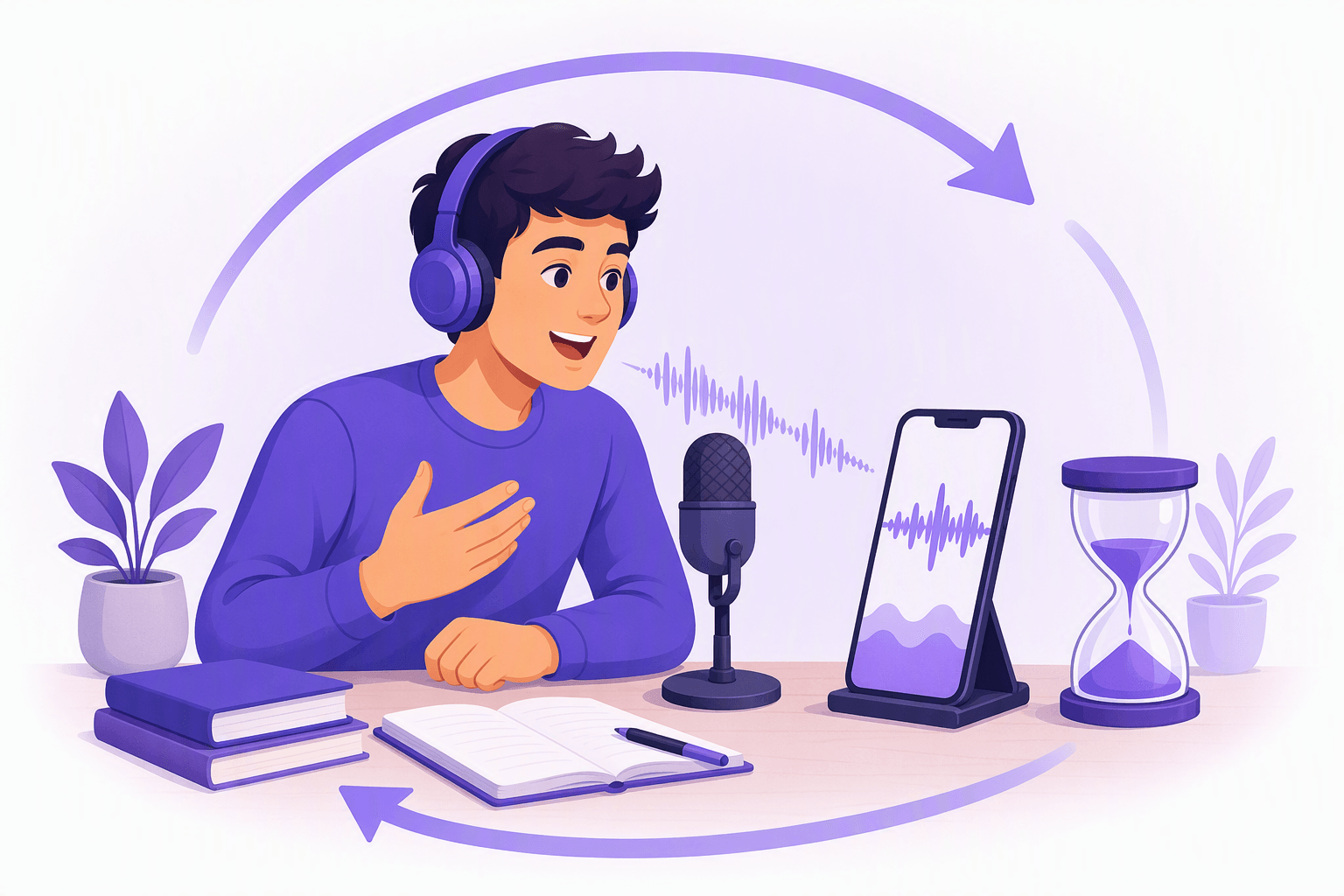
Step 1: Pick 5 high-frequency phrases
Choose phrases you will actually say. Greetings, thanks, apologies, and simple requests are ideal.
If you need a curated set, start with your greeting set from how to say hello in Korean, then add one goodbye and one polite request.
Step 2: Shadow one clip, not a whole episode
Pick a single line from a show and loop it. Focus on:
- vowel clarity
- consonant type (plain vs aspirated vs tense)
- batchim behavior
- linking across syllables
This is where clip-based learning shines, because you can replay the same two seconds until it clicks.
Step 3: Record yourself and compare
Do not compare your voice quality, compare timing and consonant categories. Ask: did I link where the actor linked, and did I keep final stops unreleased?
Step 4: Fix one thing at a time
If you try to fix everything, you will freeze. Pick one target per session, like “no released final ㄱ” or “tense consonants are short and tight.”
Pronunciation in emotionally charged language (and a safety note)
Korean speech changes when emotions rise. People speak faster, reduce more, and use stronger prosody. This is why arguments in dramas can be hard to parse.
It is also where learners pick up risky vocabulary without context. If you are curious about strong language, read a guide that explains severity and social consequences, like Korean swear words. Pronunciation is not just sounds, it is also social meaning.
⚠️ Don't practice insults as your 'pronunciation drills'
Swear words and insults often have strong social consequences, and they are easy to misapply. Build your pronunciation with neutral phrases first, then learn sensitive language with clear context and restraint.
Common pronunciation mistakes (and how to self-correct)
Mixing up ㅓ and ㅗ
If your ㅓ drifts toward “oh,” many words become ambiguous. Train with minimal pairs and exaggerate the contrast at first.
Releasing final consonants
If you hear a “puh/tuh/kuh” at the end of your syllables, you are releasing too much. Close the mouth position and stop the airflow.
Flattening tense consonants
If ㄲ sounds like ㄱ, listeners may hear a different word. Practice tense consonants as “tight and short,” not “loud.”
Reading syllable-by-syllable
If your Korean sounds choppy, you are likely pausing at each block. Read in chunks, and aim for smooth linking.
How this connects to real Korean you hear in media
In scripted media, actors still speak naturally. They may articulate more clearly than in street recordings, but sound-change rules still apply.
That makes TV and movies a strong training ground: you get clear audio, emotional prosody, and repeatable lines. If you want recommendations by level, browse the best Korean dramas to learn Korean list and start with slower, dialogue-heavy scenes.
A simple benchmark: what “good Korean pronunciation” sounds like
Good Korean pronunciation for learners is not accent-free. It is:
- vowels that are consistently distinct
- consonants that keep the three-way contrast
- batchim that is unreleased and predictable
- linking that matches native rhythm
If you can do those four things, your Korean will be easy to understand, and your listening will improve because your brain is no longer guessing where syllables begin and end.
Keep going with phrases you will actually use
Once you have the sound rules, the fastest improvement comes from repeating real lines you care about. Build a small set of “daily phrases,” then expand.
For more practical phrase sets, continue with how to say hello in Korean, how to say goodbye in Korean, and how to say I love you in Korean. If you want a broader learning plan beyond pronunciation, start at the blog index and follow a beginner path across reading, listening, and speaking.
Frequently Asked Questions
Is Korean pronunciation hard for English speakers?
What is batchim in Korean, and why does it matter?
Should I learn Korean pronunciation with romanization?
Why does my Korean sound 'choppy' when I read Hangul?
Do Koreans pronounce every letter in Hangul?
Sources & References
- National Institute of Korean Language (국립국어원), Standard Korean Language Rules (표준 발음법), accessed 2026
- King Sejong Institute Foundation, Korean Language Learning Materials, accessed 2026
- Ethnologue, 27th edition, 2024
- International Phonetic Association, Handbook of the International Phonetic Association
- Korean Language Society (한글학회), Hangul and Korean Language Resources, accessed 2026
Start learning with Wordy
Watch real movie clips and build your vocabulary as you go. Free to download.


