Quick Answer
The most common way to say I am bored in Spanish is estoy aburrido if you are male, or estoy aburrida if you are female. Spanish also has more natural ways to say you are bored, fed up, or have nothing to do, depending on the situation and country.
To say I am bored in Spanish, say estoy aburrido if you are male or estoy aburrida if you are female. It is pronounced /esˈtoj aβuˈriðo/ and /esˈtoj aβuˈriða/. This is the safest, most widely understood phrase across the Spanish-speaking world, whether you are bored at home, in class, or waiting for someone.
Spanish is spoken by more than 500 million native speakers and is an official language in 20 countries. That reach means people express boredom with regional flavor, but estoy aburrido /esˈtoj aβuˈriðo/ works everywhere. Start with it, then learn the alternatives below to sound more specific and natural.
If you are still building basic conversation skills, pair these phrases with the greetings in our guide on how to say hello in Spanish.
| English | Spanish | Pronunciation | Formality |
|---|---|---|---|
| I am bored | Estoy aburrido/a | ehs-TOY ah-boo-REE-doh/dah | casual |
| I am getting bored | Me estoy aburriendo | meh ehs-TOY ah-boo-RRYEHN-doh | casual |
| This is boring | Esto es aburrido | EHS-toh ehs ah-boo-REE-doh | casual |
| I have nothing to do | No tengo nada que hacer | noh TEHN-goh NAH-dah keh ah-SEHR | casual |
| I am fed up | Estoy harto/a | ehs-TOY AHR-toh/tah | casual |
| I am bored stiff | Me muero de aburrimiento | meh MWEH-roh deh ah-boo-RRYEE-mee-EHN-toh | casual |
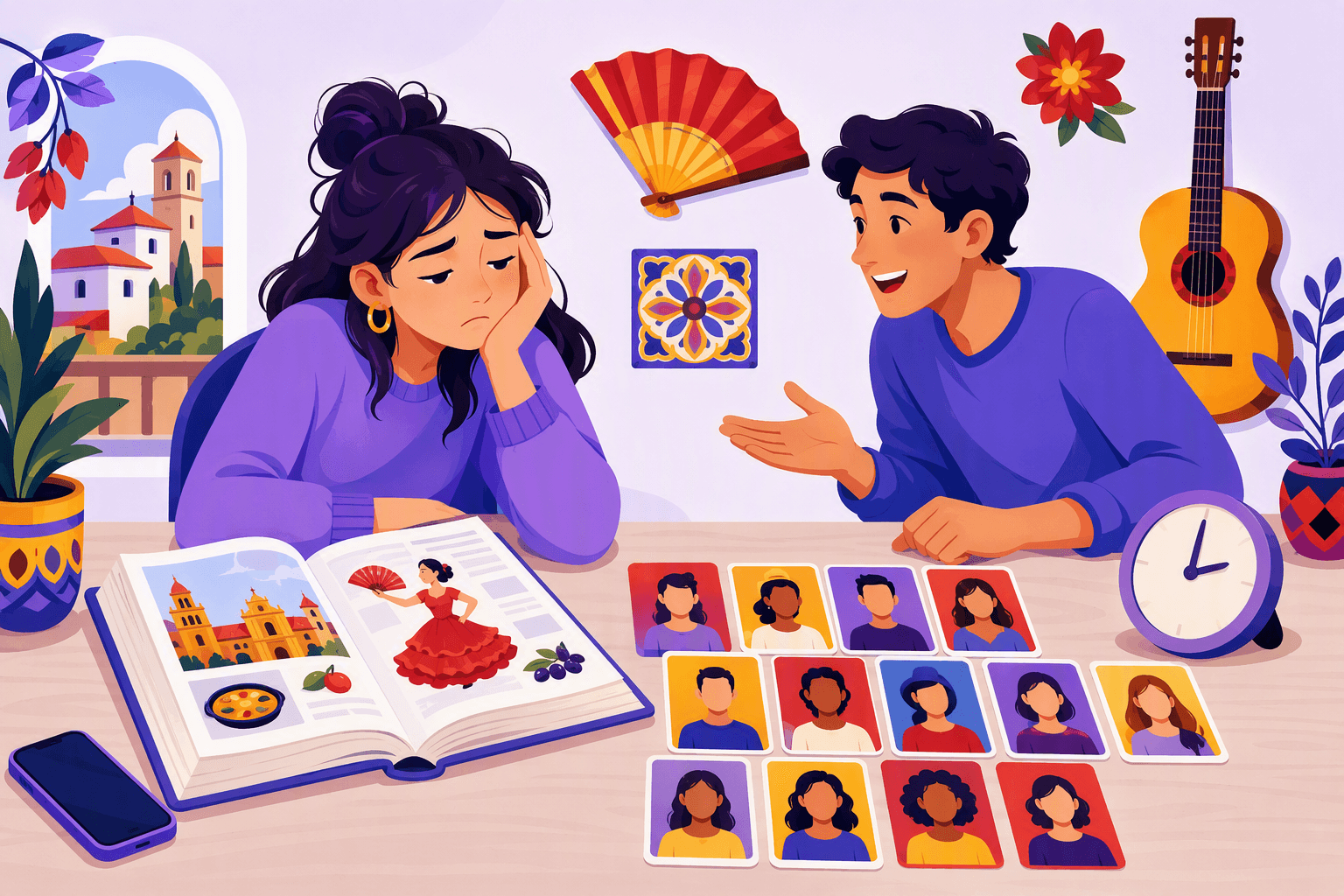
The essential phrase: estar aburrido
The phrase estoy aburrido /esˈtoj aβuˈriðo/ literally means I am bored. A woman or girl says estoy aburrida /esˈtoj aβuˈriða/. The ending changes because Spanish adjectives normally agree with the gender of the person being described.
This phrase describes a temporary state, which is why it uses estar /esˈtaɾ/, not ser /seɾ/. The distinction matters: estoy aburrido means I feel bored now, while soy aburrido /soj aβuˈriðo/ means I am a boring person.
The Real Academia Española and the Asociación de Academias de la Lengua Española define aburrido as both someone who feels boredom and something that causes it. Context and the verb tell listeners which meaning you intend.
aburrido
Aburrido /aβuˈriðo/ is the masculine adjective. Use it when the speaker identifies as male or when a masculine grammatical form is appropriate.
/ehs-TOY ah-boo-REE-doh/
Literal meaning: I am bored.
“Estoy aburrido, ¿quieres hacer algo?”
I am bored, do you want to do something?
This is neutral and natural in every Spanish-speaking region. It describes a passing feeling, not your personality.
aburrida
Aburrida /aβuˈriða/ is the feminine adjective. It has exactly the same meaning as aburrido /aβuˈriðo/, with a different ending.
/ehs-TOY ah-boo-REE-dah/
Literal meaning: I am bored.
“Estoy aburrida en casa esta tarde.”
I am bored at home this afternoon.
Spanish adjectives generally mark gender. A group with at least one male member conventionally uses the masculine plural, aburridos.
Say what is boring you
Spanish gives you two useful sentence patterns. Use estar aburrido /esˈtaɾ aβuˈriðo/ for your feeling, and use ser aburrido /seɾ aβuˈriðo/ for the thing causing that feeling.
For example, la película es aburrida /la peˈlikula es aβuˈriða/ means the movie is boring. Estoy aburrido con la película /esˈtoj aβuˈriðo kon la peˈlikula/ means I am bored with the movie.
This is especially useful when watching Spanish-language films or series. You can hear how actors use boredom to signal annoyance, awkward silence, or a lack of interest. For more practice material, see our picks for the best movies to learn Spanish.
me aburro
Me aburro /me aˈburo/ means I get bored, I am getting bored, or I bore myself, depending on context. It comes from the reflexive verb aburrirse /aβuˈrirse/, to get bored.
Use it for a developing feeling or a repeated situation. For example, me aburro cuando no tengo nada que hacer /me aˈburo ˈkwando no ˈteŋɡo ˈnaða ke aˈseɾ/ means I get bored when I have nothing to do.
/meh ehs-TOY ah-boo-RRYEHN-doh/
Literal meaning: I am boring myself.
“La reunión es muy larga, me estoy aburriendo.”
The meeting is very long, I am getting bored.
The progressive form highlights that boredom is building during an ongoing activity.
no tengo nada que hacer
No tengo nada que hacer /no ˈteŋɡo ˈnaða ke aˈseɾ/ means I have nothing to do. In daily conversation, it often sounds more natural than directly announcing boredom.
It can be a complaint, an invitation for plans, or a simple observation. If a friend says this, a natural response is podemos hacer algo /poˈðemos aˈseɾ ˈalɣo/, meaning we can do something.
/noh TEHN-goh NAH-dah keh ah-SEHR/
Literal meaning: I do not have anything to do.
“Es sábado y no tengo nada que hacer.”
It is Saturday and I have nothing to do.
This is a friendly, low-pressure way to hint that you are available. It is common in texts among friends.
💡 Use estar for your feeling
Say estoy aburrido /esˈtoj aβuˈriðo/ for I am bored. Avoid soy aburrido /soj aβuˈriðo/ unless you mean I am boring. The same adjective changes meaning because estar describes a temporary state and ser describes a characteristic.
Stronger ways to say you are bored
Sometimes estoy aburrido /esˈtoj aβuˈriðo/ is too mild. Spanish has vivid expressions for when you are seriously under-stimulated, impatient, or tired of a situation.
me muero de aburrimiento
Me muero de aburrimiento /me ˈmweɾo ðe aβuriˈmjento/ literally means I am dying of boredom. It is dramatic but common and normally not literal.
Use it with close friends, family, or classmates. It fits a long wait, a tedious lecture, or an event you cannot leave.
/meh MWEH-roh deh ah-boo-RRYEE-mee-EHN-toh/
Literal meaning: I am dying of boredom.
“Llevamos una hora esperando, me muero de aburrimiento.”
We have been waiting for an hour, I am bored stiff.
This is expressive everyday exaggeration. It is suitable with people you know, but less suitable in a formal workplace message.
qué aburrimiento
Qué aburrimiento /ke aβuriˈmjento/ means what boredom, or more naturally, how boring. It is an exclamation about a situation rather than a direct statement about yourself.
You might say it after hearing that a plan has been canceled or when a slow scene drags on. It can sound playful, resigned, or irritated depending on your voice.
estoy harto
Estoy harto /esˈtoj ˈaɾto/ for a male speaker, or estoy harta /esˈtoj ˈaɾta/ for a female speaker, means I am fed up. This is stronger than bored and often signals that you have had enough of something.
For example, estoy harto de esperar /esˈtoj ˈaɾto ðe espeˈɾaɾ/ means I am fed up with waiting. Do not use it just because a quiet afternoon lacks entertainment, unless you deliberately want to sound frustrated.
/ehs-TOY AHR-toh deh EHS-toh/
Literal meaning: I am full of this.
“Estoy harta de la misma rutina todos los días.”
I am fed up with the same routine every day.
Harto is stronger than aburrido. It often carries frustration or impatience, so use it carefully in tense conversations.
Regional ways to express boredom
Spanish changes across countries, even when the basic grammar stays stable. Manuel Moreno Fernández, in Variedades de la lengua española, emphasizes that regional varieties are systematic forms of Spanish, not incorrect versions of a single standard.
The phrases below are useful recognition vocabulary. Use the general forms first when you are unsure of the local setting.
qué flojera
In Mexico, qué flojera /ke floˈxeɾa/ often means how lazy, what a drag, or I cannot be bothered. It does not always mean boredom, but it is common when an activity feels tedious or requires unwanted effort.
If someone invites you to do something demanding, qué flojera may mean that you do not feel like it. It is casual and should not be used in formal conversations.
estoy embolado
In parts of the Río de la Plata region, especially Argentina and Uruguay, estoy embolado /esˈtoj emboˈlaðo/ can mean I am bored. A female speaker may say estoy embolada /esˈtoj emboˈlaða/.
The word is informal and regional. It is useful to understand in Argentine shows, but estoy aburrido /esˈtoj aβuˈriðo/ remains the portable choice for learners.
estoy aburridísimo
Estoy aburridísimo /esˈtoj aβuriˈðisimo/ means I am extremely bored. A female speaker says estoy aburridísima /esˈtoj aβuriˈðisima/.
The ending -ísimo /ˈisimo/ intensifies an adjective. It is a productive, expressive pattern: cansadísimo /kansaˈðisimo/ means extremely tired, and felicísimo /feliˈsisimo/ means extremely happy.
🌍 Boredom can be an invitation
In Spanish-speaking friendship groups, saying no tengo nada que hacer /no ˈteŋɡo ˈnaða ke aˈseɾ/ can gently open the door to a plan. A friend may answer vamos por un café /ˈbamos poɾ uŋ kaˈfe/, meaning let us go for coffee, without treating the comment as a serious complaint.
How to reply when someone says they are bored
The right response depends on whether the person wants sympathy, entertainment, or company. Here are a few natural answers.
- ¿Quieres hacer algo? /ˈkjeɾes aˈseɾ ˈalɣo/ means Do you want to do something?
- Vamos a ver una película. /ˈbamos a βeɾ una peˈlikula/ means Let us watch a movie.
- ¿Por qué no sales? /poɾ ˈke no ˈsales/ means Why do you not go out?
- Yo también. /ʝo tamˈbjen/ means Me too.
- Ten paciencia. /teŋ paˈsjensja/ means Be patient.
If you are ending the conversation instead, learn natural closings in our guide to how to say goodbye in Spanish.
Politeness research by Penelope Brown and Stephen Levinson helps explain why indirect phrases such as no tengo nada que hacer /no ˈteŋɡo ˈnaða ke aˈseɾ/ work well socially. They leave the listener room to suggest an activity without demanding attention directly.
Common mistakes with bored in Spanish
Confusing boring and bored
Remember this contrast:
| English meaning | Spanish | IPA |
|---|---|---|
| I am bored | Estoy aburrido/a | /esˈtoj aβuˈriðo aβuˈriða/ |
| I am boring | Soy aburrido/a | /soj aβuˈriðo aβuˈriða/ |
| This is boring | Esto es aburrido | /ˈesto es aβuˈriðo/ |
| I get bored | Me aburro | /me aˈburo/ |
A person can be aburrido /aβuˈriðo/, boring, while an activity can also be aburrida /aβuˈriða/, boring. The grammar around the adjective does the crucial work.
Forgetting gender agreement
Say estoy aburrida /esˈtoj aβuˈriða/ if you use feminine agreement. This rule is not optional in standard Spanish, though some speakers may use gender-neutral wording in particular communities or contexts.
For a mixed group or a group described with conventional masculine grammar, use estamos aburridos /esˈtamos aβuˈriðos/. For an all-female group, use estamos aburridas /esˈtamos aβuˈriðas/.
Using a strong phrase too early
Estoy harto /esˈtoj ˈaɾto/ can sound annoyed. Choose estoy aburrido /esˈtoj aβuˈriðo/ when you only mean that you lack entertainment, and save harto for genuine frustration.
This awareness of tone is useful beyond boredom. Spanish has equally important choices for affection, from neutral friendliness to strong commitment, as you can see in how to say I love you in Spanish.
Practice: choose the natural phrase
Try matching each situation to the best expression.
- You are at home on a rainy Sunday with no plans: no tengo nada que hacer /no ˈteŋɡo ˈnaða ke aˈseɾ/.
- A lecture has gone on for two hours: me estoy aburriendo /me esˈtoj aβuˈrjendo/.
- You have waited in line for a long time and are irritated: estoy harto de esperar /esˈtoj ˈaɾto ðe espeˈɾaɾ/.
- Your friend asks how you feel during a dull film: estoy aburrida /esˈtoj aβuˈriða/.
- You want to exaggerate jokingly in a group chat: me muero de aburrimiento /me ˈmweɾo ðe aβuriˈmjento/.
The core phrase remains simple: estoy aburrido /esˈtoj aβuˈriðo/ or estoy aburrida /esˈtoj aβuˈriða/. Learn it first, then use me aburro /me aˈburo/ for boredom that develops, qué aburrimiento /ke aβuriˈmjento/ for a dull situation, and estoy harto /esˈtoj ˈaɾto/ when boredom has turned into frustration.
Frequently Asked Questions
How do you say I am bored in Spanish if you are female?
What is the difference between aburrido and aburrirse?
Can aburrido mean boring in Spanish?
How do Mexicans say I am bored in Spanish?
Is me aburro correct Spanish?
Sources & References
- Instituto Cervantes, El español: una lengua viva, 2024
- Real Academia Española and ASALE, Diccionario de la lengua española, accessed 2026
- Real Academia Española and ASALE, Nueva gramática de la lengua española
- Moreno Fernández, Variedades de la lengua española, Routledge
- Brown and Levinson, Politeness: Some Universals in Language Usage, Cambridge University Press
Start learning with Wordy
Watch real movie clips and build your vocabulary as you go. Free to download.


