Quick Answer
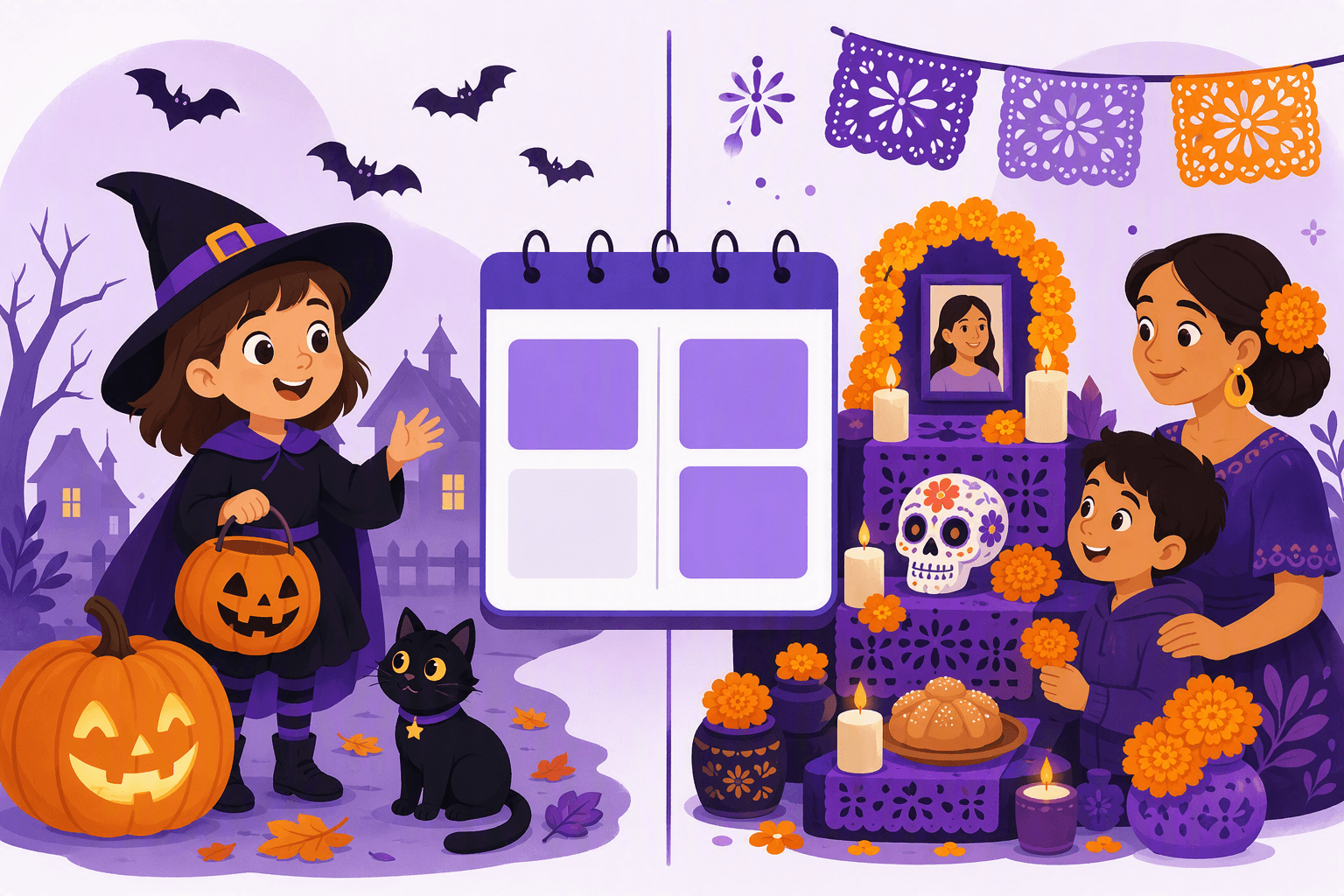
The most natural way to say Happy Halloween in Spanish is ¡Feliz Halloween! You can also say ¡Feliz Noche de Brujas! in many Latin American countries, but do not confuse Halloween with Día de Muertos, a distinct Mexican tradition held on November 1 and 2.
¡Feliz Halloween! is the most direct and widely understood way to say Happy Halloween in Spanish. You can also say ¡Feliz Noche de Brujas! /feˈlis ˈnotʃe ðe ˈβɾuxas/, especially when you want a fully Spanish expression. In Mexico, however, Halloween and Día de Muertos /ˈdi.a ðe ˈmweɾtos/ are related in calendar timing but not interchangeable celebrations.
Spanish is spoken by nearly 600 million potential speakers worldwide, according to the Instituto Cervantes, and it is an official language in 20 sovereign countries. That scale means Halloween vocabulary changes by region: a phrase that sounds natural in Madrid may not be the one children use in Mexico City, Bogotá, or San Juan.
If you are building basic seasonal conversation, pair these greetings with familiar openers from our guide on how to say hello in Spanish. The key is simple: use ¡Feliz Halloween! /feˈlis aloˈwin/ for the imported holiday, and name Día de Muertos when you mean the Mexican commemoration.
| English | Spanish | Pronunciation | Formality |
|---|---|---|---|
| Happy Halloween! | ¡Feliz Halloween! | feh-LEES ah-loh-WEEN | casual |
| Happy Halloween! | ¡Feliz Noche de Brujas! | feh-LEES NOH-cheh deh BROO-hahs | casual |
| Have a scary Halloween! | ¡Que pases un Halloween terrorífico! | keh PAH-sehs oon ah-loh-WEEN teh-rroh-REE-fee-koh | casual |
| Have fun tonight! | ¡Que te diviertas esta noche! | keh teh dee-BYEHR-tahs EHS-tah NOH-cheh | casual |
| Happy Day of the Dead | ¡Feliz Día de Muertos! | feh-LEES DEE-ah deh MWEHR-tohs | polite |
| May you have a lovely Day of the Dead | Que tengas un bonito Día de Muertos | keh TEHN-gahs oon boh-NEE-toh DEE-ah deh MWEHR-tohs | polite |
The simplest translation: ¡Feliz Halloween!
Use ¡Feliz Halloween! /feˈlis aloˈwin/ with friends, classmates, children, coworkers, and in social media captions. The borrowed word Halloween /aloˈwin/ is common in contemporary Spanish and appears in the Real Academia Española dictionary.
The word is normally pronounced with Spanish sound patterns, not exactly as in English. The first sound is an open /a/, and the stress falls toward the end: /aloˈwin/. You may hear regional variation, but the phrase will be understood across the Spanish-speaking world.
/feh-LEES ah-loh-WEEN/
Literal meaning: Happy Halloween
“¡Feliz Halloween! ¿Ya tienes disfraz?”
Happy Halloween! Do you already have a costume?
A neutral, current greeting for parties, texts, shops, classrooms, and social media. It works in Spain and throughout much of Latin America.
The adjective feliz /feˈlis/ means happy. It agrees with a masculine noun in this greeting because Halloween is commonly treated as masculine by many speakers, though the phrase is fixed enough that learners do not need to worry about gender here.
For a short Halloween message, write: ¡Feliz Halloween! Que la pases genial. /feˈlis aloˈwin ke la ˈpases xeˈnjal/ This means Happy Halloween! Have a great time.
¡Feliz Noche de Brujas!
¡Feliz Noche de Brujas! /feˈlis ˈnotʃe ðe ˈβɾuxas/ is the most transparent Spanish alternative. Literally, it means Happy Night of Witches.
The phrase is easy to understand because noche /ˈnotʃe/ means night and bruja /ˈbɾuxa/ means witch. In everyday practice, it is particularly visible in Latin American media, event posters, school crafts, and family-oriented Halloween content.
/feh-LEES NOH-cheh deh BROO-hahs/
Literal meaning: Happy Night of Witches
“¡Feliz Noche de Brujas! Espero que consigas muchos dulces.”
Happy Halloween! I hope you get lots of candy.
A natural Spanish alternative when you prefer not to use the English borrowing 'Halloween.' It is warm and suitable for children and families.
Do not translate Halloween word by word as Día de las Brujas /ˈdi.a ðe las ˈβɾuxas/. That phrase can be understood, but it is not the standard seasonal greeting. Noche de Brujas is the established wording.
Bruja
A bruja /ˈbɾuxa/ is a witch. The masculine form is brujo /ˈbɾuxo/, although Halloween decorations usually feature the feminine image and vocabulary.
Useful examples include sombrero de bruja /somˈbɾeɾo ðe ˈbɾuxa/, witch hat, and escoba de bruja /esˈkoβa ðe ˈbɾuxa/, witch's broom. The letter j in bruja has the Spanish /x/ sound, similar to the sound in José /xoˈse/, not an English /dʒ/ sound.
Disfraz
A disfraz /disˈfɾas/ is a costume. The verb is disfrazarse /disfɾaˈsaɾse/, to dress up or wear a costume.
Say ¿De qué vas disfrazado? /de ke βas disfɾaˈsaðo/ to ask a man or boy, What are you dressed as? For a woman or girl, say ¿De qué vas disfrazada? /de ke βas disfɾaˈsaða/.
Halloween words you will actually hear
| English | Spanish | Pronunciation | Note |
|---|---|---|---|
| costume | disfraz | dees-FRAHS | Use disfrazarse for 'to dress up'. |
| witch | bruja | BROO-hah | The masculine form is brujo. |
| ghost | fantasma | fahn-TAHS-mah | A common decoration and costume. |
| pumpkin | calabaza | kah-lah-BAH-sah | Also used for squash in food contexts. |
| candy | dulces | DOOL-sehs | Spain also commonly uses chuches for candy. |
| scary | terrorífico | teh-rroh-REE-fee-koh | Agree it with the noun it describes. |
| haunted house | casa embrujada | KAH-sah ehm-broo-HAH-dah | Literally 'bewitched house'. |
| spider web | telaraña | teh-lah-RAH-nyah | The ñ makes a ny sound. |
A fantasma /fanˈtasma/ is a ghost, while miedo /ˈmjeðo/ means fear. To say something is scary, use da miedo /ða ˈmjeðo/, literally it gives fear: Esa película da miedo /ˈesa peˈlikula ða ˈmjeðo/, That movie is scary.
A calabaza /kalaˈβasa/ is a pumpkin or squash. In Halloween settings, calabaza usually brings to mind a carved pumpkin, though the exact vegetable can vary across regions.
For candy, use dulces /ˈdulses/ in much of Latin America. In Spain, chuches /ˈtʃutʃes/ is a very common informal word for sweets. Learning regional vocabulary is one reason film scenes and real clips are so useful: you hear which word a family, city, or age group actually chooses.
Trick or treat in Spanish
There is no single phrase used throughout the Spanish-speaking world for trick or treat. Halloween itself spread through different local channels, including film, television, migration, schools, and tourism, so the wording remains regional.
¿Truco o trato?
In Spain, ¿Truco o trato? /ˈtɾuko o ˈtɾato/ is the most direct equivalent. It closely follows the English structure and is recognizable in dubbed films, children’s books, and Halloween events.
/TROO-koh oh TRAH-toh/
Literal meaning: Trick or treat?
“Los niños van de puerta en puerta diciendo: ¿Truco o trato?”
The children go door to door saying: Trick or treat?
Especially familiar in Spain. It is an adapted translation of the English Halloween formula rather than an older pan-Hispanic custom.
¿Me da mi calaverita?
In parts of Mexico, children may ask ¿Me da mi calaverita? /me ða mi kalaβeˈɾita/ This literally means Will you give me my little skull? Here, calaverita /kalaβeˈɾita/ can refer to a small offering of sweets, coins, or treats.
This phrase belongs to Mexican seasonal practice and may be unfamiliar elsewhere. Use it as a cultural detail, not as a universal translation to memorize for every Spanish-speaking country.
🌍 Use the local phrase when you know the place
In Spain, ¿Truco o trato? is a safe choice. In Mexico, ¿Me da mi calaverita? may be heard in some communities. If you are unsure, asking for dulces or simply saying ¡Feliz Halloween! is friendlier than forcing a regional expression.
Halloween is not Día de Muertos
The most important cultural distinction is between Halloween and Día de Muertos /ˈdi.a ðe ˈmweɾtos/. Halloween is observed on October 31. Día de Muertos is generally observed on November 1 and 2, with regional practices that vary throughout Mexico and Mexican communities abroad.
UNESCO recognizes the Indigenous festivity dedicated to the dead as Intangible Cultural Heritage. It centers on remembrance, family continuity, and welcoming the memory of deceased loved ones. Common elements include ofrendas /oˈfɾendas/, offerings or altars, flores de cempasúchil /ˈfloɾes ðe sempaˈsutʃil/, marigold flowers, photographs, candles, favorite foods, and pan de muerto /pan de ˈmweɾto/.
Stanley Brandes examines how Día de Muertos has changed through tourism, mass media, and transnational culture while remaining deeply connected to local memory practices. Octavio Paz also considered Mexican relationships with death in The Labyrinth of Solitude, though no single literary account can represent every Mexican family or region.
Say ¡Feliz Día de Muertos! /feˈlis ˈdi.a ðe ˈmweɾtos/ when greeting someone in connection with that occasion. Avoid treating it as a spooky substitute for Halloween. A respectful message can be: Que el recuerdo de tus seres queridos te acompañe /ke el reˈkweɾðo ðe tus ˈseɾes keˈɾiðos te akomˈpaɲe/, May the memory of your loved ones be with you.
🌍 Skulls do not automatically mean horror
The skull imagery of Día de Muertos, including the colorful calavera /kalaˈβeɾa/, often expresses remembrance, humor, art, and affection for people who have died. Its meaning differs from a generic Halloween skull decoration, even when the visual forms appear similar.
Messages for texts, cards, and social posts
A basic text needs only ¡Feliz Halloween! /feˈlis aloˈwin/ Add one warm sentence to make it personal.
¡Feliz Halloween! Que te diviertas mucho. /feˈlis aloˈwin ke te ðiˈβjeɾtas ˈmutʃo/ means Happy Halloween! Have lots of fun.
¡Que pases una noche de miedo! /ke ˈpases ˈuna ˈnotʃe ðe ˈmjeðo/ means Have a frightening night. In this context, it is playful, not a genuine threat.
¡Espero que tu disfraz sea increíble! /esˈpeɾo ke tu disfˈɾas ˈsea iŋkɾeˈiβle/ means I hope your costume is amazing. Use it for a friend posting a costume photo.
¡Cuidado con los fantasmas! /kwiˈðaðo koŋ los fanˈtasmas/ means Watch out for ghosts! It is a light, playful message for children or party guests.
Spanish greetings often sound more natural with a wish introduced by que /ke/. If you are writing to someone you care about, add an affectionate closing from our guide to how to say I love you in Spanish, but keep the relationship and tone appropriate.
Pronunciation points that make these phrases clearer
Spanish vowels are consistent. In feliz /feˈlis/, the e is /e/ and the i is /i/, without the shifting vowel quality common in English. Keep each vowel clean: fe-liz.
The z in feliz /feˈlis/ is usually /s/ throughout most of Latin America. In much of central and northern Spain, it is /θ/, so you may hear /feˈliθ/. Both pronunciations are standard regional varieties.
In Noche de Brujas /ˈnotʃe ðe ˈβɾuxas/, pronounce ch as /tʃ/. The j in bruja is /x/, a breathy back-of-the-mouth sound. It should not become the English sound in judge.
💡 A useful listening routine
Watch one short Spanish-language Halloween scene twice. First, listen for greetings such as feliz, cuidado, dulces, and disfraz. Then repeat one full line aloud, matching its pace and emotion. Real scenes teach the playful tone that a vocabulary list cannot show alone.
Choose the right phrase for the occasion
Use ¡Feliz Halloween! /feˈlis aloˈwin/ when you need a universal, modern greeting. Use ¡Feliz Noche de Brujas! /feˈlis ˈnotʃe ðe ˈβɾuxas/ when you want a fully Spanish option.
Use ¡Truco o trato! /ˈtɾuko o ˈtɾato/ mainly in Spain or in contexts influenced by Spanish dubbing. Use ¿Me da mi calaverita? /me ða mi kalaβeˈɾita/ only when referring to the relevant Mexican custom.
Finally, use ¡Feliz Día de Muertos! /feˈlis ˈdi.a ðe ˈmweɾtos/ for Día de Muertos itself, with respect for its role as a family remembrance tradition. When the celebration ends, our guide to how to say goodbye in Spanish will help you leave the party naturally.
Frequently Asked Questions
How do you say Happy Halloween in Spanish?
Is Halloween celebrated in Spanish-speaking countries?
What does Feliz Noche de Brujas mean?
Should I say Feliz Día de Muertos instead of Feliz Halloween in Mexico?
How do children say trick or treat in Spanish?
Sources & References
- Real Academia Española, Diccionario de la lengua española: Halloween and bruja entries, accessed 2026
- Instituto Cervantes, El español en el mundo, accessed 2026
- UNESCO, Indigenous Festivity Dedicated to the Dead, Intangible Cultural Heritage
- Stanley Brandes, Skulls to the Living, Bread to the Dead: The Day of the Dead in Mexico and Beyond, Wiley-Blackwell
- Octavio Paz, The Labyrinth of Solitude, Grove Press
Start learning with Wordy
Watch real movie clips and build your vocabulary as you go. Free to download.


