Quick Answer
Use it's only when you mean it is or it has. Use its (no apostrophe) for possession, meaning 'belonging to it.' A fast check is to replace it's with it is: if the sentence still makes sense, it's is correct, otherwise use its.
It's is short for it is or it has, while its (no apostrophe) shows possession, meaning belonging to it. If you can replace the word with it is and the sentence still works, write it's. If not, write its.
This tiny apostrophe is one of the highest-impact English mistakes because it shows up everywhere: emails, captions, subtitles, and even signs. English has about 1.5 billion speakers worldwide when you count native and second-language speakers (Ethnologue, 27th edition, 2024), so this rule matters in global communication, not just school essays.
If you want more everyday English you will actually hear, pair this with our English slang guide and then practice spotting real contractions in dialogue with movies to learn English.
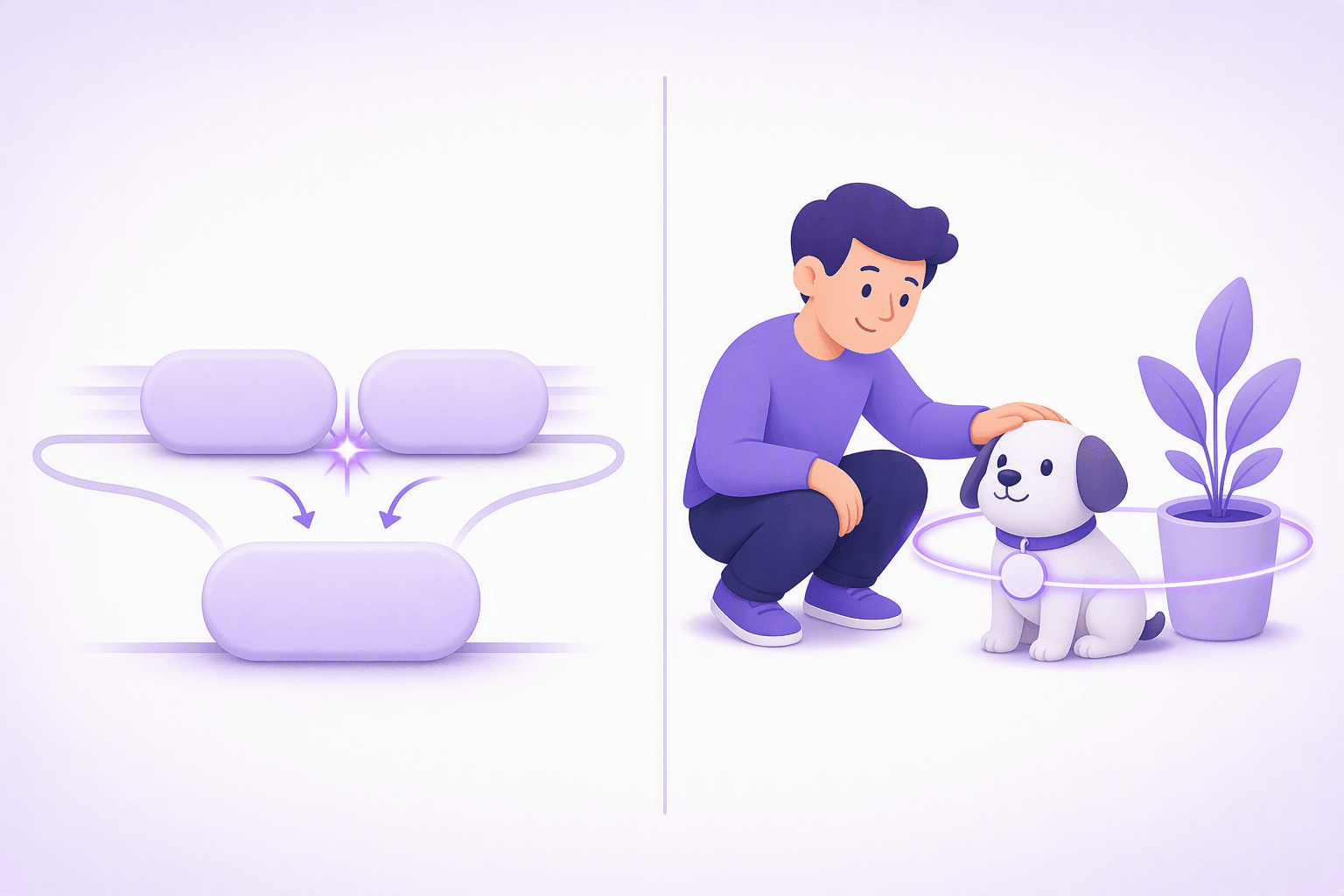
The one-step rule: the "it is" test
The fastest way to choose is mechanical.
Step 1: Replace the word with "it is"
- It's correct: "It's raining." → "It is raining." (works)
- Its correct: "The company changed its policy." → "The company changed it is policy." (does not work)
Step 2: If "it is" fails, try "it has"
This catches the second contraction meaning.
- It's correct: "It's been a long day." → "It has been a long day." (works)
- Its correct: "The phone lost its signal." → "The phone lost it has signal." (does not work)
💡 If you only memorize one thing
If you can expand it to "it is" or "it has", use "it's". If you mean possession, use "its". The apostrophe never makes "its" possessive.

What each form means (with pronunciation)
English learners often ask whether the apostrophe changes pronunciation. In normal speech, its and it's are usually pronounced the same: ITS.
The difference is grammatical, not spoken, which is why it is easy to miss in fast dialogue and subtitles.
It's: the contraction (it is / it has)
Use it's (ITS) in two cases.
It is
- "It's cold in here." (It is cold in here.)
- "I think it's true." (I think it is true.)
- "It's not your fault." (It is not your fault.)
It has
- "It's been fun." (It has been fun.)
- "It's gotten worse." (It has gotten worse.)
- "It's already started." (It has already started.)
In edited writing, contractions also signal tone. Bryan A. Garner discusses register and formality choices in Garner's Modern English Usage (Oxford University Press): contractions are normal in most modern prose, but you can reduce them for a more formal feel.
Its: the possessive determiner (belonging to it)
Use its (ITS) before a noun.
- "The dog wagged its tail."
- "The city is known for its museums."
- "The team changed its strategy."
This is the part that feels unfair: apostrophes often mark possession, but not with pronouns.
- his (not hi's)
- her (not her's)
- their (not their's)
- your (not you're)
- its (not it's)
The Chicago Manual of Style explains this as a standard pronoun pattern: possessive pronouns do not take apostrophes (Chicago Manual of Style, accessed 2026).
Why English breaks the "apostrophe = possession" idea
English apostrophes do two main jobs:
- Contractions: don't, I'm, it's
- Noun possession: the teacher's book, the teachers' lounge
But pronouns are a special class. Rodney Huddleston and Geoffrey K. Pullum, in The Cambridge Grammar of the English Language (Cambridge University Press), treat pronoun possessives as their own grammatical system rather than apostrophe-marked noun possession.
That is why its behaves like his and their, not like the cat's.
🌍 A modern writing reality: texting changed the error rate
In casual texting, many people skip apostrophes entirely, while others rely on autocorrect that inserts them aggressively. That means you will see "its" and "it's" used interchangeably in messages, even by native speakers. In formal contexts, though, readers still treat the distinction as a basic proofreading signal.
Common mistakes (and how to fix them)
These are the patterns that cause most errors.
Mistake 1: Using "it's" for possession
Wrong: "The car lost it's mirror."
Right: "The car lost its mirror."
Fix: Ask "belongs to what?" If it belongs to the car, you want its.
Mistake 2: Using "its" when you mean "it is"
Wrong: "Its going to be fine."
Right: "It's going to be fine."
Fix: Expand it. "It is going to be fine" works, so use it's.
Mistake 3: Forgetting that "it's" can mean "it has"
Wrong: "Its been a while."
Right: "It's been a while."
Fix: Try "it has." "It has been a while" works.
Mistake 4: Overcorrecting in formal writing
Some writers avoid contractions and then panic when they see it's in their draft. The solution is not random apostrophes, it is consistency.
- Formal: "It is essential that the system updates its settings."
- Neutral: "It's essential that the system updates its settings."
Both are fine, but the apostrophe must match the meaning.
Real examples you see in movies and TV
If you learn English through dialogue, this rule becomes easier because you can hear the contraction even when you cannot see the apostrophe.
Here are typical subtitle-style lines and what they mean:
- "It's not over." = It is not over.
- "It's been years." = It has been years.
- "It's your call." = It is your call.
- "The plan has its risks." = belonging to the plan
When you watch, try pausing and expanding it's in your head. This is one of the quickest ways to build automatic grammar.
For more listening-first practice, use movies to learn English and focus on short, repeatable scenes where contractions are frequent.
A quick mini-lesson on apostrophes (so the rule feels logical)
Apostrophes are small but overloaded. The confusion around its vs it's is really about mixing two systems.
System A: Apostrophe for missing letters
- do not → don't
- I am → I'm
- it is → it's
System B: Apostrophe for noun possession
- the actor's line (one actor)
- the actors' lines (many actors)
Pronouns do not use System B
Pronouns already have dedicated possessive forms. That is why English has:
- I → my
- you → your
- he → his
- she → her
- we → our
- they → their
- it → its
Once you see its as part of the pronoun set, the apostrophe stops feeling tempting.
Edge cases that confuse even advanced learners
"Its" as a standalone possessive
English has standalone possessives like mine, yours, hers, ours, theirs. But its rarely works that way.
Awkward: "This seat is its."
Natural: "This seat belongs to it."
In practice, you can avoid the issue by rewriting.
"It's" at the end of a sentence
This is normal when the contraction is followed by implied content.
- "If it's, it's." (informal, elliptical)
- "Whatever it's, I don't care." (rare, and usually rewritten)
Most of the time, you will see it's mid-sentence because it attaches to a verb phrase.
Possessive with gerunds
Learners sometimes ask: "Its being late annoyed me" vs "It's being late annoyed me."
- "Its being late annoyed me" can be grammatical in some formal styles, where its modifies the gerund phrase "being late."
- In everyday English, people usually write: "It being late annoyed me" (rare) or "The fact that it was late annoyed me" (common).
If you are writing for school or work, choose the clearer rewrite.
⚠️ Do not trust autocorrect on this one
Many keyboards replace "its" with "it's" automatically because "it's" is common in casual writing. Proofread any sentence that has a noun right after the word, that is a strong signal you want possessive "its".
Practice: choose its or it's
Try these quickly, then check the answers.
- ___ a good idea.
- The cat licked ___ paws.
- I think ___ been fixed.
- Every country has ___ own customs.
- ___ not what it looks like.
Answers:
- It's (It is a good idea.)
- its (paws belong to the cat)
- It's (It has been fixed.)
- its (own customs belong to the country)
- It's (It is not what it looks like.)
How this shows up in real life: credibility and tone
In many workplaces, its/it's is treated like a spelling error, even though it is grammar. That matters because readers use tiny signals to judge competence when they skim.
This is similar to how slang can signal in-group tone. In one context, slang builds rapport, in another it reads as careless. If you are curious how tone shifts in English, compare this with our English slang and notice how writing choices change depending on audience.
A useful mental model from sociolinguistics is that writing is not only about correctness, it is about social meaning. Penelope Eckert's work on style and social identity in language is a good reference point here: people interpret small features as belonging to a register, a community, or a level of formality.
A memory trick that actually works
If you tend to overuse the apostrophe, use this visual rule:
- It's = it + 's (a missing letter, like don't)
- Its = his (both are possessive pronouns with no apostrophe)
When you see "its," think "his." You would never write "hi's tail," so you should not write "it’s tail."
Mini checklist for proofreading
When you proofread, scan for the word and do a fast classification.
-
Is the next word a noun?
If yes, it is probably its: "its color," "its price," "its meaning." -
Is the next word a verb or adjective?
If yes, it is probably it's: "it's raining," "it's weird," "it's going." -
Can you expand to "it is" or "it has"?
If yes, write it's.
This takes seconds and catches almost every mistake.
Related mistakes worth fixing next
If you are cleaning up your writing, these are the next high-frequency issues that show up alongside its/it's:
- Confusing homophones, see our English homophones guide.
- Mixing informal and formal tone, especially when slang or swearing appears in dialogue, see English swear words for register and context.
- Number formatting in writing, especially dates and quantities, see English numbers.
Using Wordy-style clip practice for this rule (without overthinking it)
The best way to make it's automatic is repeated exposure to contractions in real speech, then short written recall.
Pick a short scene, listen for "it's," and write the line from memory. Then expand it to "it is" or "it has" to confirm the meaning. This turns a punctuation rule into a listening and grammar reflex.
If you want a curated starting point, browse movies to learn English and choose scenes with everyday dialogue, not legal or fantasy speech.
Summary: the rule in one sentence
Write it's only when you mean it is or it has. Write its for possession, meaning belonging to it, and remember that pronoun possessives do not use apostrophes.
If you want more quick wins like this, explore the Wordy blog and build a short list of mistakes you will eliminate one by one.
Frequently Asked Questions
Is it ever correct to write 'its' with an apostrophe for possession?
How do I quickly check whether I need 'its' or 'it's'?
Why do people confuse 'its' and 'it's' so often?
Does using 'its' instead of 'it's' matter in professional writing?
What about 'its' at the end of a sentence, like 'The choice is its'?
Sources & References
- Cambridge Dictionary, 'its' and 'it's' entries, accessed 2026
- Merriam-Webster Dictionary, 'its' and 'it's' entries, accessed 2026
- The Chicago Manual of Style, apostrophes and contractions (online), accessed 2026
- Ethnologue, 27th edition, 2024
- Oxford Learner's Dictionaries, 'its' and 'it's' entries, accessed 2026
Start learning with Wordy
Watch real movie clips and build your vocabulary as you go. Free to download.


