Quick Answer
Common Spanish names include classics like María, José, Juan, and Carmen, plus modern favorites like Sofía, Valeria, Mateo, and Hugo. This guide gives 60+ real names with English-friendly pronunciations, explains nicknames and double names, and shows how naming customs differ across Spain and Latin America.
Common Spanish names include timeless classics like María, José, Juan, and Carmen, plus modern favorites like Sofía, Valeria, Mateo, and Hugo. The best choice depends on region, generation, and how formal the situation is, because Spanish naming culture includes compound first names, nicknames that can be surprising, and two-surname conventions in many countries.
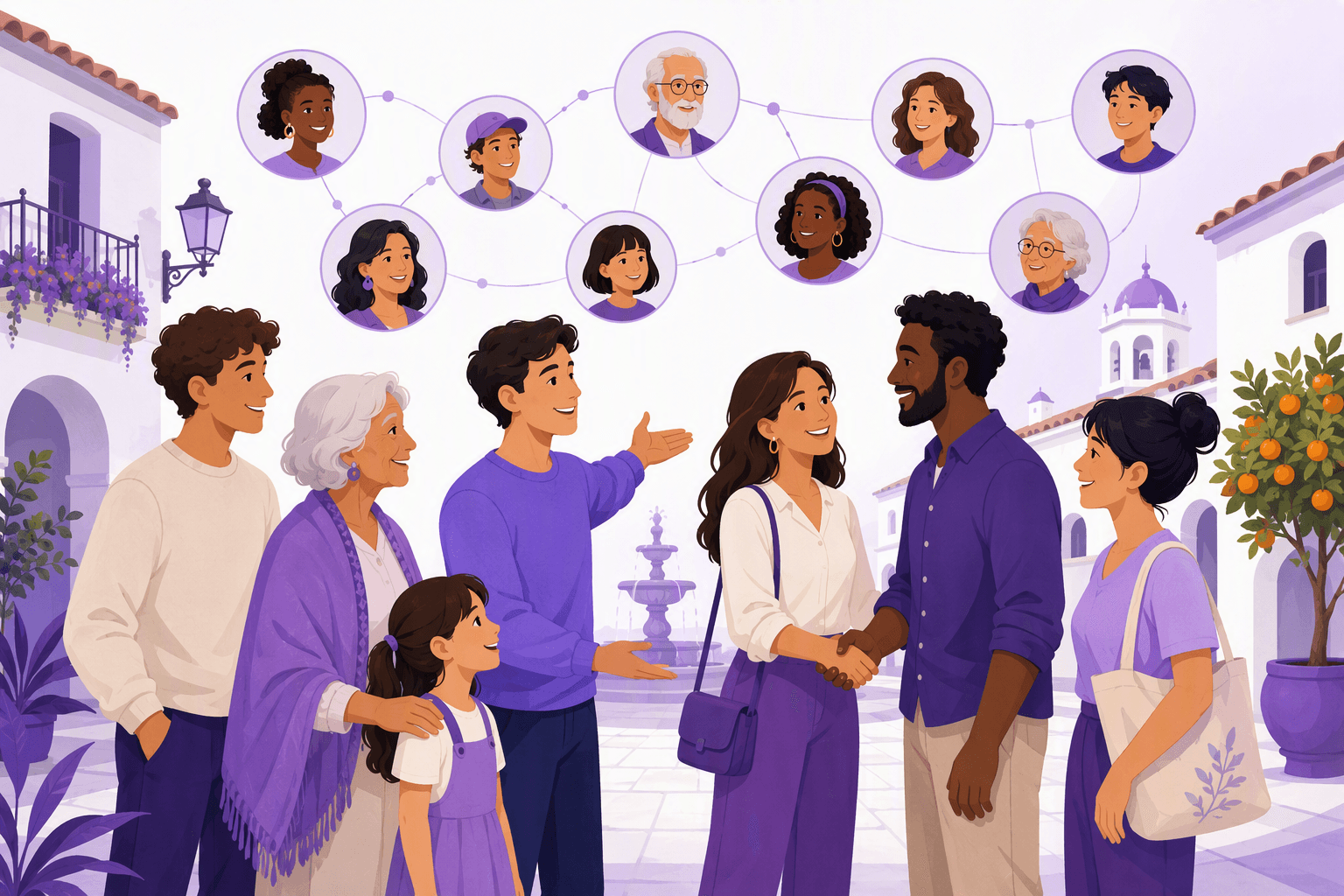
| English | Spanish | Pronunciation | Formality |
|---|---|---|---|
| My name is... | Me llamo... | meh YAH-moh | polite |
| What's your name? | ¿Cómo te llamas? | KOH-moh teh YAH-mahs | casual |
| What's your name? (formal) | ¿Cómo se llama? | KOH-moh seh YAH-mah | formal |
| Nice to meet you | Mucho gusto | MOO-choh GOOS-toh | polite |
| This is... | Te presento a... | teh preh-SEHN-toh ah | polite |
| What should I call you? | ¿Cómo quieres que te llame? | KOH-moh KYEH-rehs keh teh YAH-meh | polite |
Why Spanish names vary so much across countries
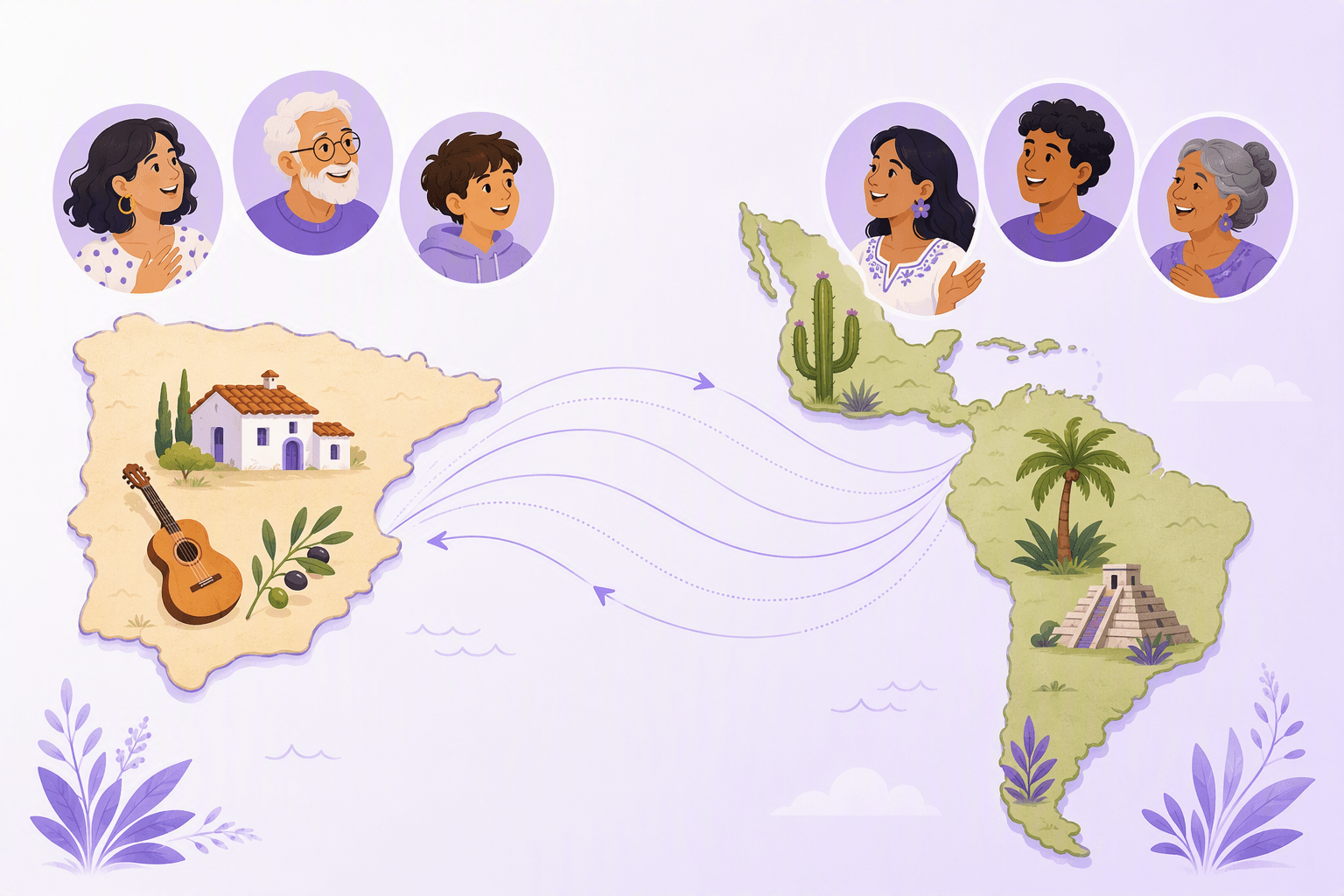
Spanish is a global language, so names travel, shift, and pick up local flavor. Ethnologue estimates Spanish has about 500 million L1 speakers worldwide, and Instituto Cervantes reports Spanish is spoken in more than 20 countries as an official language, plus large communities elsewhere.
That scale creates two realities at once: many names are instantly understood everywhere, and at the same time, each country has its own “sounds normal here” list.
If you are also building everyday conversation skills, pair this guide with how to say hello in Spanish so you can introduce yourself naturally.
How Spanish naming works in real life
Given names, compound names, and what people actually say
Many people have two given names, especially in more traditional families. You might see María del Carmen, José Luis, or Juan Pablo on documents, but hear only Carmen, Luis, or Juan in daily life.
Compound names can be practical too. In a classroom with three Marías, “María José” becomes the clearest identifier, and it often shortens to something like Marijose.
Two surnames: the pattern you will see on forms
In Spain and many Latin American countries, it is common to use two surnames. Spain’s INE explains the standard format as two apellidos, historically one from each parent.
In conversation, people may use only the first surname, but official systems often expect both. This matters when you are booking flights, filling out visas, or matching IDs.
| Concept | Spanish | Pronunciation | Note |
|---|---|---|---|
| First surname | primer apellido | pree-MEHR ah-peh-YEE-doh | Often the father's first surname. |
| Second surname | segundo apellido | seh-GOON-doh ah-peh-YEE-doh | Often the mother's first surname. |
| Full name | nombre completo | NOHM-breh kohm-PLEH-toh | May include multiple given names plus two surnames. |
| Nickname | apodo | ah-POH-doh | Also 'sobrenombre' in some contexts. |
| Diminutive | diminutivo | dee-mee-noo-TEE-voh | Often formed with -ito/-ita, like Juanito. |
| Compound given name | nombre compuesto | NOHM-breh kohm-PWEHS-toh | Two given names used together, like José Luis. |
💡 A practical rule for forms
If a form asks for "surname" and you have two apellidos, use both exactly as they appear on your passport or national ID. This avoids mismatches at airports and hotels.
60+ common Spanish first names (with pronunciation)
The lists below focus on names you will actually hear in Spain and Latin America. Pronunciations are English-friendly approximations, not perfect phonetics, but they will get you understood quickly.
Popular female names
These are widely recognized across regions, with a mix of traditional and modern choices. If you want a name that “fits in” almost anywhere, pick from this set.
| Spanish | Pronunciation | Note |
|---|---|---|
| María | mah-REE-ah | Often appears in compound names, for example María José. |
| Carmen | KAR-mehn | Very common in Spain, also used across Latin America. |
| Josefa | hoh-SEH-fah | Traditional, sometimes shortened to Pepa. |
| Isabel | ee-sah-BEHL | Nicknames include Isa, Bel, and in some places Chabela. |
| Ana | AH-nah | Simple and pan-Hispanic, often paired in double names. |
| Lucía | loo-SEE-ah | Accent matters, loo-SEE-ah, not LOO-see-ah. |
| Sofía | soh-FEE-ah | A modern favorite across many countries. |
| Valeria | vah-LEH-ree-ah | Very popular in Latin America in recent decades. |
| Camila | kah-MEE-lah | Common in South America and among younger generations. |
| Daniela | dah-nee-EH-lah | Often shortened to Dani. |
| Paula | POW-lah | In Spain, often heard among millennials. |
| Elena | eh-LEH-nah | Classic, easy to pronounce for learners. |
| Sara | SAH-rah | In Spanish it is SAH-rah, not SAIR-uh. |
| Laura | LOW-rah | Spanish LOW-rah differs from some English pronunciations. |
| Marta | MAR-tah | A steady, familiar name across regions. |
| Patricia | pah-TREE-syah | Often shortened to Patri in Spain. |
| Andrea | ahn-DRAY-ah | In Spanish, stress is on DRAY. |
| Beatriz | beh-ah-TREES | Nicknames include Bea. |
| Rocío | roh-SEE-oh | The accent marks the stress, very Spanish in feel. |
| Guadalupe | gwah-dah-LOO-peh | Strong cultural and religious associations in Mexico. |
Popular male names
These names are common across generations, with several modern favorites that have surged in recent decades. They are also frequent in movies and TV, which makes them easy to reinforce through listening.
| Spanish | Pronunciation | Note |
|---|---|---|
| José | hoh-SEH | Nicknames vary, including Pepe in Spain. |
| Juan | HWAHN | A classic, also used in compound names like Juan Carlos. |
| Carlos | KAR-lohs | Common across Spain and Latin America. |
| Miguel | mee-GEHL | Often paired as Miguel Ángel. |
| Francisco | frahn-SEES-koh | Nicknames include Paco (Spain) and Pancho (many regions). |
| Antonio | ahn-TOH-nyoh | Nicknames include Toni and Toño. |
| Manuel | mah-NWEHL | Nicknames include Manu. |
| Javier | hah-VYEHR | Often shortened to Javi. |
| Pedro | PEH-droh | Classic, recognizable everywhere. |
| Luis | LWEES | In many places pronounced LWEES, not LOO-iss. |
| Diego | DYEH-goh | Very common in Mexico and beyond. |
| Sergio | SEHR-hyoh | The g sounds like an English h before i/e. |
| Andrés | ahn-DREHS | Accent indicates stress on DREHS. |
| Pablo | PAH-bloh | Widely used, strong cultural associations through art and history. |
| Fernando | fehr-NAHN-doh | Nicknames include Fer and Nando. |
| Alejandro | ah-leh-HAHN-droh | Often shortened to Ale. |
| Daniel | dah-nee-EHL | Short form Dani is common. |
| Mateo | mah-TEH-oh | A top modern favorite in many countries. |
| Hugo | OO-goh | In Spanish the h is silent. |
| Álvaro | AHL-vah-roh | Very common in Spain, accent marks stress. |
🌍 A quick listening tip
In most Spanish accents, vowels are stable. If you learn the five vowel sounds (a, e, i, o, u), you can pronounce many names correctly on the first try: María, Sofía, Mateo, Diego.
Nicknames in Spanish: what to expect (and why they matter)
Spanish nicknames can be straightforward, but they can also feel unpredictable. This is normal, and it is part of how closeness and familiarity are expressed.
"Address forms and diminutives are not just 'cute grammar'. They encode social meaning, especially intimacy, solidarity, and politeness norms."
Anna Wierzbicka, Cross-Cultural Pragmatics
Diminutives: -ito, -ita, and the warmth factor
The diminutive often signals affection, not small size. Juan becomes Juanito (hwah-NEE-toh), Ana becomes Anita (ah-NEE-tah), and Carmen can become Carmencita (kar-mehn-SEE-tah).
In many families, you will hear diminutives used well into adulthood. It is not childish, it is relational.
Famous nickname patterns you will hear
A few nicknames are cultural knowledge. They can vary by country, but these are widely recognized:
- José: Pepe (PEH-peh) in Spain is a classic.
- Francisco: Paco (PAH-koh) in Spain, Pancho (PAHN-choh) in many places.
- Guadalupe: Lupita (loo-PEE-tah) is common in Mexico.
⚠️ Do not force a nickname
Wait until someone introduces themselves with a nickname, or a close friend uses it first. Calling a new colleague Lupita or Paco without permission can feel overly familiar.
Regional flavor: Spain vs Latin America (without stereotypes)
Spain: traditional compounds and certain “very Spanish” picks
In Spain, you will often encounter compound names and names with strong local identity, like Rocío (roh-SEE-oh) or Álvaro (AHL-vah-roh). INE name data also shows how popularity shifts by generation, with newer cohorts favoring shorter names.
Spain also has co-official languages in several regions, so you may meet people with Catalan, Basque, or Galician names depending on where you are.
Mexico and Central America: religious and family-linked naming
In Mexico, names tied to Catholic tradition and Marian devotion remain culturally salient, even when the person goes by a shorter everyday form. Guadalupe is a clear example, with the nickname Lupita used widely.
You will also hear many compound names that honor relatives. That family logic often matters more than trendiness.
South America: modern global names plus strong local favorites
Across South America, you will hear a blend: classic Spanish names, pan-European names, and newer global favorites. Sofía and Mateo are good examples of names that feel modern and international while still sounding natural in Spanish.
If you are learning through media, you will notice that characters’ names often reflect class, region, and age. That is one reason movie clips are so useful for cultural intuition.
For more listening-first learning ideas, browse the Wordy blog and compare with best movies to learn Spanish.
How to choose a Spanish name for yourself (learner-friendly, culturally safe)
Pick something you can pronounce consistently
If you choose a Spanish name for class or travel, choose one you can say the same way every time. Names like Elena (eh-LEH-nah), Daniel (dah-nee-EHL), and Laura (LOW-rah) are easy wins.
Avoid names with sounds you cannot yet control, like rolled rr, unless you are ready to practice. You can always upgrade later.
Match your vibe: age, formality, and context
A name can signal generation. A very traditional name might feel “older” in some places, while a modern favorite might feel “younger.”
If you are unsure, pick a neutral classic like Ana, Marta, Carlos, or Miguel. They rarely sound out of place.
Use your real name in formal situations
For paperwork, exams, and anything official, use your legal name. A chosen Spanish name is best treated as a social convenience, not an identity replacement.
If you want to introduce yourself smoothly, practice the full mini-script: greeting, name, and a polite closer. Pair it with how to say goodbye in Spanish so you can end conversations naturally too.
How to address people politely in Spanish (names plus titles)
Señor, señora, señorita, and professional titles
In many contexts, you can use a title plus surname: Señor García, Señora López. In professional settings, you may hear Licenciado or Doctor/Doctora depending on country and workplace culture.
When in doubt, use a polite greeting and ask what they prefer. The Quick Reference above includes a natural way to ask, “What should I call you?”
Tú vs usted changes how names feel
Using tú with a first name can feel friendly and normal. Using usted with a first name can feel formal or even stiff, depending on region and relationship.
If you are working on formality overall, the broader politeness system matters as much as the name itself. For a deeper look at Spanish tone and boundaries, see Spanish swear words so you can recognize what not to repeat from movies.
Names you will hear a lot in Spanish-language movies and TV
Media tends to overrepresent certain “everyday” names because they are instantly legible. Juan, José, Carmen, and Ana show up constantly, and modern series often feature Sofía, Valeria, Diego, and Mateo.
This is useful for learners. Repeated exposure builds fast recognition, and names are often the first words you understand in rapid dialogue.
If romance-focused dialogue is your goal, add how to say I love you in Spanish to your practice list, because names and terms of address show up heavily in relationship scenes.
Common mistakes English speakers make with Spanish names
Stress and accent marks
Accent marks are not decoration. Rocío is roh-SEE-oh, and Andrés is ahn-DREHS.
If you ignore the accent, you may still be understood, but you will sound less natural. Treat the accent as a built-in pronunciation guide.
The silent h and the Spanish j
Hugo is OO-goh, not HYOO-goh. Javier starts with a strong h-like sound, hah-VYEHR, not JAY-vee-er.
Once you internalize those two rules, a lot of names become easier.
Over-Anglicizing vowels
Spanish vowels are cleaner and more stable than English vowels. Sofía is soh-FEE-ah, not soh-FEE-uh.
If you want a fast pronunciation upgrade, focus on vowel clarity, not speed.
A simple practice routine (10 minutes, high payoff)
- Pick 5 names from the tables that you like.
- Say each name out loud 10 times, slowly, with clear vowels.
- Put each name into a real sentence: Me llamo Sofía, Me llamo Mateo.
- Add one polite connector: Mucho gusto.
- Listen for those names in a Spanish clip and repeat the line.
This is exactly the kind of small, repeatable practice that makes real speech feel less fast.
If you want more core vocabulary that shows up constantly in dialogue, continue with 100 most common Spanish words.
Final take: the “safe” shortlist if you just want to pick one
If you want a Spanish name that is widely recognized, easy to pronounce, and unlikely to sound strange in any Spanish-speaking country, these are strong choices:
- Female: Ana (AH-nah), Elena (eh-LEH-nah), Sofía (soh-FEE-ah), Laura (LOW-rah)
- Male: Carlos (KAR-lohs), Daniel (dah-nee-EHL), Mateo (mah-TEH-oh), Miguel (mee-GEHL)
From there, the best name is the one you will actually use confidently in conversation.
Frequently Asked Questions
What are the most common Spanish names?
Why do so many Spanish names have nicknames that look unrelated?
How do Spanish surnames work with first names?
Is it okay to choose a Spanish name as a learner?
What’s the difference between José María and María José?
Sources & References
- Instituto Nacional de Estadística (INE, Spain), Nombres y apellidos, latest available edition
- Real Academia Española (RAE), Diccionario panhispánico de dudas, latest available edition
- Ethnologue, Spanish (27th edition), 2024
- Instituto Cervantes, El español: una lengua viva, latest available edition
- Wierzbicka, A., Cross-Cultural Pragmatics, 2nd ed., 2003
Start learning with Wordy
Watch real movie clips and build your vocabulary as you go. Free to download.


