Quick Answer
'OK boomer' means 'I’m dismissing your opinion as out-of-touch or generationally clueless.' It’s usually a sarcastic shutdown used online, aimed at attitudes associated with older generations, not always literal age. It can be funny among friends, but in workplaces or family conversations it often reads as rude and escalates conflict.
'OK boomer' means "I’m dismissing what you’re saying as out-of-touch, preachy, or generationally clueless," usually with sarcasm. It’s a conversational door-slam more than a literal comment about someone’s age, and it often signals that the speaker does not want to debate the topic.
The phrase matters for English learners because it shows how internet English compresses a whole argument into two words, and how tone can change meaning. If you want a broader map of modern informal English, start with our English slang guide.
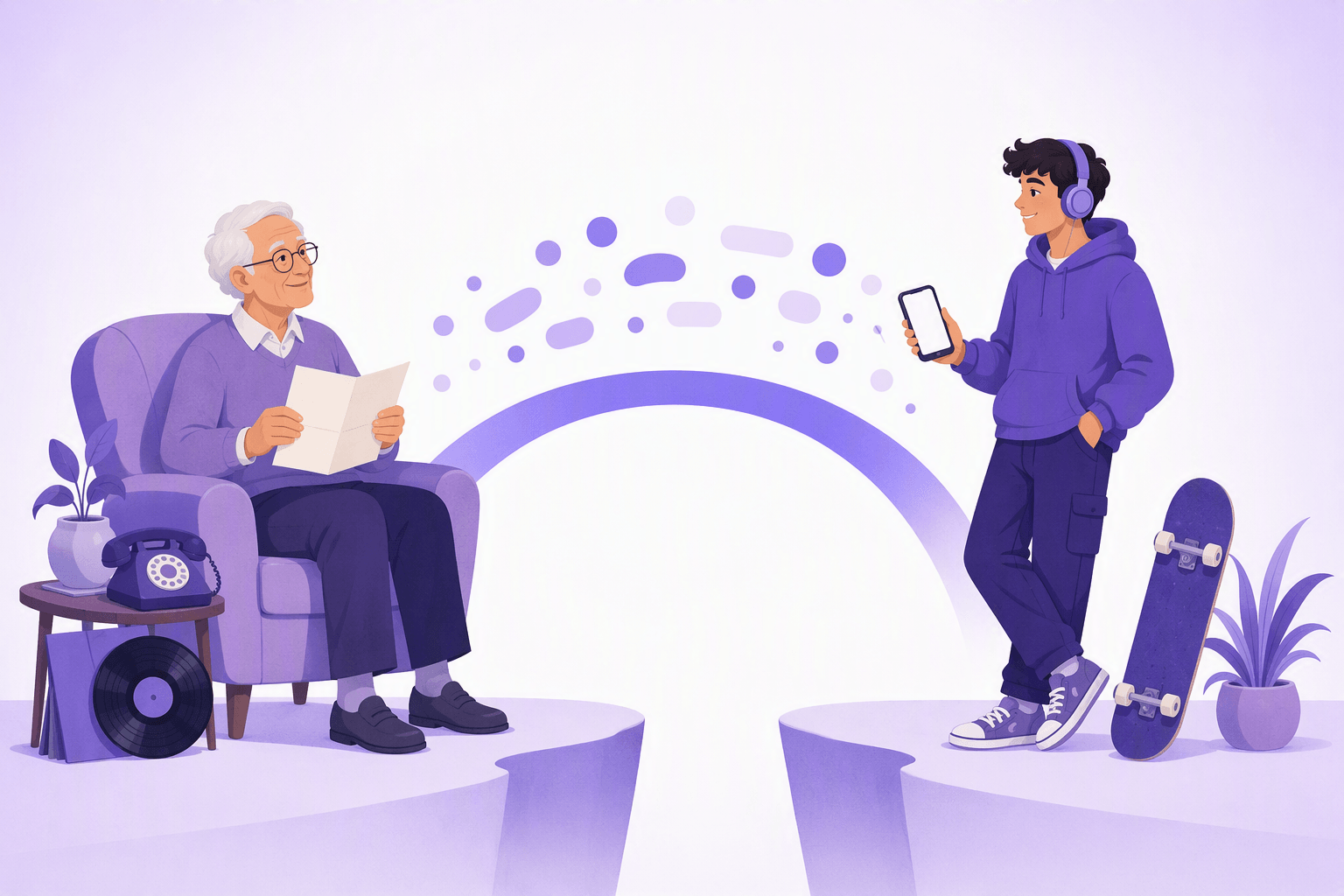
The core meaning in plain English
At its simplest, 'OK boomer' is a dismissive response to a comment that feels stereotypically "older generation." Think: moralizing, minimizing younger people’s problems, or repeating familiar lines like "just work harder" without acknowledging context.
It functions like: "Sure, whatever," "You don’t get it," or "I’m done with this conversation." The power is not in the content, it’s in the refusal to engage.
How it feels in conversation
In real interaction, 'OK boomer' usually communicates one of these messages:
- "I think your opinion is outdated."
- "I’ve heard this argument too many times."
- "I don’t think you’re listening, so I’m not going to keep explaining."
- "I’m mocking the attitude behind your comment."
Research on interaction and social meaning often frames these moments as face-threatening moves, where one person publicly rejects the other person’s stance. Deborah Tannen’s work on conversational style is useful here: conflict often escalates when people interpret tone as disrespect, even if the speaker thinks they are being witty.
Pronunciation
Pronounce it like: oh-KAY BOO-mer.
In fast speech, many speakers reduce it to something like ’kay BOO-mer, especially online in voice clips.
What does "boomer" mean here?
"Boomer" is short for "Baby Boomer," a generation label used in US-centered demographic talk. Pew Research Center defines Baby Boomers as people born 1946 to 1964 (accessed 2026), but in slang, "boomer" often means "someone acting like a boomer."
That shift is common in English: a label becomes a stereotype, then becomes a behavior-based insult. The Oxford English Dictionary tracks how words like "boomer" develop multiple senses over time (accessed 2026).
🌍 A key nuance: literal vs stereotype
In many uses, 'boomer' does not mean the person is actually in that age group. It means the speaker thinks the person is acting in a way associated with an older, out-of-touch stereotype.
Origin and how it went viral
'OK boomer' circulated online before it hit mainstream headlines, but it became widely visible in 2019, when it spread across TikTok, Twitter, Reddit, and comment sections as a quick comeback in generational arguments. Dictionary.com and Merriam-Webster both documented it as a notable internet phrase (accessed 2026).
What made it sticky is its structure:
- "OK" is minimal agreement, often sarcastic.
- "boomer" targets an identity category, even if loosely.
- Together, they create a compact dismissal that is easy to meme, caption, and remix.
If you want to understand why short phrases travel so well online, Gretchen McCulloch’s work in Because Internet is a helpful lens: internet language rewards brevity, repeatability, and recognizable stance-taking, especially in comment threads where speed matters.
When people use it (and what they are reacting to)
People use 'OK boomer' when they feel a conversation has become repetitive or condescending. Common triggers include:
"Kids these days" complaints
Examples include criticizing younger people’s work ethic, phone use, dating habits, or slang. The reply says: "This is a tired script."
Minimizing structural problems
When someone reduces issues like housing costs, student debt, or climate anxiety to personal failure, 'OK boomer' can be a protest against what feels like denial of reality.
Moralizing and lecturing
If a comment sounds like a lecture rather than a discussion, the phrase becomes a way to reject the role of "student" being assigned to the listener.
Examples you will actually see (with tone notes)
These are not "perfect grammar" examples, they are realistic.
- Comment thread
- A: "Back in my day we didn’t need therapy."
- B: "OK boomer."
Tone: public dismissal, often gets likes because it performs a stance quickly.
- Family conversation
- A: "Just walk into the office and ask for a job."
- B: "OK boomer."
Tone: can be funny, but often lands as disrespectful and ends the talk.
- Playful friend banter
- A: "I still print my boarding pass."
- B: "OK boomer."
Tone: teasing, works only if the relationship is safe and both people laugh.
Is it offensive?
It can be, depending on context. It is not a slur, but it is age-targeted and contempt-coded, which is why many people hear it as insulting.
A useful way to think about it is: it attacks the person’s social identity (or the stereotype of it) rather than the argument. That is why it escalates quickly in workplaces and families.
If you are learning English for professional settings, treat it as "do not use at work" language, similar to many items in our English swear words guide, even though it is not profanity.
⚠️ Workplace rule
In emails, meetings, customer service, and classrooms, 'OK boomer' is almost always inappropriate. Even if you mean it as a joke, it can read as age discrimination or disrespect.
Why it became a generational symbol
'OK boomer' is not just a phrase, it is a cultural pressure valve. It emerged in a period when generational debates were already intense, especially around economics, technology, and social values.
A few real-world anchors that shape the conversation:
- English is global, which helps memes travel. Ethnologue estimates about 1.5 billion people speak English worldwide when counting native and second-language speakers (Ethnologue, 27th edition, 2024). That scale makes English memes unusually exportable.
- Generational labels are media-friendly. They compress complex demographic trends into a single word, which is convenient for headlines and social platforms.
- Online platforms reward punchlines. Short dismissals often outperform long explanations in engagement metrics, even when they reduce understanding.
Linguist John McWhorter, in his writing on language change and informal speech, often emphasizes that conversational shortcuts are not "lazy," they are efficient tools for social meaning. 'OK boomer' is efficient, but it is also socially sharp.
How to use it safely (if you use it at all)
If you are an English learner, the safest approach is to understand it, not to deploy it. But if you do want to use it in casual settings, you need to control three variables: relationship, setting, and tone.
Relationship: who are you talking to?
Use only with friends who already joke that way. Do not use it with strangers, authority figures, customers, or older relatives unless you are sure it will be received as playful.
Setting: where is this happening?
- Public online spaces: common, but escalatory.
- Private chats: can be playful.
- Face-to-face: often harsher than people expect, because sarcasm is more personal in person.
Tone: are you shutting down or teasing?
If your goal is to end a conversation, it will work. If your goal is to persuade, it will backfire.
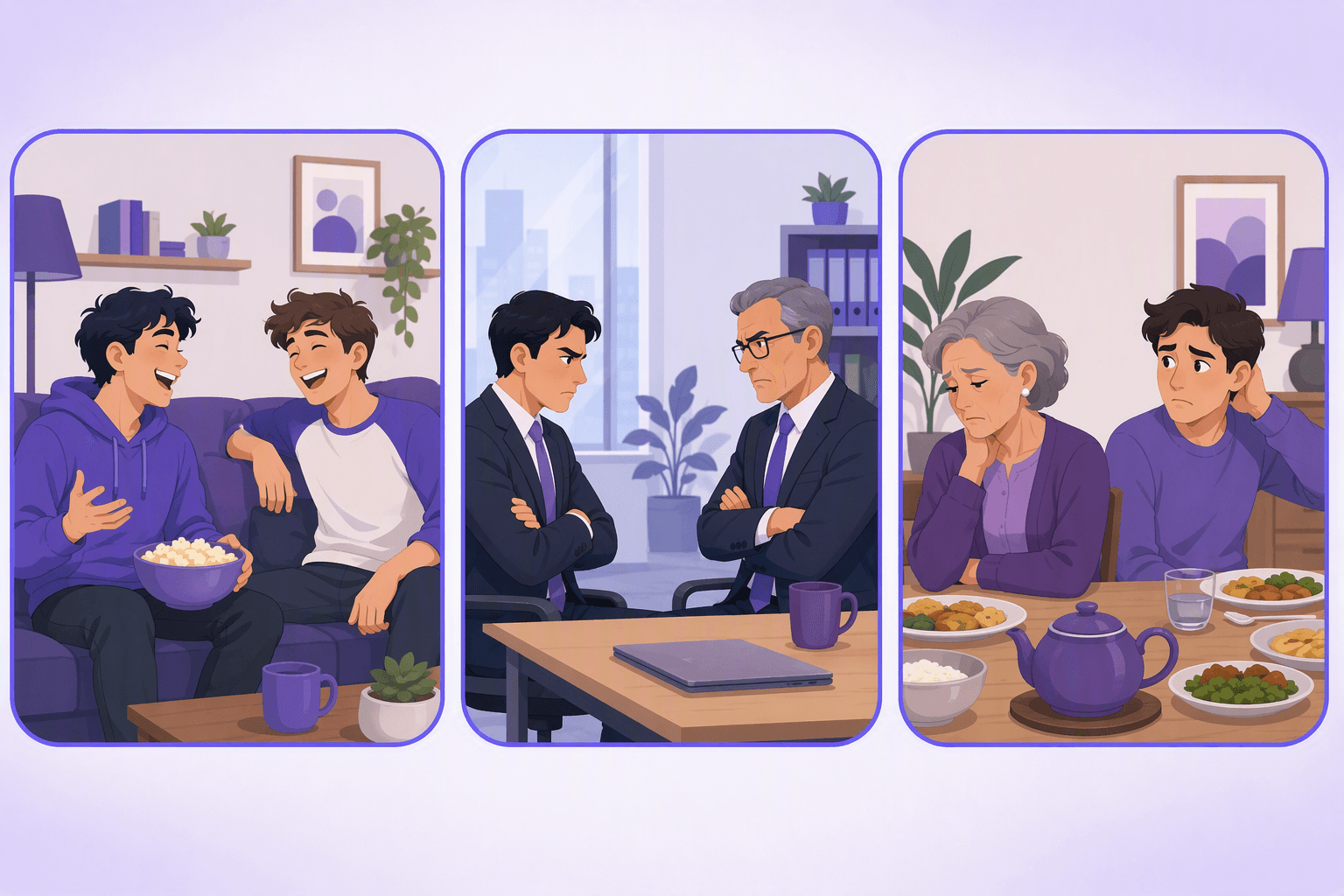
Better alternatives (same feeling, less conflict)
If you want to express frustration without insulting a group identity, these are safer:
- "I don’t think we’re going to agree."
- "That doesn’t match my experience."
- "Can we focus on the specific issue?"
- "I hear you, but I see it differently."
These keep the disagreement on the idea, not the person.
Common misunderstandings for learners
Mistaking it for genuine agreement
Because it starts with "OK," learners sometimes read it as acceptance. In most uses, it is sarcastic. The stress pattern matters: oh-KAY often sounds clipped.
Thinking it only targets Baby Boomers
In slang, it can be aimed at Gen X, Millennials, or even Gen Z if someone is acting "old-fashioned." The meaning is stance-based: "you sound out of touch."
Using it as a debate tactic
It is not a debate tactic, it is a conversation-ending move. If you want to practice persuasive English, you will get more value from disagreement tools and real dialogue, like you hear in films and series.
For listening practice with real arguments and comebacks, use movie clips and subtitles, and compare how characters disagree politely vs rudely. Our list of best movies to learn English is a good starting point.
'OK boomer' in the bigger ecosystem of internet English
Internet slang often follows a pattern: a phrase starts in a niche community, gets memed, becomes mainstream, then becomes "cringe" to early adopters. 'OK boomer' has gone through that cycle in many spaces.
It also shows a common internet move: stance markers. Instead of arguing the content, you label the stance as predictable and dismiss it. Other stance markers include "touch grass," "cope," and "skill issue," though each has its own community and tone.
If you are building a modern vocabulary, pair this article with our broader English slang overview and then learn how to recognize register changes: the same speaker may write formally at work and use sharp slang in comments.
Cultural nuance: why it lands differently in different countries
Even though the phrase is English, it is heavily shaped by US generational labels and US culture wars. In countries where "Baby Boomer" is not a common everyday category, the phrase can feel like imported internet culture, used more as a meme than a real social critique.
That said, English-language internet spaces often share the same meme vocabulary across borders. Because English is used in many countries as a second language, a phrase like this can be understood globally even when the local demographic context differs.
Mini language lesson: why two words can carry so much meaning
'OK boomer' is a good example of pragmatics, meaning created by context.
- The literal meaning is mild: "OK" plus a label.
- The implied meaning is strong: "I reject your stance and I’m not engaging."
This is why learning English is not only vocabulary and grammar. You also need to learn what people do with words in real interaction, especially in informal settings.
If you like learning English through real dialogue, Wordy focuses on short movie and TV clips where you can hear how tone changes meaning, then review the vocabulary with spaced repetition. For a more structured base vocabulary, you can also use frequency lists like our 100 most common English words and then notice how those simple words behave in real speech.
Quick checklist: should you say it?
Use this as a practical decision tool:
- Are you in a professional or mixed-age setting? Do not say it.
- Are you trying to persuade or build rapport? Do not say it.
- Are you joking with close friends who already use it? Maybe.
- Are you online and ready for conflict? You can, but expect pushback.
Related expressions you might see nearby
'OK boomer' often appears in the same conversational neighborhoods as:
- "Sure, Jan." (dismissive, meme-based)
- "Whatever you say." (can be neutral or sarcastic)
- "That’s not how it works." (corrective, less identity-based)
- "Read the room." (social correction)
These are useful to recognize because they signal stance and social positioning, not just information.
A note on numbers and generations (why labels feel slippery)
Generational talk often uses numbers and date ranges, but everyday speech uses stereotypes. Pew Research Center’s ranges are widely referenced in English-language media (accessed 2026), but people rarely check birth years in conversation.
If you want to get comfortable with English numbers for dates and ranges, our English numbers guide helps you say years smoothly, which matters when people talk about "born in 1960" vs "born in the sixties."
Bottom line
'OK boomer' is a sarcastic dismissal meaning "I’m done with this argument, your take feels out of touch." It is culturally tied to generational debates, it spread widely through meme culture, and it is easy to recognize but risky to use, especially outside close friends.
To keep building real-world English that matches the situation, combine slang recognition with lots of listening. Start with English slang, then train your ear with movies to learn English, and keep your register safe by knowing what crosses the line in English swear words.
Frequently Asked Questions
Is 'OK boomer' always about age?
Is 'OK boomer' rude?
Where did 'OK boomer' come from?
How do you respond to 'OK boomer' without escalating?
Can you say 'OK boomer' as a joke with friends?
Sources & References
- Merriam-Webster, 'OK boomer' entry, accessed 2026
- Oxford English Dictionary, 'boomer' and related entries, accessed 2026
- Pew Research Center, generational definitions and demographics, accessed 2026
- Ethnologue, 27th edition, 2024
- Dictionary.com, 'OK boomer' definition and usage notes, accessed 2026
Start learning with Wordy
Watch real movie clips and build your vocabulary as you go. Free to download.


