Quick Answer
LOL means 'laughing out loud.' In modern texting, it often signals friendliness, softens a message, or marks something as lighthearted, even when you are not literally laughing. This guide explains tone, common patterns, and safer alternatives for work, friends, and online communities.
LOL means "laughing out loud", but in 2026 it usually functions less like a literal description of laughter and more like a tone signal in digital conversation, showing friendliness, easing tension, or marking a message as casual.
| English | English | Pronunciation | Formality |
|---|---|---|---|
| Meaning | LOL | ell-OH-ell | casual |
| Literal expansion | laughing out loud | LAF-ing out LOWD | casual |
| Common tone | lighthearted, friendly, not too serious | LITE-har-tid | casual |
| Safer work alternative | haha / that's funny | HA-ha | polite |
| Stronger variant | lmao | el-em-AY-oh | slang |
LOL is one of the most common pieces of internet English, and it spreads because English itself spreads. Ethnologue estimates roughly 1.5 billion English speakers worldwide (native plus second-language), and English is used as an official language in dozens of countries, so short, easy-to-type markers like LOL travel fast across borders.
If you are learning English, LOL is worth understanding even if you do not plan to use it. You will see it in texts, comments, gaming chat, and subtitles, and it often changes the emotional meaning of a sentence more than the dictionary meaning of the letters.
For more everyday informal English, pair this with our English slang guide and, for listening practice, our picks for the best movies to learn English.
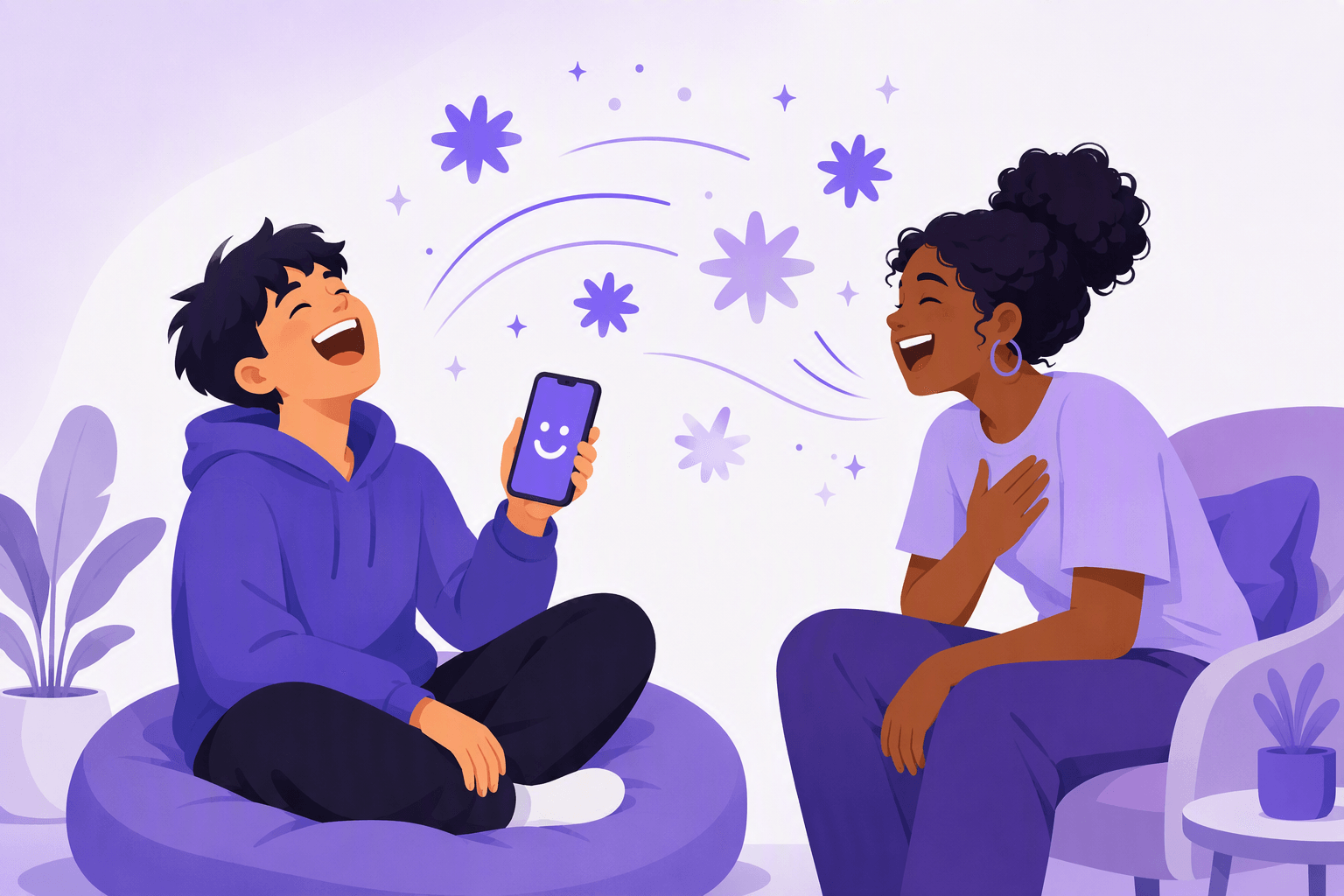
What LOL literally stands for (and what it usually means now)
LOL is an initialism for "laughing out loud" (pronounced letter-by-letter: "ell-OH-ell"). Dictionaries record it as an abbreviation used in electronic communication, originally tied to actual laughter.
In real conversation today, LOL often means one of these:
- "I’m friendly, this is casual."
- "I’m joking, don’t take this too seriously."
- "This is slightly awkward, I’m smoothing it over."
- "I’m acknowledging what you said, even if it’s not hilarious."
That shift is normal in language. Words and expressions often drift from literal meaning to social function, especially in fast, high-volume environments like messaging.
"The language of the internet is not a separate language, but a new set of communicative options, with its own conventions and pragmatic signals."
David Crystal, linguist, Language and the Internet (Cambridge University Press)
How LOL works as a tone marker
It can soften a message
Compare:
- "Can you send the file today?"
- "Can you send the file today lol"
The second can sound less demanding, more like friendly nudging. The risk is that it can also sound unclear or passive-aggressive if the other person is stressed.
💡 Learner shortcut
If you are not sure whether LOL will sound friendly or dismissive, replace it with a clear emotion word: "Thanks!", "No worries", "That’s funny", or "I’m kidding". Clarity beats slang in mixed-level conversations.
It can mark something as a joke
In plain text, jokes do not always look like jokes. LOL can function like a sign that says "I’m not being serious."
- "Yeah, I totally love waking up at 5am lol" (sarcasm)
- "I’m basically a chef now lol" (self-deprecating humor)
If you are learning English, this is a big deal: sarcasm is hard to hear without voice cues, and LOL is one of the cues people use to prevent misunderstanding.
It can reduce awkwardness
People also use LOL as a social cushion after something slightly uncomfortable:
- "I forgot your name lol"
- "That was a weird meeting lol"
Here LOL is less about humor and more about managing face, the social need to avoid embarrassment. This lines up with classic pragmatics research on politeness strategies, where speakers soften threats to the relationship with hedges and humor.
It can signal distance or dismissal
LOL can also create emotional distance:
- "Ok lol"
- "Sure lol"
These can read as "I’m not taking this seriously" or "I don’t agree but I’m not arguing." In many online spaces, "lol" is used to downplay conflict while still showing attitude.
Where you will see LOL: texting, gaming, comments, and subtitles
LOL is not equally common in every medium.
In fast chat environments like gaming or live streams, LOL is a quick reaction token, similar to "nice" or "wow." It can mean "that was funny," but it can also mean "I saw that, I’m reacting."
In comment threads, LOL can be performative. People use it to show alignment with a group, like laughing with the crowd. This is one reason LOL can feel harsher online: it can imply "everyone is laughing at you."
In subtitles, you might see LOL written out in on-screen text messages, but spoken dialogue usually uses "I’m kidding," "that’s funny," or laughter sounds. If you want to train your ear for real laughter and casual reactions, movies help, but you need the right kind. Our best movies to learn English list focuses on clear dialogue and everyday speech.
Pronunciation and capitalization: LOL vs lol
LOL
"LOL" in caps can feel more like the original meaning, a stronger laugh, or just older texting style. It is still pronounced "ell-OH-ell" (ell as in the letter L).
lol
Lowercase "lol" often feels lighter and more like punctuation. Many people type it almost automatically to keep messages friendly.
LoL and other mixed forms
Mixed-case is less standard. Sometimes it is stylistic, sometimes it is accidental autocorrect. Do not over-interpret it unless you know the person’s habits.
⚠️ Avoid this common learner mistake
Do not say "lol" out loud in most face-to-face conversations unless you are quoting a message or joking about internet talk. In spoken English, people usually laugh, smile, or say "that’s funny" instead.
LOL vs similar reactions (and what each one signals)
Understanding the alternatives helps you read tone, and it gives you safer choices when you write.
haha
Pronunciation: "HA-ha" (often repeated: "hahaha").
Haha is closer to real laughter. It usually reads warmer than lol, especially when paired with a friendly sentence.
- "Haha, that’s true."
- "Haha I can’t believe it."
lmao
Pronunciation: "el-em-AY-oh".
This is stronger and more slangy. It literally references "my ass," so it is more informal and can be inappropriate at work or with strangers. If you want to understand the boundary between casual and offensive language, our English swear words guide explains why some abbreviations feel stronger than they look.
rofl
Pronunciation: often "ROFF-ul" or spelled out.
This is older internet slang ("rolling on the floor laughing"). You will still see it, but it is less common than LOL and can feel dated in some communities.
😂 and other emojis
Emojis can replace LOL, but they also vary by culture and age group. Some people use 😂 for genuine laughter, others use it to soften a message, and some avoid it because it feels too intense.
"I’m dead"
Pronunciation: "I’m DED".
This is modern slang for "that’s extremely funny." It is common in social media, and it can be playful, but it is not literal. If you are building core vocabulary first, start with high-frequency words from our 100 most common English words and treat phrases like this as optional flavor.
Common LOL patterns you should recognize
"lol" at the end
This is the most frequent pattern:
- "I’ll be there in 10 lol"
- "That’s my bad lol"
It often signals "don’t judge me too hard" or "I’m keeping it light."
"lol" at the beginning
Beginning-position "lol" is often a reaction to what came before:
- "lol no"
- "lol that’s wild"
It can be friendly, but it can also be blunt. In arguments, "lol" at the beginning can sound like mocking.
Double LOL and extended forms
- "lolol"
- "lollll"
These are intensity markers. More letters usually means more emotion, but it can also be ironic, like pretending to laugh.
"LOL." with a period
A period can make it colder:
- "lol."
- "LOL."
This often reads as "not amused" or "I’m done with this." Punctuation matters a lot in digital English because it replaces voice tone.
When LOL is appropriate (and when it is not)
Good situations for learners
Use LOL if you are in a clearly casual space and you are confident about the tone:
- chatting with friends your age
- group chats where others use it
- gaming chat
- casual comments where humor is obvious
Start small. One "lol" is usually enough.
Situations to avoid
Avoid LOL when the message is serious or when status and professionalism matter:
- job applications, formal emails
- customer support messages
- apologies for real harm
- sensitive topics (health, grief, money stress)
If you need a neutral tone, write plainly. If you need warmth, use explicit politeness.
A simple workplace rule
If you would not laugh in the same moment in a meeting, do not type LOL. In many workplaces, a friendly "Thanks!" does the same job without risk.
Cultural and generational notes (why LOL can feel different)
LOL has been around long enough that different age groups learned it in different eras of the internet. For some older users, LOL still maps to actual laughter. For many younger users, "lol" is closer to a discourse particle, similar to "like" in speech, and it can appear even in mildly negative messages.
This is why two people can read the same "Sure lol" differently. One reads it as friendly casualness, the other reads it as disrespect.
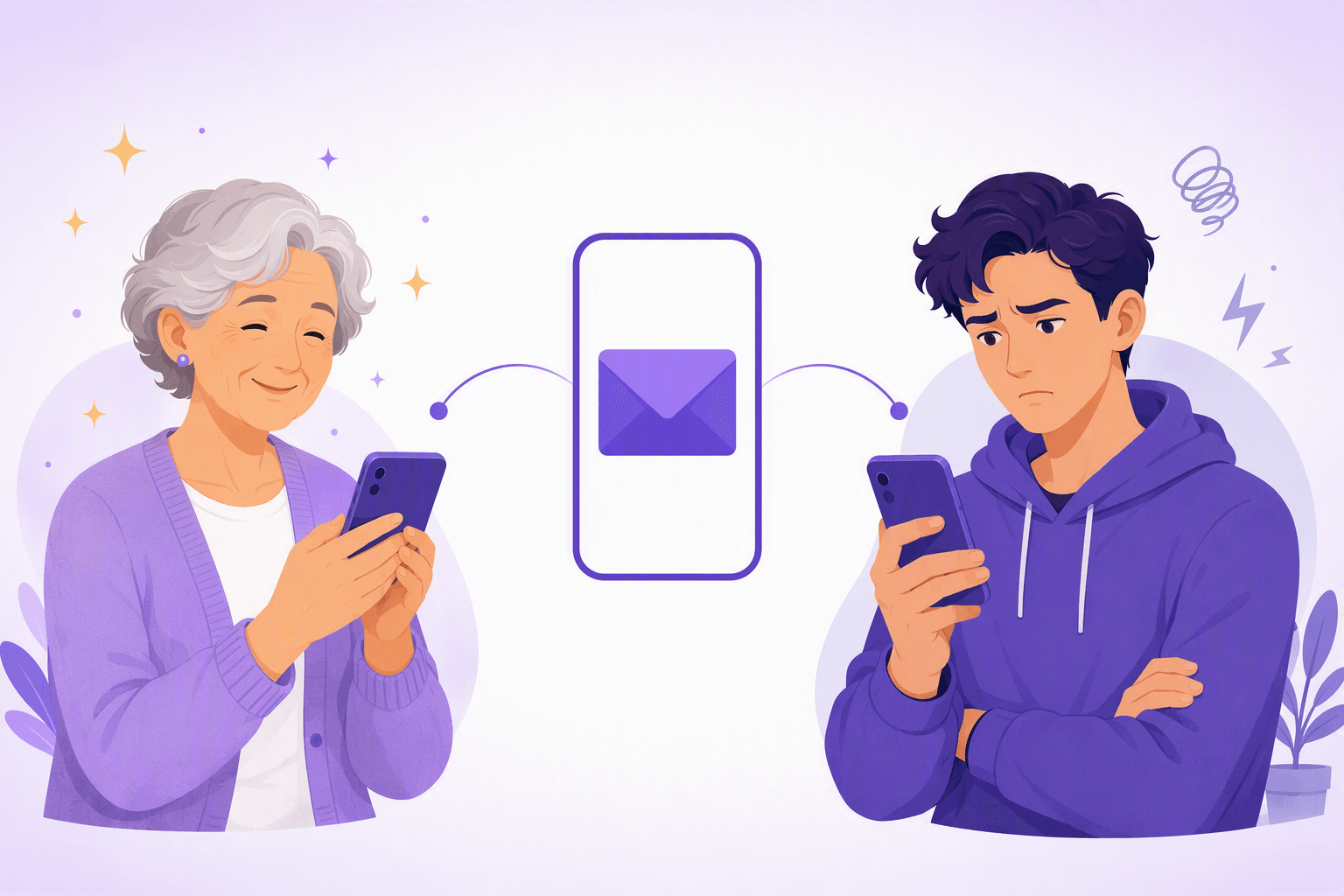
There is also a cross-cultural layer. English is used globally, and many second-language speakers learn internet English before they learn workplace English. That can create mismatches: a learner uses LOL to be friendly, but a native speaker in a formal context reads it as careless.
If you are learning English for international communication, it helps to separate "internet-friendly" from "professionally clear." You can still be warm without slang.
🌍 Why subtitles and texts teach different English
Movies and TV teach spoken reactions, timing, and real laughter. Texting teaches written tone markers like lol, haha, and emojis. If you only learn from one channel, you miss half the system. A balanced routine uses both, which is why clip-based listening practice works well for modern English.
LOL in real English: examples you can copy (and safer rewrites)
Here are common messages and a safer alternative when you are unsure.
| Message with LOL | Likely meaning | Safer alternative |
|---|---|---|
| "Can you call me lol" | soft request, casual | "Can you call me when you can?" |
| "I’m late lol" | embarrassed, keeping it light | "Sorry, I’m running late." |
| "Ok lol" | uncertain, dismissive, or joking | "Okay!" or "Got it." |
| "That’s not true lol" | disagreement with edge | "I don’t think that’s right." |
| "You’re crazy lol" | playful teasing | "You’re hilarious" or "You’re wild" |
If you want more building blocks for numbers and timing in messages like "I’ll be there in 10," review English numbers. It helps you write times and quantities quickly and correctly.
The origin story (briefly) and why it stuck
LOL emerged in early online communication where speed mattered and bandwidth was limited. Short abbreviations solved a real problem: expressing emotion without voice.
Research on computer-mediated communication shows that these markers evolve quickly into social tools, not just shorthand. Once a community agrees that "lol" means "friendly, light, I’m not attacking," it becomes useful even when nothing is funny.
That is also why LOL persists even as emojis and gifs exist. It is fast, keyboard-native, and flexible.
How to learn and use LOL naturally with movie and TV clips
You rarely hear characters say "ell-OH-ell" in dialogue, but you constantly see the situations that LOL tries to handle: teasing, awkwardness, sarcasm, and softening a request.
A practical method is to watch short scenes and label the social action:
- teasing a friend
- disagreeing politely
- admitting a mistake
- reacting to something surprising
Then choose a written reaction that matches the action: "haha" for real amusement, "lol" for softening, or no marker for serious clarity. This is exactly the kind of mapping that helps you sound natural in both speech and text.
If you want a structured way to do that with real dialogue, start with our best movies to learn English and combine it with a focused slang list from English slang.
Quick do and don't list (without overthinking it)
Do
- Use "lol" to keep genuinely casual chats light.
- Watch where you place it, end-position is usually softer.
- Match the other person’s style, especially in group chats.
Don't
- Use LOL to respond to serious messages.
- Use it with people who might read it as mocking.
- Use stronger variants like lmao in professional contexts.
If you are expanding beyond casual tone markers, it also helps to know what crosses the line. Our English swear words guide explains which words and abbreviations can cause real offense, even when they look like harmless slang.
Conclusion: what LOL means in 2026
LOL still means "laughing out loud," but most of the time it functions as a tone cue: friendly, casual, smoothing, sometimes sarcastic. Read it as social intent, not as a report of actual laughter.
When you are unsure, choose clarity over slang. As your English grows, you will start to feel when "lol" sounds warm, when it sounds awkward, and when it sounds sharp, and that is the real skill behind modern digital English.
Frequently Asked Questions
What does LOL mean in texting?
Is LOL rude or passive-aggressive?
What is the difference between LOL and haha?
Should I use LOL at work?
What does 'lol' mean at the end of a sentence?
Sources & References
- Merriam-Webster, 'LOL' (definition entry), updated regularly
- Oxford English Dictionary, 'LOL' (abbreviation), updated regularly
- Crystal, David. Language and the Internet (2nd ed.). Cambridge University Press, 2006
- Tagliamonte, Sali A. & Denis, Derek. 'LOL and the evolution of language in the Internet age.' American Speech, 2008
Start learning with Wordy
Watch real movie clips and build your vocabulary as you go. Free to download.


