Spanish Language Overview: Where It's Spoken, How It Works, and How to Learn It
Quick Answer
Spanish is a global language with hundreds of millions of native speakers across Spain, Latin America, and large communities in the US. This overview explains where Spanish is spoken, what makes its pronunciation and grammar distinctive, how major dialects differ, and how to learn Spanish efficiently using real-world input.
Spanish is one of the most useful languages to learn because it is spoken across 20 countries, has over 500 million native speakers, and gives you access to a huge range of culture from films and music to work and travel (Instituto Cervantes, 2024; Ethnologue, 2024).

| English | Spanish | Pronunciation | Formality |
|---|---|---|---|
| Hello | Hola | OH-lah | casual |
| Good morning | Buenos días | BWEH-nohs DEE-ahs | polite |
| How are you? (informal) | ¿Cómo estás? | KOH-moh ehs-TAHS | casual |
| Nice to meet you | Mucho gusto | MOO-choh GOOS-toh | polite |
| Please | Por favor | por fah-VOR | polite |
| Thank you | Gracias | GRAH-syahs | polite |
| You're welcome | De nada | deh NAH-dah | polite |
| Goodbye | Adiós | ah-DYOHSS | polite |
Why Spanish matters in 2026
Spanish is not just "a travel language". It is a major world language used in government, education, media, and business across multiple continents.
Ethnologue’s 2024 edition lists Spanish among the largest languages by native speakers, and Instituto Cervantes estimates more than 590 million total speakers when including L2 users (Ethnologue, 2024; Instituto Cervantes, 2024).
Where Spanish is spoken
Spanish is an official language in 20 countries, plus Spain. The largest Spanish-speaking populations are in Mexico, Colombia, Argentina, and Spain, with many more across Central America, the Caribbean, and the Andes.
It is also a major community language in the United States. Even without federal official status, Spanish is widely used in healthcare, customer service, and local government in many cities.
Spanish as a "pluricentric" language
Spanish has multiple standard centers, not one single "correct" national version. The RAE works together with the Association of Academies of the Spanish Language (ASALE) to describe a shared standard while recognizing regional norms (RAE & ASALE, 2009).
This matters for learners: you can aim for a clear, widely understood Spanish without sounding like you are copying one country’s slang.
What Spanish sounds like: pronunciation you can trust
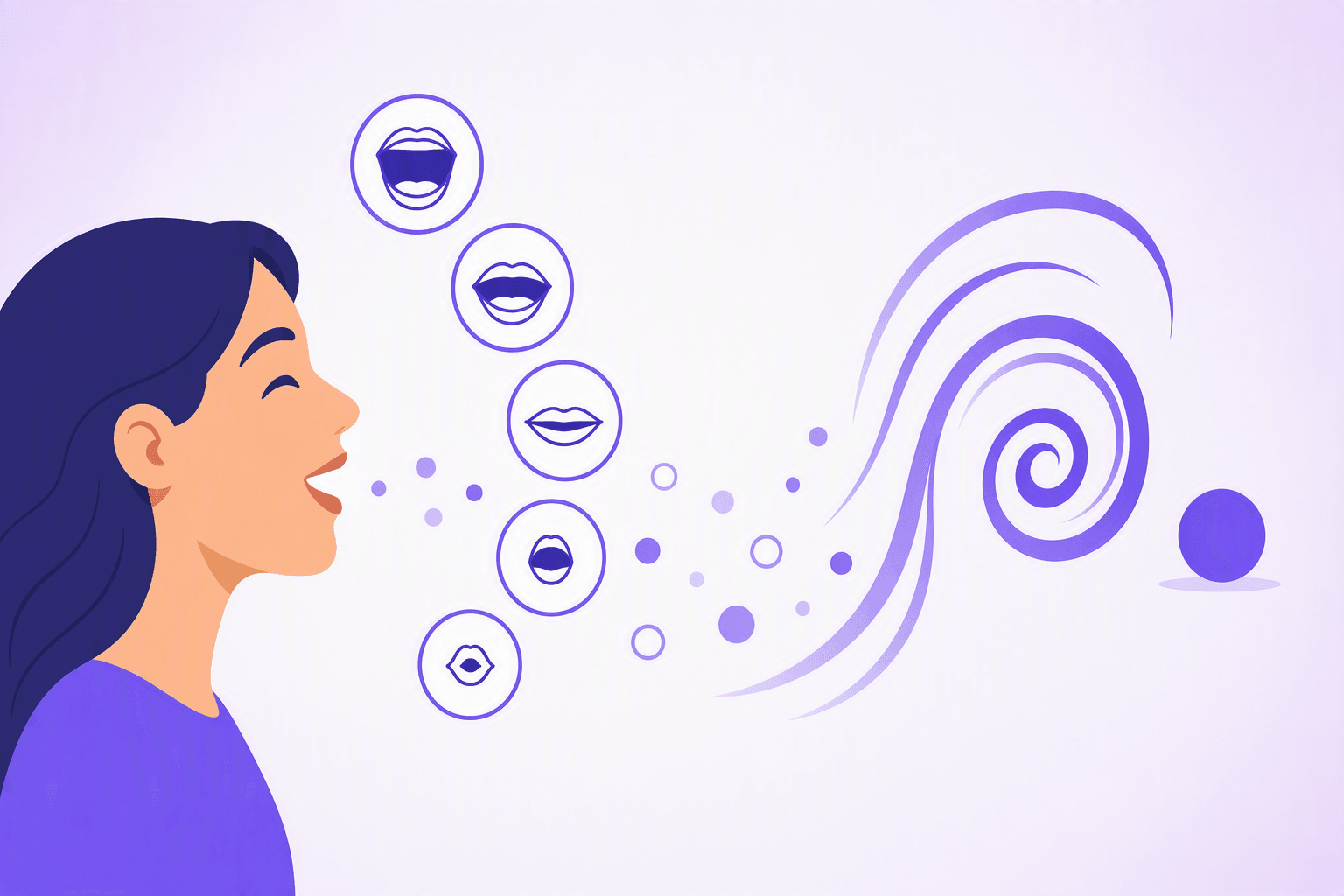
Spanish pronunciation is more consistent than English: letters usually map to the same sounds. That consistency is one reason learners often improve quickly in reading and listening once they know the basics.
Still, a few features shape your accent and comprehension.
Vowels: five sounds, steady timing
Spanish has five main vowels: a, e, i, o, u. They are typically "pure" vowels, not sliding diphthongs like many English vowels.
Approximate sounds:
- a: "ah" as in "father"
- e: "eh" as in "bed" (short)
- i: "ee" as in "see"
- o: "oh" as in "go" (short, not drawn out)
- u: "oo" as in "food"
Because vowels stay steady, Spanish rhythm often feels more even to English speakers.
The letters that change by region: c, z, ll, y
Two big accent markers show up quickly:
- Ceceo/distinción: In much of Spain, "c" (before e/i) and "z" sound like "th" in "think". So gracias can sound like "GRAH-thyahs". In Latin America, it is usually "s", "GRAH-syahs".
- Yeísmo: In many regions, "ll" and "y" sound similar. In Argentina and Uruguay, they often sound like "sh" or "zh", so calle can sound like "KAH-sheh" or "KAH-zheh".
None of these is "more correct". They are regional standards.
R vs RR: the sound that needs practice
Spanish has two "r" sounds:
- r between vowels is a tap, like a quick "d" in American English "ladder". Example: pero (PEH-roh).
- rr is a trill, a rolled sound. Example: perro (PEH-rroh).
If you cannot roll rr yet, do not freeze. Native listeners usually understand you from context, and the trill improves with targeted practice.
💡 Fast pronunciation win
Learn Spanish stress rules early. If a word ends in a vowel, n, or s, stress the second-to-last syllable (hablo: AH-bloh). Otherwise, stress the last syllable (hotel: oh-TELL). Accent marks (tildes) override the default.
How Spanish works: the core grammar ideas
Spanish grammar looks complex on day one because verbs change a lot. In practice, the system is regular, and high-frequency patterns repeat constantly.
The RAE’s grammar describes Spanish as a highly inflected language, especially in verbs, with agreement in gender and number across nouns, articles, and adjectives (RAE & ASALE, 2009).
Word order: flexible, but not random
The default order is Subject-Verb-Object, like English. But Spanish often drops the subject because the verb ending already shows who is doing the action.
- (Yo) hablo: "I speak" (AH-bloh)
- (Nosotros) hablamos: "we speak" (ah-BLAH-mohs)
This is why Spanish dialogue can feel fast: fewer pronouns, more meaning packed into verb endings.
Gender and agreement: the "signal system"
Most nouns are masculine or feminine, and articles and adjectives match:
- el libro rojo (ell LEE-broh ROH-hoh)
- la casa roja (lah KAH-sah ROH-hah)
Do not treat gender as "logic". Treat it as a memory tag that helps you build correct sentences automatically.
Ser vs estar: identity vs state (with real-life nuance)
English uses "to be" for many meanings. Spanish splits it mainly into ser and estar.
- ser (sehr): identity, inherent traits, time, origin
- estar (eh-STAR): location, temporary states, results
But native usage is also cultural and pragmatic. Saying está rico (eh-STAH REE-koh) for food is normal in many countries, while es rico can mean "it is tasty" in some contexts but can also mean "he is rich" depending on the noun implied.
The subjunctive: Spanish mood, not "extra grammar"
Learners fear the subjunctive because it feels like a new tense. It is better understood as a mood used for non-facts: wishes, doubts, recommendations, emotions.
Examples you will hear constantly:
- Quiero que vengas. (KYEH-roh keh BEN-gahs) "I want you to come."
- Es importante que estudies. (ess eem-por-TAHN-teh keh ehs-TOO-dyess) "It’s important that you study."
"The subjunctive is not a 'difficult tense' but a pragmatic tool for marking a speaker’s stance toward what is being said."
Professor Joan L. Bybee, linguist (as discussed in usage-based approaches to grammar)
Dialects and regional differences that actually affect learners
Spanish varies by region, but most differences are predictable. If you focus on high-frequency words and clear pronunciation, you will be understood across the Spanish-speaking world.
Pronouns: tú, usted, ustedes, vosotros, vos
Here is the practical map:
- tú (too): informal singular in most places
- usted (oo-STED): formal singular
- ustedes (oo-STEH-dess): plural in Latin America for both formal and informal
- vosotros (boh-SOH-trohs): informal plural mainly in Spain
- vos (bohs): informal singular in parts of Central America and the Río de la Plata region
If you want a deeper decision guide, start with tú vs usted in Spanish. It is one of the highest-impact politeness choices you will make.
Vocabulary: the "everyday nouns" problem
Regional vocabulary differences show up most in daily objects and food. A few examples:
- car: coche (Spain), carro (many Latin American countries), auto (Argentina/Chile)
- juice: zumo (Spain), jugo (Latin America)
- computer: ordenador (Spain), computadora (Latin America)
The key is not memorizing every variant. It is learning to ask and confirm politely:
- ¿Cómo le dicen aquí? (KOH-moh leh DEE-sen ah-KEE) "What do you call it here?"
Speed and reduction in real speech
Textbook Spanish is clear. Real Spanish reduces sounds:
- para becomes pa (pah) in casual speech
- estás becomes ’tás (tahs) in fast conversation
- de + el becomes del (dell), a mandatory contraction
This is why learning through authentic clips is so effective: you train your ear for what people actually say.
If you like learning with real dialogue, explore Spanish learning on Wordy and compare methods in our best language learning apps guide.
Spanish in culture: what learners miss if they only study textbooks
Spanish is a global language, but it is also a set of local identities. Culture shows up in how people greet, disagree, joke, and show warmth.
Greetings are often "check-ins", not just hellos
In many Spanish-speaking cultures, greetings are relational. People often stack a greeting plus a small question:
- Hola, ¿qué tal? (OH-lah keh TAHL)
- Buenas, ¿todo bien? (BWEH-nahs TOH-doh BYEN)
This is not always a real request for a detailed update. It is a social handshake.
For a full set of options, see how to say hello in Spanish.
Goodbyes can be longer than you expect
In many contexts, leaving is a mini-ritual. You might hear:
- Bueno, me voy. (BWEH-noh meh voy) "Alright, I’m heading out."
- Que te vaya bien. (keh teh VAI-yah BYEN) "Hope it goes well for you."
If you want natural exits that do not sound abrupt, use how to say goodbye in Spanish.
Affection: Spanish uses warmth, but with register
Spanish can be very affectionate, but the "right" phrase depends on relationship and region. Te quiero (teh KYEH-roh) is common for family and partners in many places, while te amo (teh AH-moh) can feel stronger and more romantic.
For context-rich options, read how to say I love you in Spanish.
🌍 A small but real cultural detail: 'buen provecho'
In many countries, people say buen provecho (BWEHN proh-BEH-choh) to someone who is eating, similar to "enjoy your meal". In Spain, it exists but is less automatic in some settings. If you use it, it reads as friendly and polite almost everywhere.
A realistic learning plan: from zero to confident
Spanish is learnable fast if you prioritize frequency and listening. The goal is not memorizing rules, it is building automatic recognition of patterns.
Research on vocabulary coverage shows that understanding movies requires substantial lexical knowledge, and that is exactly why structured exposure matters (see the broader evidence base in applied linguistics on lexical coverage and authentic input). Pairing clips with deliberate review closes the gap between "I recognized it" and "I can use it".
Step 1: Build a high-frequency base (first 2 to 4 weeks)
Focus on:
- the 1,000 most frequent words
- present tense of common verbs (ser, estar, tener, ir, hacer)
- survival phrases for greetings, requests, and directions
Keep output simple. Aim for clean pronunciation and correct stress.
Step 2: Train your ear with short, repeatable scenes
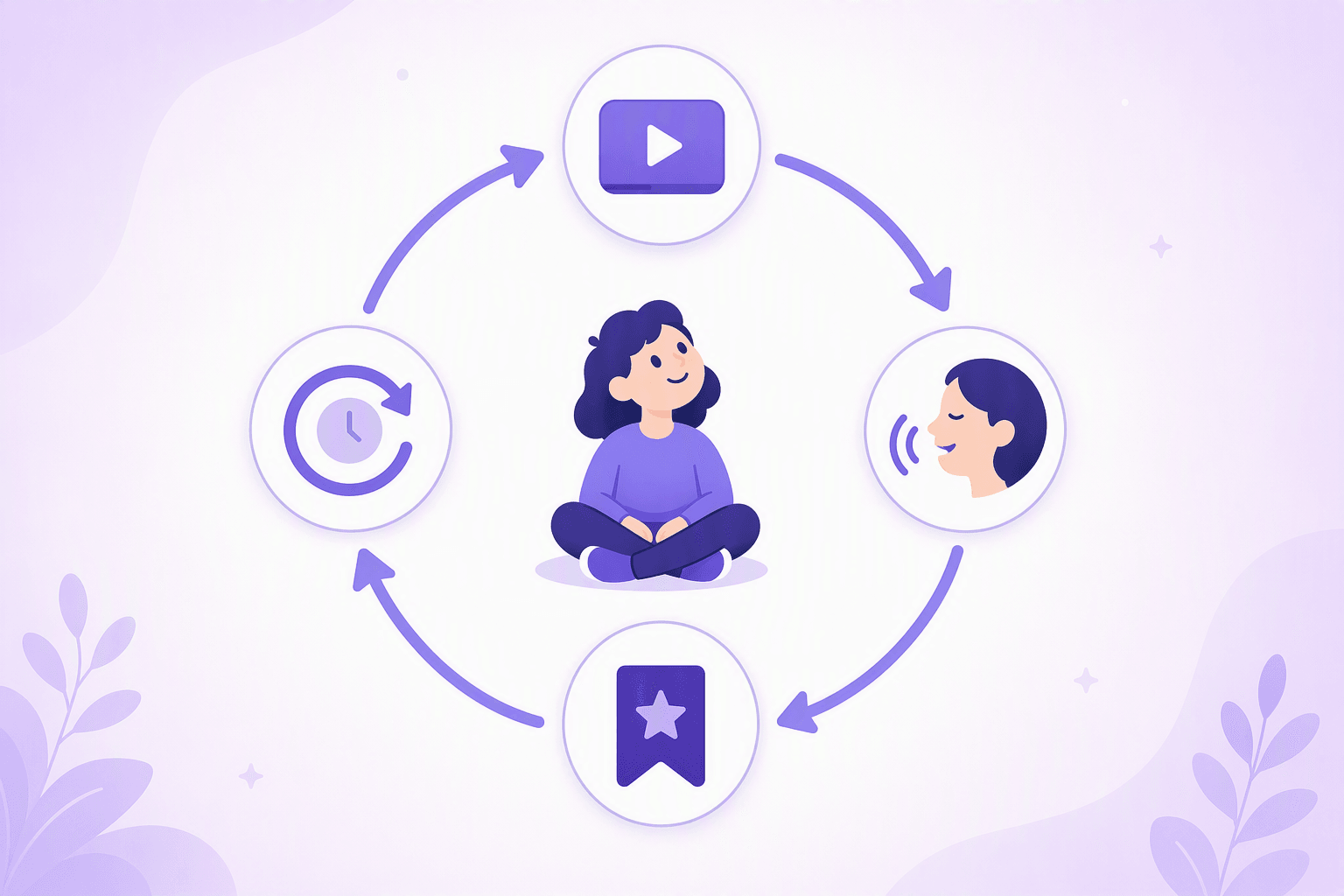
Use short clips, not full movies at first. Rewatch the same scene until you can hear word boundaries.
A good routine:
- Watch with Spanish subtitles
- Replay and shadow (repeat out loud)
- Save 5 to 10 words
- Review with spaced repetition the next day
Step 3: Add grammar when it solves a problem you feel
Grammar sticks when it answers a real question you had in a clip. For example, you will notice:
- why lo, la, le appear everywhere
- why people say me gusta instead of "I like"
- why que shows up in so many structures
When you are ready, use a structured reference like our Spanish verb conjugation guide to organize what you are already hearing.
Step 4: Choose a dialect target, then stay consistent
Pick one accent for your active speaking. You can still understand others.
A simple rule:
- If you plan to travel in Spain, learn vosotros and distinción.
- If you plan to use Spanish in the Americas or the US, focus on ustedes and seseo.
Consistency reduces cognitive load and speeds up fluency.
⚠️ About slang and swearing
Spanish slang is highly regional, and swear words can escalate quickly depending on country, tone, and relationship. Learn them for comprehension first, not for performance. If you want a responsible overview with severity and context, see our Spanish swear words guide.
Common learner mistakes (and how to fix them)
These are predictable errors that block fluency more than "advanced grammar".
Translating English politeness too literally
English uses "please" heavily. Spanish often uses tone, verb forms, and softeners:
- ¿Me puedes ayudar? (meh PWEH-dess ah-yoo-DAR) "Can you help me?"
- ¿Podrías... ? (poh-DREE-ahs) "Could you... ?"
Por favor (por fah-VOR) is fine, but it is not required in every request.
Overusing subject pronouns
Saying yo, tú, nosotros in every sentence sounds unnatural. Use them for emphasis or contrast.
Instead of: Yo quiero, yo pienso, yo creo
Try: Quiero, pienso, creo
Confusing "false friends"
A few high-risk ones:
- embarazada (em-bah-rah-SAH-dah) means "pregnant", not "embarrassed"
- asistir (ah-sees-TEER) often means "to attend", not "to assist"
- actual (ahk-TOO-ahl) often means "current", not "actual"
FundéuRAE regularly highlights these kinds of usage pitfalls and recommended forms (FundéuRAE, 2023-2025).
Using Spanish with confidence: what "good" sounds like
You do not need perfect grammar to sound competent. You need:
- clear vowels and stress
- strong control of the most common verbs
- polite defaults (hola, buenos días, gracias, perdón)
- the ability to repair misunderstandings
A powerful repair phrase is:
- Perdón, ¿puedes repetir? (pehr-DON PWEH-dess reh-peh-TEER) "Sorry, can you repeat?"
That single sentence keeps conversations alive.
Learn Spanish faster with real dialogue
Spanish is a language you learn with your ears. The fastest progress comes when you combine structure (so you know what you are hearing) with authentic input (so you learn what people actually say).
If you want a clip-based approach, start on Wordy’s Spanish page, then build your everyday conversation set with how to say hello in Spanish and how to say goodbye in Spanish. For more learning strategy, browse the Wordy blog.
Frequently Asked Questions
How many people speak Spanish worldwide?
How many countries have Spanish as an official language?
Is Spanish pronunciation easy for English speakers?
What is the biggest grammar difference between Spanish and English?
Should I learn Spain Spanish or Latin American Spanish?
Sources & References
- Instituto Cervantes, El español: una lengua viva (Anuario), 2024
- RAE & ASALE, Nueva gramática de la lengua española, 2009
- Ethnologue, Spanish (spa) language entry, 27th edition, 2024
- FundéuRAE, Recomendaciones sobre uso y norma del español, 2023-2025
Start learning with Wordy
Watch real movie clips and build your vocabulary as you go. Free to download.


