Quick Answer
Spanish accent marks (tildes) show which syllable is stressed and sometimes distinguish between words that look the same. If you know the stress rules for words ending in vowel, n, or s vs other consonants, you can predict most accents, then learn the key exceptions like question words (qué, cómo) and meaning pairs (sí vs si).
Spanish accent marks in Spanish (tildes) tell you where the stress falls when a word does not follow the default stress rules, and they also separate words that would otherwise be spelled the same, like sí (yes) vs si (if). If you learn three stress rules, plus a short list of “meaning accents” and question-word accents, you can place most tildes correctly without guessing.
Spanish is a global language, with about 500 million native speakers (Ethnologue, 27th edition, 2024) and official status across 20 countries, plus major communities in the United States. That scale is why standard spelling matters: accents are not decoration, they are part of the shared written system promoted by the RAE and ASALE in their Ortografía de la lengua española.
If you are also working on everyday Spanish, pair this with our guides on how to say hello in Spanish and how to say goodbye in Spanish, because greetings are where you first see accents in the wild (adiós, cómo, qué).

What counts as an “accent mark” in Spanish?
In English, “accent” often means pronunciation. In Spanish writing, people usually mean the tilde, the diagonal mark over a vowel: á, é, í, ó, ú.
There is also the diéresis (ü) in words like pingüino, which is not a stress mark. It tells you to pronounce the u in güe/güi.
Tilde vs diéresis
A tilde marks stress or distinguishes meaning. A diéresis marks sound, specifically that the u is pronounced.
- vergüenza (behr-GWEN-sah): the ü shows you say “gwe”
- venganza (behng-GAHN-sah): no ü, different sound and meaning
The RAE treats both as part of Spanish orthography, but only the tilde is what most learners mean by “accent marks” (RAE y ASALE, Ortografía de la lengua española).
The 3 stress rules that explain most accent marks
Spanish spelling is stress-based. Once you know where stress normally goes, the tilde becomes a simple “exception marker.”
In A New Reference Grammar of Modern Spanish (Butt and Benjamin, Routledge), stress is presented as predictable for most words, with the orthography designed to make that predictability visible. The RAE’s orthography codifies the same idea: default stress patterns, then accents when you break them.
Rule 1: Words ending in a vowel, n, or s
If a word ends in a vowel, n, or s, the stress normally falls on the second-to-last syllable.
Examples (no accent needed because they follow the rule):
- hablo (AH-bloh)
- casa (KAH-sah)
- joven (HOH-behn)
- clases (KLAH-sehs)
If you want stress somewhere else, you add a tilde:
- café (kah-FEH)
- jamás (hah-MAHS)
- sofá (soh-FAH)
Rule 2: Words ending in any other consonant
If a word ends in a consonant other than n or s, the stress normally falls on the last syllable.
Examples:
- doctor (dohk-TOR)
- reloj (reh-LOH)
- Madrid (mah-DRID)
If you want stress on the second-to-last syllable, you add a tilde:
- lápiz (LAH-pees)
- fácil (FAH-seel)
- árbol (AHR-bohl)
Rule 3: If the stress breaks the default, write the tilde
This is the “master rule.” You do not place accents because a word “sounds strong,” you place them because the stress is not where the ending would normally put it.
A quick check you can do in your head:
- Look at the last letter.
- Apply Rule 1 or Rule 2.
- If the real stress is different, add the tilde on the stressed vowel.
💡 Fast stress test for learners
Say the word naturally, then check the ending. If it ends in a vowel, n, or s, Spanish expects the stress on the second-to-last syllable. If your stress is elsewhere, you need a tilde.
The 4 stress categories (and how accents map to them)
Spanish words are often grouped by stress position. These labels are useful when you are learning, but the rules above are what you apply when writing.
Agudas
Stress on the last syllable. They carry a tilde only if they end in a vowel, n, or s.
- canción (kahn-SYOHN)
- inglés (een-GLEHS)
- hotel (oh-TEL) no tilde, ends in l
Llanas (graves)
Stress on the second-to-last syllable. They carry a tilde only if they end in a consonant other than n or s.
- árbol (AHR-bohl)
- difícil (dee-FEE-seel)
- casa (KAH-sah) no tilde, ends in vowel
Esdrújulas
Stress on the third-to-last syllable. They always carry a tilde.
- música (MOO-see-kah)
- teléfono (teh-LEH-foh-noh)
- pájaro (PAH-hah-roh)
Sobreesdrújulas
Stress falls before the third-to-last syllable, often with pronouns attached to a verb. They always carry a tilde.
- dímelo (DEE-meh-loh)
- explícaselo (ehks-PLEE-kah-seh-loh)
This is one reason accents show up a lot in subtitles and dialogue, because spoken Spanish uses clitics constantly. If you learn Spanish through media, you will see these forms repeatedly, especially in commands.
Accent marks that change meaning (tilde diacrítica)
Some accents exist even when stress rules would not require them. Their job is to distinguish words that would otherwise be spelled the same.
The RAE calls these tildes diacríticas. They are extremely high-value for learners because they prevent common misunderstandings.
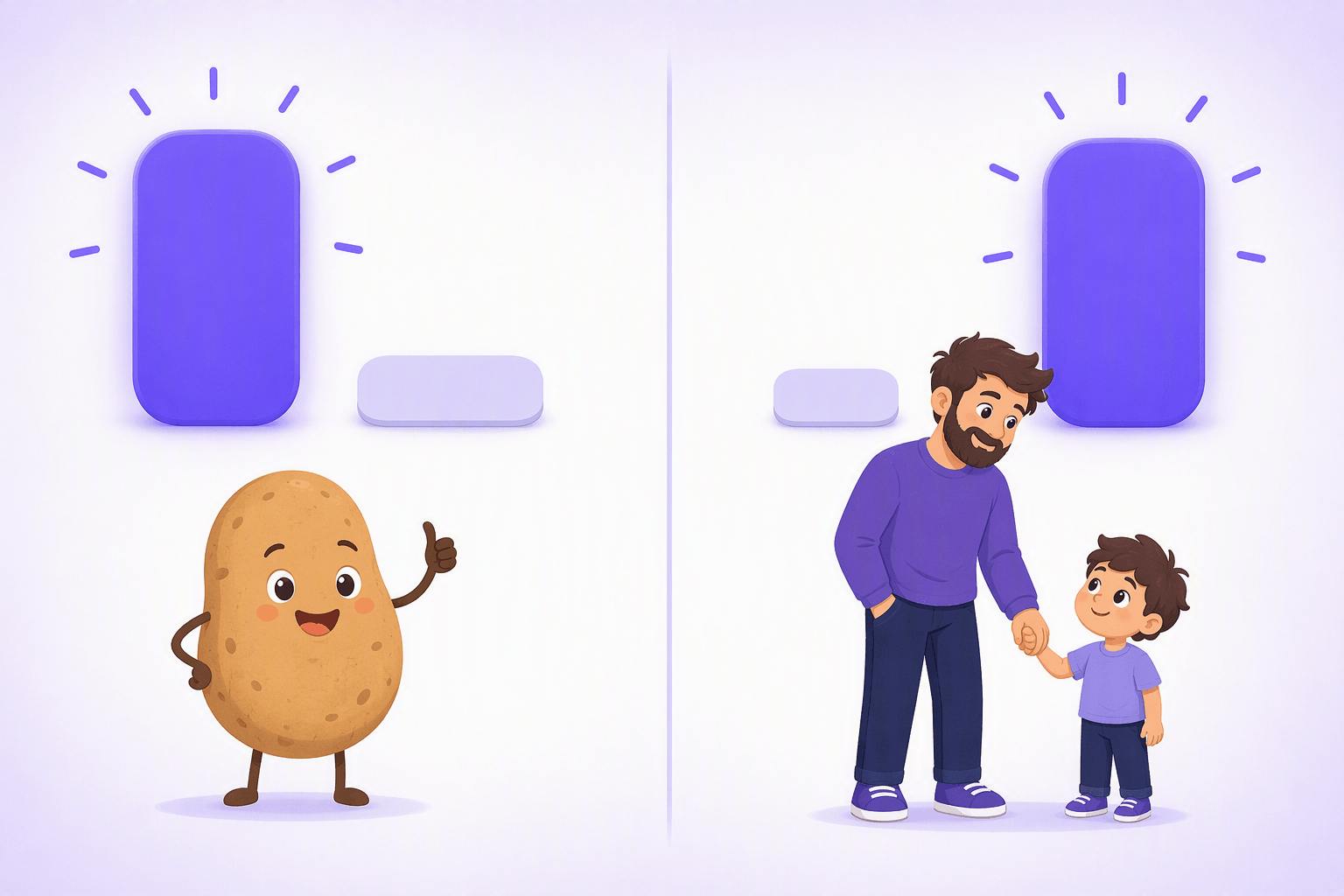
sí
sí (SEE) means “yes” or can mark emphasis, while si (see) means “if.”
- Sí, voy. (SEE, boy) = Yes, I’m going.
- Si voy, te aviso. (see boy, teh ah-BEE-soh) = If I go, I’ll let you know.
tú
tú (TOO) is “you” (subject pronoun). tu (too) is “your.”
- Tú eres mi amigo. (TOO EH-rehs mee ah-MEE-goh)
- Tu amigo llegó. (too ah-MEE-goh yeh-GOH)
él
él (EHL) is “he.” el is “the” (masculine singular article).
- Él trabaja aquí. (EHL trah-BAH-hah ah-KEE)
- El trabajo es duro. (ehl trah-BAH-hoh ehs DOO-roh)
mí
mí (MEE) is “me” after a preposition. mi is “my.”
- Para mí, es tarde. (PAH-rah MEE, ehs TAHR-deh)
- Mi casa es tu casa. (mee KAH-sah ehs too KAH-sah)
más
más (MAHS) is “more.” mas is a literary “but” that you will see in older writing.
- Quiero más. (KYEH-roh MAHS)
- No lo hice, mas lo intenté. (noh loh EE-seh, mahs loh een-tehn-TEH)
dé
dé (DEH) is a form of dar (to give). de is “of/from.”
- Espero que me dé tiempo. (ehs-PEH-roh keh meh DEH TYEHM-poh)
- Soy de Chile. (soy deh CHEE-leh)
sé
sé (SEH) is “I know” or a command “be” (from ser). se is a reflexive pronoun.
- Sé la verdad. (SEH lah behr-DAHD)
- Se lo dije. (seh loh DEE-heh)
aún
aún (ah-OON) often means “still/yet.” aun often means “even,” “including,” or “even if.”
- Aún no llega. (ah-OON noh YEH-gah) = He still hasn’t arrived.
- Aun así, fui. (ah-OON ah-SEE, FWEE) = Even so, I went.
⚠️ A common learner trap
Texting without accents is common, but these meaning pairs are where missing accents cause real confusion. If you only “save” accents in a few places, prioritize sí/si, tú/tu, él/el, and mí/mi.
Question words: when they need accents (and when they do not)
Spanish question words take a tilde when they are interrogative or exclamative, even in indirect questions. Without the tilde, they are usually conjunctions or relative pronouns.
This is one of the most visible accent patterns in subtitles, because characters constantly ask and react.
qué
qué (KEH) is “what” in questions or exclamations.
- ¿Qué quieres? (KEH KYEH-rehs)
- No sé qué quieres. (noh SEH KEH KYEH-rehs)
Without accent, que is usually “that/which.”
- Creo que sí. (KREH-oh keh SEE)
cómo
cómo (KOH-moh) is “how” in questions or exclamations.
- ¿Cómo estás? (KOH-moh ehs-TAHS)
- Mira cómo lo hace. (MEE-rah KOH-moh loh AH-seh)
Without accent, como is usually “like/as” or “I eat” (from comer).
- Como pizza. (KOH-moh PEET-sah) = I eat pizza.
- Hazlo como quieras. (AHSS-loh KOH-moh KYEH-rahs) = Do it however you want.
cuándo, dónde, cuál, cuánto
- ¿Cuándo? (KWAHN-doh) when
- ¿Dónde? (DOHN-deh) where
- ¿Cuál? (KWAL) which
- ¿Cuánto? (KWAHN-toh) how much
Without accents: cuando, donde, cual, cuanto appear in non-interrogative roles.
- Te llamo cuando pueda. (teh YAH-moh KWAHN-doh PWEH-dah)
- Voy donde tú vas. (boy DOHN-deh TOO bahss)
Accent marks and diphthongs: why some words “suddenly” get í or ú
A lot of accent confusion comes from vowel combinations. Spanish vowels can form:
- diphthongs: two vowels in one syllable (like ai, ie, ue)
- hiatus: two vowels split into separate syllables
A tilde on í or ú often signals that the vowel breaks the diphthong, creating a hiatus. The RAE’s orthography treats this as a major accent pattern.
The most practical rule
If i or u is the weak vowel in a pair (ai, ei, oi, au, eu, ou, ia, ie, io, ua, ue, uo), it normally stays inside a diphthong. But if you stress that i or u, it often takes an accent to show it stands alone.
Examples:
- país (pah-EES) not pais
- río (REE-oh) not rio
- oído (oh-EE-doh) not oido
- búho (BOO-oh) not buho
This is why accents can appear even when you think the ending rule should decide everything. The accent is doing two jobs: marking stress and signaling syllable division.
The letter ü: when it appears and how to pronounce it
The diéresis ü is rare but important. It appears in güe and güi to show the u is pronounced.
- pingüino (peen-GWEE-noh)
- bilingüe (bee-leen-GWEH)
Without ü, gue/gui usually sound like “geh/gee” with a silent u:
- guitarra (gee-TAH-rah)
- guerra (GEH-rah)
FundéuRAE regularly highlights this as a spelling point because learners and even natives can hesitate in low-frequency words (FundéuRAE, accessed 2026).
Do capital letters need accent marks?
Yes. Á, É, Í, Ó, Ú are correct in uppercase, and modern Spanish style expects them.
You will still see omissions in older all-caps printing, but that is typography, not the rule. If you are writing a resume, an email, subtitles, or anything public-facing, keep the accents.
Examples:
- MÉXICO (MEH-ksee-koh)
- ÓSCAR (OHS-kahr)
- ÚLTIMA (OOL-tee-mah)
Why accents matter in real life (not just in class)
Accents affect three things that matter outside worksheets: comprehension, searchability, and tone.
Comprehension
Some missing accents are harmless. Others change meaning immediately.
- Tu padre vs Tú, padre
- El vs Él
- Si vs Sí
In fast dialogue, especially in subtitles, these distinctions keep you from mis-parsing a sentence.
Searchability and names
Accents matter in names and place names, even when systems strip diacritics.
- José vs Jose
- Bogotá vs Bogota
- Málaga vs Malaga
If you are learning Spanish for travel or work, getting accents right is a small signal of care, similar to spelling someone’s name correctly.
Tone and register
In informal chat, people often skip accents. In professional Spanish, skipping them can read as rushed or non-native.
That is similar to English: “u” vs “you.” People understand both, but they do not signal the same register.
🌍 A practical cultural detail: accents and keyboards
Many Spanish-speaking users type on phone keyboards that auto-suggest accents, so correct accents can appear with almost no effort. In contrast, learners using an English keyboard often have to long-press or switch layouts, which is why learners omit accents more than natives do.
A simple workflow to place accents correctly (without memorizing lists)
This is the fastest reliable process for learners.
Step 1: Find the stressed syllable by speaking
Spanish stress is strong and stable. Say the word as you have heard it in real speech, ideally from audio, not from your own guess.
If you are learning from clips, repeat the line and tap the stressed syllable. This is one place where movie dialogue helps because stress is exaggerated by emotion.
Step 2: Apply the ending rule
- Ends in vowel, n, s: stress should be second-to-last
- Ends in other consonant: stress should be last
Step 3: If it breaks the rule, add the tilde
Put the tilde on the vowel in the stressed syllable: canción, lápiz, difícil.
Step 4: Check for meaning accents and question words
If the word is one of the common pairs (sí/si, tú/tu, él/el), or a question word (qué, cómo), apply the diacritic accent rule.
Step 5: If there is a vowel pair, check for hiatus
If the stress falls on í or ú inside a vowel pair, it often needs an accent: país, río, oído.
💡 A realistic practice plan
Pick 20 high-frequency words you already use, then write one sentence for each with correct accents. Start with question words (qué, cómo, dónde) and meaning pairs (tú/tu, sí/si). You will see them constantly in greetings, goodbyes, and relationship phrases like those in how to say I love you in Spanish.
Common mistakes learners make (and how to fix them)
Over-accenting because it “sounds stressed”
Learners sometimes add accents to words that already follow the default rule.
- Incorrect: cása
- Correct: casa (KAH-sah)
Fix: always run the ending rule first.
Forgetting accents in fixed everyday words
Some very common words simply must be learned with accents because they are exceptions or meaning markers.
- también (tahm-BYEHN)
- después (dehs-PWEHS)
- adiós (ah-DYOSS)
You will see adiós constantly if you are using any goodbye guide, including how to say goodbye in Spanish.
Confusing “solo” and “sólo”
You may see older writing with sólo to mean “only.” The modern standard generally prefers solo without accent, using context to disambiguate, though accents can appear if ambiguity is truly unavoidable (RAE y ASALE, Ortografía de la lengua española).
If you are a learner, the safe default is: write solo.
Missing accents in “danger pairs” in emotional contexts
When people get emotional, they use short words and pronouns more. That is exactly where meaning accents matter.
If you are watching intense scenes, you will see lots of tú, él, sí, and qué. That is also where spelling mistakes stand out.
If you want a reminder of how tone shifts with strong language, our guide to Spanish swear words shows how small spelling and stress differences can change how a line lands.
How accents show up in real Spanish dialogue
Accents are not evenly distributed. They cluster in:
- questions and reactions: ¿Qué? ¿Cómo? ¿Dónde?
- past tense and adverbs: también, después, jamás
- commands with pronouns: dímelo, cuéntame, pásamelo
- emotional emphasis: ¡Qué bien! ¡Cómo no!
This is why learning with authentic clips can accelerate accent intuition. You are not memorizing rules in isolation, you are seeing the same accented words recur in the same social moves: greeting, challenging, apologizing, flirting, arguing.
For more high-frequency vocabulary that will keep surfacing, browse the Spanish learning section and the blog index for topic-based lists.
A quick self-check: can you place accents on these?
Try these without looking anything up:
- cafe
- lapiz
- pais
- que (as “what”)
- tu (as “your”)
Answers:
- café (kah-FEH)
- lápiz (LAH-pees)
- país (pah-EES)
- qué (KEH)
- tu (too) no accent, possession
If you missed país, that is the hiatus pattern. If you missed qué, that is the interrogative accent rule.
Final takeaway
Spanish accent marks are predictable once you treat them as a stress system: apply the ending rules, mark exceptions, then learn the small set of meaning accents and question-word accents. After that, the remaining accents you meet are mostly vowel-combination cases like país and río, which become intuitive with repeated exposure.
If you want to reinforce this with real listening, pick a short scene and transcribe it with accents, then compare to official subtitles. You will be surprised how quickly qué, cómo, sí, tú, él become automatic.
Frequently Asked Questions
What are Spanish accent marks used for?
How do I know where the stress goes in Spanish without an accent?
Do capital letters in Spanish need accent marks?
Why do question words like qué and cómo have accents?
Is it okay to skip accent marks when texting?
Sources & References
- Real Academia Española (RAE) y ASALE, Ortografía de la lengua española
- FundéuRAE, Recomendaciones sobre tildes y uso en mayúsculas (accessed 2026)
- Instituto Cervantes, El español: una lengua viva, Informe 2024
- Ethnologue, 27th edition, 2024
Start learning with Wordy
Watch real movie clips and build your vocabulary as you go. Free to download.


