Quick Answer
Spanish proverbs, called refranes, are short traditional sayings that people use to give advice, warn someone, or comment on life in a memorable way. You will hear them in everyday conversation across the Spanish-speaking world, especially in family talk, humor, and practical advice. This guide teaches 35 high-utility refranes with pronunciation and real usage notes.
Spanish proverbs, called refranes, are short, traditional sayings that Spanish speakers use to give advice, warn someone, or comment on everyday life in a memorable way, and learning a small set of common refranes will make your Spanish sound more culturally fluent fast.
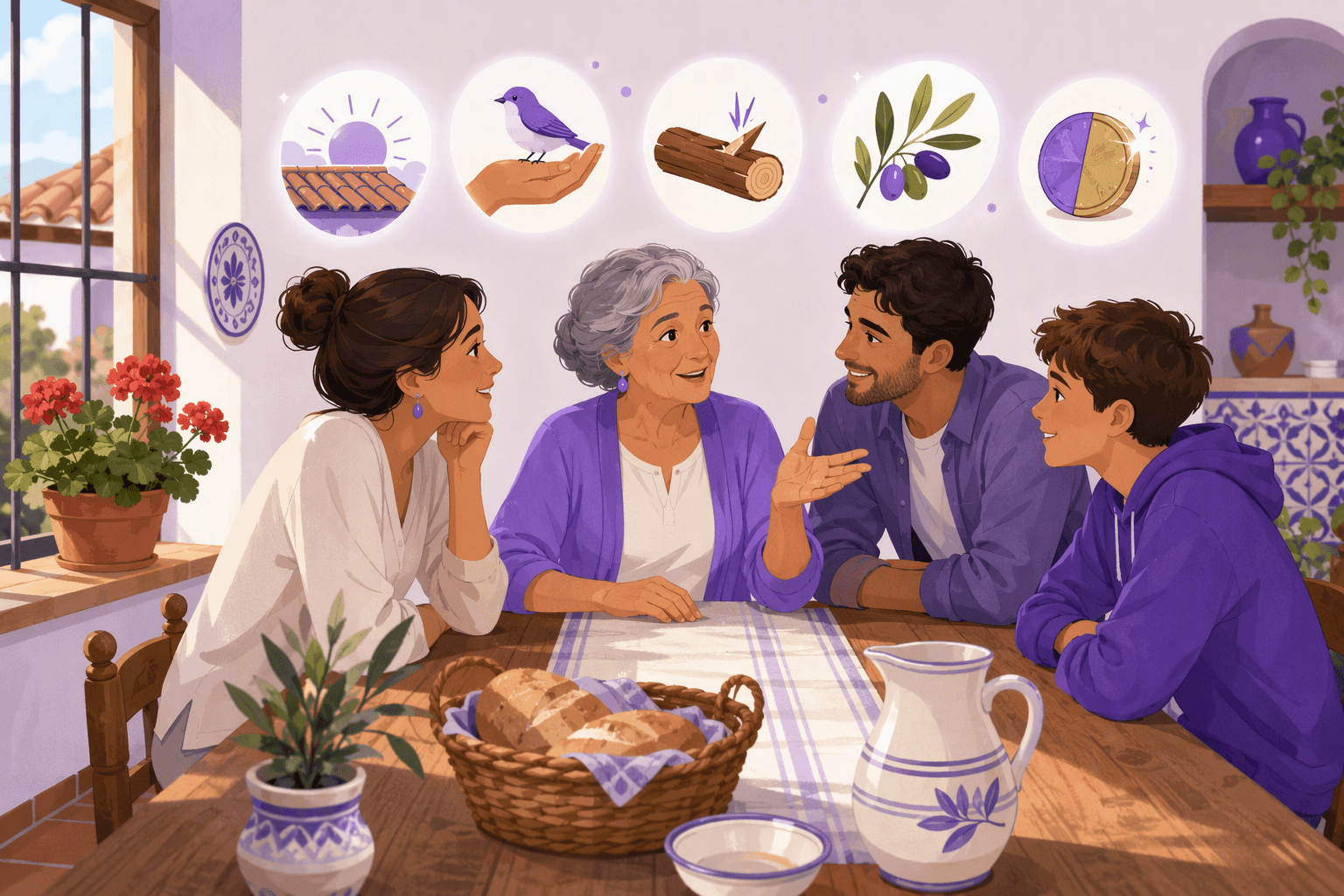
Refranes matter because they show how people package “common sense” into a line you can repeat at the perfect moment. They also help you understand dialogue in films and series, where characters often use a proverb instead of a long explanation.
Spanish is spoken across 20 countries where it is an official language, plus the United States and many diaspora communities. Ethnologue estimates hundreds of millions of native speakers and lists Spanish among the world’s largest languages (Ethnologue, 27th edition, 2024), which means refranes travel, mix, and pick up local flavor.
If you are building everyday listening skills, pair this guide with our Spanish pronunciation guide and keep a few “conversation starters” ready from how to say hello in Spanish.
Refrán vs dicho: what Spanish speakers actually mean
The RAE’s DLE defines refrán as a concise saying that expresses a lesson or advice, and dicho as a “saying” or “remark” that can be more general (RAE DLE, accessed 2026). In real conversation, people often use both, but refrán tends to sound more “classic.”
You will also hear proverbio, which sounds more formal and literary. If you say refrán, you will sound natural in both Spain and Latin America.
How to use refranes without sounding forced
Refranes work best when they feel like a quick verdict on a situation. Think of them as a social shortcut: instead of arguing, you drop a proverb and move on.
Linguist Walter Ong, in Orality and Literacy (Routledge), describes how oral traditions favor memorable, rhythmic phrasing. Refranes are built for that: short, punchy, and easy to repeat.
Three “safe” ways to introduce a refrán
- As a comment: “Bueno, ya sabes: …”
- As advice: “Mi abuela siempre decía: …”
- As a soft warning: “Ojo, porque …”
💡 A good learner rule
If you would not say the same idea as a slogan in English, do not say it as a refrán in Spanish. Refranes are confident by design, so they can sound blunt if you use them in sensitive situations.
35 Spanish refranes you will actually hear (with pronunciation)
Below are high-utility refranes that show up in everyday talk, family advice, and on-screen dialogue. Pronunciations are English approximations, not perfect phonetics.
A quien madruga, Dios le ayuda
Pronunciation: ah KYEHN mah-DROO-gah, DYOS leh ah-YOO-dah
Meaning: If you start early, you get advantages. It is close to “the early bird gets the worm,” but it can also imply moral approval of being hardworking.
Use it when someone wakes up early to travel, study, or beat a line. It can be sincere or lightly teasing.
No dejes para mañana lo que puedas hacer hoy
Pronunciation: noh DEH-hehs pah-rah mah-NYAH-nah loh keh PWEH-dahs ah-SEHR oy
Meaning: Do not procrastinate. This is a classic “parent voice” proverb.
It fits school, chores, paperwork, and anything with deadlines. In a workplace, it can sound preachy, so use it with people you know well.
Más vale tarde que nunca
Pronunciation: mahs BAH-leh TAHR-deh keh NOON-kah
Meaning: Better late than never. It is often used to soften an apology.
You will hear it when someone finally replies, shows up, or finishes a task. Tone depends on delivery: it can be warm or passive-aggressive.
El que mucho abarca, poco aprieta
Pronunciation: ehl keh MOO-choh ah-BAHR-kah, POH-koh ah-PREH-tah
Meaning: If you try to do too much, you do nothing well. Think “jack of all trades, master of none,” but more about overcommitting.
This one is common advice for students juggling too many goals. It also fits project planning at work.
Al mal tiempo, buena cara
Pronunciation: ahl mahl TYEM-poh, BWEH-nah KAH-rah
Meaning: Keep a good attitude in bad times. It is a culturally familiar “be resilient” line.
Use it when plans go wrong and you want to encourage someone. It can sound dismissive if the problem is serious, so read the room.
A caballo regalado no se le mira el diente
Pronunciation: ah kah-BAH-yoh reh-GAH-lah-doh noh seh leh MEE-rah ehl DYEN-teh
Meaning: Do not criticize a gift. You will also hear “los dientes.”
It is used when someone complains about something free. It can be playful, especially in family settings.
Dime con quién andas y te diré quién eres
Pronunciation: DEE-meh kohn KYEHN AHN-dahs ee teh dee-REH KYEHN EH-rehs
Meaning: Your friends show who you are. It is often used as a warning about bad influences.
Because it judges people, it can come off harsh. Use it carefully, or in a joking tone.
En boca cerrada no entran moscas
Pronunciation: ehn BOH-kah seh-RRAH-dah noh EHN-trahn MOHS-kahs
Meaning: If you keep your mouth shut, you avoid trouble. It can mean “do not overshare” or “do not talk back.”
It is common in family talk and can be used humorously after someone says something awkward.
Ojos que no ven, corazón que no siente
Pronunciation: OH-hohs keh noh behn, koh-rah-SOHN keh noh SYEN-teh
Meaning: If you do not see it, it does not hurt. It is often about jealousy, secrets, or not knowing bad news.
This can sound morally questionable, so it is usually said with a shrug, not as serious advice.
Quien calla, otorga
Pronunciation: KYEHN KAH-yah, oh-TOHR-gah
Meaning: Silence implies consent. It is used in arguments when someone does not deny something.
Because it is confrontational, it is more common in heated talk or teasing, not polite conversation.
No hay mal que por bien no venga
Pronunciation: noh eye mahl keh por BYEHN noh BEN-gah
Meaning: Something good can come from something bad. Similar to “every cloud has a silver lining.”
It is a common comfort line after a setback, break-up, or job problem.
A palabras necias, oídos sordos
Pronunciation: ah pah-LAH-brahs NEH-syahs, oh-EE-dohs SOHR-dohs
Meaning: Ignore foolish talk. It is advice to not engage with insults or nonsense.
This is useful when someone is being rude online or in a group. It can be empowering, not preachy.
El hábito no hace al monje
Pronunciation: ehl AH-bee-toh noh AH-seh ahl MOHN-heh
Meaning: Clothes do not make the person. It warns against judging by appearances.
It is a good fit when someone looks “serious” but is not, or when you want to defend someone being underestimated.
No por mucho madrugar amanece más temprano
Pronunciation: noh por MOO-choh mah-droo-GAHR ah-mah-NEH-seh mahs tehm-PRAH-noh
Meaning: You cannot force time. Starting earlier does not always make results arrive sooner.
It is great for patience: paperwork, bureaucracy, waiting for news. Spain uses it a lot, but it is understood widely.
El que ríe último, ríe mejor
Pronunciation: ehl keh RRYEH OOL-tee-moh, RRYEH meh-HOR
Meaning: The final winner laughs best. It is a competitive, sometimes petty line.
Use it jokingly with friends about sports or games. In serious conflict, it can escalate tension.
Más vale pájaro en mano que ciento volando
Pronunciation: mahs BAH-leh PAH-hah-roh ehn MAH-noh keh SYEN-toh boh-LAHN-doh
Meaning: A sure thing is better than a risky bigger promise. Similar to “a bird in the hand.”
It comes up in money decisions, job offers, and relationships. It is common advice from older relatives.
El que no llora, no mama
Pronunciation: ehl keh noh YOH-rah, noh MAH-mah
Meaning: If you do not ask, you do not get. It is blunt and very colloquial.
It can be funny in contexts like negotiating, requesting help, or asking for a raise. Avoid it in formal settings.
A falta de pan, buenas son tortas
Pronunciation: ah FAHL-tah deh pahn, BWEH-nahs sohn TOHR-tahs
Meaning: If you cannot get the ideal, accept a substitute. It is about making do.
It is used for food, plans, and even dating jokes. Tone is usually light.
De tal palo, tal astilla
Pronunciation: deh tahl PAH-loh, tahl ahs-TEE-yah
Meaning: Like parent, like child. It can be affectionate or critical.
You will hear it when someone inherits habits, talent, or attitude. It is a frequent family comment.
Cría cuervos y te sacarán los ojos
Pronunciation: KREE-ah KWER-bohs ee teh sah-kah-RAHN lohs OH-hohs
Meaning: Raise ungrateful people and they will hurt you. It is dramatic, and that is the point.
Use it carefully, usually as a dark joke about someone who helps a person who then betrays them.
El amor es ciego
Pronunciation: ehl ah-MOR ehs SYEH-goh
Meaning: Love is blind. It is common and easy to use.
It fits relationship talk, especially when someone ignores red flags. If you want romantic Spanish instead, see how to say I love you in Spanish.
Barriga llena, corazón contento
Pronunciation: bah-RREE-gah YEH-nah, koh-rah-SOHN kohn-TEHN-toh
Meaning: Full belly, happy heart. It is used after a good meal.
It is a warm, very “family table” proverb. It also shows up in food scenes in films.
Donde hubo fuego, cenizas quedan
Pronunciation: DOHN-deh OO-boh FWEH-goh, seh-NEE-sahs KWEH-dahn
Meaning: Where there was fire, ashes remain. Past romance can leave feelings behind.
It is often used about exes. Because it implies lingering attraction, it can be teasing.
El que la sigue, la consigue
Pronunciation: ehl keh lah SEE-geh, lah kohn-SEE-geh
Meaning: Persistence pays off. It is motivational and common.
It fits studying, sports, job hunting, and creative work. It is a safe, positive proverb.
A buen hambre no hay pan duro
Pronunciation: ah BWEHN AHM-breh noh eye pahn DOO-roh
Meaning: When you are truly hungry, nothing tastes bad. It is about appreciating what you have.
It can be literal about food or metaphorical about being less picky when you need something.
Cada loco con su tema
Pronunciation: KAH-dah LOH-koh kohn soo TEH-mah
Meaning: Everyone has their obsession. It is often affectionate, like “that is just their thing.”
Because loco can be sensitive in some contexts, keep it light and friendly.
En casa de herrero, cuchillo de palo
Pronunciation: ehn KAH-sah deh eh-RREH-roh, koo-CHEE-yoh deh PAH-loh
Meaning: The expert often lacks the basics at home. Like a mechanic with a broken car.
It is great for teasing: a chef who eats instant noodles, a language teacher who forgets to text back.
No hay peor ciego que el que no quiere ver
Pronunciation: noh eye peh-OR SYEH-goh keh ehl keh noh KYEH-reh behr
Meaning: The worst blindness is refusing to see. It is about denial.
This can sound accusatory, so it is best with close friends or in a reflective conversation.
El mundo es un pañuelo
Pronunciation: ehl MOON-doh ehs oon pah-NYWEH-loh
Meaning: The world is small. People say it when they discover surprising connections.
It is common after running into someone unexpectedly, or realizing two friends know each other.
No todo lo que brilla es oro
Pronunciation: noh TOH-doh loh keh BREE-yah ehs OH-roh
Meaning: Not everything that shines is gold. It warns against flashy appearances.
It fits scams, social media “perfect lives,” and too-good-to-be-true offers.
Cuando el río suena, agua lleva
Pronunciation: KWAHN-doh ehl RREE-oh SWEH-nah, AH-gwah YEH-bah
Meaning: If there is smoke, there is fire. Rumors often have a basis.
Because it can encourage gossip, use it cautiously. It is common, but it can sound judgmental.
El que se fue a Sevilla, perdió su silla
Pronunciation: ehl keh seh FWEH ah seh-BEE-yah, pehr-DYOH soo SEE-yah
Meaning: If you leave your seat, you lose it. It is said to kids, but adults use it jokingly too.
It is a playful line in group settings, especially when someone gets up and returns to find their spot taken.
A buen entendedor, pocas palabras
Pronunciation: ah BWEHN ehn-tehn-deh-DOR, POH-kahs pah-LAH-brahs
Meaning: A smart person needs few words. It is used to imply “you get what I mean.”
It can be polite as a wrap-up, or slightly threatening if used to hint at consequences. Tone matters.
El que avisa no es traidor
Pronunciation: ehl keh ah-BEE-sah noh ehs trah-ee-DOR
Meaning: If I warned you, I am not to blame. It is a pre-emptive disclaimer.
You will hear it before someone sets a boundary or predicts a problem. It is common in friendly teasing too.
Perro ladrador, poco mordedor
Pronunciation: PEH-rroh lah-drah-DOR, POH-koh mohr-deh-DOR
Meaning: Big talkers often do not act. It is about bluster.
It fits workplace drama, online arguments, and schoolyard talk. It is usually said as calm judgment.
El que no arriesga, no gana
Pronunciation: ehl keh noh ah-RRYEH-sgah, noh GAH-nah
Meaning: No risk, no reward. It is motivational, but can also justify impulsive choices.
Use it when encouraging someone to apply, audition, travel, or ask someone out.
No hay peor sordo que el que no quiere oír
Pronunciation: noh eye peh-OR SOHR-doh keh ehl keh noh KYEH-reh oh-EER
Meaning: The worst deafness is refusing to listen. It is like the “blindness” proverb, but about stubbornness.
It is strong in conflict, so it is better for reflective talk than arguments.
What makes refranes stick: rhythm, rhyme, and “ready-made” wisdom
Many refranes use parallel structure, internal rhyme, or balanced clauses. That makes them easy to remember and easy to deliver quickly.
Cognitive linguist George Lakoff, in Women, Fire, and Dangerous Things (University of Chicago Press), argues that people rely on conceptual categories and frames to make sense of experience. Refranes are frames you can borrow, and that is why they feel persuasive even when they oversimplify.
🌍 Why grandmothers are famous for refranes
In many Spanish-speaking families, older relatives are treated as keepers of practical knowledge. Quoting a refrán can signal that you are not just giving your opinion, you are invoking shared tradition. That social move can end a debate quickly, especially at the dinner table.
Regional variation: same proverb, different vibe
Spanish is a global language with strong regional identities. Instituto Cervantes tracks Spanish as a major world language with wide geographic spread (Instituto Cervantes, accessed 2026), and refranes reflect that.
In Spain, you may hear more refranes in casual banter, especially among older speakers. In parts of Latin America, refranes often show up in family advice, humor, and storytelling.
If you want to sound region-aware, focus on pronunciation and everyday vocabulary first. Our Latin American vs Spain Spanish guide helps you avoid the most common “I learned this in the wrong region” surprises.
Common learner mistakes with refranes (and how to avoid them)
Mistake 1: using a refrán as a direct insult
Some refranes are basically judgments. If you say them with a serious face, they can sting.
If you are not sure, soften it with “dicen que” or “ya sabes.” That signals you are quoting culture, not attacking.
Mistake 2: changing the wording too much
Refranes are fixed phrases. Small changes can make them sound wrong, like misquoting a movie line.
If you want flexibility, use a normal sentence instead. Save refranes for when you can say them cleanly.
Mistake 3: mixing up “funny blunt” with “rude blunt”
Spanish can feel more direct than English in certain contexts, but social norms still matter. If you want a clear boundary on what crosses into rude language, read our Spanish swear words guide so you can recognize the difference between a proverb and an insult.
How to learn refranes through movies and TV (the efficient way)
Refranes are best learned as audio, not as a list. When you hear one in a scene, you also learn the facial expression, timing, and whether it lands as humor or as advice.
A simple method:
- Save the clip.
- Repeat the line out loud three times, matching rhythm.
- Write one sentence about when you would use it.
- Use it once in a real conversation or a voice note.
If you are building a “daily Spanish” routine, combine refranes with practical greetings and exits. Keep how to say goodbye in Spanish open as your “end the conversation politely” toolkit.
A mini cultural map: what refranes reveal about Spanish-speaking life
Refranes often cluster around a few themes:
- Work and time: madrugar, mañana, paciencia
- Social reputation: dime con quién andas
- Food as comfort: barriga llena
- Pragmatism: más vale pájaro en mano
- Boundaries and consequences: el que avisa no es traidor
That is not random. Proverbs are a kind of everyday cultural memory, the sort of intangible heritage UNESCO describes in its broader framework for safeguarding living traditions (UNESCO, accessed 2026).

Practice: pick 5 refranes for your “active set”
Choose five that match your real life. If you are studying, you will use procrastination and persistence refranes constantly.
Here is a balanced starter set:
- Más vale tarde que nunca
- El que la sigue, la consigue
- No todo lo que brilla es oro
- En casa de herrero, cuchillo de palo
- Al mal tiempo, buena cara
Once these feel automatic, add five more. Depth beats breadth with refranes because the goal is timing, not memorization.
💡 One-sentence test
If you cannot imagine a specific person you know saying the refrán in a specific situation, do not learn it yet. Pick one you can picture in a real scene.
Keep going: build your Spanish “ear” with real dialogue
Refranes are one of the fastest ways to understand why a scene feels funny, sharp, or wise in Spanish. When you catch one, you are catching culture, not just vocabulary.
To keep your momentum, browse the Wordy blog and rotate between culture, pronunciation, and high-frequency phrases so your Spanish stays usable, not just “correct.” If you want a simple next step, revisit how to say hello in Spanish and try opening a conversation with a greeting, then closing it with a refrán that fits what happened.
Frequently Asked Questions
What are Spanish proverbs called?
Are refranes the same in Spain and Latin America?
Is it weird for a Spanish learner to use refranes?
What is the difference between a refrán and an idiom?
How can I learn refranes faster?
Sources & References
- Instituto Cervantes, El español: una lengua viva (annual report, accessed 2026)
- Real Academia Española (RAE), Diccionario de la lengua española (DLE), entries for 'refrán' and 'dicho' (accessed 2026)
- Ethnologue, 27th edition, 2024
- UNESCO, Convention for the Safeguarding of the Intangible Cultural Heritage, overview materials (accessed 2026)
- Panhispanic Association of Academies of the Spanish Language (ASALE), online language resources (accessed 2026)
Start learning with Wordy
Watch real movie clips and build your vocabulary as you go. Free to download.


