Quick Answer
The essential Japanese question words are 誰 (dare, who), 何 (nani/nan, what), どこ (doko, where), いつ (itsu, when), なぜ (naze, why), どう (dou, how), どれ (dore, which), and いくら (ikura, how much). Japanese question words belong to the ド (do-) column of the Ko-So-A-Do demonstrative system, and questions are marked by the particle か (ka) in polite speech or rising intonation in casual conversation.
The essential Japanese question words are 誰 (dare, who), 何 (nani/nan, what), どこ (doko, where), いつ (itsu, when), なぜ (naze, why), どう (dou, how), どれ (dore, which), and いくら (ikura, how much). Unlike English, Japanese does not change word order to form questions. Instead, it relies on the sentence-final particle か (ka) or rising intonation.
Japanese is spoken by approximately 125 million native speakers, and the Japan Foundation's 2024 survey reports that over 3.8 million people across 142 countries are actively studying it as a foreign language. One of the features that makes Japanese question words uniquely systematic is the Ko-So-A-Do demonstrative framework: every question word belongs to the ド (do-) column, which means once you learn the pattern, predicting new question words becomes intuitive.
"The Japanese demonstrative system is one of the most elegant and symmetrical in any language. The Ko-So-A-Do grid organizes spatial, object, and manner references into a four-way distinction that extends naturally to interrogatives through the Do- column."
(David Crystal, The Cambridge Encyclopedia of Language, Cambridge University Press)
This guide covers every essential Japanese question word with kanji, hiragana, pronunciation, grammar notes, and cultural context. For interactive practice with real Japanese content, visit our Japanese learning page.

Quick Reference: Japanese Question Words
| English | Japanese | Pronunciation | Note |
|---|---|---|---|
| Who? | 誰 / だれ | dah-reh | 誰の = whose? |
| What? | 何 / なに・なん | nah-nee / nahn | Two readings by context |
| Where? | どこ | doh-koh | Ko-So-A-Do: ここ→そこ→あそこ→どこ |
| When? | いつ | ee-tsoo | No kanji in modern use |
| Why? | なぜ / どうして / なんで | nah-zeh / doh-shee-teh / nahn-deh | Formal → standard → casual |
| How? | どう | doh | どうやって = how (method) |
| Which? (of 3+) | どれ | doh-reh | Ko-So-A-Do: これ→それ→あれ→どれ |
| Which? (+ noun) | どの | doh-noh | どの本 = which book? |
| What kind of? | どんな | dohn-nah | どんな人 = what kind of person? |
| How much? (price) | いくら | ee-koo-rah | これはいくらですか = How much is this? |
| How many? | いくつ | ee-koo-tsoo | Also: how old? (casual) |
💡 The Ko-So-A-Do System
Japanese organizes demonstratives into a four-column grid. The コ (ko-) column refers to things near the speaker, ソ (so-) near the listener, ア (a-) far from both, and ド (do-) marks the unknown, which is where questions live. Once you know this pattern, question words are predictable: これ (this) → それ (that) → あれ (that over there) → どれ (which?). The same pattern applies to ここ/そこ/あそこ/どこ (here/there/over there/where?) and この/その/あの/どの (this/that/that over there/which?).
誰 (だれ)
| English | Japanese | Pronunciation | Note |
|---|---|---|---|
| Who? | 誰 / だれ | dah-reh | General question |
| Whose? | 誰の / だれの | dah-reh noh | 誰の本 = whose book? |
| Who? (formal) | どなた | doh-nah-tah | Polite equivalent of 誰 |
| Someone | 誰か / だれか | dah-reh-kah | 誰か来た = someone came |
| Everyone | 誰でも / だれでも | dah-reh-deh-moh | 誰でもできる = anyone can do it |
誰 (dare) is the basic word for "who" in Japanese. It appears at the beginning or middle of a sentence, but unlike English, the word order does not change: あの人は誰ですか (ano hito wa dare desu ka, "who is that person?"). Adding の (no) creates the possessive "whose": 誰の傘ですか (dare no kasa desu ka, "whose umbrella is this?").
In formal or business settings, どなた (donata) replaces 誰. Asking a receptionist 誰ですか (dare desu ka) sounds blunt; どなたですか (donata desu ka) is the appropriate polite form. According to Makino and Tsutsui's A Dictionary of Basic Japanese Grammar, どなた is the honorific counterpart and should be used when speaking to or about people of higher social status.
A powerful grammar pattern: adding か (ka) after 誰 creates "someone" (誰か), while でも (demo) creates "anyone/everyone" (誰でも). This か/でも pattern works across all question words and is one of the most productive grammar rules in Japanese.
何 (なに / なん)
| English | Japanese | Pronunciation | Note |
|---|---|---|---|
| What? | 何 / なに | nah-nee | Default reading |
| What? (before な/の/だ) | 何 / なん | nahn | 何の本 = what book? |
| How many people? | 何人 / なんにん | nahn-neen | Counter: 人 (people) |
| What time? | 何時 / なんじ | nahn-jee | Counter: 時 (hour) |
| How old? | 何歳 / なんさい | nahn-sah-ee | Counter: 歳 (age) |
| Something | 何か / なにか | nah-nee-kah | 何か食べたい = I want to eat something |
何 is the most versatile question word in Japanese, and its two readings are a source of confusion for learners. The rule is phonological: 何 is read なん (nan) before sounds in the な (na), の (no), and だ/で (da/de) rows, and before counters. In all other positions, it is read なに (nani).
For example: 何をしますか (nani o shimasu ka, "what will you do?") uses なに because it precedes を (o). But 何の本ですか (nan no hon desu ka, "what book is it?") uses なん because it precedes の (no). This distinction is automatic for native speakers but requires practice for learners.
何 combined with counters creates an enormous family of useful questions. 何人 (nan-nin) asks "how many people," 何時 (nan-ji) asks "what time," 何歳 (nan-sai) asks "how old," 何回 (nan-kai) asks "how many times," and 何月 (nan-gatsu) asks "what month." The Japan Foundation's teaching guidelines identify these counter combinations as essential vocabulary for the JLPT N5 and N4 levels.
どこ (doko)
| English | Japanese | Pronunciation | Note |
|---|---|---|---|
| Where? | どこ | doh-koh | どこに行きますか = Where are you going? |
| Where? (formal) | どちら | doh-chee-rah | Also means 'which direction' |
| Somewhere | どこか | doh-koh-kah | どこかに行きたい = I want to go somewhere |
| Everywhere | どこでも | doh-koh-deh-moh | どこでもいい = anywhere is fine |
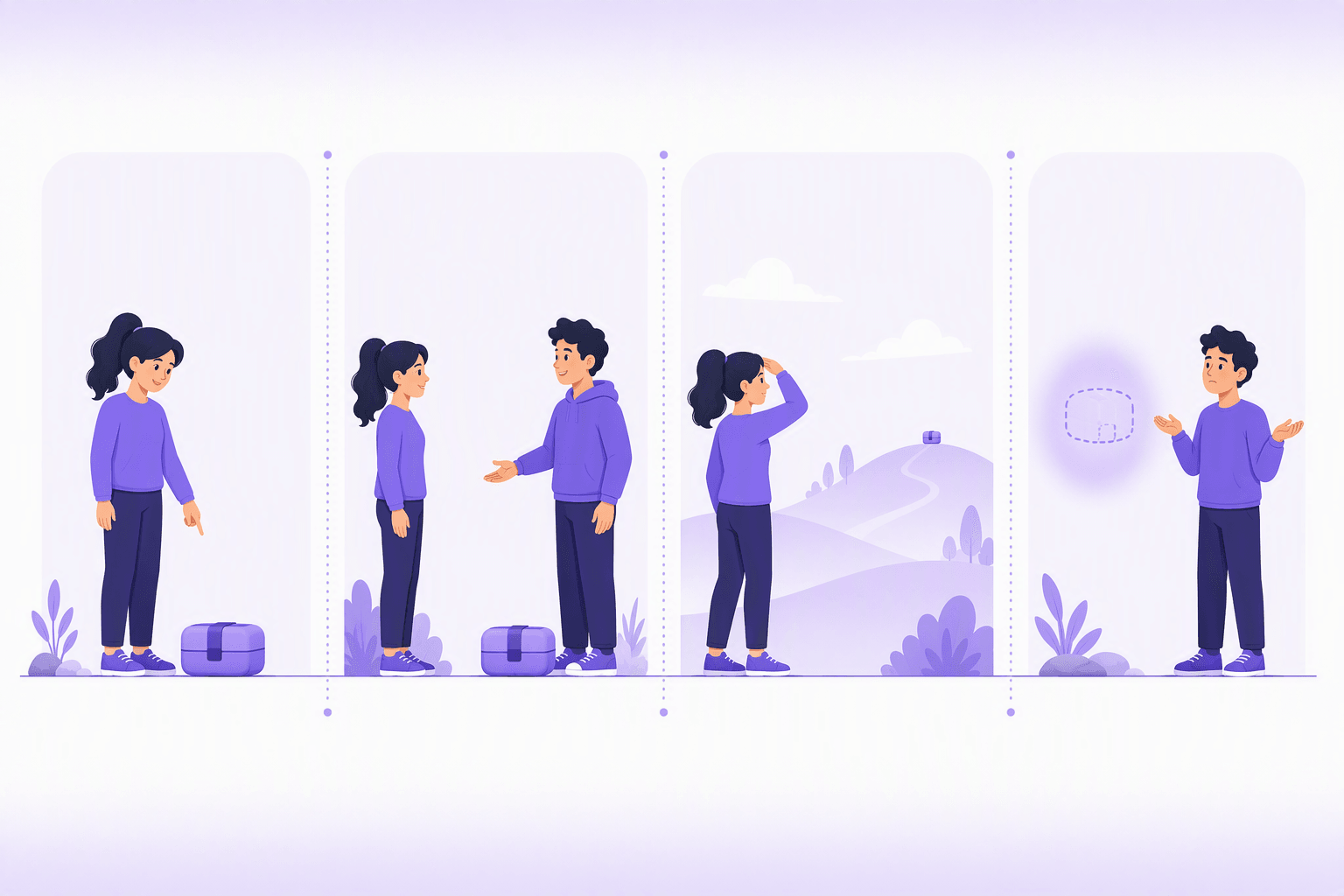
どこ (doko) fits perfectly into the Ko-So-A-Do grid: ここ (koko, here), そこ (soko, there), あそこ (asoko, over there), どこ (doko, where?). The particle that follows どこ changes the meaning: どこに (doko ni) asks about a destination, どこで (doko de) asks about a location of action, and どこから (doko kara) asks about origin.
The polite form どちら (dochira) serves double duty as both "where" and "which direction." In department stores and hotels, staff will ask どちらへ (dochira e, "where to?") rather than the plainer どこへ. どちら also functions as a polite "which of two," a distinction English does not make but Japanese tracks carefully.
いつ (itsu)
| English | Japanese | Pronunciation | Note |
|---|---|---|---|
| When? | いつ | ee-tsoo | いつ来ますか = When will you come? |
| Sometime | いつか | ee-tsoo-kah | いつか日本に行きたい = I want to go to Japan someday |
| Always | いつも | ee-tsoo-moh | いつも元気 = always energetic |
| Since when? | いつから | ee-tsoo-kah-rah | いつから日本語を勉強していますか |
| By when? | いつまでに | ee-tsoo-mah-deh-nee | Deadline: いつまでに終わりますか |
いつ (itsu) is unusual among Japanese question words because it has no kanji in modern use and is written exclusively in hiragana. Unlike 誰 or 何, いつ does not require a particle to function in a sentence: いつ行きますか (itsu ikimasu ka, "when will you go?") is grammatically complete without adding に or を.
The derived forms are among the most common words in daily Japanese. いつも (itsumo, "always") appears in greetings like いつもお世話になっております (itsumo osewa ni natte orimasu), the standard business greeting meaning "thank you for your continued support." いつか (itsuka, "someday") carries a wistful, aspirational tone frequently heard in song lyrics and everyday conversation.
なぜ / どうして / なんで
| English | Japanese | Pronunciation | Note |
|---|---|---|---|
| Why? (formal) | なぜ | nah-zeh | Writing, news, academia |
| Why? (standard) | どうして | doh-shee-teh | Safest for most situations |
| Why? (casual) | なんで | nahn-deh | Friends, family, informal |
| For what reason? | 何のために | nahn-noh tah-meh-nee | Purpose-focused question |
Japanese has three words for "why," and choosing the right one depends entirely on formality. なぜ (naze) is the most formal and literary, used in NHK news broadcasts, academic papers, and formal speeches. どうして (doushite) is the standard polite form and the safest choice for everyday conversation with acquaintances, coworkers, or strangers. なんで (nande) is casual and used exclusively among friends and family.
According to the Agency for Cultural Affairs' National Language Survey, なんで is the most frequently used form in spoken Japanese, particularly among speakers under 40. However, using it in a formal setting marks the speaker as too casual. The NHK Broadcasting Culture Research Institute recommends なぜ for broadcast journalism and どうして for conversational programming.
Note that どうして has an additional meaning beyond "why": it can also mean "how" in certain contexts: どうしてそうなった (doushite sou natta) can mean both "why did it turn out that way" and "how did it turn out that way." Context usually clarifies the intended meaning.
どう / どうやって
| English | Japanese | Pronunciation | Note |
|---|---|---|---|
| How? (state/opinion) | どう | doh | どうですか = How is it? |
| How? (method) | どうやって | doh-yaht-teh | どうやって行きますか = How do you get there? |
| How? (formal) | いかが | ee-kah-gah | いかがですか = How is it? (polite) |
| How about...? | どうですか | doh-deh-soo-kah | Suggestion or inquiry |
Japanese splits the English "how" into two distinct words. どう (dou) asks about a state, condition, or opinion: 日本語はどうですか (nihongo wa dou desu ka, "how is Japanese?" meaning "what do you think of Japanese?"). どうやって (douyatte) asks about a method or means: どうやって作りますか (douyatte tsukurimasu ka, "how do you make it?").
The formal equivalent いかが (ikaga) is essential for polite Japanese. Restaurant servers ask お飲み物はいかがですか (onomimono wa ikaga desu ka, "how about a drink?"). In business, コーヒーはいかがですか (koohii wa ikaga desu ka) is the standard way to offer a guest coffee. Using どう in these contexts would be grammatically correct but socially too casual.
どれ / どの / どんな
| English | Japanese | Pronunciation | Note |
|---|---|---|---|
| Which one? (of 3+) | どれ | doh-reh | Standalone: どれがいい? = Which is good? |
| Which? (+ noun) | どの | doh-noh | どの電車 = which train? |
| Which? (of 2) | どちら | doh-chee-rah | Also: where (polite) |
| What kind of? | どんな | dohn-nah | どんな映画が好き? = What kind of movies do you like? |
The "which" family demonstrates the Ko-So-A-Do system at its clearest. これ (this one), それ (that one), あれ (that one over there), どれ (which one?). The same pattern maps to noun modifiers: この本 (this book), その本 (that book), あの本 (that book over there), どの本 (which book?).
A critical distinction: どれ (dore) stands alone as a pronoun for three or more options, while どちら (dochira) is used for choosing between two options. Asking どれにしますか (dore ni shimasu ka) at a restaurant with many dishes is natural, but when choosing between tea and coffee, どちらにしますか (dochira ni shimasu ka) is correct.
どんな (donna, "what kind of") is one of the most useful conversational question words. どんな音楽が好きですか (donna ongaku ga suki desu ka, "what kind of music do you like?") is a standard conversation starter. It attaches directly to nouns without a particle, just like この/その/あの/どの.
いくら / いくつ
| English | Japanese | Pronunciation | Note |
|---|---|---|---|
| How much? (price) | いくら | ee-koo-rah | これはいくらですか = How much is this? |
| How many? / How old? | いくつ | ee-koo-tsoo | いくつありますか = How many are there? |
| How long? (time) | どのくらい | doh-noh-koo-rah-ee | どのくらいかかりますか = How long does it take? |
| How far? | どのくらい | doh-noh-koo-rah-ee | Also for distance, amount, degree |
いくら (ikura) asks specifically about price and is one of the first phrases every traveler learns: これはいくらですか (kore wa ikura desu ka, "how much is this?"). It is unrelated to the food いくら (ikura, salmon roe); the food word comes from Russian, while the question word is native Japanese.
いくつ (ikutsu) serves double duty as both "how many" (for general counting) and "how old" (casually). おいくつですか (oikutsu desu ka) with the polite お prefix is a gentle way to ask someone's age, considered softer than the direct 何歳ですか (nan-sai desu ka). For quantities, いくつ is used when no specific counter is needed: りんごはいくつ要りますか (ringo wa ikutsu irimasu ka, "how many apples do you need?").
どのくらい (dono kurai) is the go-to expression for asking about extent, duration, or degree. It covers questions English splits into "how long," "how far," and "how much" (for non-price quantities). 東京からどのくらいかかりますか (Toukyou kara dono kurai kakarimasu ka, "how long does it take from Tokyo?") is essential travel vocabulary.
💡 Making Questions With か (ka) and Rising Intonation
In polite Japanese (です/ます form), add か (ka) to the end of any statement to make it a question: これは本です (kore wa hon desu, "this is a book") becomes これは本ですか (kore wa hon desu ka, "is this a book?"). In casual speech, か is often dropped entirely, and the question is conveyed through rising intonation alone: これは本? (kore wa hon?). Note that adding か to casual speech (これは本か?) sounds masculine and somewhat rough. Most casual speakers simply raise their pitch at the end.
🌍 Indirect Questions and Politeness
Japanese culture values indirect communication, especially when asking questions of superiors, customers, or strangers. Rather than a direct question like いつ来ますか (itsu kimasu ka, "when will you come?"), polite Japanese wraps the question inside a request: いつ来るか教えていただけますか (itsu kuru ka oshiete itadakemasu ka, "could you please tell me when you will come?"). This structure (embedding a question with か inside a polite request) is called 間接疑問文 (kansetsu gimonbun, indirect question). Mastering it is essential for sounding appropriately polite in business, customer service, and any interaction involving social hierarchy.
Japanese Question Words in Movies and TV
Watching Japanese films, anime, and drama is one of the most effective ways to internalize question words in natural context. You will hear casual なんで (nande, "why?!") in anime far more than formal なぜ, while business dramas showcase indirect questioning and いかが (ikaga) in professional settings.
Pay attention to how characters shift between formality levels: a character might use なんで with friends but switch to なぜ or どうして when speaking to a teacher. This register-switching is a core feature of natural Japanese that textbooks rarely capture well.
Browse our collection of best movies to learn Japanese for curated recommendations, or explore more Japanese vocabulary and grammar guides on the blog. For hands-on practice with question words in context, try our Japanese learning tools with real movie and TV content.
Frequently Asked Questions
What are the basic question words in Japanese?
How do you form a question in Japanese?
Why does 何 have two readings, なに (nani) and なん (nan)?
What is the Ko-So-A-Do system in Japanese?
What is the difference between なぜ, どうして, and なんで?
Is it rude to ask direct questions in Japanese?
Sources & References
- Agency for Cultural Affairs (文化庁), National Language Survey, 2024
- Japan Foundation (国際交流基金), Survey of Japanese-Language Education Abroad, 2024
- Makino, S. & Tsutsui, M., A Dictionary of Basic Japanese Grammar (The Japan Times)
- Crystal, D., The Cambridge Encyclopedia of Language, 4th edition (Cambridge University Press)
- NHK Broadcasting Culture Research Institute, Standard Japanese Pronunciation Guide
Start learning with Wordy
Watch real movie clips and build your vocabulary as you go. Free to download.


