Quick Answer
To write a formal email in English, use a clear subject line, a polite greeting (like 'Dear Ms. Lee'), a short purpose-first opening, and a respectful closing (like 'Kind regards'). Keep sentences brief, avoid slang, and make requests with softeners such as 'Could you please' or 'I would appreciate it if'.
To write a formal email in English, use a specific subject line, a respectful greeting, a purpose-first opening, short paragraphs, a clear request, and a professional closing like "Kind regards" or "Sincerely". The key is tone control: you sound formal by being clear, neutral, and considerate, not by using complicated vocabulary.
English is the most widely spoken language by total speakers, with around 1.5 billion speakers worldwide, according to Ethnologue (2024). That global role means your email might be read by someone from a different workplace culture, so predictable structure and polite phrasing matter more than sounding clever.
If you also want to build everyday fluency outside email, pair this with listening practice from movies and shows, for example our picks of the best movies to learn English. For contrast, it also helps to know what not to write, like slang from English slang and overly casual expressions from English idioms and expressions.

| English | Pronunciation | Formality |
|---|---|---|
| Subject: Request for meeting next week | SUHB-jekt: ri-KWEHST fer MEE-ting nekst WEEK | formal |
| Dear Ms. Lee, | DEER miz LEE | formal |
| Dear Hiring Manager, | DEER HY-er-ing MAN-uh-jer | formal |
| Hello Dr. Patel, | heh-LOH DOK-ter pah-TEL | polite |
| I hope this message finds you well. | eye HOHP this MEH-sij fyndz yoo WEHL | polite |
| I am writing regarding... | eye am RY-ting ri-GAHR-ding | formal |
| I am writing to request... | eye am RY-ting tuh ri-KWEHST | formal |
| Could you please confirm...? | kood yoo pleez kuhn-FURM | polite |
| I would appreciate it if you could... | eye wood uh-PREE-shee-ayt it if yoo kood | formal |
| Please find attached... | pleez fynd uh-TACHT | formal |
| For your reference, ... | fer yoor REF-er-ens | formal |
| Thank you for your time and assistance. | THANGK yoo fer yoor TYME and uh-SIS-tens | formal |
| I look forward to your reply. | eye look FOR-werd tuh yoor ri-PLY | formal |
| Kind regards, | kynd ri-GAHRDZ | formal |
| Sincerely, | sin-SEER-lee | formal |
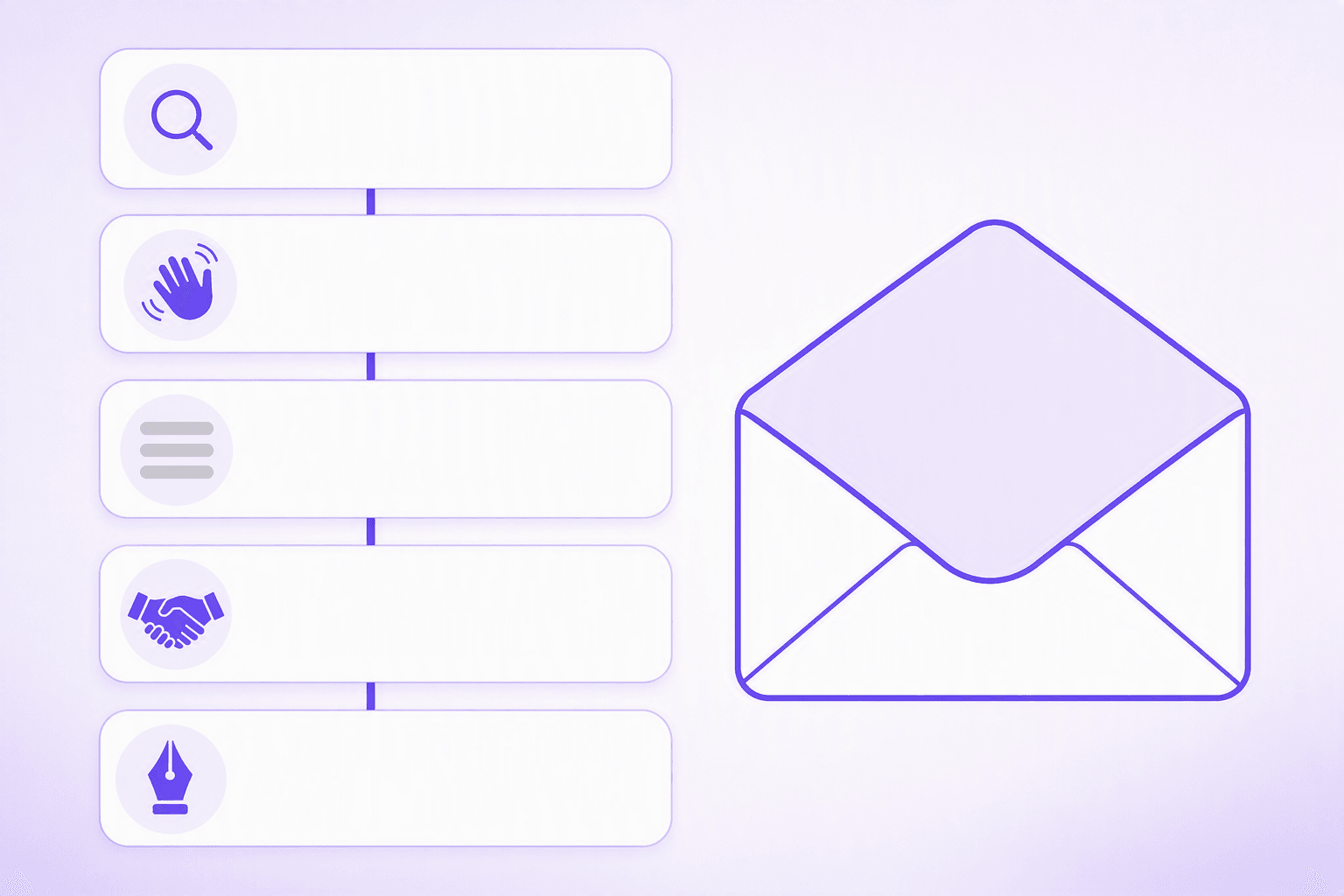
The structure of a formal email (the format readers expect)
Formal emails are easier to write when you treat them like a template with fixed parts. Most misunderstandings come from missing context, unclear requests, or tone that feels too casual for the relationship.
Style guides for professional writing generally prioritize clarity and reader effort, and that applies strongly to email. Bryan A. Garner’s work on modern English usage is a useful reminder that formality is not about fancy words, it is about controlled, readable choices.
Subject line: specific beats clever
A good subject line tells the reader what the email is about in under 8 to 10 words. It also helps your message get found later.
Use nouns and purpose words: "Request", "Update", "Confirmation", "Invoice", "Interview", "Meeting". Avoid vague subjects like "Hello" or "Question".
💡 Subject line formula
Try: topic + action + time. Example: "Project Orion: status update for July 20" (PRAH-jekt OR-ee-uhn: STAY-tus UHP-dayt fer juh-LY twen-tee).
Greeting: match the relationship and power distance
In English, formality is often expressed through titles and distance. "Dear" plus title and last name is still the safest option when you do not know the person well.
If you are writing to a group, use role-based greetings: "Dear Customer Support Team," or "Dear Admissions Office,". This is common in international contexts where you might not have a name.
Opening: purpose first, then context
A formal opening usually does two jobs: it states why you are writing, and it gives the minimum context needed to understand the request.
If you add a friendly line, keep it neutral. "I hope this message finds you well" is safe, but not required.
Body: short paragraphs, one request per paragraph
Most formal emails read better when each paragraph has one job. One paragraph for background, one for the request, one for logistics.
If you have multiple items, use bullets. This reduces the chance the reader misses a detail.
Closing: action, thanks, sign-off
A strong closing makes the next step obvious. If you need a reply, say what you need and when.
Then add a thank-you line and a closing phrase ("Kind regards") plus your name and role.
25 formal email phrases you can copy and paste (with pronunciation)
These phrases cover the most common email moves: requesting, confirming, apologizing, following up, and closing. Because this is an English learning guide, the phrase and original text are identical, and the pronunciation is the main learning support.
Subject lines (5)
Use subject lines that describe the action. In busy inboxes, action words reduce back-and-forth.
/SUHB-jekt: ri-KWEHST fer MEE-ting nekst WEEK/
Literal meaning: A direct subject line that states the purpose.
“Subject: Request for meeting next week”
Subject: Request for meeting next week
In many workplaces, a clear subject line is treated as a courtesy because it helps the reader prioritize and search later.
/FAH-loh uhp on ow-er kon-ver-SAY-shun/
Literal meaning: Signals you are continuing a previous thread.
“Subject: Follow-up on our conversation”
Subject: Follow-up on our conversation
Use this after a call or meeting. It implies continuity, not pressure.
/kon-fer-MAY-shun uhv uh-POYNT-ment/
Literal meaning: States you are confirming a scheduled time.
“Subject: Confirmation of appointment”
Subject: Confirmation of appointment
Common in healthcare, services, and interviews. It sounds neutral and organized.
/ri-KWEHST fer in-fer-MAY-shun/
Literal meaning: A general subject line for asking questions.
“Subject: Request for information”
Subject: Request for information
Works well when you are contacting an office or support team and do not know the recipient.
/UHP-day-tid DOK-yuh-ments uh-TACHT/
Literal meaning: Tells the reader what is inside the email.
“Subject: Updated documents attached”
Subject: Updated documents attached
This reduces the chance the recipient misses the attachment or opens the wrong version.
Greetings and openings (6)
In many English-speaking workplaces, "Dear" is still the default for first contact. "Hello" is slightly warmer and often fine when you know the person’s name.
/DEER miz LEE/
Literal meaning: A formal greeting using title and last name.
“Dear Ms. Lee, I am writing regarding the invoice dated July 10.”
Dear Ms. Lee, I am writing regarding the invoice dated July 10.
Use Ms. when you do not know a woman's preferred title. Avoid guessing marital status with Mrs.
/DEER HY-er-ing MAN-uh-jer/
Literal meaning: A role-based greeting when you do not know the name.
“Dear Hiring Manager, I am writing to apply for the Marketing Analyst position.”
Dear Hiring Manager, I am writing to apply for the Marketing Analyst position.
This is usually preferred over 'To whom it may concern' because it sounds more specific and current.
/heh-LOH DOK-ter pah-TEL/
Literal meaning: A polite greeting using a professional title.
“Hello Dr. Patel, thank you for your time yesterday.”
Hello Dr. Patel, thank you for your time yesterday.
In English, professional titles (Dr., Professor) are a strong formality signal, even with 'Hello'.
/eye HOHP this MEH-sij fyndz yoo WEHL/
Literal meaning: A neutral polite opener.
“I hope this message finds you well. I am writing to request an update on my application.”
I hope this message finds you well. I am writing to request an update on my application.
Common in international business English. In some US workplaces it can sound slightly formulaic, but it is rarely offensive.
/eye am RY-ting ri-GAHR-ding/
Literal meaning: States the topic in a formal way.
“I am writing regarding the contract terms we discussed.”
I am writing regarding the contract terms we discussed.
This is a standard business opener because it is direct without sounding demanding.
/eye am RY-ting tuh ri-KWEHST/
Literal meaning: Introduces a request politely.
“I am writing to request a meeting at your earliest convenience.”
I am writing to request a meeting at your earliest convenience.
In English politeness, indirectness often signals respect, especially when asking for time or action.
Polite requests (6)
Requests are where tone matters most. Pragmatics research on politeness (Brown and Levinson, Politeness: Some Universals in Language Usage, Cambridge University Press) treats requests as face-threatening acts, which is why English uses softeners like could, would, and please.
Could
"Could you" is a safe default. It is polite without being overly formal.
/kood yoo pleez kuhn-FURM/
Literal meaning: A polite request for confirmation.
“Could you please confirm the meeting time for Thursday?”
Could you please confirm the meeting time for Thursday?
Adding 'please' helps, but one 'please' is enough. Multiple 'please' can sound anxious or sarcastic.
I would appreciate it if
This phrase is more formal and slightly more distant. It works well when writing to institutions or senior people.
/eye wood uh-PREE-shee-ayt it if yoo kood/
Literal meaning: A formal way to ask for help or action.
“I would appreciate it if you could share the updated timeline.”
I would appreciate it if you could share the updated timeline.
This is common in formal email because it frames the request as gratitude, not entitlement.
Please find attached
This is a classic business phrase. It is normal, even if it feels old-fashioned.
/pleez fynd uh-TACHT/
Literal meaning: Introduces an attachment.
“Please find attached the signed agreement.”
Please find attached the signed agreement.
Many organizations still expect this phrasing. It is clear and hard to misread.
For your reference
Use this when you are not asking for action, just sharing information.
/fer yoor REF-er-ens/
Literal meaning: Signals information is provided for context.
“For your reference, the policy document is linked below.”
For your reference, the policy document is linked below.
This reduces pressure. It tells the reader you are not demanding a response.
If possible
This is a small phrase that makes deadlines feel less aggressive.
/if PAH-suh-bul kood yoo ri-PLY by FRY-day/
Literal meaning: Asks for a deadline while showing flexibility.
“If possible, could you reply by Friday so we can finalize the schedule?”
If possible, could you reply by Friday so we can finalize the schedule?
In many workplaces, deadlines are normal. This wording keeps the tone cooperative.
At your earliest convenience
This is formal and common, but can be vague. Use it when you truly do not have a deadline.
/at yoor UR-lee-ist kuhn-VEE-nyens/
Literal meaning: Requests action when the reader has time.
“At your earliest convenience, could you review the attached draft?”
At your earliest convenience, could you review the attached draft?
If you actually need a date, ask for one. Otherwise this can sound like hidden urgency.
Apologies and fixes (4)
Formal email apologies should be short and specific. Over-apologizing can make the situation feel bigger than it is.
David Crystal’s work on English usage and style highlights how context shapes what sounds natural, and email is a context where brevity often reads as competence.
Apologize
Use "I apologize" for more formal contexts. Use "I am sorry" when the relationship is warmer.
/eye uh-PAH-luh-jyz fer thuh dih-LAY/
Literal meaning: A formal apology for late response.
“I apologize for the delay. Thank you for your patience.”
I apologize for the delay. Thank you for your patience.
This is common in customer support and institutional email. It is direct and professional.
/THANGK yoo fer yoor PAY-shens/
Literal meaning: Acknowledges the reader waited.
“Thank you for your patience while we review your request.”
Thank you for your patience while we review your request.
This shifts the tone from apology to appreciation, which often feels better to the reader.
/thair uh-PEERZ tuh bee an AIR-er in/
Literal meaning: Flags a problem without accusing anyone.
“There appears to be an error in the billing address on the invoice.”
There appears to be an error in the billing address on the invoice.
This is a diplomatic way to correct mistakes, especially across teams or organizations.
/kood yoo pleez KLAIR-uh-fy/
Literal meaning: Asks for clarification politely.
“Could you please clarify which version you would like us to use?”
Could you please clarify which version you would like us to use?
This avoids sounding like you are blaming the reader for being unclear.
Closings and sign-offs (4)
Closings are where many learners accidentally sound too casual. In English, a professional closing is short, and the politeness is carried by the structure, not by emotional language.
Thank you
Use one thank-you line that matches what you asked for.
/THANGK yoo fer yoor TYME and uh-SIS-tens/
Literal meaning: Thanks the reader for effort and attention.
“Thank you for your time and assistance. I look forward to your reply.”
Thank you for your time and assistance. I look forward to your reply.
This is a safe default when you asked for help, review, or action.
Looking forward
This signals expectation without demanding.
/eye look FOR-werd tuh yoor ri-PLY/
Literal meaning: A formal way to say you expect a response.
“I look forward to your reply. Thank you again for your time.”
I look forward to your reply. Thank you again for your time.
In some contexts it can feel slightly stiff, but it is widely accepted in formal email.
Sign-offs
"Kind regards" and "Sincerely" are both standard. Choose based on relationship and region.
/kynd ri-GAHRDZ/
Literal meaning: A polite, professional sign-off.
“Kind regards, Jordan Kim”
Kind regards, Jordan Kim
Common in the UK and internationally. In the US, 'Best regards' is also very common.
/sin-SEER-lee/
Literal meaning: A formal sign-off, often used in official contexts.
“Sincerely, Jordan Kim”
Sincerely, Jordan Kim
Often used for applications, official complaints, and more traditional business writing.
Two full formal email templates (copy, then customize)
Templates reduce mistakes because you are not inventing tone under pressure. Customize the bracketed parts, and keep the rest.
Template 1: requesting a meeting
Subject: Request for meeting next week
Dear [Title + Last Name],
I hope this message finds you well. I am writing to request a meeting next week to discuss [topic].
If possible, could you reply by Friday with your availability? Please find attached a short agenda for your reference.
Thank you for your time and assistance.
Kind regards,
[Full Name]
[Role, Company]
[Phone] | [Email]
Template 2: follow-up after no response
Subject: Follow-up on our conversation
Hello [Name],
I am writing regarding my previous email about [topic]. Could you please confirm whether you had a chance to review it?
If it is helpful, I can resend the documents or provide additional details.
Thank you for your time.
Best regards,
[Full Name]
Common tone mistakes (and the quick fix)
Even advanced learners make tone errors in email because the words are correct, but the social meaning is off.
⚠️ Avoid these in formal email
Avoid slang, sarcasm, and intense emotion words (for example 'This is ridiculous' or 'I am furious'). If you need to complain, keep it factual, describe impact, and state the resolution you want.

Mistake 1: sounding demanding
Demanding: "Send me the file today."
Better: "Could you please send the file today?" or "If possible, could you send the file today?"
Mistake 2: writing long paragraphs
Long blocks of text look like work. Short paragraphs look like respect for the reader’s time.
If you need detail, use bullets and headings inside the email.
Mistake 3: over-formality that feels unnatural
Some learners try to sound formal by adding rare words. In email, that can hurt clarity.
Use common words, but choose polite structures. That is what makes the message feel professional.
How to practice formal email English with real dialogue
Email English is a genre, but the building blocks are everyday: requests, apologies, and follow-ups. When you watch shows, listen for how characters soften requests and manage status differences, then reuse those patterns in writing.
For listening-based practice, start with our best movies to learn English and keep a running list of polite request frames. If you want a broader foundation, build core vocabulary with the 100 most common English words, then layer on workplace phrases.
If you want to practice these lines in context, Wordy’s clip-based approach is built for repeating short, high-frequency sentences until they feel automatic. Explore more learning guides on the blog or jump straight to learn English.
Frequently Asked Questions
What is the best greeting for a formal email in English?
How do you start a formal email politely?
Is it okay to use 'Hi' in a formal email?
What is a good formal closing line in English?
How do you politely ask for a reply in a formal email?
How long should a formal email be?
Sources & References
- Cambridge Dictionary, entries for 'regards', 'sincerely', and 'please' (accessed 2026)
- Merriam-Webster, entries for 'formal', 'professional', and 'salutation' (accessed 2026)
- British Council, Business English and email writing resources (accessed 2026)
- OECD, Survey of Adult Skills (PIAAC): literacy and workplace communication materials (accessed 2026)
- Ethnologue: Languages of the World, English language entry (2024)
Start learning with Wordy
Watch real movie clips and build your vocabulary as you go. Free to download.


