Quick Answer
To stay motivated learning a language, stop relying on willpower and build a system: tiny daily goals, visible progress tracking, enjoyable input (shows, music, clips), and social accountability. Motivation lasts when your study feels doable today and meaningful long-term, and when you can see proof that you are improving week to week.
Staying motivated learning a language is easiest when you stop chasing motivation and instead build routines that make studying automatic: a small daily minimum, enjoyable input you actually want to consume, and a simple way to see progress every week. If your plan depends on feeling inspired, you will quit when life gets busy, but if your plan depends on a system, you keep going even on low-energy days.
English is a useful example because it is the most widely learned second language in the world, and it is used as an official language in dozens of countries. Ethnologue estimates about 1.5 billion English speakers worldwide when you combine native and second-language speakers (Ethnologue, 27th edition, 2024). That scale matters because it means you can find content, communities, and goals for English in almost any niche.
This guide focuses on motivation that lasts for months, not days. You will get nine methods, plus concrete routines you can copy.
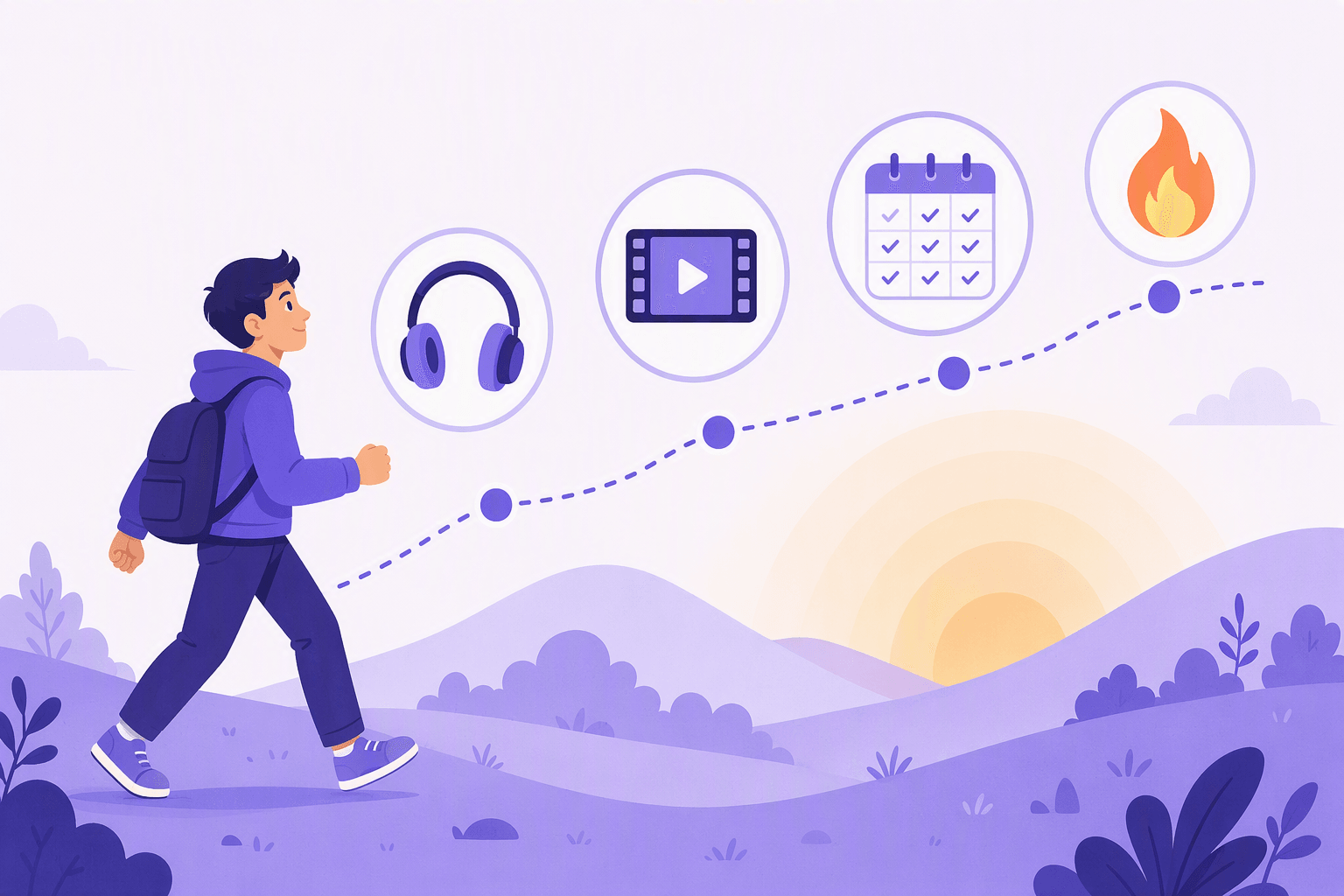
Motivation problems are usually planning problems
Most learners do not quit because they are lazy. They quit because the plan is too big, too vague, or too disconnected from real life.
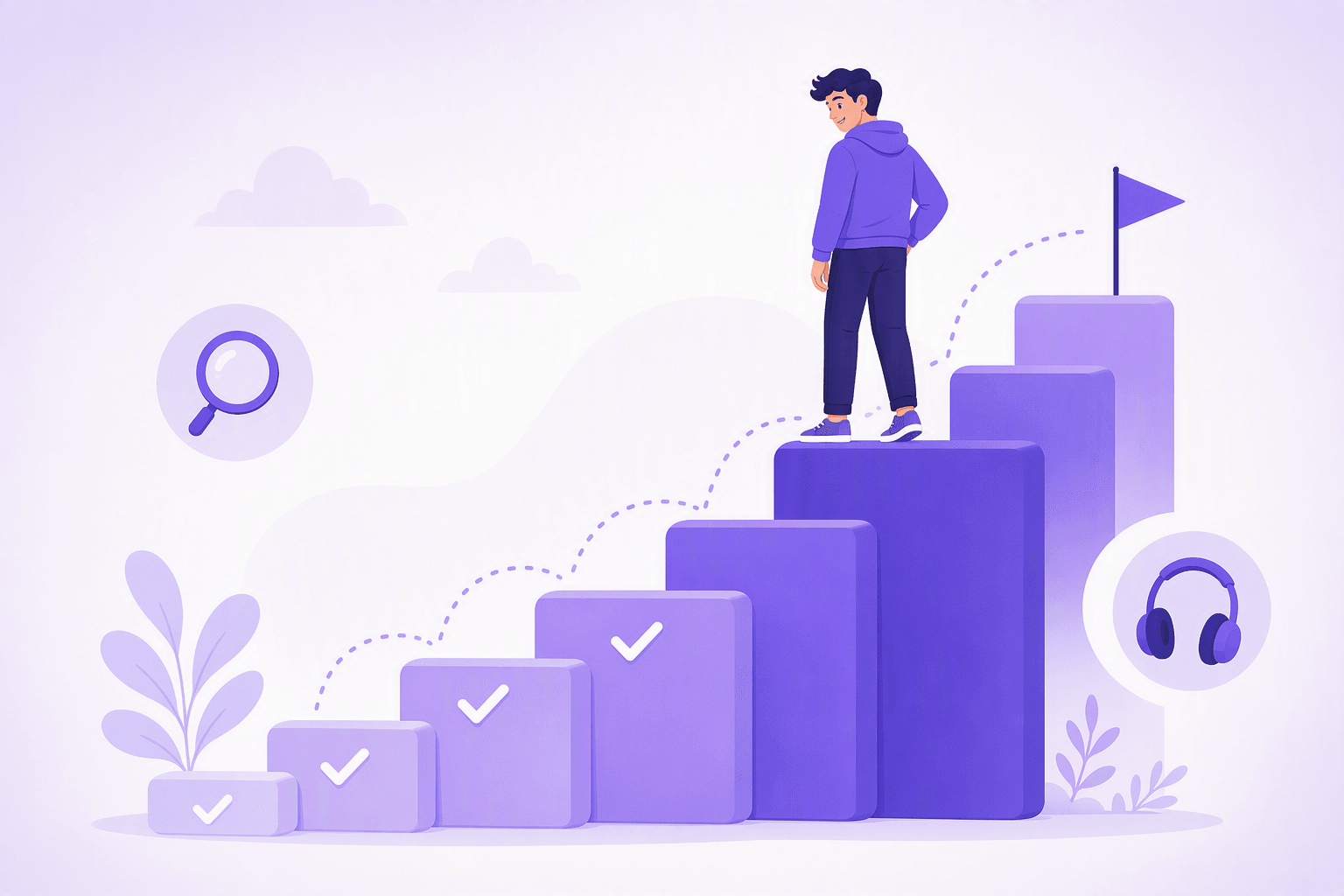
Teresa Amabile and Steven Kramer, in The Progress Principle (Harvard Business Review Press), argue that perceived progress is one of the strongest drivers of motivation in knowledge work. Language learning is knowledge work, and the same pattern shows up: when you can see progress, you keep going.
BJ Fogg, in Tiny Habits (Houghton Mifflin Harcourt), emphasizes that behavior change is easier when the action is small and tied to a stable prompt. In language learning terms, that means a daily minimum you can do even when you are tired.
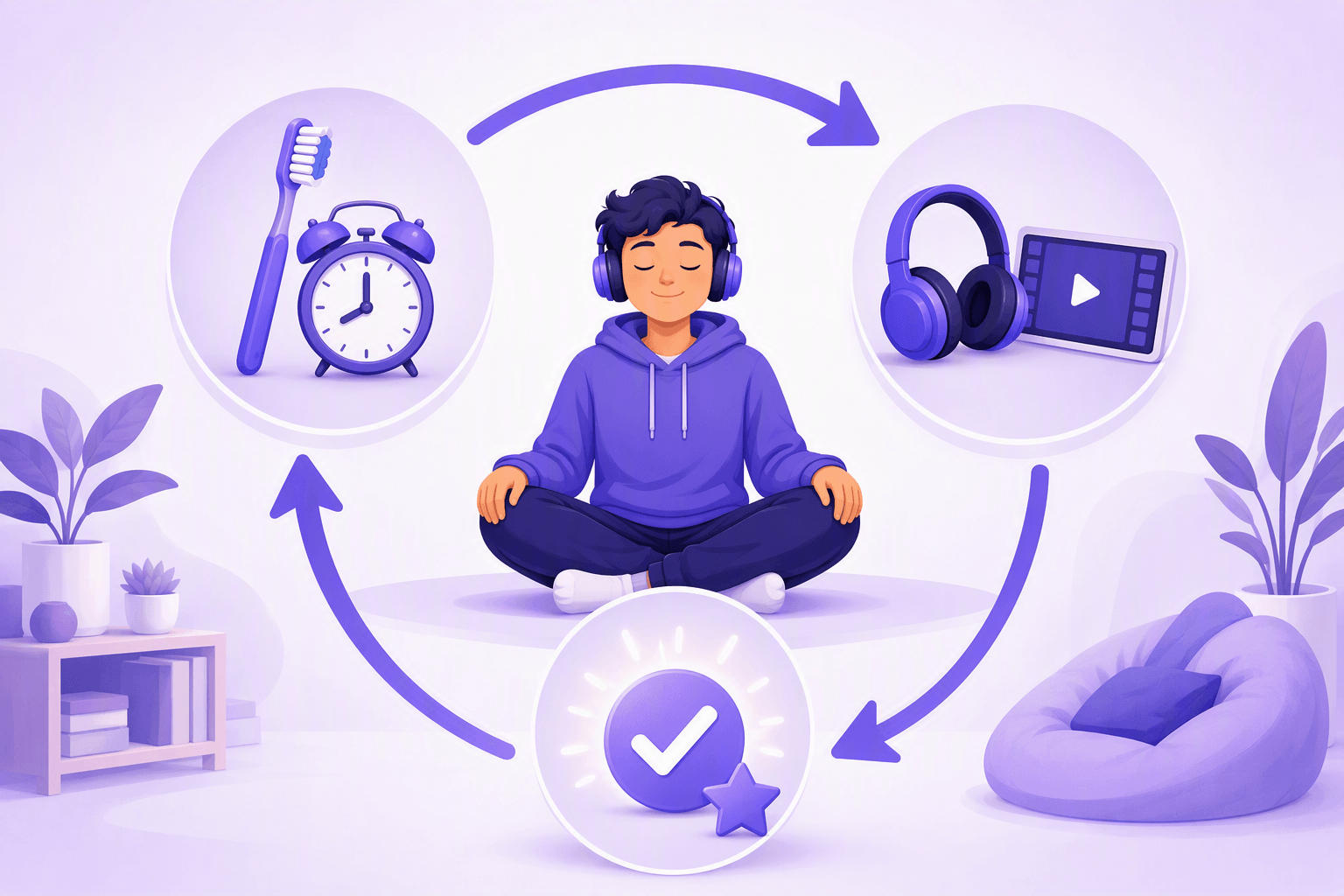
Charles Duhigg’s The Power of Habit (Random House) is also useful here: stable cues and rewards beat heroic willpower. If you always study “sometime after work,” you are negotiating with yourself every day. If you study “after brushing teeth,” you are not.
💡 A simple reframe
If you feel unmotivated, do not ask, "How do I get motivated?" Ask, "What would make this easier to start today?"
Method 1: Set a daily minimum that feels almost too easy
A daily minimum is the smallest session that still counts as “I am the kind of person who studies this language.”
For many people, that minimum is one of these:
- 5 minutes of listening
- 10 flashcards
- 3 sentences written
- 1 short clip with subtitles
The point is not that this is enough to become fluent. The point is that it protects consistency, and consistency protects motivation.
Build a two-level plan: minimum and bonus
Use two levels:
- Minimum: the non-negotiable habit (5 to 10 minutes)
- Bonus: what you do when you have energy (20 to 60 minutes)
This prevents the common trap where you study hard for a week, burn out, then stop for two weeks.
Method 2: Track the right metric, not the wrong one
Tracking “days studied” is fine, but it can hide the truth. Two weeks of “studied” could mean 20 minutes total.
Track one input metric and one output metric:
- Input: minutes listened, pages read, clips watched
- Output: words recalled, sentences spoken, messages sent
If you want a simple weekly target, try:
- 90 minutes of listening per week (about 13 minutes per day)
- 2 short speaking sessions per week (even 10 minutes each)
UNESCO’s literacy data is a reminder that reading and listening access shapes learning outcomes at scale (UNESCO Institute for Statistics, accessed 2026). For you as an individual learner, access is not the issue, but exposure is. If you do not hear the language often, your brain does not get enough repetitions to make it feel easy.
⚠️ Avoid the 'app score' trap
If your only progress signal is an app streak or a percentage bar, motivation becomes fragile. Add a real-world metric like minutes listened or episodes finished.
Method 3: Make your goal identity-based, not fantasy-based
“Become fluent” is a fantasy goal. It is not wrong, but it is too big to guide daily action.
Identity goals work better:
- “I am someone who listens to English every day.”
- “I am someone who can handle small talk at work.”
- “I am someone who reads one news story a day.”
This is where culture matters. In many workplaces, “good English” does not mean perfect grammar. It means you can follow meetings, reply politely, and write clear messages. Motivation improves when your goal matches the real social function you need.
If you want a concrete identity goal, pick a role:
- traveler
- student
- gamer
- parent at school meetings
- healthcare worker
- office professional
Then build vocabulary and listening around that role.
Method 4: Use entertainment as your main fuel, not your reward
If studying feels like eating vegetables, you will eventually rebel. Make some of your learning feel like entertainment, not homework.
A strong approach is “one clip a day.” Short clips are easier than full episodes, and they repeat common phrases naturally.
If you are learning English, start with our best movies to learn English list and choose something you would watch anyway. Enjoyment is not a bonus, it is a strategy.
Why movies and shows help motivation
Movies give you:
- repeated everyday phrases
- emotion and context, which improves memory
- pronunciation models and rhythm
They also give you social connection. When you can talk about a show, you have a reason to use the language.
Method 5: Create “friction” for quitting, and “ease” for starting
Motivation often fails at the start line. Make starting effortless:
- Put your headphones next to your toothbrush.
- Keep your study app on the first screen.
- Pre-download content for commuting.
Make quitting slightly annoying:
- Do not break the chain at home, even if it is 5 minutes.
- Keep a visible calendar where you mark listening minutes.
The American Psychological Association’s guidance on behavior change emphasizes environment design and realistic goals over self-criticism (APA, accessed 2026). Your environment can do the motivating for you.
Method 6: Learn “high-frequency” language early so you feel progress faster
Motivation rises when the language starts showing up everywhere. That happens when you learn high-frequency words and phrases.
If you are learning English, a practical starting point is the 100 most common English words. These words feel boring, but they unlock real sentences.
Then add “glue phrases”:
- “I mean…”
- “It depends.”
- “To be honest…”
- “What do you think?”
These are the phrases that make you feel like you can participate, even with limited vocabulary.
Use numbers as a quick confidence win
Numbers are a fast, measurable skill. You can learn them, test yourself, and use them immediately in daily life.
If you want a structured refresher, use numbers in English and practice saying prices, dates, and times out loud. Confidence grows when you can do practical tasks without freezing.
Method 7: Add a social loop, even if you are shy
Studying alone is efficient, but it is emotionally thin. A social loop makes the language feel connected to people, not just content.
Pick one:
- a weekly tutor or exchange partner
- a group class once a week
- a Discord community where you post one message a day
- commenting on short videos in the target language
The OECD’s education reporting repeatedly shows that persistence is strongly linked to support structures and learning environments (OECD, accessed 2026). You do not need a full classroom, but you do need some form of support.
💡 The 'one message' rule
If speaking feels scary, start with one written message per day. Motivation improves when you stop treating output as a rare event.
Method 8: Plan for the motivation dip, and treat it as normal
Most learners experience a dip around weeks 3 to 6:
- novelty fades
- progress feels slower
- you notice how much you still do not know
This is not failure, it is the middle of the process.

Use a “bad day” protocol
Write a protocol for low-energy days:
- Do the minimum (5 minutes).
- Choose the easiest content (something familiar).
- Stop on purpose, before you feel drained.
Stopping on purpose is important. It teaches your brain that studying does not always end in exhaustion.
Method 9: Make your learning culturally real, not textbook-perfect
Motivation increases when the language feels like a living thing people use, not a school subject.
That means learning:
- how people actually greet, joke, and disagree
- what is appropriate in different settings
- what sounds natural vs what is technically correct
For English learners, slang and swearing are a special case. They are culturally powerful, but they can also backfire.
If you want to understand tone safely, read English slang for modern informal speech, and treat it as recognition-first. If you are curious about strong language, use English swear words as a cultural guide, not as a checklist to copy.
🌍 A motivation truth most learners miss
Many learners lose motivation because they are learning a version of the language they never hear. If your daily input is real speech, your brain gets constant proof that the language exists outside your study time, and that keeps you engaged.
A realistic weekly routine (you can copy this)
Here is a simple plan that fits busy schedules and protects motivation.
Daily (10 to 20 minutes)
- 5 to 10 minutes: listening (one short clip or a short scene)
- 5 to 10 minutes: review (flashcards or notes from the clip)
Twice per week (15 to 30 minutes)
- speaking practice: tutor, exchange, or self-talk with a prompt
- record yourself for 60 seconds and re-record once
Once per week (20 minutes)
- “proof of progress” session:
- rewatch one old clip that used to feel hard
- reread an old text you wrote
- do a short timed listening and note improvement
This weekly proof session is a motivation engine. It turns invisible progress into visible progress.
Common motivation killers (and what to do instead)
Killer: Comparing yourself to fluent speakers
Fix: compare yourself to your past self, using a weekly metric.
Killer: Over-planning and under-doing
Fix: plan one week at a time, and keep a daily minimum.
Killer: Only studying what you are bad at
Fix: mix hard work with easy wins. Motivation needs both challenge and comfort.
Killer: Waiting until you have “more time”
Fix: build a small habit now. Later is not a strategy.
How Wordy fits into a motivation system (without relying on hype)
If your motivation drops because textbooks feel disconnected from real speech, movie and TV clips can help because they make listening feel concrete and repeatable. Wordy is designed around short, level-appropriate clips with interactive subtitles and review tools, which makes it easier to keep a daily minimum even on busy days.
If you prefer full-length content, start with our best movies to learn English list and build your routine around scenes you can rewatch. The key is not the platform, it is the habit: frequent, enjoyable exposure plus a small amount of review.
A final motivation rule that works
Motivation is not something you find, it is something you build by collecting small wins. Keep the daily minimum small, make input enjoyable, and create a weekly moment where you can see progress.
If you want more learning strategies, browse the Wordy blog and pick one new routine to try for seven days.
Frequently Asked Questions
Why do I lose motivation after a few weeks of learning a language?
How many minutes a day do I need to stay motivated and improve?
What should I do when I miss a day and feel like I failed?
Is it better to study grammar or just watch shows to stay motivated?
How do I stay motivated if I am learning alone with no class?
Sources & References
- Ethnologue, Ethnologue 27th edition, 2024
- UNESCO Institute for Statistics, Literacy statistics (accessed 2026)
- OECD, Education at a Glance (accessed 2026)
- American Psychological Association, information on habit formation and behavior change (accessed 2026)
Start learning with Wordy
Watch real movie clips and build your vocabulary as you go. Free to download.


