Quick Answer
The most common way to say sorry in Japanese is 'Sumimasen' (すみません, soo-mee-mah-sehn). It works as an apology, a thank-you, and an 'excuse me' all at once. For casual apologies among friends, use 'Gomen' (ごめん) or 'Gomen nasai' (ごめんなさい). In formal or business settings, 'Moushiwake gozaimasen' (申し訳ございません), literally 'there is no excuse,' is the gold standard.
The Short Answer
The most common way to say sorry in Japanese is Sumimasen (すみません, soo-mee-mah-sehn). It is one of the most versatile words in the entire language, functioning simultaneously as an apology, a thank-you, and an "excuse me." But Japanese has an entire ecosystem of apology expressions, ranging from the breezy Gomen (ごめん) between friends to the gravely formal Moushiwake gozaimasen (申し訳ございません) in boardrooms and press conferences.
Japanese is spoken by approximately 125 million people, according to Ethnologue's 2024 data. Japan's apology culture is one of the most extensively studied aspects of its society. The Agency for Cultural Affairs' 2023 National Language Survey found that Japanese speakers use apology-related expressions more frequently than any other category of polite speech, even more than greetings or expressions of gratitude.
"In Japanese culture, the apology is not merely an admission of fault; it is a social tool for maintaining harmony, expressing empathy, and restoring the delicate balance of interpersonal relationships."
(Anna Wierzbicka, Cross-Cultural Pragmatics, Mouton de Gruyter, 2003)
This guide covers 15 essential ways to say sorry in Japanese, organized by formality level: casual expressions for friends and family, polite everyday apologies, formal business language (keigo), and the uniquely Japanese phenomenon of sumimasen as gratitude. Each includes Japanese script, romaji pronunciation, and cultural context so you know exactly which apology fits which situation.
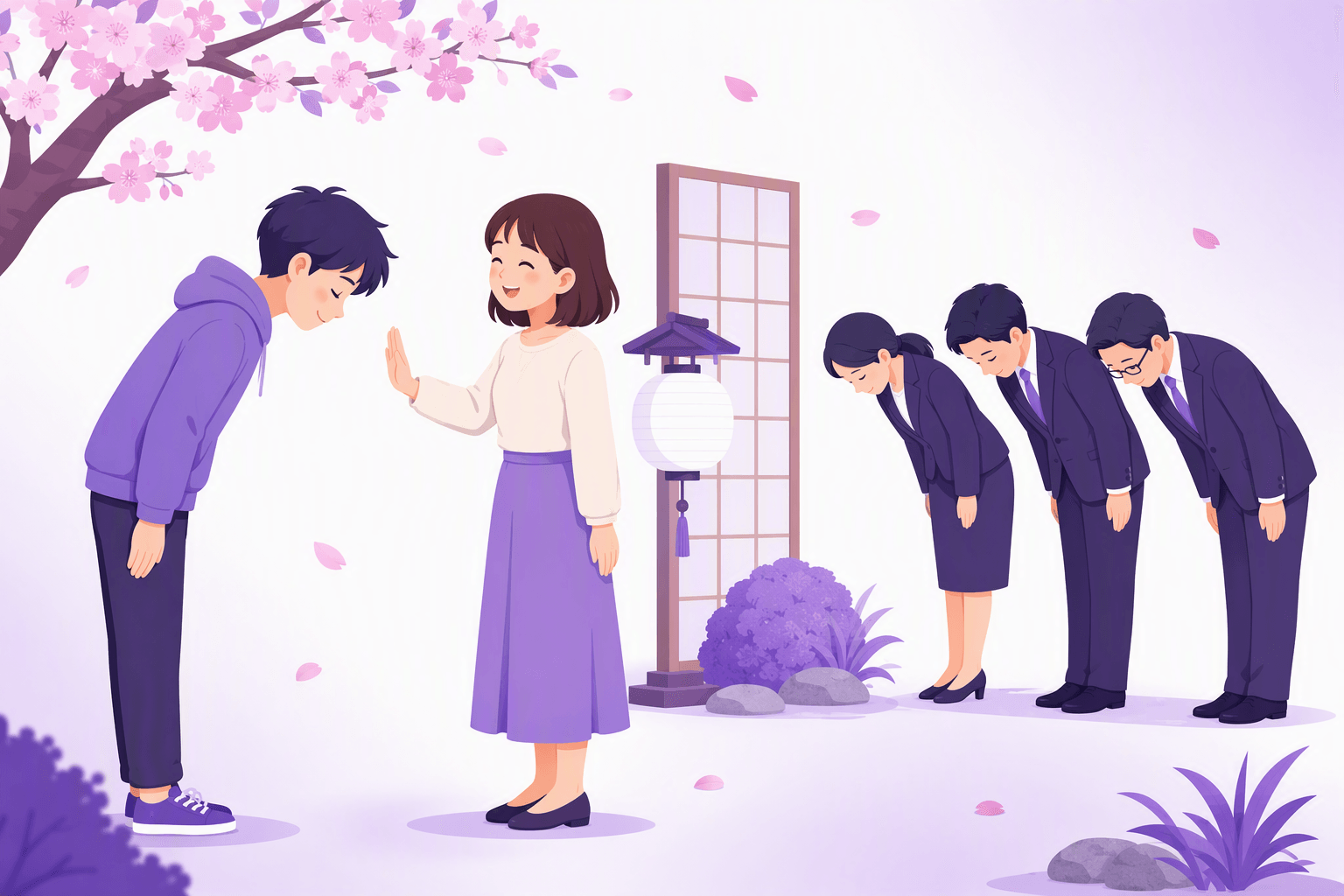
Quick Reference: Japanese Apology Expressions at a Glance
| English | Japanese | Pronunciation | Formality |
|---|---|---|---|
| Sorry (casual) | ごめん (Gomen) | goh-mehn | casual |
| Sorry (casual, soft) | ごめんね (Gomen ne) | goh-mehn neh | casual |
| I'm sorry (standard casual) | ごめんなさい (Gomen nasai) | goh-mehn nah-sah-ee | casual |
| I'm sorry / Excuse me | すみません (Sumimasen) | soo-mee-mah-sehn | polite |
| I'm sorry (informal polite) | すいません (Suimasen) | soo-ee-mah-sehn | polite |
| I have no excuse (polite) | 申し訳ありません (Moushiwake arimasen) | moh-shee-wah-keh ah-ree-mah-sehn | formal |
| I have no excuse (very formal) | 申し訳ございません (Moushiwake gozaimasen) | moh-shee-wah-keh goh-zah-ee-mah-sehn | very formal |
| I deeply apologize | 深くお詫び申し上げます (Fukaku owabi moushiagemasu) | foo-kah-koo oh-wah-bee moh-shee-ah-geh-mahs | very formal |
| Excuse me (passing) | 失礼します (Shitsurei shimasu) | shee-tsoo-reh shee-mahs | polite |
| That was rude of me | 失礼しました (Shitsurei shimashita) | shee-tsoo-reh shee-mah-shtah | polite |
| Sorry (very casual, male) | すまん (Suman) | soo-mahn | slang |
| Sorry (very casual, modern) | ごめーん (Gomeen) | goh-mehn (elongated) | slang |
| My bad (slang) | わりぃ (Warii) | wah-ree | slang |
| Sorry for the trouble | ご迷惑をおかけしました (Gomeiwaku o okake shimashita) | goh-meh-wah-koo oh oh-kah-keh shee-mah-shtah | formal |
| Please forgive me | お許しください (Oyurushi kudasai) | oh-yoo-roo-shee koo-dah-sah-ee | very formal |
Casual Apologies: Among Friends and Family
These expressions are reserved for people you are close to. Using them with a stranger or superior would come across as disrespectful. According to linguist Sachiko Ide's research on Japanese politeness, the casual-formal distinction in apologies is one of the clearest markers of social distance in the language.
ごめん
/goh-mehn/
Literal meaning: Forgive me (abbreviated)
“ごめん、遅れた!電車が止まってた。”
Sorry, I'm late! The train was stopped.
The most casual apology. Only use with close friends, siblings, or romantic partners. Dropping the 'nasai' from 'Gomen nasai' signals intimacy and informality.
Gomen is the stripped-down core of Japanese apology. It comes from gomen nasai with the polite suffix removed, much like how arigatou drops gozaimasu in casual speech. This is the apology you reach for when you bump into a friend, show up five minutes late, or forget to reply to a text. It carries no weight of formality; it is warm, direct, and quick.
ごめんね
/goh-mehn neh/
Literal meaning: Sorry, okay?
“ごめんね、今日行けなくなっちゃった。”
Sorry, I can't make it today after all.
Adding 'ne' softens the apology with a seeking-understanding tone. Common among women and in affectionate relationships. Equivalent to 'sorry about that, okay?' in English.
The particle ne (ね) adds a gentle, empathetic layer: it seeks the listener's understanding rather than simply stating regret. Gomen ne feels warmer and more affectionate than plain gomen. You will hear it frequently between couples, close female friends, and parents speaking to children. Among younger speakers, the elongated ごめーんね (gomeen ne) adds a playful, drawn-out quality.
ごめんなさい
/goh-mehn nah-sah-ee/
Literal meaning: Please forgive me
“ごめんなさい、あなたの本をなくしてしまいました。”
I'm sorry, I lost your book.
The full casual apology. More sincere than 'Gomen' but still personal, used with people you know. Children are taught to say 'Gomen nasai' from a very young age. It carries genuine emotional weight.
Gomen nasai is the first apology Japanese children learn. The nasai suffix comes from nasaru (a respectful form of "to do"), making the literal meaning "please do me the favor of forgiving." Despite this etymological politeness, in modern usage gomen nasai sits firmly in the casual-to-neutral range. It is the apology of choice when you genuinely feel bad about something but are speaking to someone you know personally.
💡 Gomen vs. Gomen nasai vs. Sumimasen
Think of these three as a ladder: Gomen (close friends only) → Gomen nasai (personal but sincere) → Sumimasen (polite, works with anyone). When in doubt about which to use, sumimasen is always the safe choice.
Standard Polite Apologies: Everyday Use
These expressions work in most daily situations: with strangers, shop staff, acquaintances, and colleagues. They strike the balance between being respectful and not overly formal.
すみません
/soo-mee-mah-sehn/
Literal meaning: It does not end (my indebtedness)
“すみません、ちょっと通してください。”
Excuse me, could you let me through please?
The Swiss Army knife of Japanese polite expressions. Functions as 'sorry,' 'excuse me,' AND 'thank you.' Used dozens of times daily by every Japanese speaker. The single most useful word for visitors to Japan.
Sumimasen is arguably the most important word to know in Japanese. Its literal root, sumu (to end, to be settled) in the negative form, means "it is not settled," referring to one's feeling of unresolved indebtedness. This etymology reveals why sumimasen works as both an apology and an expression of gratitude: in both cases, you are acknowledging a debt to the other person.
According to the Japan Foundation's 2021 education survey, sumimasen is one of the top five most frequently taught words in Japanese language programs worldwide, and for good reason. A single day in Tokyo involves saying sumimasen to get a waiter's attention, to apologize for bumping someone on a crowded train, and to thank a stranger who picks up something you dropped.
すいません
/soo-ee-mah-sehn/
Literal meaning: Casual contraction of Sumimasen
“あ、すいません、ここ空いてますか?”
Oh, excuse me, is this seat free?
A common spoken contraction of 'Sumimasen.' The 'mi' syllable gets softened to create a faster, more conversational flow. Perfectly acceptable in speech but avoided in formal writing.
In rapid everyday speech, sumimasen naturally contracts to suimasen. The meaning is identical; the difference is purely phonetic convenience. You will hear suimasen far more often than the full sumimasen in casual restaurants, on trains, and in street interactions. It is completely standard spoken Japanese, though formal writing always uses the full form.
失礼します
/shee-tsoo-reh shee-mahs/
Literal meaning: I commit a rudeness
“失礼します。山田部長はいらっしゃいますか?”
Excuse me. Is Department Head Yamada available?
Used when entering a room, interrupting someone, or excusing yourself. In offices, employees say this when entering a superior's office. Also commonly said before hanging up the phone.
Shitsurei shimasu translates literally as "I am about to commit a rudeness." It is the polite way to excuse yourself when entering someone's office, interrupting a conversation, or leaving a gathering. The past-tense form, shitsurei shimashita (失礼しました), is used to apologize after the fact ("that was rude of me"). You will hear this pair constantly in Japanese workplaces and in Japanese films and dramas.
Formal and Business Apologies: Keigo Level
These expressions belong to the world of keigo (敬語, honorific language), the formal register used in business, customer service, and public life. Mastering even one or two of these marks you as a serious student of Japanese. For more on navigating Japanese formality, visit our Japanese learning page.
申し訳ありません
/moh-shee-wah-keh ah-ree-mah-sehn/
Literal meaning: There is no excuse
“納期に遅れてしまい、申し訳ありません。”
I have no excuse for missing the deadline.
The standard formal business apology. Used in meetings, professional emails, and customer-facing situations. Stronger than 'Sumimasen' and signals genuine professional remorse.
Moushiwake (申し訳) literally means "something to say in one's defense" or "excuse." Adding arimasen (there is not) produces "there is no excuse," a powerful admission that the speaker cannot justify their error. This is the baseline formal apology in Japanese business culture, used in meetings, emails, and any professional context where sumimasen would feel too light. In speech you will also hear the shorter moushiwake nai (申し訳ない), the same expression one notch below full formality.
申し訳ございません
/moh-shee-wah-keh goh-zah-ee-mah-sehn/
Literal meaning: There is no excuse (humble)
“システム障害でご不便をおかけし、誠に申し訳ございません。”
We sincerely have no excuse for the inconvenience caused by the system failure.
The elevated form of 'Moushiwake arimasen.' Used in press conferences, corporate apologies, customer service escalations, and formal written communications. The 'gozaimasen' suffix adds maximum humility.
Replacing arimasen with the more humble gozaimasen elevates this expression to the highest tier of formal apology. This is the phrase you see in Japanese corporate press conferences, the shazai kaiken (謝罪会見), where executives bow deeply before cameras. According to a 2023 NHK analysis, moushiwake gozaimasen appeared in over 85% of corporate apology statements broadcast that year.
深くお詫び申し上げます
/foo-kah-koo oh-wah-bee moh-shee-ah-geh-mahs/
Literal meaning: I humbly offer deep apologies
“この度の不祥事について、深くお詫び申し上げます。”
Regarding this recent incident, I offer my deepest apologies.
The most formal apology in Japanese. Reserved for serious corporate scandals, public figures addressing controversies, and the gravest personal offenses. Almost always accompanied by a deep 45-degree bow.
This is the nuclear option of Japanese apologies. Fukaku (deeply) + owabi (apology, with the honorific o-) + moushiagemasu (humbly offer/state) creates the most solemn expression of remorse in the language. You will encounter it in formal press conferences, official company statements, and written apologies from public figures. In daily life, you will almost never need this, but recognizing it helps you understand Japanese news and corporate culture.
🌍 The Japanese Press Conference Apology (謝罪会見)
Japan's public apology culture has no real equivalent in Western societies. When a company makes a serious mistake, executives hold a shazai kaiken (謝罪会見, apology press conference) where they stand in a line and bow deeply (often at the full 45-degree saikeirei angle) while the most senior person delivers the apology. The depth and duration of the bow are closely scrutinized by media and the public as indicators of sincerity.
The Many Faces of すみません: Apology, Gratitude, and Attention
One of the most fascinating aspects of Japanese is how sumimasen seamlessly shifts between three entirely different functions. Understanding this versatility is key to sounding natural.
| Function | Situation | English Equivalent |
|---|---|---|
| Apology | Bumping into someone on a train | "Sorry!" |
| Gratitude | Someone holds the door for you | "Thank you!" |
| Attention | Getting a waiter's attention | "Excuse me!" |
| Apology + Gratitude | Someone picks up something you dropped | "Sorry / Thanks!" |
The underlying logic is consistent: in all four cases, sumimasen acknowledges that the other person was affected by your existence or actions. Bumping into someone affected them physically. Someone holding a door affected them by costing their time. Getting a waiter's attention interrupts their work. Japanese linguist Sachiko Ide argues that this unified function reflects the Japanese cultural value of meiwaku (迷惑), the deep awareness of causing trouble or inconvenience to others.
🌍 Sumimasen as 'Thank You'
If someone in Japan gives you directions, carries your luggage, or does you any unsolicited favor, you will often hear Japanese people say sumimasen rather than arigatou. This is not self-deprecation; it is empathy. By apologizing for the inconvenience, the speaker honors the effort the other person made. Visitors to Japan who adopt this habit are often complimented on their natural-sounding Japanese.
Slang and Very Casual Apologies
Among close friends and in informal settings, Japanese speakers reach for abbreviated and playful forms. These are common in anime, manga, and casual conversation but should never be used in formal contexts.
すまん
/soo-mahn/
Literal meaning: Archaic contraction of 'Sumimasen'
“すまん、先に食べちゃった。”
My bad, I ate without waiting for you.
A masculine, rough contraction of 'Sumimasen.' Common in anime and among older men. Carries a gruff but familiar tone. The variant 'Sumanai' (すまない) is slightly less abbreviated.
Suman (and its slightly longer form sumanai) is the informal, masculine contraction of sumimasen. You will hear it constantly from male characters in anime and Japanese films. It carries a gruff, no-nonsense quality, an apology that acknowledges the fault without excessive ceremony.
わりぃ
/wah-ree/
Literal meaning: Bad (dialect/slang form of 'warui')
“わりぃわりぃ、完全に忘れてた。”
My bad, my bad, I totally forgot.
Derived from 'warui' (悪い, bad/wrong). Equivalent to 'my bad' in English. Very casual, used mainly by young men. Often doubled for emphasis: 'Warii warii.'
Warii is a slang deformation of warui (悪い, meaning "bad"). Saying warii is the Japanese equivalent of "my bad": it acknowledges fault in the most minimal, casual way possible. Doubling it to warii warii is extremely common and signals a lighthearted, non-serious apology between close friends.
Bowing and Body Language with Apologies
In Japanese culture, the physical bow (ojigi, お辞儀) is inseparable from the verbal apology. The depth of your bow communicates sincerity as powerfully as the words themselves.
| Bow Type | Japanese | Angle | Used With |
|---|---|---|---|
| Nod (eshaku) | 会釈 | 15° | Minor "excuse me" moments |
| Standard bow (keirei) | 敬礼 | 30° | Standard apologies, sumimasen |
| Deep bow (saikeirei) | 最敬礼 | 45° | Formal apologies, serious mistakes |
| Prostration (dogeza) | 土下座 | Floor | Extreme remorse (rare in daily life) |
The 30-degree keirei bow accompanies most everyday apologies, like saying sumimasen on the street or apologizing to a colleague. The 45-degree saikeirei is reserved for serious situations: a business failure, a significant personal offense, or a public apology. Dogeza (kneeling with the forehead touching the floor) is the most extreme form and is almost never seen outside of historical dramas, though it occasionally appears in real corporate apology situations.
⚠️ Timing Matters
The bow should accompany or slightly follow the verbal apology, not precede it. Bowing before speaking can look rehearsed or insincere. The most natural pattern is to begin speaking the apology, then bow as you reach the key word (sumimasen, moushiwake gozaimasen), and hold the bow for a beat before rising.
How to Respond to Japanese Apologies
Knowing how to accept an apology gracefully is essential. Japanese responses to apologies tend to minimize the offense, reassuring the apologizer that no harm was done.
| They Say | You Can Say | Meaning | Tone |
|---|---|---|---|
| すみません | いいえ、大丈夫です (Iie, daijoubu desu) | No, it's fine | Polite, reassuring |
| ごめんなさい | 気にしないで (Ki ni shinaide) | Don't worry about it | Casual, warm |
| ごめん | 全然大丈夫 (Zenzen daijoubu) | Totally fine | Casual, friendly |
| 申し訳ございません | お気になさらないでください (Oki ni nasaranaide kudasai) | Please don't concern yourself | Very formal |
| すみません | いえいえ (Ie ie) | No, no | Casual-polite |
| ごめんね | 大丈夫だよ (Daijoubu da yo) | It's okay | Casual, reassuring |
The pattern mirrors how Japanese speakers respond to gratitude: deflect and minimize. Just as "no, not at all" is the standard response to thanks, "it's fine, don't worry" is the standard response to apologies. Directly saying "I forgive you" (yurushimasu, 許します) sounds overly dramatic in daily conversation, so save it for serious situations.
Practice With Real Japanese Content
Reading about apology expressions gives you the foundation, but hearing them spoken naturally (with proper intonation, bowing cues, and social context) is what transforms knowledge into instinct. Japanese dramas and films are perfect for this because characters constantly navigate the sumimasen vs. gomen vs. moushiwake gozaimasen spectrum, giving you an intuitive feel for when each expression fits.
Wordy lets you watch Japanese movies and shows with interactive subtitles. Tap on any apology expression to see its meaning, romaji pronunciation, formality level, and cultural context in real time. Instead of memorizing phrases from a list, you absorb them from authentic conversations where body language, tone, and social dynamics make the meaning unmistakable.
For more Japanese content, explore our blog for language guides including the best movies to learn Japanese. You can also visit our Japanese learning page to start practicing with real content today.
Frequently Asked Questions
What is the difference between 'Sumimasen' and 'Gomen nasai'?
How do you apologize in a Japanese business setting?
Why do Japanese people say 'Sumimasen' instead of 'Arigatou'?
Is bowing required when apologizing in Japanese?
What does 'Gomen ne' mean and when should I use it?
Sources & References
- Agency for Cultural Affairs, Japan (文化庁), National Language Survey on Politeness in Japanese (2023)
- The Japan Foundation (国際交流基金), Survey Report on Japanese-Language Education Abroad (2021)
- Wierzbicka, A. (2003). 'Cross-Cultural Pragmatics: The Semantics of Human Interaction.' Mouton de Gruyter.
- Ethnologue: Languages of the World, Japanese language entry (2024)
- Ide, S. (1989). 'Formal forms and discernment: Two neglected aspects of universals of linguistic politeness.' Multilingua, 8(2-3).
Start learning with Wordy
Watch real movie clips and build your vocabulary as you go. Free to download.


