How to Say How Are You in Japanese: Context-Based Guide to Japanese Check-Ins
Quick Answer
The textbook translation of 'how are you' in Japanese is 'お元気ですか?' (o-genki desu ka), but Japanese people rarely use this in daily conversation. Instead, they use context-specific greetings like '最近どう?' (saikin dō (how's it been?), '調子はどう?' (chōshi wa dō) how's it going?), or simply the time-of-day greeting without asking at all.
Why "How Are You" Works Differently in Japanese
The textbook answer is お元気ですか? (o-genki desu ka, oh-gehn-kee dehs-kah), but here is the truth: Japanese people rarely say this in daily life. Unlike the English "how are you?" (which is a reflexive greeting people exchange without expecting a real answer) お元気ですか carries genuine weight. It implies you have not seen the person recently and are sincerely asking about their health and well-being.
Japanese is spoken by approximately 125 million people according to Ethnologue's 2024 data, and its communication style is fundamentally different from English. Where English relies on formulaic check-ins ("How are you?" / "Good, thanks"), Japanese culture emphasizes 空気を読む (kūki wo yomu, reading the air). Rather than asking someone directly how they are, Japanese speakers gauge mood and well-being from context, tone of voice, and facial expressions. The National Institute for Japanese Language and Linguistics (NINJAL) corpus data confirms that direct "how are you" equivalents appear far less frequently in everyday Japanese conversation than their English counterparts. Whether you're looking up "how are you in japanese" for travel, study, or conversation, this guide covers everything you need.
"Every language encodes its own assumptions about what constitutes a socially appropriate greeting. Japanese speakers do not ask 'how are you' daily because their greeting system already communicates care through contextual awareness rather than direct inquiry."
(Anna Wierzbicka, Cross-Cultural Pragmatics, Mouton de Gruyter)
This guide covers the full spectrum of Japanese check-ins: the textbook phrase and when it actually applies, casual alternatives friends really use, formal business expressions, and the workplace greeting that replaces "how are you" entirely. Each includes Japanese script, romaji pronunciation, and the cultural context you need to sound natural rather than textbook-stiff.
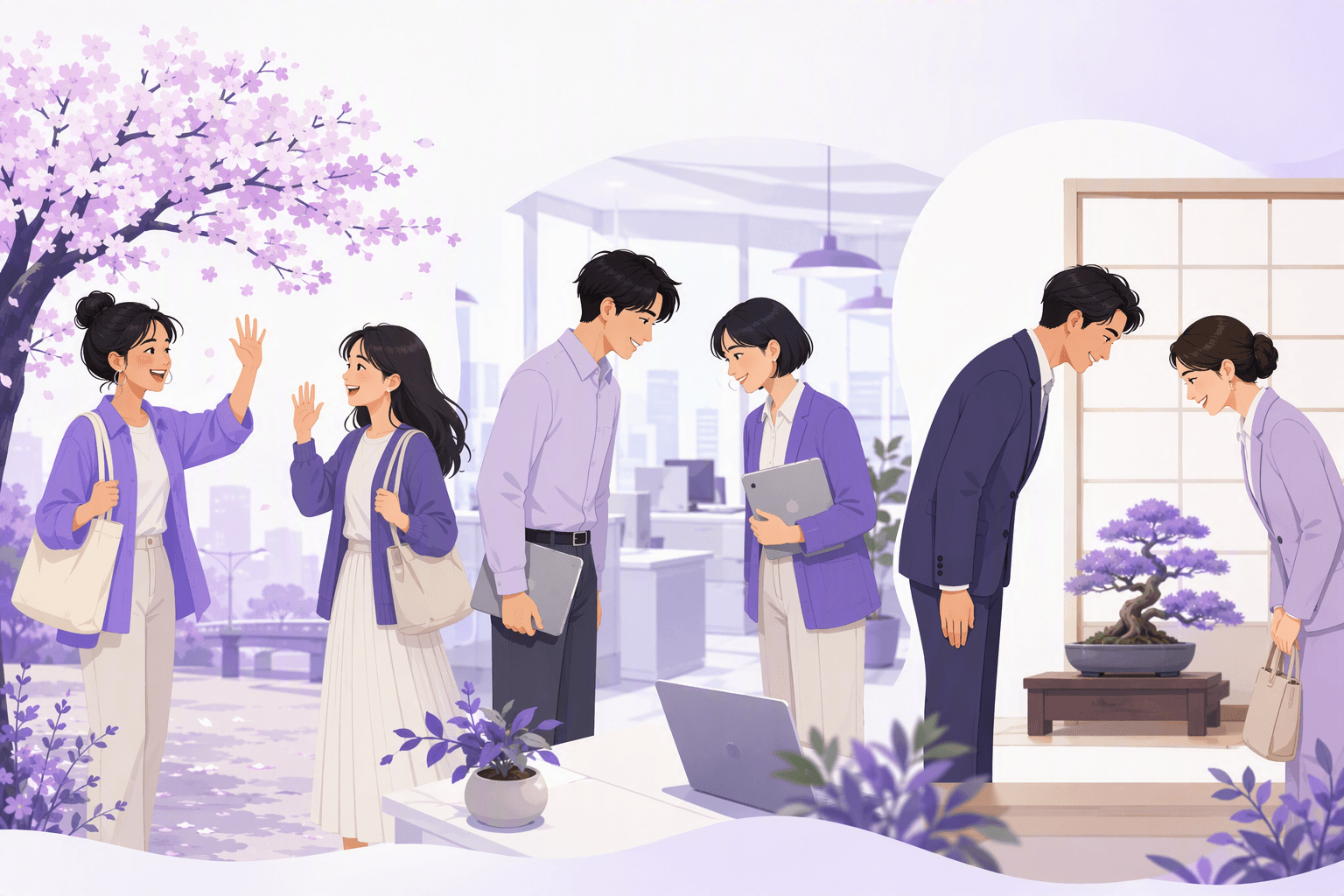
Quick Reference: Japanese "How Are You" Expressions
| English | Japanese | Pronunciation | Formality |
|---|---|---|---|
| How are you? (polite) | お元気ですか (O-genki desu ka) | oh-gehn-kee dehs-kah | polite |
| You good? (casual) | 元気? (Genki?) | gehn-kee | casual |
| How's it been lately? | 最近どう? (Saikin dō?) | sah-ee-keen doh | casual |
| How's it going? | 調子はどう? (Chōshi wa dō?) | choh-shee wah doh | casual |
| How are things? | どうですか? (Dō desu ka?) | doh dehs-kah | polite |
| Have things been unchanged? | お変わりありませんか (O-kawari arimasen ka) | oh-kah-wah-ree ah-ree-mah-sehn kah | formal |
| How have you been spending your time? | いかがお過ごしですか (Ikaga o-sugoshi desu ka) | ee-kah-gah oh-soo-goh-shee dehs-kah | very formal |
| It's been a long time (polite) | お久しぶりです (O-hisashiburi desu) | oh-hee-sah-shee-boo-ree dehs | polite |
| I've been neglectful in keeping touch | ご無沙汰しております (Go-busata shite orimasu) | goh-boo-sah-tah shee-teh oh-ree-mahs | very formal |
| You must be tired (work greeting) | お疲れ様です (Otsukaresama desu) | oh-tsoo-kah-reh-sah-mah dehs | polite |
| You doing well? | 元気にしてる? (Genki ni shiteru?) | gehn-kee nee shee-teh-roo | casual |
| Are you okay? | 大丈夫? (Daijōbu?) | dah-ee-joh-boo | casual |
The Textbook Phrase: When It Actually Applies
This section covers お元気ですか, the phrase every textbook teaches first but that comes with strict usage rules in real Japanese conversation.
お元気ですか?
/oh-gehn-kee dehs-kah/
Literal meaning: Are you healthy/energetic?
“お元気ですか?去年のパーティー以来ですね。”
How have you been? It's been since last year's party.
NOT a daily greeting. Use it when you haven't seen someone in weeks or months. It carries genuine concern for the person's well-being. Using it with someone you saw yesterday sounds strange, like asking 'Are you still alive?'
Let's break down the components. The o- prefix (お) is an honorific that adds politeness. Genki (元気) means health, vitality, or energy, combining the kanji for "origin" (元) and "spirit" (気). Desu ka makes it a polite question. So you are literally asking "Is your spirit at its origin?", a question about someone's fundamental well-being.
The Agency for Cultural Affairs' 2023 National Language Survey data shows that Japanese adults overwhelmingly use time-of-day greetings (おはようございます, こんにちは) for daily encounters rather than "how are you" equivalents. お元気ですか is reserved for genuine check-ins after a period of absence.
⚠️ The #1 Mistake Foreign Speakers Make
Do not use お元気ですか as a daily greeting. A Japanese coworker you saw yesterday will find it confusing because it implies either you forgot seeing them, or you are worried something happened overnight. For daily greetings, use the time-of-day expressions from our hello in Japanese guide, or the workplace check-in お疲れ様です covered below.
When お元気ですか IS appropriate:
- Reuniting with someone after several weeks or months
- Writing letters or emails to someone you haven't contacted recently
- Calling a family member or friend you haven't spoken to in a while
- Opening a conversation with an acquaintance you run into unexpectedly
Casual Check-Ins Among Friends
These are the expressions Japanese people actually use with friends, classmates, and peers when they want to ask how someone is doing. They are short, warm, and natural.
元気?
/gehn-kee/
Literal meaning: Healthy? / Energetic?
“やあ、元気?最近忙しそうだね。”
Hey, you good? You look busy lately.
The stripped-down casual version of お元気ですか. Drops the honorific お and the polite ですか. Used between friends, classmates, and peers of similar age. The most common casual check-in in Japanese.
元気? is what remains after you strip away all the politeness markers. No honorific o-, no polite desu ka, just the core word genki with a rising intonation. Among friends, this works both as a quick "you good?" and as a slightly more substantial check-in depending on tone. A breezy genki? with a wave is a greeting. A slower, softer genki? with eye contact is a genuine inquiry.
最近どう?
/sah-ee-keen doh/
Literal meaning: Lately how?
“最近どう?新しい仕事に慣れた?”
How's it been lately? Have you gotten used to the new job?
A natural, open-ended check-in. 'Saikin' (recently/lately) signals that you're asking about their general life situation, not just today. Very commonly used when catching up with friends you see regularly but not daily.
最近どう? is the closest natural equivalent to the English "how have you been?" It invites the other person to share whatever is on their mind: work, life, hobbies, anything recent. The polite version, 最近どうですか? (saikin dō desu ka), works with acquaintances and people slightly older than you.
調子はどう?
/choh-shee wah doh/
Literal meaning: Condition/tune, how?
“調子はどう?今日の試合、大丈夫そう?”
How's it going? Think you'll be okay for today's match?
Asks about someone's current condition or form. Often used in contexts related to work performance, health, sports, or projects. 'Chōshi' implies a state that can be good or bad, like being 'in form' or 'off.'
調子 (chōshi) originally means "tune" or "rhythm." Think of it as asking whether someone is "in tune" or "in rhythm" with life. This expression is particularly common in contexts where performance matters: sports, work projects, health recovery, or studying for exams. The polite version is 調子はどうですか? (chōshi wa dō desu ka).
元気にしてる?
/gehn-kee nee shee-teh-roo/
Literal meaning: Are you doing/keeping well?
“久しぶり!元気にしてる?”
Long time no see! Have you been doing well?
A warmer, more personal version of 元気? that asks not just about the present moment but about how someone has been sustaining their well-being. Natural when reconnecting with friends after some time apart.
The difference between 元気? and 元気にしてる? is subtle but important. 元気? is a snapshot ("are you well right now?") while 元気にしてる? asks about an ongoing state ("have you been keeping well?"). The shiteru (している contracted) implies continuous action. Use this when you haven't seen someone for a few weeks and want a warmer check-in than a quick 元気?
大丈夫?
/dah-ee-joh-boo/
Literal meaning: Are you okay? / All right?
“顔色悪いけど、大丈夫?”
You look pale. Are you okay?
Not a general 'how are you' but a situational check-in used when something seems wrong. If someone looks tired, upset, or unwell, 大丈夫? is the natural response. It shows you've been 'reading the air' and noticed something is off.
大丈夫? demonstrates 空気を読む (kūki wo yomu, reading the air) in action. Rather than routinely asking "how are you," Japanese speakers observe, and when they notice something seems off, they use 大丈夫? to check in. It is reactive rather than formulaic; you use it because you have already perceived that the person might need help.
🌍 空気を読む, Reading the Air
The concept of 空気を読む (kūki wo yomu) is central to understanding why Japanese does not have a direct "how are you" equivalent for daily use. Japanese communication culture values indirect perception. Rather than asking someone how they feel, you are expected to observe their mood, energy, and behavior and respond accordingly. Asking directly can feel intrusive. This is why context-specific check-ins like 大丈夫? (when something seems wrong) or お疲れ様です (acknowledging effort) exist instead of a single catch-all "how are you."
Formal and Business Check-Ins
Japanese keigo (敬語, honorific language) has its own set of "how are you" equivalents for professional and formal contexts. The Japan Foundation's educational research consistently identifies keigo mastery as the single biggest challenge for advanced Japanese learners.
お変わりありませんか?
/oh-kah-wah-ree ah-ree-mah-sehn kah/
Literal meaning: Have there been no changes?
“お変わりありませんか?お仕事の方はいかがですか?”
Have you been well? How is work going?
A refined, formal way to ask 'how are you.' Used in business meetings, formal letters, and when meeting clients or superiors you haven't seen recently. The negative phrasing ('no changes?') reflects the Japanese cultural preference for stability and continuity.
This expression is elegant in its indirectness. Instead of asking how someone is, you ask whether anything has changed, and the expected answer is that nothing has, because stability is valued. 変わり (kawari) means "change," and the negative arimasen ka asks "is there not?" The full phrase gently inquires whether everything in the person's life remains well and stable.
This is the standard check-in for business situations: opening a meeting with a client you have not seen in a month, starting a formal phone call, or writing to a business partner. It signals respect and professional polish.
いかがお過ごしですか?
/ee-kah-gah oh-soo-goh-shee dehs-kah/
Literal meaning: How are you spending your time?
“寒い日が続いておりますが、いかがお過ごしですか?”
The cold days continue. How have you been spending your time?
The most formal 'how are you' in Japanese. Used in written correspondence, formal speeches, and highly respectful conversations. Often preceded by a seasonal reference, following the Japanese letter-writing tradition of opening with the weather or season.
This is the highest-register "how are you" in Japanese. いかが (ikaga) is the formal version of "how," and お過ごし (o-sugoshi) is the honorific form of "spending time." You will encounter this primarily in formal letters, corporate emails to important clients, and ceremonial speeches. It is almost always preceded by a seasonal observation, a tradition rooted in Japanese letter-writing culture where acknowledging the season demonstrates attentiveness and refinement.
お疲れ様です
/oh-tsoo-kah-reh-sah-mah dehs/
Literal meaning: You are honorably tired
“お疲れ様です。午後の会議の資料、確認しましたか?”
Hey there. Have you checked the materials for the afternoon meeting?
The de facto 'how are you' in Japanese workplaces. It replaces direct check-ins entirely: when you pass a colleague in the hallway, you say お疲れ様です rather than asking how they are. It acknowledges shared effort and serves as greeting, check-in, and solidarity all at once.
If there is one phrase that replaces "how are you" in Japanese daily life, it is お疲れ様です. According to the Agency for Cultural Affairs' survey data, this expression is used dozens of times per day in Japanese offices. It functions as a greeting when encountering colleagues, a check-in that acknowledges their effort, and a subtle expression of solidarity, all without requiring the other person to share personal information about how they actually feel.
The genius of お疲れ様です is that it shifts the focus from "how are you?" (a potentially intrusive question) to "I see your effort and I respect it" (an observation that requires no vulnerable response). This aligns perfectly with Japanese communication norms where indirect care is preferred over direct inquiry.
💡 Keigo Levels of 'How Are You'
Japanese has three distinct politeness levels for asking about someone's well-being, and choosing the wrong one is a social error. Casual (friends): 元気? / 最近どう?: Polite (acquaintances, daily encounters): お元気ですか? / お疲れ様です: Formal (business, elders, formal writing): お変わりありませんか? / いかがお過ごしですか?, When in doubt, go one level higher than you think necessary. It is always safer to be too polite than too casual in Japanese.
After a Long Absence
These phrases are specifically for situations where you have not seen someone for an extended period. They pair naturally with a "how are you" follow-up and carry genuine emotional weight.
お久しぶりです
/oh-hee-sah-shee-boo-ree dehs/
Literal meaning: It has been a long time (polite)
“お久しぶりです!お元気でしたか?”
It's been so long! Have you been well?
The polite 'long time no see.' This is one of the FEW situations where following up with お元気ですか feels completely natural, because the time gap justifies a genuine check-in. The casual version 'hisashiburi' drops the honorific prefix and polite suffix.
お久しぶりです is the gateway to a natural お元気ですか. Because the phrase itself establishes that significant time has passed, following up with a "how have you been?" is not only acceptable but expected. The combination お久しぶりです!お元気でしたか? ("Long time no see! Have you been well?") is one of the most natural conversation openers in Japanese. Notice the past tense でしたか (deshita ka), which asks about their well-being over the entire period you were apart.
Among friends, the casual version 久しぶり!元気だった? (hisashiburi! genki datta?) works the same way with less formality.
ご無沙汰しております
/goh-boo-sah-tah shee-teh oh-ree-mahs/
Literal meaning: I have been neglectful (in contacting you)
“ご無沙汰しております。その後、お変わりありませんか?”
I apologize for not being in touch. Have you been well since then?
The most formal version of 'long time no see.' It takes responsibility for the gap in communication: you are apologizing for YOUR neglect in maintaining contact. Used with business associates, respected elders, and in formal correspondence.
Where お久しぶりです simply states that time has passed, ご無沙汰しております takes personal responsibility for it. 無沙汰 (busata) means "neglect of communication," and しております (shite orimasu) is the humble form of "doing." You are literally saying "I have been neglectfully failing to keep in touch," placing the blame on yourself regardless of the actual circumstances.
This expression is essential for business Japanese. If you have not contacted a client, a mentor, or a respected senior colleague in several months, opening with ご無沙汰しております demonstrates humility and awareness. It is also standard in formal email and letter openings. The natural follow-up is お変わりありませんか? to ask about their well-being.
How to Respond to Japanese Check-Ins
Knowing the correct response matters as much as knowing how to ask. Japanese check-in responses follow predictable patterns, and the phrase おかげさまで (okagesamade, meaning "thanks to you") appears frequently.
Responses to "How Are You" Check-Ins
| They Ask | You Respond | Meaning |
|---|---|---|
| お元気ですか? | はい、おかげさまで、元気です | Yes, thanks to you, I'm well |
| 元気? | うん、元気!そっちは? | Yeah, I'm good! How about you? |
| 最近どう? | まあまあかな。仕事が忙しくて | So-so, I guess. Work has been busy |
| 調子はどう? | ぼちぼちだよ | Getting by / Not bad |
| お変わりありませんか? | おかげさまで、変わりなくやっております | Thanks to you, all is unchanged and well |
| お疲れ様です | お疲れ様です | (Echo it back) |
| 大丈夫? | うん、大丈夫。ありがとう | Yeah, I'm fine. Thanks |
Key Response Phrases
| Japanese | Pronunciation | Meaning | Formality |
|---|---|---|---|
| おかげさまで | oh-kah-geh-sah-mah-deh | Thanks to you / Thankfully | Polite |
| まあまあ | mah-mah | So-so / Not bad | Casual |
| ぼちぼち | boh-chee-boh-chee | Getting by / Bit by bit | Casual |
| 元気です | gehn-kee dehs | I'm well | Polite |
| 元気だよ | gehn-kee dah-yoh | I'm good | Casual |
🌍 おかげさまで, The Gratitude Response
The phrase おかげさまで (okagesamade) literally means "thanks to the shadow," a poetic reference to the protective shade provided by others (originally Buddhist and Shinto deities, now used more generally). When someone asks how you are and you respond with おかげさまで, you are attributing your well-being to the care and support of others rather than claiming it as your own achievement. This reflects the Japanese cultural value of expressing gratitude and humility rather than individual self-sufficiency.
Practice With Real Japanese Content
Understanding the nuance between お元気ですか, 最近どう?, and お疲れ様です comes from hearing them in context, not from memorizing lists. Japanese films and dramas are ideal for this because the strict social hierarchy means characters constantly switch between casual and formal check-ins depending on who they are talking to. You will hear friends exchange a quick 元気? and moments later watch the same character use お変わりありませんか? with a boss.
Wordy lets you watch Japanese movies and shows with interactive subtitles. Tap on any phrase to see its romaji pronunciation, formality level, and cultural context in real time. Instead of memorizing isolated phrases, you absorb the subtle differences between check-in expressions from authentic conversations with native speakers.
For more Japanese language resources, explore our blog for guides including the best movies to learn Japanese. You can also visit our Japanese learning page to start practicing with real content today.
Frequently Asked Questions
Do Japanese people actually say 'お元気ですか' (o-genki desu ka) every day?
What is the most natural way to ask 'how are you' in casual Japanese?
How do you ask 'how are you' in formal Japanese or business settings?
What is 'お疲れ様です' and why is it used instead of 'how are you' at work?
How do you respond when someone asks 'お元気ですか' in Japanese?
Sources & References
- Agency for Cultural Affairs (文化庁), National Language Survey (2023)
- Japan Foundation (国際交流基金), Survey Report on Japanese-Language Education Abroad (2021)
- Ethnologue: Languages of the World, 27th edition (2024)
- Wierzbicka, A., Cross-Cultural Pragmatics: The Semantics of Human Interaction (Mouton de Gruyter)
- National Institute for Japanese Language and Linguistics (国立国語研究所, NINJAL), Corpus of Everyday Japanese Conversation
Start learning with Wordy
Watch real movie clips and build your vocabulary as you go. Free to download.


