Quick Answer
The most common way to say happy birthday in German is 'Alles Gute zum Geburtstag' (AHL-les GOO-teh tsoom geh-BOORTS-tahk), meaning 'all the best for your birthday.' Germans also use 'Herzlichen Glückwunsch' (heartfelt congratulations), sing 'Zum Geburtstag viel Glück' to the familiar melody, and raise a glass with 'Zum Wohl!' German birthday customs include a strict taboo against celebrating early.
The Short Answer
The most common way to say happy birthday in German is Alles Gute zum Geburtstag (AHL-les GOO-teh tsoom geh-BOORTS-tahk), meaning "all the best for your birthday." This expression works across Germany, Austria, and Switzerland in both spoken and written form. The other essential birthday phrase is Herzlichen Glückwunsch zum Geburtstag (heartfelt congratulations on your birthday), which carries a slightly warmer, more personal tone.
German is spoken by over 130 million people worldwide and is an official language in six countries: Germany, Austria, Switzerland, Liechtenstein, Luxembourg, and Belgium, according to Ethnologue's 2024 data. German birthday culture comes with distinctive customs that can surprise outsiders, most notably the strict superstition that you must never wish someone happy birthday before the actual day.
"German customs surrounding the Geburtstag reflect the culture's deeper attitudes toward precision, sincerity, and the proper order of things. Even celebrations follow rules, and those rules are not merely decorative."
(Ulrich Ammon, Die Stellung der deutschen Sprache in der Welt, De Gruyter, 2015)
This guide covers 16 essential German birthday expressions organized by category: standard wishes, the birthday song, formal greetings, casual phrases, toasts, and regional variations. Each includes pronunciation, cultural context, and an example so you can celebrate confidently in any German-speaking setting.
Quick Reference: German Birthday Phrases at a Glance
| English | German | Pronunciation | Formality |
|---|---|---|---|
| Happy birthday (standard) | Alles Gute zum Geburtstag | AHL-les GOO-teh tsoom geh-BOORTS-tahk | polite |
| Heartfelt congratulations | Herzlichen Glückwunsch zum Geburtstag | HEHRTS-likh-en GLEWK-voonsh tsoom geh-BOORTS-tahk | polite |
| Happy birthday (song) | Zum Geburtstag viel Glück | tsoom geh-BOORTS-tahk feel GLEWK | polite |
| Congratulations! | Herzlichen Glückwunsch! | HEHRTS-likh-en GLEWK-voonsh | polite |
| All the best! | Alles Gute! | AHL-les GOO-teh | casual |
| Long may you live | Hoch soll er/sie leben | hohkh zol ehr/zee LEH-ben | polite |
| Happy birthday (written formal) | Herzliche Glückwünsche zum Geburtstag | HEHRTS-likh-eh GLEWK-vewn-sheh tsoom geh-BOORTS-tahk | formal |
| Best wishes on your special day | Alles Liebe zum Geburtstag | AHL-les LEE-beh tsoom geh-BOORTS-tahk | polite |
| Cheers / To your health | Zum Wohl! | tsoom VOHL | casual |
| Cheers (informal) | Prost! | prohst | casual |
| May all your wishes come true | Mögen all deine Wünsche in Erfüllung gehen | MUH-gen ahl DY-neh VEWN-sheh in ehr-FEW-lung GAY-en | polite |
| Happy belated birthday | Nachträglich alles Gute zum Geburtstag | NAHKH-trehk-likh AHL-les GOO-teh tsoom geh-BOORTS-tahk | polite |
| Happy birthday, old man/woman (humorous) | Alles Gute, du altes Haus! | AHL-les GOO-teh doo AHL-tes HOWS | slang |
| Wishing you health and happiness | Gesundheit und Glück | geh-ZOONT-hyt oont GLEWK | polite |
| Happy birthday (Swiss dialect) | Härzliche Glückwünsch zum Geburtstag | HEHRT-slikh-eh GLEWK-vewnsh tsoom geh-BOORTS-tahk | polite |
| Have a wonderful birthday | Hab einen wunderschönen Geburtstag | hahp EYE-nen VOON-der-shuh-nen geh-BOORTS-tahk | casual |
Standard Birthday Wishes
These are the essential birthday greetings used across all German-speaking countries. The Duden dictionary, Germany's definitive language reference, lists both Alles Gute zum Geburtstag and Herzlichen Glückwunsch as standard modern German expressions.
Alles Gute zum Geburtstag
/AHL-les GOO-teh tsoom geh-BOORTS-tahk/
Literal meaning: All the good for the birthday
“Alles Gute zum Geburtstag, Mama! Wir haben Kuchen für dich gebacken.”
Happy birthday, Mom! We baked a cake for you.
The most universally used German birthday greeting. Works in every setting: casual, formal, written, spoken. Safe across all German-speaking countries and age groups.
Alles Gute zum Geburtstag is the default German birthday wish, understood and used by everyone from Berlin to Zurich. The word Geburtstag itself is wonderfully transparent in its construction: Geburt (birth) + Tag (day) = birthday. This compound-word clarity is characteristic of German, and it means learners can decode the word instantly.
Herzlichen Glückwunsch zum Geburtstag
/HEHRTS-likh-en GLEWK-voonsh tsoom geh-BOORTS-tahk/
Literal meaning: Heartfelt luck-wish for the birthday
“Herzlichen Glückwunsch zum Geburtstag, lieber Thomas! Feier schön!”
Heartfelt birthday congratulations, dear Thomas! Have a great celebration!
Slightly warmer and more personal than 'Alles Gute.' The word 'herzlich' (from 'Herz,' meaning heart) adds genuine emotional warmth. Frequently used in cards and face-to-face greetings.
The word Glückwunsch is another classic German compound: Glück (luck/happiness) + Wunsch (wish). Combined with herzlich (heartfelt, from Herz = heart), the phrase packs genuine warmth into a single expression. It is slightly more personal than Alles Gute and is often the preferred choice for close friends and family.
⚠️ Never Celebrate Early in Germany
In German-speaking culture, wishing someone happy birthday before their actual birthday is considered bad luck (Vorfreude ist die schönste Freude, aber Vorgeburtstag bringt Unglück). This superstition is deeply ingrained. Do not send early birthday cards, do not throw a surprise party the weekend before, and do not say Alles Gute even one hour early. Always wait for midnight or the day itself.
Herzlichen Glückwunsch!
/HEHRTS-likh-en GLEWK-voonsh/
Literal meaning: Heartfelt congratulations!
“Herzlichen Glückwunsch! Dreißig ist ein tolles Alter!”
Congratulations! Thirty is a great age!
The shortened form without 'zum Geburtstag.' Works perfectly when the birthday context is obvious. Also used for other milestones like weddings, graduations, and promotions.
Without the zum Geburtstag addition, Herzlichen Glückwunsch becomes a universal congratulations phrase. At a birthday party, the context makes the meaning clear. You will also hear this at weddings, graduations, promotions, and any achievement worth celebrating.
The German Birthday Song
Zum Geburtstag viel Glück
/tsoom geh-BOORTS-tahk feel GLEWK/
Literal meaning: For the birthday much luck/happiness
“Zum Geburtstag viel Glück, zum Geburtstag viel Glück, zum Geburtstag liebe Anna, zum Geburtstag viel Glück!”
Happy birthday to you, happy birthday to you, happy birthday dear Anna, happy birthday to you!
Sung to the same melody as the English 'Happy Birthday to You.' Use 'liebe' before a woman's name and 'lieber' before a man's name. The most common birthday song in Germany.
The German birthday song follows the universally known melody with German lyrics. The full text:
Zum Geburtstag viel Glück, Zum Geburtstag viel Glück, Zum Geburtstag liebe/lieber [Name], Zum Geburtstag viel Glück!
Note the gendered distinction: liebe (dear) before a woman's name, lieber before a man's name. According to the Goethe-Institut, this version has been the dominant birthday song in German-speaking countries since the mid-20th century, gradually replacing older regional songs.
Hoch soll er/sie leben
/hohkh zol ehr/zee LEH-ben/
Literal meaning: Long/high shall he/she live
“Hoch soll sie leben, hoch soll sie leben, dreimal hoch!”
Long may she live, long may she live, three cheers!
A traditional German birthday toast-song, especially popular in Bavaria, Austria, and at formal celebrations. Often sung after the main birthday song. The full version is followed by 'dreimal hoch!' (three cheers) and the guests cheer three times.
Hoch soll er/sie leben is Germany's second birthday song, and in some regions (particularly Bavaria and Austria) it is just as important as Zum Geburtstag viel Glück. The full version is followed by Dreimal hoch! (three cheers!), at which point the guests raise their glasses and shout Hoch! Hoch! Hoch! It is especially common at milestone birthdays and larger celebrations.
💡 Milestone Birthdays in Germany
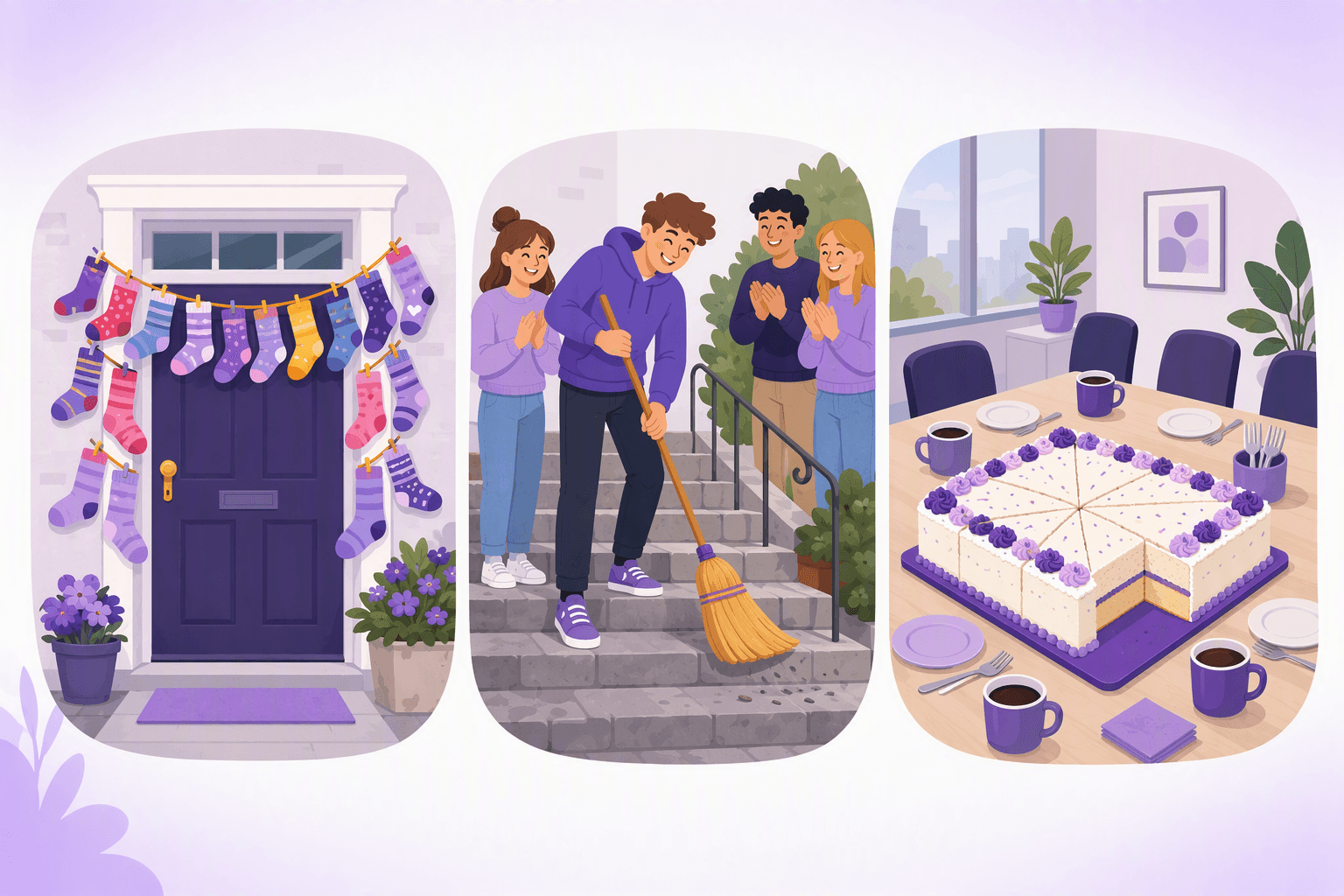
Germans celebrate certain birthdays with extra enthusiasm. The 18th (legal adulthood), 30th, 40th, and 50th are major milestones. At the 30th birthday, an unmarried person may be subjected to humorous traditions like sweeping the steps of a public building until kissed by a stranger. The 25th birthday for unmarried men involves friends decorating the doorway with a garland of old socks (Sockenkranz).
Formal Birthday Greetings
For professional settings, written cards, and situations requiring the Sie (formal you) form.
Herzliche Glückwünsche zum Geburtstag
/HEHRTS-likh-eh GLEWK-vewn-sheh tsoom geh-BOORTS-tahk/
Literal meaning: Heartfelt wishes of happiness for the birthday
“Herzliche Glückwünsche zum Geburtstag, Herr Direktor. Im Namen des ganzen Teams.”
Heartfelt birthday wishes, Director. On behalf of the entire team.
The plural 'Glückwünsche' (wishes, plural) elevates this to the preferred formal written form. Standard in business cards, corporate emails, and official communications.
The shift from singular Glückwunsch to plural Glückwünsche is a subtle but meaningful upgrade in formality. This is the version you find in business birthday cards, corporate emails, and official congratulations. German business culture takes these formalities seriously, and a sloppy or overly casual birthday wish to a superior can leave a poor impression.
Gesundheit und Glück
/geh-ZOONT-hyt oont GLEWK/
Literal meaning: Health and happiness
“Wir wünschen dir Gesundheit und Glück im neuen Lebensjahr.”
We wish you health and happiness in the new year of your life.
A classic wish that focuses on the two things Germans value most: health and happiness. Often included in birthday cards and speeches. 'Gesundheit' is considered the most important wish in German culture.
Germans place enormous value on Gesundheit (health). According to Duden, it is the single most common element in German birthday wishes. The pairing with Glück (happiness/luck) covers the two pillars of a good life according to German cultural values: being healthy and being content.
Casual and Humorous Birthday Phrases
Among friends, German birthday wishes often take on a playful, irreverent tone. For more on informal German expressions, visit our German learning page.
Alles Gute!
/AHL-les GOO-teh/
Literal meaning: All the best!
“Alles Gute! Lass es heute richtig krachen!”
All the best! Really let it rip today!
The short, casual version of 'Alles Gute zum Geburtstag.' Perfect for quick greetings among friends, text messages, and social media posts. Universally understood.
When you are among friends and the context is obvious, the full zum Geburtstag addition is unnecessary. Alles Gute! is quick, warm, and the most common birthday text message in German. You will see it flooding German social media feeds every day.
Alles Liebe zum Geburtstag
/AHL-les LEE-beh tsoom geh-BOORTS-tahk/
Literal meaning: All the love for the birthday
“Alles Liebe zum Geburtstag, mein Schatz! Du bedeutest mir so viel.”
All my love on your birthday, my darling! You mean so much to me.
A warmer, more affectionate variation using 'Liebe' (love) instead of 'Gute' (good). Common between romantic partners, close family members, and very dear friends. Especially popular in Austria.
Alles Liebe replaces the neutral Gute (good) with Liebe (love), making this a more intimate birthday wish. It is especially common in Austria, where expressions of warmth come more easily than in the stereotypically reserved north. Use it with romantic partners, parents, siblings, and very close friends.
Alles Gute, du altes Haus!
/AHL-les GOO-teh doo AHL-tes HOWS/
Literal meaning: All the best, you old house!
“Alles Gute, du altes Haus! Wirst ja auch nicht jünger!”
Happy birthday, you old codger! You're not getting any younger!
A humorous, teasing birthday greeting between close friends. 'Du altes Haus' (you old house) is an affectionate way of calling someone old. Strictly for friends with a good sense of humor.
German humor shines through in birthday greetings. Du altes Haus (you old house) is an endearing insult that only works between close friends. Other humorous variations include Na, du alte Socke! (hey, you old sock!) and Willkommen im Club der Alten! (welcome to the old people's club!). Use these only with friends who appreciate German directness.
Hab einen wunderschönen Geburtstag
/hahp EYE-nen VOON-der-shuh-nen geh-BOORTS-tahk/
Literal meaning: Have a wonderfully beautiful birthday
“Hab einen wunderschönen Geburtstag! Genieß den Tag!”
Have a wonderful birthday! Enjoy the day!
A warm, expressive wish that sounds natural in spoken German. 'Wunderschön' (wonderfully beautiful) is a typically German compound superlative. Common in text messages and spoken greetings.
Wunderschön (another example of German's love for expressive compound words) literally means "wonder-beautiful." This phrase feels genuine and warm without being overly formal. It is the kind of thing you would write in a personal birthday card.
Nachträglich alles Gute zum Geburtstag
/NAHKH-trehk-likh AHL-les GOO-teh tsoom geh-BOORTS-tahk/
Literal meaning: Belatedly all the best for the birthday
“Nachträglich alles Gute zum Geburtstag! Ich hoffe, du hattest einen tollen Tag.”
Happy belated birthday! I hope you had a great day.
Since wishing early is considered bad luck, being late is far more acceptable in German culture. 'Nachträglich' (belatedly) is always forgiven, but 'vorher' (beforehand) is not.
Given the German taboo against early birthday wishes, nachträglich (belatedly) is a particularly important word to know. Being a day or even a week late is perfectly acceptable and even expected in some social circles. Being a day early, on the other hand, might genuinely upset someone.
Birthday Toasts
German birthdays almost always involve beer, wine, or sparkling wine (Sekt), and toasting is essential.
Zum Wohl!
/tsoom VOHL/
Literal meaning: To well-being!
“Zum Wohl! Auf das Geburtstagskind!”
Cheers! To the birthday person!
The standard German toast for wine and formal occasions. Used at birthday dinners when raising wine or Sekt glasses. Always make eye contact when clinking glasses; this is taken very seriously in German-speaking countries.
Zum Wohl is the preferred toast for wine and Sekt (German sparkling wine). At a birthday dinner, the host or a close friend typically stands, says a few words, and concludes with Zum Wohl auf das Geburtstagskind! (Cheers to the birthday person!). Making eye contact during the toast is essential; according to German superstition, failure to do so brings seven years of bad luck.
Prost!
/prohst/
Literal meaning: May it benefit (from Latin prosit)
“Prost! Auf noch viele schöne Jahre!”
Cheers! To many more beautiful years!
The casual toast for beer. At German birthday celebrations with beer, 'Prost!' is the standard. Derived from the Latin 'prosit' (may it benefit). Especially common in Bavaria and at Biergarten celebrations.
Prost is the beer toast, and considering Germany's deep beer culture, you will use it frequently at birthday celebrations. It derives from the Latin prosit (may it benefit), showing how even casual German expressions can have ancient roots. At a Biergarten birthday celebration in Munich, expect to hear Prost! dozens of times.
🌍 German Birthday Traditions at Work
In German workplaces, the birthday person brings cake or pastries to the office, the opposite of many anglophone countries where coworkers might bring treats for the birthday person. This tradition is taken seriously, and forgetting to bring cake on your birthday can be a minor social faux pas. Some offices have evolved this into a potluck system, but the birthday person providing the main cake remains standard.
How to Respond to German Birthday Wishes
| They Say | You Say | Translation |
|---|---|---|
| Alles Gute zum Geburtstag! | Danke schön! / Vielen Dank! | Thank you! / Many thanks! |
| Herzlichen Glückwunsch! | Danke, das ist lieb von dir! | Thanks, that's sweet of you! |
| Hoch soll er/sie leben! | Danke, danke! | Thanks, thanks! |
| Zum Wohl! | Zum Wohl! / Prost! | Cheers! |
| Nachträglich alles Gute! | Danke, besser spät als nie! | Thanks, better late than never! |
Practice With Real German Content
Reading about birthday phrases is a solid start, but hearing native speakers use them naturally is what builds real fluency. German cinema and television feature plenty of birthday scenes, from the cozy family Kaffee und Kuchen (coffee and cake) gatherings in domestic dramas to the rowdy Biergarten celebrations in Bavarian comedies.
Wordy lets you watch German movies and shows with interactive subtitles. Tap any phrase to see its meaning, pronunciation, and cultural context in real time. Instead of memorizing phrases from a list, you absorb them from authentic conversations with natural intonation and emotion.
For more German content, explore our blog for language guides including the best movies to learn German. You can also visit our German learning page to start practicing with real content today.
Frequently Asked Questions
What is the most common way to say happy birthday in German?
What do Germans sing for happy birthday?
Is it true you cannot wish a German happy birthday early?
What does 'Herzlichen Glückwunsch' mean?
Who pays for birthday celebrations in Germany?
Do birthday customs differ between Germany, Austria, and Switzerland?
Sources & References
- Duden, Deutsches Universalwörterbuch, 9th edition (2023)
- Goethe-Institut, German language and culture resources
- Ethnologue: Languages of the World, German language entry (2024)
- Ammon, Ulrich (2015). 'Die Stellung der deutschen Sprache in der Welt.' De Gruyter.
Start learning with Wordy
Watch real movie clips and build your vocabulary as you go. Free to download.


