Quick Answer
The most common way to say congratulations in Japanese is 'おめでとうございます' (Omedetou gozaimasu, oh-meh-deh-toh goh-zah-ee-mahs), the polite form used for virtually every celebratory occasion. Among friends, the casual 'おめでとう' (Omedetou) is standard. The word derives from 'medetai,' meaning auspicious, reflecting the deep cultural significance of celebration in Japanese society.
The Short Answer
The most common way to say congratulations in Japanese is おめでとうございます (Omedetou gozaimasu, oh-meh-deh-toh goh-zah-ee-mahs). This polite form works for virtually every celebratory occasion: graduations, weddings, promotions, New Year, and more. Among close friends, the casual おめでとう (Omedetou) is equally natural.
Japanese is spoken by approximately 125 million people, nearly all in Japan, according to Ethnologue's 2024 data. The word おめでとう derives from the classical adjective めでたい (medetai), meaning "auspicious" or "worthy of celebration." This etymology reveals something fundamental: in Japanese culture, congratulating someone is not merely acknowledging their achievement; it is recognizing that something auspicious has occurred, worthy of collective joy.
"In Japanese, celebratory language is not simply expressive; it is performative. Saying 'omedetou' does not just describe a feeling; it enacts a social ritual that binds speaker and listener in shared recognition of a fortunate event."
(Anna Wierzbicka, Cross-Cultural Pragmatics, Mouton de Gruyter, 2003)
This guide covers 20+ essential Japanese congratulatory expressions organized by formality and occasion: standard polite and casual forms, occasion-specific phrases, very formal expressions, and the cultural customs that accompany them. Each includes Japanese script, romaji, pronunciation, and cultural context.
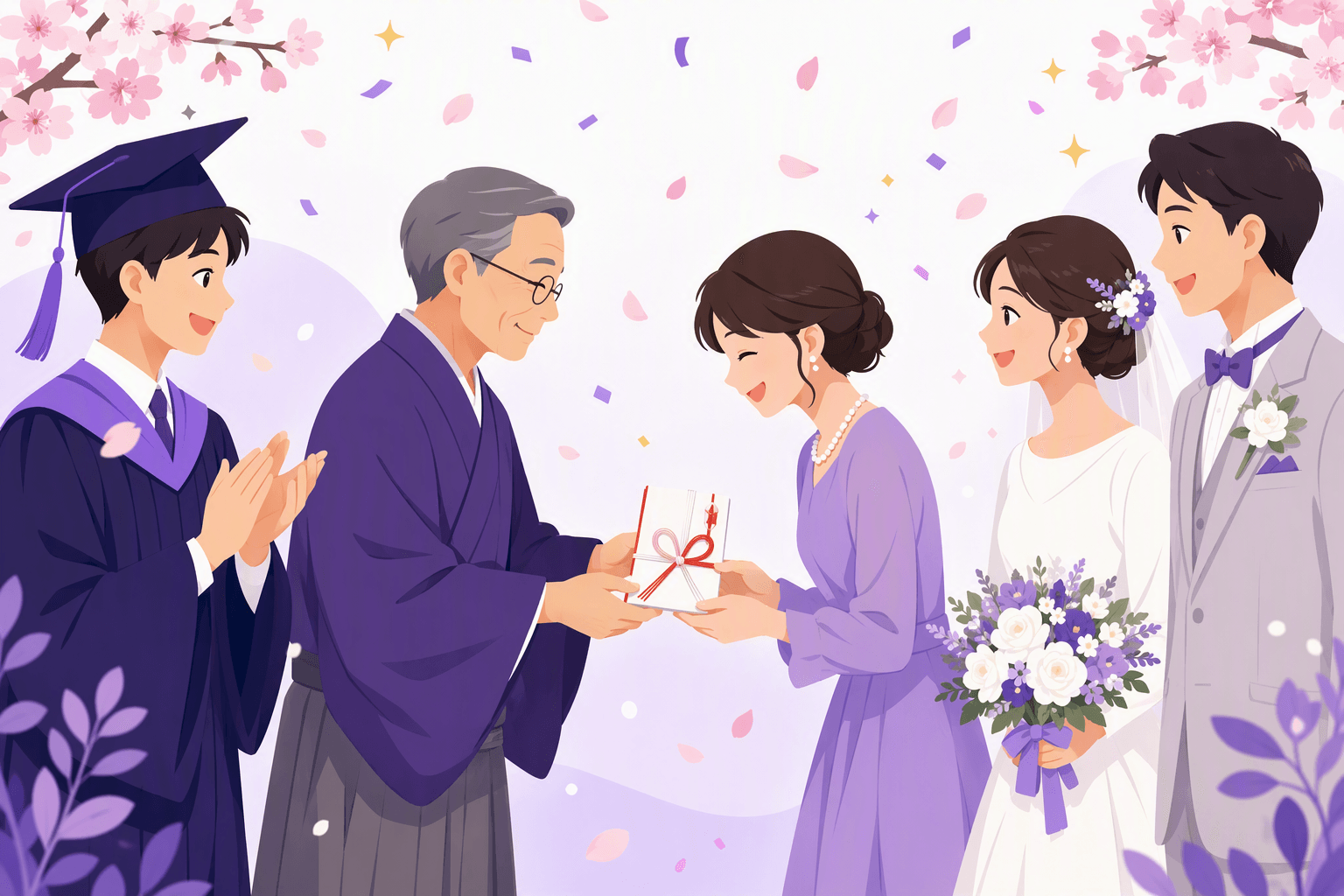
Quick Reference: Japanese Congratulatory Phrases at a Glance
| English | Japanese | Pronunciation | Formality |
|---|---|---|---|
| Congratulations (polite) | おめでとうございます (Omedetou gozaimasu) | oh-meh-deh-toh goh-zah-ee-mahs | polite |
| Congratulations (casual) | おめでとう (Omedetou) | oh-meh-deh-toh | casual |
| Congrats (slang) | おめでと (Omedeto) | oh-meh-deh-toh | casual |
| Happy New Year | 明けましておめでとうございます (Akemashite omedetou gozaimasu) | ah-keh-mah-shee-teh oh-meh-deh-toh goh-zah-ee-mahs | polite |
| Congratulations on your wedding | ご結婚おめでとうございます (Gokekkon omedetou gozaimasu) | goh-kehk-kohn oh-meh-deh-toh goh-zah-ee-mahs | polite |
| Congratulations on your graduation | ご卒業おめでとうございます (Gosotsugyou omedetou gozaimasu) | goh-soh-tsoo-gyoh oh-meh-deh-toh goh-zah-ee-mahs | polite |
| Congratulations on the birth | ご出産おめでとうございます (Gosshussan omedetou gozaimasu) | goh-shoos-sahn oh-meh-deh-toh goh-zah-ee-mahs | polite |
| Congratulations on your promotion | ご昇進おめでとうございます (Goshoushin omedetou gozaimasu) | goh-shoh-sheen oh-meh-deh-toh goh-zah-ee-mahs | polite |
| I offer my heartfelt congratulations | お祝い申し上げます (Oiwai moushiagemasu) | oh-ee-wah-ee moh-shee-ah-geh-mahs | very formal |
| From my heart, congratulations | 心よりお祝い申し上げます (Kokoro yori oiwai moushiagemasu) | koh-koh-roh yoh-ree oh-ee-wah-ee moh-shee-ah-geh-mahs | very formal |
| Let's celebrate! | お祝いしよう! (Oiwai shiyou!) | oh-ee-wah-ee shee-yoh | casual |
Standard Congratulations
These are the core congratulatory expressions that work across virtually every celebratory situation in Japan. The choice between polite and casual forms follows the keigo (politeness level) system that governs all Japanese communication.
おめでとうございます
/oh-meh-deh-toh goh-zah-ee-mahs/
Literal meaning: It is auspicious / It is worthy of celebration
“試験に合格したんですか?おめでとうございます!”
You passed the exam? Congratulations!
The universal polite congratulatory phrase. Works for any occasion, graduations, promotions, weddings, births, achievements, and more. The 'gozaimasu' ending makes it appropriate for seniors, coworkers, and anyone you address with '-san.'
This is the safe, default congratulatory expression in Japanese. The word breaks down into おめでたい (omedetai), the polite form of めでたい (medetai = auspicious), conjugated into the -ou form. According to the Agency for Cultural Affairs' 2023 National Language Survey, over 95% of respondents identified this as the appropriate phrase for formal congratulatory situations.
The ございます (gozaimasu) ending elevates the expression to polite speech. NHK Broadcasting recommends this form as the standard for all but the most intimate relationships.
Casual Congratulations
Among friends and in relaxed settings, Japanese speakers shorten and soften their congratulatory language.
おめでとう
/oh-meh-deh-toh/
Literal meaning: Auspicious / Congratulations
“おめでとう!やったね!”
Congratulations! You did it!
The casual form used with close friends, siblings, and people your age or younger. Drops the polite 'gozaimasu' ending. Natural, warm, and enthusiastic among friends. The single most versatile casual congratulatory word.
Dropping ございます creates the casual form used between friends. This is the version you would text, shout across a room, or post on social media. The word おめでとう on its own carries genuine warmth, and using the full polite form with a close friend might actually feel stiff and create unnecessary distance.
The etymology is worth noting. めでたい (medetai) originally meant "worthy of admiration" in classical Japanese, from the verb 愛でる (mederu, to admire or appreciate). Over centuries, it shifted to mean "auspicious" or "fortunate," carrying the sense that good fortune has arrived and deserves recognition.
おめでと
/oh-meh-deh-toh/
Literal meaning: Congrats (abbreviated)
“おめでと〜!今度お祝いしようね!”
Congrats! Let's celebrate soon!
A further-shortened, playful version popular among younger Japanese speakers. Common in LINE messages, texts, and social media. The trailing vowel is often stretched with a wave dash: おめでと〜. Considered cute and informal.
This clipped form is especially popular in digital communication. On LINE (Japan's dominant messaging app), you will frequently see おめでと〜 with the wave dash elongation, often accompanied by celebratory stickers and emoji. It carries a lighthearted, affectionate tone that works perfectly among close friends and younger speakers.
💡 When in Doubt, Go Polite
If you are unsure which form to use, always choose おめでとうございます. Being too polite in Japanese is never offensive; it simply signals respect. Being too casual with someone who expects polite speech, however, can cause genuine discomfort. This is especially important in congratulatory contexts, where the goal is to make the other person feel honored.
Occasion-Specific Congratulations
One of the most distinctive features of Japanese congratulatory language is the occasion-specific prefix system. By adding an honorific prefix (ご or お) plus the occasion noun before おめでとうございます, you create a tailored congratulatory phrase for any life event.
明けましておめでとうございます
/ah-keh-mah-shee-teh oh-meh-deh-toh goh-zah-ee-mahs/
Literal meaning: Congratulations on the dawn (of the new year)
“明けましておめでとうございます。今年もよろしくお願いします。”
Happy New Year. I look forward to your continued support this year.
THE most important congratulatory phrase in Japanese culture. Said on or after January 1st. Always followed by '今年もよろしくお願いします' (kotoshi mo yoroshiku onegaishimasu). New Year (お正月) is Japan's biggest holiday, more significant than Christmas or birthdays.
This is arguably the single most important congratulatory expression in the entire Japanese language. お正月 (Oshougatsu, New Year) is Japan's largest holiday. Families reunite, businesses close for days, and the country essentially pauses. The phrase 明けまして (akemashite) comes from 明ける (akeru, to dawn or open), referring to the new year dawning.
According to the Agency for Cultural Affairs, the custom of sending 年賀状 (nengajou, New Year postcards) bearing this phrase peaked at approximately 4.4 billion cards in 2003. While digital greetings have reduced that number, sending this phrase, whether on paper or via LINE, remains a deeply ingrained cultural practice.
🌍 New Year Timing Matters
Never say 明けましておめでとうございます before January 1st. Before New Year, the correct phrase is よいお年を (Yoi otoshi wo, "Have a good year"). Saying akemashite omedetou on December 31st is a common mistake by learners. The year must have already "dawned" (明けた) for the phrase to make sense.
ご結婚おめでとうございます
/goh-kehk-kohn oh-meh-deh-toh goh-zah-ee-mahs/
Literal meaning: Congratulations on your honorable marriage
“ご結婚おめでとうございます。末永くお幸せに。”
Congratulations on your marriage. May you have everlasting happiness.
The standard wedding congratulation. The follow-up phrase '末永くお幸せに' (sue nagaku oshiawase ni, may you have lasting happiness) is the traditional wedding wish. At Japanese weddings, congratulatory speeches (スピーチ) are a major component of the reception.
The prefix ご (go) is the honorific marker for Sino-Japanese words, elevating 結婚 (kekkon, marriage) to respectful language. Japanese wedding congratulations carry specific taboos: avoid using words that suggest repetition (また, again; 重ね重ね, repeatedly) because they imply the marriage might happen again, meaning divorce. This linguistic care reflects the cultural weight placed on auspicious language at celebrations.
ご卒業おめでとうございます
/goh-soh-tsoo-gyoh oh-meh-deh-toh goh-zah-ee-mahs/
Literal meaning: Congratulations on your honorable graduation
“ご卒業おめでとうございます。新しい出発を心よりお祝いします。”
Congratulations on your graduation. I sincerely celebrate your new beginning.
Used for graduations at every level, elementary school through university. March is graduation season in Japan (the school year runs April to March). Graduation ceremonies (卒業式) are formal, emotional events where students often cry openly.
Japanese graduation ceremonies (卒業式, sotsugyoushiki) are solemn, emotional affairs. Unlike many Western graduations, they are formal events where tears are expected and welcomed. The school year in Japan runs from April to March, so graduation season falls in March, coinciding with cherry blossom season, which adds a poetic dimension to the occasion.
ご出産おめでとうございます
/goh-shoos-sahn oh-meh-deh-toh goh-zah-ee-mahs/
Literal meaning: Congratulations on your honorable childbirth
“ご出産おめでとうございます。母子ともにお元気で何よりです。”
Congratulations on the birth. I'm so glad both mother and baby are healthy.
Said after a baby is born, never before, as congratulating before the birth is considered premature and potentially unlucky. The follow-up phrase about the health of mother and child is traditional and deeply appreciated.
An important cultural note: in Japanese custom, you should wait until after the baby is safely born before offering congratulations. Congratulating a pregnant woman on her upcoming child is considered presumptuous and potentially inviting bad luck. The standard follow-up phrase 母子ともにお元気で (boshi tomo ni ogenki de, both mother and child are healthy) acknowledges the most important outcome.
ご昇進おめでとうございます
/goh-shoh-sheen oh-meh-deh-toh goh-zah-ee-mahs/
Literal meaning: Congratulations on your honorable promotion
“ご昇進おめでとうございます。ますますのご活躍をお祈りしています。”
Congratulations on your promotion. I hope for your continued success.
Used in workplace settings when a colleague receives a promotion. Often accompanied by the follow-up wish for continued success (ご活躍). In Japanese corporate culture, promotions are significant social events and acknowledging them properly is expected.
The prefix system is productive: you can attach ご to virtually any Sino-Japanese noun describing a positive life event. Other common combinations include ご入学おめでとうございます (gonyuugaku, school entrance), ご就職おめでとうございます (goshuushoku, getting a job), and ご婚約おめでとうございます (gokon'yaku, engagement).
💡 The ご/お Prefix Pattern
The honorific prefix ご (go) attaches to Sino-Japanese (Chinese-origin) words: ご結婚, ご卒業, ご出産. The prefix お (o) attaches to native Japanese words: お誕生日, お祝い. Learning this pattern lets you construct congratulatory phrases for any occasion.
Very Formal Congratulations
For business correspondence, formal speeches, and ceremonies. These expressions use humble speech (謙譲語, kenjougo) that places the speaker below the recipient.
お祝い申し上げます
/oh-ee-wah-ee moh-shee-ah-geh-mahs/
Literal meaning: I humbly offer my celebration/congratulations
“この度はご栄転、心よりお祝い申し上げます。”
On this occasion of your transfer to a higher position, I offer my heartfelt congratulations.
The most formal congratulatory expression. Uses humble speech (謙譲語) with '申し上げます' (moushiagemasu). Found in formal letters, business emails, and ceremonial speeches. The speaker lowers themselves to elevate the recipient.
申し上げます (moushiagemasu) is the humble form of "to say/offer," placing the speaker in a position of deference. This level of formality appears in written congratulatory messages to company executives, in formal speeches at wedding receptions, and in official correspondence. NHK Broadcasting research identifies this as the appropriate register for public-facing congratulatory language.
心よりお祝い申し上げます
/koh-koh-roh yoh-ree oh-ee-wah-ee moh-shee-ah-geh-mahs/
Literal meaning: From my heart, I humbly offer congratulations
“ご結婚おめでとうございます。心よりお祝い申し上げます。”
Congratulations on your marriage. I offer my heartfelt congratulations.
Adds emotional depth to the formal congratulation. The phrase '心より' (kokoro yori, from the heart) is a set expression in formal Japanese. Used in wedding speeches, formal cards, and business congratulatory messages to add personal warmth while maintaining formality.
Adding 心より (kokoro yori, from the heart) introduces emotional sincerity into the formal register. This combination of deep formality paired with expressed emotion is a hallmark of Japanese ceremonial language. You will hear this phrase at wedding receptions, retirement ceremonies, and other milestone celebrations.
お祝い (Oiwai): The Gift Culture of Congratulations
In Japanese culture, congratulations are rarely just words. The concept of お祝い (oiwai) encompasses both the act of celebrating and the congratulatory gift itself. Understanding oiwai culture is essential to congratulating someone properly in Japan.
When congratulating someone on a major life event (a wedding, a birth, a graduation), Japanese custom calls for a gift, typically money placed in a special decorative envelope called a 祝儀袋 (shuugibukuro). The amount varies by occasion and your relationship to the recipient, but the presentation follows strict rules.
| Occasion | Typical Amount | Envelope Style |
|---|---|---|
| Wedding (friend) | ¥30,000 | Red and white mizuhiki, tied in a knot that cannot be untied |
| Wedding (colleague) | ¥30,000 | Same as above |
| Birth of a child | ¥5,000 - ¥10,000 | Red and white mizuhiki, bow knot (can be retied = repeatable joy) |
| Graduation | ¥5,000 - ¥10,000 | Red and white, bow knot |
| Promotion | ¥5,000 - ¥10,000 | Red and white, bow knot |
⚠️ Numbers to Avoid in Congratulatory Gifts
Certain numbers are taboo in Japanese gift-giving due to phonetic associations. 4 (四, shi) sounds like 死 (shi, death). 9 (九, ku) sounds like 苦 (ku, suffering). Never give money in amounts of ¥40,000 or ¥90,000, and avoid giving gifts in sets of four or nine. At weddings, even numbers other than two are sometimes avoided because they suggest divisibility (the couple "splitting apart"). The number 8 (八, hachi) is considered especially lucky because its kanji widens at the bottom, symbolizing expanding prosperity.
How to Respond to Japanese Congratulations
| They Say | You Say | Translation |
|---|---|---|
| おめでとうございます | ありがとうございます (Arigatou gozaimasu) | Thank you very much |
| おめでとう | ありがとう! (Arigatou!) | Thanks! |
| お祝い申し上げます | 恐れ入ります (Osore irimasu) | I'm humbled / You're too kind |
| ご結婚おめでとう | ありがとう、これからもよろしくね (Arigatou, kore kara mo yoroshiku ne) | Thanks, I'm counting on you going forward |
| 明けましておめでとうございます | 明けましておめでとうございます。今年もよろしくお願いします | Happy New Year. Please continue your support this year |
The response to formal congratulations deserves special attention. 恐れ入ります (osore irimasu, literally "I feel fear/awe") is an elegant humble response that conveys "I'm not worthy of such kind words," perfectly suited for accepting formal congratulations from superiors or in ceremonial settings.
🌍 The Reciprocal Nature of Japanese Congratulations
Japanese congratulatory customs are deeply reciprocal. If someone celebrates your wedding with a ¥30,000 gift, you are expected to return approximately half that value in a 内祝い (uchiiwai, return gift) within one month. This reciprocity system, rooted in the concept of 義理 (giri, social obligation), ensures that congratulations flow as a balanced social exchange rather than a one-directional gesture.
Practice With Real Japanese Content
Reading about congratulatory phrases builds your vocabulary, but hearing native speakers use them in natural conversation is what creates real fluency. Japanese dramas and anime are filled with celebration scenes, from graduation ceremonies in school anime to wedding episodes in romantic dramas, where you can hear these phrases spoken with authentic emotion and intonation.
Wordy lets you watch Japanese movies and shows with interactive subtitles. Tap any congratulatory phrase to see its meaning, pronunciation, and cultural context in real time. Instead of memorizing phrases from a list, you absorb them from authentic conversations with natural intonation and cultural cues.
For more Japanese content, explore our blog for language guides including the best anime movies to learn Japanese. You can also visit our Japanese learning page to start practicing with real content today.
Frequently Asked Questions
What is the most common way to say congratulations in Japanese?
What is the difference between おめでとう and おめでとうございます?
How do you say Happy New Year in Japanese?
What numbers should you avoid in Japanese congratulatory gifts?
What is お祝い (oiwai) and how does it relate to congratulations?
Sources & References
- Agency for Cultural Affairs (文化庁), National Language Survey (Kokugo ni Kansuru Yoron Chousa, 2023)
- NHK Broadcasting Culture Research Institute, Survey on Japanese Keigo Usage (2022)
- Ethnologue: Languages of the World, Japanese language entry (2024)
- Wierzbicka, A., Cross-Cultural Pragmatics: The Semantics of Human Interaction (Mouton de Gruyter, 2003)
Start learning with Wordy
Watch real movie clips and build your vocabulary as you go. Free to download.


