Quick Answer
The best synonyms for 'beautiful' depend on what you are describing: 'gorgeous' and 'stunning' are strong and emotional, 'lovely' is warm and everyday, 'elegant' is refined, and 'picturesque' fits scenery. This guide gives 45 options with pronunciation, tone, and examples so you can sound natural in conversation and writing.
You can replace beautiful with more precise words like gorgeous (GOR-juhss), stunning (STUN-ing), lovely (LUV-lee), elegant (EL-uh-guhnt), or picturesque (pik-chuh-RESK) depending on what you mean: intensity, warmth, refinement, or scenery. This guide gives you 45 natural English synonyms for beautiful, with pronunciation, tone, and examples so you can compliment people, describe places, and write without repeating the same word.
English is spoken by roughly 1.5 billion people worldwide when you count native and second-language speakers (Ethnologue, 27th edition, 2024). That scale matters because “beautiful” synonyms also carry social meaning: what sounds romantic in one setting can sound awkward, old-fashioned, or too intense in another.
If you want more everyday English you actually hear, pair this with our English slang guide and listen for these adjectives in context.
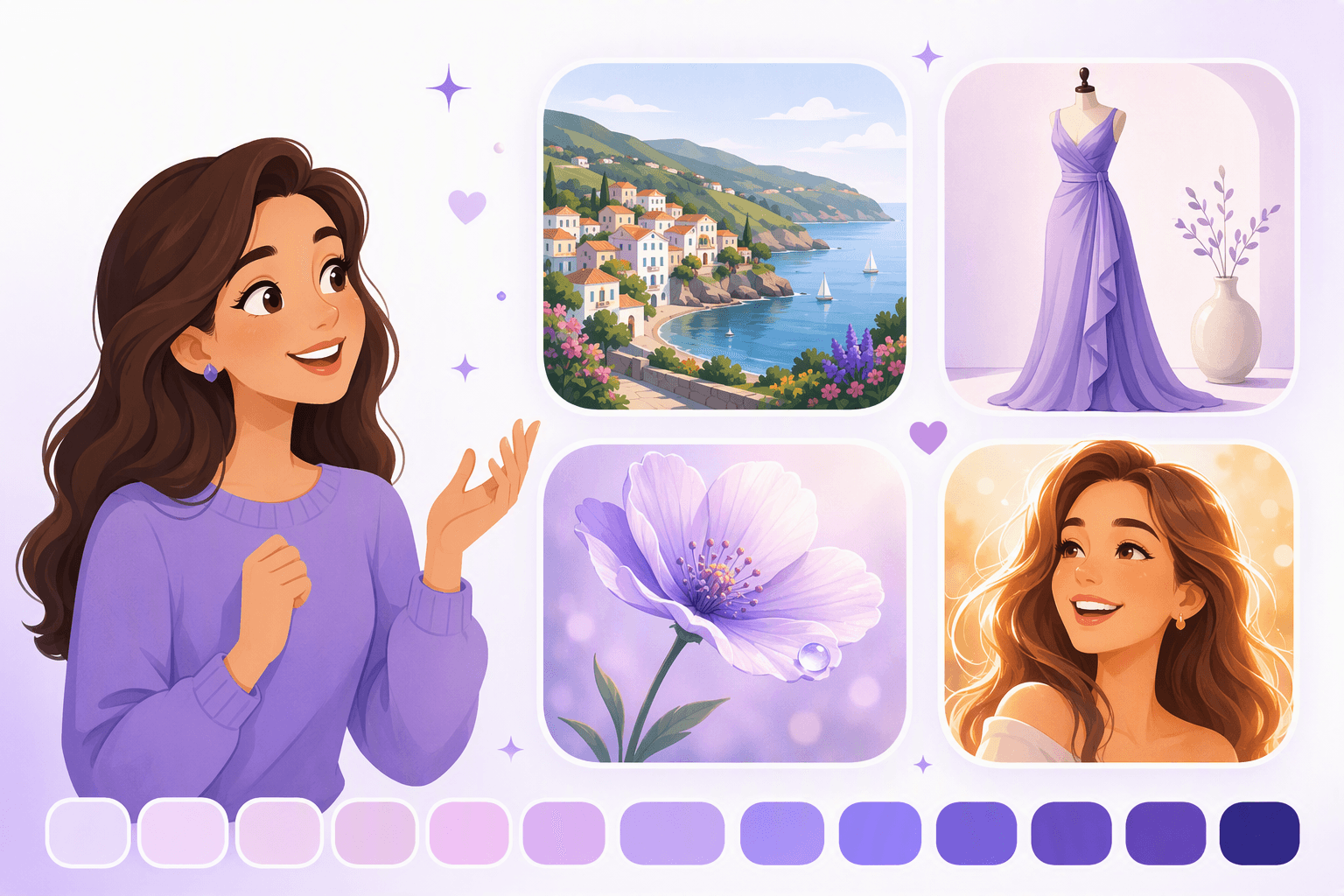
How native speakers choose a synonym (the fast rule)
Native speakers usually pick a “beautiful” synonym by answering one question: Beautiful in what way?
Is it about attraction (gorgeous), awe (breathtaking), taste (elegant), sweetness (lovely), detail (exquisite), or nature (picturesque)?
Bryan A. Garner’s work on usage and style argues for choosing the most exact word rather than a vague substitute. In practice, that means you get better writing and more natural speech by being specific, not fancy.
💡 A quick safety check
If you are complimenting a person in a professional setting, many speakers choose “great” or “fantastic” for someone’s outfit or work, and avoid comments that feel too personal. Tone and relationship matter as much as vocabulary.
Strong, emotional synonyms (high intensity)
These are the words people use when “beautiful” feels too mild.
gorgeous
Pronunciation: GOR-juhss
Tone: strong, enthusiastic, often about people, outfits, interiors
You will hear this constantly in movies, dating talk, and fashion contexts. It can be romantic, but it can also be friendly: “That dress is gorgeous.”
Example: “Your photos are gorgeous.”
Better than “beautiful” when you mean: high impact, immediate admiration.
stunning
Pronunciation: STUN-ing
Tone: dramatic, attention-grabbing, often about appearance or results
“Stunning” suggests a reaction, like you are briefly speechless. It works for a person, a view, or a performance.
Example: “The sunset was stunning.”
Common collocation: “absolutely stunning.”
breathtaking
Pronunciation: BRETH-tay-king
Tone: awe, usually scenery or experiences
This is a top choice for travel writing and big landscapes. It can be used for a person, but it often sounds like a movie line unless the moment is truly intense.
Example: “The mountains are breathtaking in winter.”
spectacular
Pronunciation: spek-TAK-yuh-ler
Tone: big, impressive, public-facing
“Spectacular” fits fireworks, shows, architecture, and views. It can sound slightly promotional, like marketing language.
Example: “They put on a spectacular performance.”
radiant
Pronunciation: RAY-dee-uhnt
Tone: glowing, healthy, joyful, often about faces or smiles
“Radiant” is common in compliments that focus on energy rather than body shape. It is also used in wedding contexts.
Example: “You look radiant today.”
dazzling
Pronunciation: DAZ-ling
Tone: bright, sparkling, showy
Use it for lights, jewelry, stage looks, or anything visually intense. It can feel slightly theatrical, which is sometimes the point.
Example: “A dazzling display of colors.”
Warm, everyday synonyms (safe and natural)
These are the words that sound normal in daily conversation.
lovely
Pronunciation: LUV-lee
Tone: warm, friendly, polite
“Lovely” works for people, places, weather, and experiences. In British English it is especially common as a general positive word.
Example: “It was a lovely evening.”
Compliment: “You look lovely.”
pretty
Pronunciation: PRIH-tee
Tone: softer, lighter, sometimes youthful
“Pretty” often suggests smaller-scale beauty: a pretty garden, a pretty necklace. It can also mean “somewhat” in phrases like “pretty good,” which is unrelated to appearance.
Example: “That’s a pretty shade of blue.”
cute
Pronunciation: KYOOT
Tone: charming, small, playful
“Cute” is for babies, pets, small objects, and sometimes people in a casual, affectionate way. In some contexts, calling an adult “cute” can sound less serious than “beautiful.”
Example: “That’s a cute café.”
nice-looking
Pronunciation: NYSS LOO-king
Tone: neutral, slightly distant
This is useful when you want to be positive without sounding intense. It can also be used when you do not know the person well.
Example: “It’s a nice-looking apartment.”
attractive
Pronunciation: uh-TRAK-tiv
Tone: neutral, direct, slightly formal
“Attractive” is common in writing and polite conversation. It can sound clinical if overused, but it is clear.
Example: “It’s an attractive design.”
Refined and “taste” synonyms (design, fashion, style)
Use these when beauty is about restraint, balance, and quality.
elegant
Pronunciation: EL-uh-guhnt
Tone: refined, tasteful, controlled
“Elegant” is perfect for clothing, solutions, writing, and design. It often implies simplicity and good judgment.
Example: “An elegant black suit.”
Also: “an elegant solution.”
sophisticated
Pronunciation: suh-FIS-tih-kay-tid
Tone: urban, polished, mature
This word is common in reviews: restaurants, perfumes, interiors. It can also describe a person’s style or taste.
Example: “A sophisticated color palette.”
chic
Pronunciation: SHEEK
Tone: fashionable, modern, slightly French-flavored
“Chic” is short and punchy, common in fashion and décor. It can sound trendy, which is fine if that is what you mean.
Example: “A chic little hotel.”
stylish
Pronunciation: STY-lish
Tone: practical compliment about fashion or design
“Stylish” is more everyday than “chic.” It is safe for compliments because it focuses on choices.
Example: “That jacket is really stylish.”
polished
Pronunciation: PAH-lisht
Tone: finished, professional
Use it for work, presentations, writing, and performances. It implies effort and refinement.
Example: “A polished final draft.”
Nature and travel synonyms (views, cities, landscapes)
These are the words you hear in documentaries, travel shows, and reviews.
picturesque
Pronunciation: pik-chuh-RESK
Tone: “looks like a picture,” charming scenery
This is for villages, coastlines, streets, and viewpoints. It suggests composition: something you would photograph.
Example: “A picturesque harbor town.”
scenic
Pronunciation: SEE-nik
Tone: practical, descriptive
“Scenic” is common in phrases like “scenic route” and “scenic overlook.” It is less emotional than “breathtaking.”
Example: “We took the scenic route.”
idyllic
Pronunciation: eye-DIL-ik
Tone: peaceful, perfect, almost unreal
“Idyllic” is about mood and lifestyle, not just visuals. It can feel literary.
Example: “An idyllic countryside escape.”
majestic
Pronunciation: muh-JES-tik
Tone: grand, dignified, often nature or architecture
This is a strong word for mountains, forests, and big buildings. It implies scale and power.
Example: “Majestic peaks.”
serene
Pronunciation: suh-REEN
Tone: calm, quiet beauty
“Serene” is great for lakes, temples, mornings, and minimal spaces. It is more about feeling than appearance.
Example: “A serene beach at dawn.”
🌍 Why travel shows love these words
English travel media often uses a small set of adjectives, like “breathtaking,” “idyllic,” and “picturesque,” because they are instantly understood by a global audience. If you want to sound more original, add a concrete detail: light, color, texture, sound, or movement.
If you learn English through film, these landscape words show up a lot in voiceovers and dialogue. Our list of best movies to learn English helps you hear them in natural pacing.
Art, writing, and “beauty of ideas” synonyms
Sometimes “beautiful” is not about looks, it is about craft.
exquisite
Pronunciation: ek-SKWIZ-it
Tone: fine detail, high quality, often luxury or art
“Exquisite” suggests careful workmanship. It is common with “exquisite detail” and “exquisite taste.”
Example: “Exquisite embroidery.”
masterful
Pronunciation: MAS-ter-ful
Tone: highly skilled, confident praise
Use it for acting, writing, cooking, directing, and strategy. It is about competence that creates beauty.
Example: “A masterful performance.”
brilliant
Pronunciation: BRIL-yuhnt
Tone: smart, impressive, sometimes excited
“Brilliant” is common in British English as a general positive word, but it also means intellectually excellent.
Example: “That’s a brilliant idea.”
poetic
Pronunciation: poh-ET-ik
Tone: expressive, lyrical
“Poetic” is useful when something feels artistic or emotionally resonant, even if it is simple.
Example: “A poetic ending.”
harmonious
Pronunciation: har-MOH-nee-uhss
Tone: balanced, pleasing combination
Use it for colors, music, design, and group dynamics. It is more technical than “beautiful.”
Example: “A harmonious blend of flavors.”
Romance and compliments (what sounds natural, not cheesy)
A lot of learners know “beautiful,” but native speakers often choose different words depending on closeness and context. Research on politeness strategies (Brown & Levinson, Politeness: Some Universals in Language Usage, Cambridge University Press) helps explain why: compliments can threaten someone’s “face” if they feel too intimate or evaluative.

for a partner (direct, affectionate)
- You look gorgeous. (GOR-juhss)
- You’re stunning. (STUN-ing)
- You’re beautiful. (BYOO-tuh-ful) still works, especially in sincere moments.
These are common in romantic scenes, but in real life they land best when they match the moment. Overusing “stunning” can sound performative.
for friends (warm, low pressure)
- You look lovely. (LUV-lee)
- That’s such a cute outfit. (KYOOT)
- That color looks amazing on you. (uh-MAY-zing)
This style compliments choices, not bodies, which many people find more comfortable.
for coworkers (safe and respectful)
- That presentation was polished. (PAH-lisht)
- Your design is elegant. (EL-uh-guhnt)
- Great work, this looks fantastic. (fan-TAS-tik)
In many English-speaking workplaces, appearance compliments can be sensitive. Complimenting work quality is usually safer.
⚠️ Avoid these common learner mistakes
Do not call strangers “gorgeous” in formal settings, it can sound like flirting. Also be careful with “hot,” which is strongly sexual in most contexts. If you want a neutral compliment, “great” and “fantastic” are your best tools.
“Beautiful” synonyms that can sound old-fashioned (use carefully)
These words are real, but they carry a literary or historical vibe.
comely
Pronunciation: KUM-lee
Tone: old-fashioned, literary
You might see it in older novels. In modern speech it can sound ironic.
fair
Pronunciation: FAIR
Tone: poetic, sometimes archaic
“Fair maiden” is a classic phrase, but it is not modern everyday English. “Fair” also means “just” or “moderate,” so context matters.
resplendent
Pronunciation: reh-SPLEN-dent
Tone: very formal, bright, ornate
Great for writing when you want grandeur. In conversation it can sound like you are joking unless your audience shares that style.
sublime
Pronunciation: suh-BLYME
Tone: elevated, philosophical, awe
In aesthetics, “sublime” often points to awe mixed with intensity. It is common in essays and criticism.
Precision words: say what is beautiful about it
If you want to sound advanced, use adjectives that name the feature.
graceful
Pronunciation: GRAYS-ful
Meaning: beauty in movement and ease
Example: “A graceful dancer.”
vivid
Pronunciation: VIH-vid
Meaning: strong, clear color or imagery
Example: “Vivid autumn colors.”
delicate
Pronunciation: DEL-ih-kit
Meaning: fine, fragile, carefully made
Example: “Delicate lace.”
striking
Pronunciation: STRY-king
Meaning: catches attention, stands out
Example: “A striking silhouette.”
flawless
Pronunciation: FLAW-liss
Meaning: no visible imperfections
Example: “Flawless skin,” “a flawless victory” (also used humorously).
A practical list: 45 synonyms grouped by use
Below is a quick grouping you can copy into notes. If you want dictionary-level nuance, compare entries in the OED, Merriam-Webster, and Cambridge Dictionary (all accessed 2026).
People and appearance
Beautiful (BYOO-tuh-ful), gorgeous (GOR-juhss), stunning (STUN-ing), radiant (RAY-dee-uhnt), attractive (uh-TRAK-tiv), lovely (LUV-lee), pretty (PRIH-tee), cute (KYOOT), striking (STRY-king), elegant (EL-uh-guhnt)
Places and nature
Breathtaking (BRETH-tay-king), picturesque (pik-chuh-RESK), scenic (SEE-nik), majestic (muh-JES-tik), serene (suh-REEN), idyllic (eye-DIL-ik), spectacular (spek-TAK-yuh-ler)
Objects, design, and style
Elegant (EL-uh-guhnt), sophisticated (suh-FIS-tih-kay-tid), chic (SHEEK), stylish (STY-lish), polished (PAH-lisht), exquisite (ek-SKWIZ-it), sleek (SLEEK), refined (rih-FYND)
Art, writing, and ideas
Brilliant (BRIL-yuhnt), masterful (MAS-ter-ful), poetic (poh-ET-ik), harmonious (har-MOH-nee-uhss), compelling (kum-PEL-ing)
“Extra” literary options
Resplendent (reh-SPLEN-dent), sublime (suh-BLYME), enchanting (en-CHAN-ting), mesmerizing (MEH-zuh-ry-zing)
How movies and TV teach these words (and why it works)
Film dialogue is a shortcut to natural adjective choice because you hear the word with a situation, facial expression, and relationship. You also learn which words are over-the-top, and which are normal.
For example, “stunning” often appears with a pause or emphasis, while “lovely” is quick and casual. If you want to train your ear for that difference, use short scenes and repeat them, then swap adjectives and notice how the tone changes.
If you are building core vocabulary alongside these adjectives, our 100 most common English words list helps you cover the high-frequency glue words that make your sentences flow.
Common collocations (the combinations natives actually use)
Synonyms matter, but collocations matter more. Here are natural pairings:
- a stunning view (STUN-ing VYOO)
- a gorgeous dress (GOR-juhss DRES)
- a lovely time (LUV-lee TYME)
- an elegant solution (EL-uh-guhnt suh-LOO-shuhn)
- exquisite detail (ek-SKWIZ-it dee-TAYL)
- picturesque village (pik-chuh-RESK VIL-ij)
- a radiant smile (RAY-dee-uhnt SMYLE)
If you want to sound natural fast, learn the pair, not just the word.
What to avoid: intensity mismatch and accidental sarcasm
English speakers often use exaggeration playfully. That means some “beautiful” synonyms can sound sarcastic if the situation is clearly not beautiful.
Example: “Well, that’s just lovely.”
Depending on tone, it can mean the opposite.
Also watch intensity mismatch:
- Calling a normal sandwich “exquisite” can sound like a joke.
- Calling a coworker “gorgeous” can sound inappropriate.
- Calling a messy room “picturesque” sounds sarcastic.
If you are also learning the social side of English, our American vs British English guide shows how everyday tone words differ across regions.
A simple practice routine (10 minutes)
- Pick 5 synonyms from different groups (one warm, one strong, one design, one nature, one ideas).
- Write one sentence for each, using a common collocation.
- Say them out loud twice, focusing on stress: GOR-juhss, STUN-ing, EL-uh-guhnt, pik-chuh-RESK.
- Watch a short scene and listen for one adjective choice, then imitate it.
This is more effective than memorizing a long list once, because you build meaning plus rhythm.
Final takeaway
If you want better synonyms for beautiful, choose words that match the exact kind of beauty: lovely for warmth, gorgeous for strong admiration, elegant for refined taste, picturesque for scenery, and exquisite for fine detail. Once you learn the common collocations, your English will sound natural instead of “thesaurus English.”
For more real-world input, keep a running list of adjectives you hear in shows, then recycle them in your own sentences. And when you want to understand tone shifts in modern speech, compare with our English slang and, for the opposite end of register, our guide to English swear words.
Frequently Asked Questions
What is the best synonym for 'beautiful'?
Is 'pretty' the same as 'beautiful'?
What are formal synonyms for 'beautiful' in writing?
What are good synonyms for 'beautiful' to compliment someone?
How can I avoid repeating 'beautiful' in essays?
Sources & References
- Oxford English Dictionary, entries for 'beautiful', 'gorgeous', 'stunning' (accessed 2026)
- Merriam-Webster Dictionary, entries for 'beautiful', 'pretty', 'lovely' (accessed 2026)
- Cambridge Dictionary, entries for 'elegant', 'exquisite', 'picturesque' (accessed 2026)
- Ethnologue, 27th edition, 2024
- Garner, Bryan A., Garner's Modern English Usage, Oxford University Press
Start learning with Wordy
Watch real movie clips and build your vocabulary as you go. Free to download.


