Quick Answer
English question formation mainly works by moving an auxiliary verb before the subject (Are you coming?) or using do-support when there is no auxiliary (Do you like it?). Wh-questions add a question word (what, where, why) at the front, but the same auxiliary rule still applies. This guide shows the patterns, the most common errors, and how real speech often shortens questions.
English question formation is mostly about one rule: put the auxiliary verb before the subject (Are you ready?), and if there is no auxiliary, add do (Do you work here?). Once you can do that, wh-questions, negative questions, and tag questions become predictable instead of confusing.
If you are also building everyday listening skills, pair this with real dialogue from films and series, our picks in best movies to learn English are a practical way to hear how questions get shortened in fast speech.

Why English questions feel tricky (and what is actually happening)
English is spoken by roughly 1.5 billion people as a first or additional language, and it has official or major status in dozens of countries, which means you will hear many accents and styles (Ethnologue, 27th ed., 2024). The good news is that question structure is surprisingly stable across varieties.
What makes English feel hard is that it often does not form questions by changing verb endings. Instead, it changes word order and uses helper verbs. In The Cambridge Grammar of the English Language, Rodney Huddleston and Geoffrey K. Pullum describe English questions in terms of subject-auxiliary inversion and do-support, which is exactly what you will practice here.
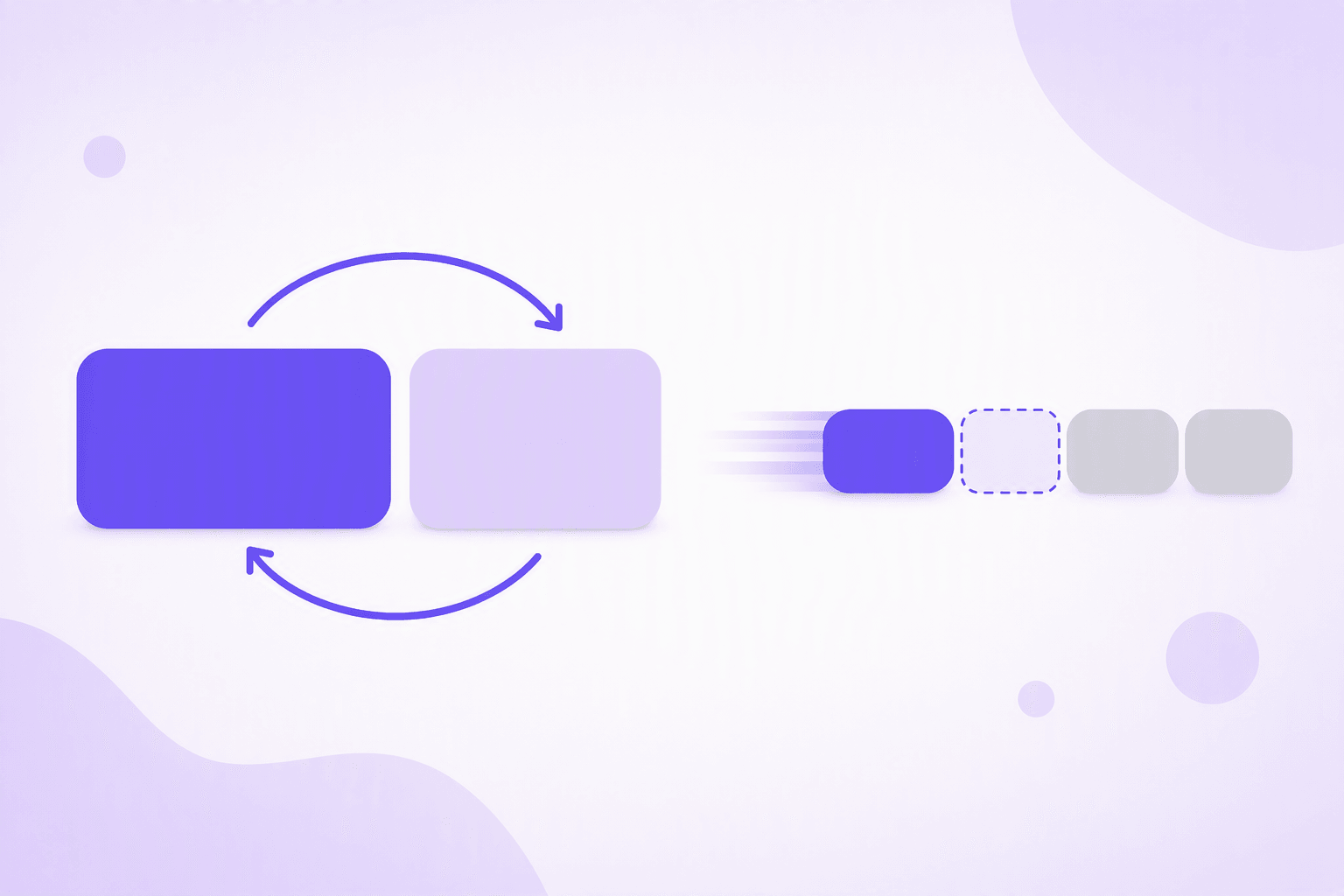
The core rule: auxiliary first
A fast way to diagnose an English question is to ask: do I already have an auxiliary verb?
Auxiliaries include be (am/is/are/was/were), have (have/has/had), modal verbs (can, could, will, would, should, must, might), and sometimes do itself.
Yes-no questions with BE
If the main verb is BE, just invert.
Statement: You are late.
Question: Are you late?
This stays true even with longer subjects.
Statement: Your friends are here.
Question: Are your friends here?
Yes-no questions with modals
Modals behave the same way.
Statement: You can drive.
Question: Can you drive?
Statement: They should leave now.
Question: Should they leave now?
Yes-no questions with HAVE (perfect tenses)
Perfect tenses already include HAVE, so you invert HAVE.
Statement: You have finished.
Question: Have you finished?
Statement: She has seen it.
Question: Has she seen it?
In American English, “Have you…?” is common, but in casual speech you will also hear “You’ve seen it?” with intonation, which we cover later.
Do-support: when English adds DO
If there is no auxiliary, English usually inserts DO to form a normal question.
Statement: You like coffee.
Question: Do you like coffee?
Statement: He works here.
Question: Does he work here?
Statement: They went home.
Question: Did they go home?
Cambridge Dictionary and Oxford Learner’s Dictionaries both treat this as a standard part of English grammar (see their entries on the auxiliary do, accessed 2026).
Present simple: do vs does
Use do with I/you/we/they, and does with he/she/it.
- Do you live nearby?
- Does she live nearby?
Notice what happens to the main verb: it returns to the base form.
Correct: Does she live nearby?
Incorrect: Does she lives nearby?
Past simple: did + base verb
Past tense moves to did, and the main verb becomes base form.
Correct: Did you see it?
Incorrect: Did you saw it?
This “double past” error is one of the most common learner mistakes because many languages mark tense directly on the main verb in questions.
💡 A quick self-check
If you use did, the next verb should look like an infinitive without 'to': did go, did see, did eat. If you see did went or did saw, fix it.
Wh-questions: add a question word, then follow the same rule
Wh-questions start with a question word, but the engine is still auxiliary-first or do-support.
Common question words:
- what, where, when, why, who, which, how
What
Pronunciation: WUHT
Use what for things, actions, and information.
- What is this?
- What do you want?
- What did she say?
Where
Pronunciation: WHEHR
- Where are you going?
- Where do they live?
- Where did you buy it?
When
Pronunciation: WEHN
- When is your flight?
- When do you start?
- When did it happen?
Why
Pronunciation: WYE
- Why are you laughing?
- Why do you think that?
- Why did he leave?
How
Pronunciation: HOW
How often pairs with an adjective or adverb phrase.
- How are you?
- How old are you?
- How far is it?
If you want a bigger set of everyday building blocks, our 100 most common English words list helps you recognize the high-frequency verbs and helpers that appear in questions constantly.
The special case: subject questions (no inversion)
Sometimes the wh-word is the subject of the sentence. Then you do not invert and you do not use do-support.
Compare these:
Object question (needs inversion):
- What did you see?
Subject question (no inversion):
- What happened?
More examples:
- Who called you? (subject = who)
- Who did you call? (object = who)
Learners often overuse do-support here because it feels like all wh-questions should have it. The key is to ask: is the wh-word doing the action?
Embedded questions: statement word order inside a larger sentence
Embedded questions are questions inside statements. They use statement word order, not question word order.
Direct question: Where is she?
Embedded: Do you know where she is?
Direct question: What did he say?
Embedded: I remember what he said.
This is a high-value pattern for sounding natural and polite, especially in service situations.
- Could you tell me where the restroom is?
- Do you know what time it is?
The British Council’s LearnEnglish materials teach this contrast explicitly because it is a common error point for intermediate learners (British Council, accessed 2026).
Negative questions: meaning and structure
Negative questions often carry attitude: surprise, expectation, or a soft push.
Don't you…?
Pronunciation: DOHNT yoo
- Don’t you want to sit down?
- Don’t you have class today?
This often implies the speaker expects “yes” or thinks the answer is obvious.
Isn't it…?
Pronunciation: IZ-uhnt it
- Isn’t it cold in here?
- Isn’t it your turn?
Formal alternative: do you not…?
- Do you not agree?
This is grammatical, but it sounds formal or confrontational in everyday conversation. Contractions are the default in most spoken settings.
🌍 Why negative questions can sound 'loaded'
In many English-speaking workplaces, negative questions can feel like you are challenging the listener's competence: "Didn't you read the email?" often sounds like blame. A softer alternative is "Did you get a chance to read the email?" The grammar is easy, the social meaning is the hard part.
Tag questions: the social tool English uses constantly
Tag questions add a short question at the end to check agreement or soften a statement.
- You’re coming, aren’t you?
- She can drive, can’t she?
- They don’t know, do they?
A simple rule: the tag uses the opposite polarity (positive statement, negative tag) and repeats the auxiliary.
Intonation changes meaning
In real speech, intonation matters.
- Falling tone: seeking agreement, almost like “right.”
You’re from Chicago, aren’t you. - Rising tone: genuine question.
You’re from Chicago, aren’t you?
Movies and TV are especially useful here because you can hear the tone that textbooks cannot show. If you practice with dialogue, you will also notice how tags can sound friendly, sarcastic, or even threatening depending on delivery.
Short questions and ellipsis in conversation
Real English often drops words when the meaning is obvious.
“You coming?”
Instead of “Are you coming?” you may hear:
- You coming?
- Coming?
- You good?
These are common in casual speech, but they are not always appropriate in formal writing or professional settings.
“Wanna” and “gonna” in questions
- What are you gonna do? (going to)
- You wanna eat? (want to)
If you are learning slang and casual reductions, it helps to separate grammar from register. Our English slang guide is useful for recognizing casual forms without overusing them in the wrong context.
⚠️ Do not copy every movie question into real life
Screen dialogue is often more direct than everyday polite speech. A character might say "What do you want?" in a tense scene. In real life, "What would you like?" or "What can I get you?" is safer in customer-facing situations.
Polite question strategies (grammar plus tone)
English politeness often uses indirectness. This is not only cultural, it is structural.
Deborah Tannen’s work on conversational style is a helpful lens here: English speakers frequently use questions to manage rapport, soften requests, and avoid sounding too blunt.
Could you…? / Would you…?
Pronunciation:
-
could you = KUD yoo
-
would you = WUD yoo
-
Could you help me for a second?
-
Would you mind closing the window?
Do you mind…?
- Do you mind if I sit here?
- Do you mind closing the door?
These are grammatically questions, but functionally they are polite requests. The expected answer patterns can be tricky: “Do you mind…?” often expects “No” to mean “I don’t mind.”
Any chance…?
- Any chance you could send that today?
This is common in emails and workplace chat. It is indirect, but still clear.
Common learner mistakes (and quick fixes)
1) Missing auxiliary
Incorrect: Where you are going?
Correct: Where are you going?
Fix: find the auxiliary (are) and move it before the subject (you).
2) Using do-support when you already have an auxiliary
Incorrect: Do you are ready?
Correct: Are you ready?
Fix: if you already have am/is/are, have/has, or a modal, do not add do.
3) Double tense marking
Incorrect: Did you went?
Correct: Did you go?
Fix: tense lives on did, not on the main verb.
4) Confusing who vs whom (and overcorrecting)
In modern spoken English, who is common even where traditional grammar would prefer whom.
- Who did you see? (common)
- Whom did you see? (formal)
Steven Pinker discusses how prescriptive rules often differ from everyday usage in The Sense of Style. For learners, the practical approach is: use who in speech, learn whom mainly for formal writing and set phrases.
Question formation across English varieties
English is used across many countries and communities, and question grammar stays consistent, but style varies.
American English
American speech often uses:
- short confirmation questions: “Right?” “Okay?”
- intonation questions: “You’re serious?”
British and Irish English
You may hear:
- “Have you got…?” as a present possession question: “Have you got a pen?”
- tags used heavily for friendliness or irony.
Indian English and other global varieties
Because English is an additional language for many speakers, you may hear more explicit, fully formed questions in professional contexts. That is not “wrong,” it is often clearer in international settings.
If you are working internationally, clarity beats cleverness. Full forms like “Could you please confirm…” are common and effective.
Practice patterns you can reuse (without memorizing rules)
A good way to internalize question formation is to memorize a few “frames” and swap vocabulary.
Frame 1: Do you + base verb…?
- Do you work here?
- Do you know him?
- Do you remember?
Frame 2: Are you + -ing…?
- Are you coming?
- Are you waiting for someone?
- Are you looking for this?
Frame 3: What do you + base verb…?
- What do you mean?
- What do you want to do?
- What do you need?
Frame 4: Where did you…?
- Where did you go?
- Where did you get that?
- Where did you learn English?
If you want to add numbers naturally in questions, practice with time, prices, and dates. Our numbers in English guide makes it easier to ask questions like “How much is it?” and “What time does it start?”
Using questions safely in humor, conflict, and strong language
Questions are not only grammar, they are social moves.
A question like “What’s your problem?” is grammatically normal, but socially aggressive. The same is true for many swear-word questions, which can escalate conflict quickly.
If you want to understand those without accidentally using them, read our English swear words guide as recognition practice, not as a script for real life.
🌍 A small but real workplace detail
In many English-speaking offices, direct questions in meetings can feel like cross-examination if they start with "Why did you…?" A common softener is to lead with context: "Just to understand the timeline, why did we choose option B?" The grammar is identical, but the opening phrase changes the temperature.
A simple checklist for any question you want to build
- Find the auxiliary. If you have one, move it before the subject.
- If you do not have one, add do/does/did.
- If it is a wh-question, put the wh-word first.
- If the wh-word is the subject, do not invert.
- In conversation, decide if you want the full form (neutral) or a shortened form (casual).
Learn question formation faster with real clips
The fastest way to make these patterns automatic is to hear them in context, especially do-support and reduced questions like “You good?” or “What’re you doing?” When you practice with short scenes, you get grammar, pronunciation, and intonation together, which is how your brain will retrieve questions in real conversations.
If you want structured listening practice, start with a few scenes from your favorite shows, then repeat the same question frames until they feel effortless. You can also browse more learning guides on the blog index when you want to target a specific grammar point next.
Frequently Asked Questions
Why do English questions use 'do'?
What is the difference between 'What did you say?' and 'What you said?'
Is 'You are coming?' correct English?
How do I form negative questions like 'Don't you…?'
What are the most common mistakes with English questions?
Sources & References
- Cambridge Dictionary, 'do-support' and question forms, accessed 2026
- Oxford Learner's Dictionaries, entries for 'do' auxiliary and question word order, accessed 2026
- British Council, LearnEnglish: questions and question forms, accessed 2026
- Ethnologue, 27th edition, 2024
- Huddleston, R. and Pullum, G. K., The Cambridge Grammar of the English Language, Cambridge University Press
Start learning with Wordy
Watch real movie clips and build your vocabulary as you go. Free to download.


