Quick Answer
To improve English pronunciation quickly, focus less on single sounds and more on stress, rhythm, and connected speech: clear vowel length, reduced unstressed vowels, and natural linking. English is spoken by about 1.5 billion people worldwide, so accents vary, but these 12 fixes reliably make you easier to understand in international English.
English pronunciation improves fastest when you stop chasing a perfect accent and instead fix the things that affect understanding most: word stress, sentence rhythm, vowel length, and the way words connect in real speech. These 12 tips target the high-impact patterns that make you sound clearer in conversations, interviews, and everyday listening.
English is also a global language with huge variation. Ethnologue estimates about 1.5 billion total speakers worldwide (L1 plus L2), and English has official or major institutional roles across dozens of countries, so there is no single "correct" accent, but there are shared habits that make speech easy to follow.
If you want a listening-first way to train these habits, pair this guide with real dialogue. Movie and TV clips force you to deal with speed, emotion, and reductions, which is why many learners use them alongside structured study. See our picks for the best movies to learn English, then come back and apply the drills below.
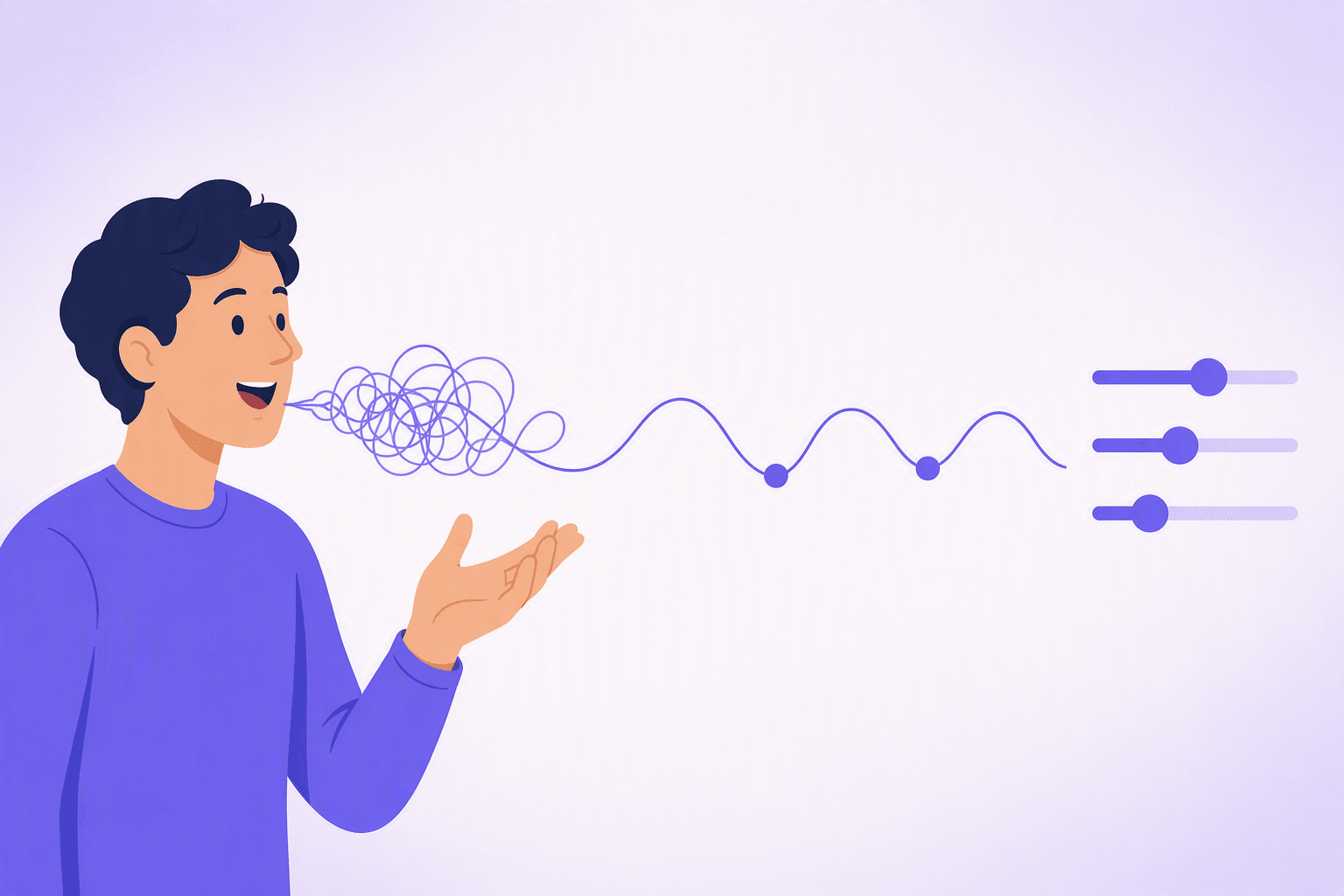
1) Prioritize intelligibility over accent
A strong accent is not the same thing as unclear speech. Many people with noticeable accents are easy to understand because their stress and vowels are consistent.
Jennifer Jenkins’ work on English as a Lingua Franca argues that international intelligibility often depends on a smaller set of pronunciation features than native-like accent goals. In practice, that means you can keep your identity and still sound clear.
💡 A simple target for 'clear English'
Aim for: correct word stress, stable vowel length, and clean consonant endings. If you do only those three, your speech usually becomes easier to understand than someone who pronounces every sound perfectly but stresses the wrong syllable.
2) Learn stress timing: English is rhythm-driven
English rhythm is stress-timed: stressed syllables tend to occur at roughly regular intervals, and unstressed syllables compress. That is why native speech can feel "fast" even when the speaker is not rushing.
Peter Roach’s English Phonetics and Phonology is a standard reference for learners because it treats stress and connected speech as core, not optional. If you only practice isolated words, you miss the rhythm that listeners expect.
A quick self-check
Say these two sentences at a natural pace:
- "I want to GO."
- "I want to go to the STORE."
In the second sentence, "want to" and "to" usually shrink, while GO and STORE carry the beat.

3) Fix word stress first (it changes what people hear)
Wrong stress can make a familiar word sound like a different word. This is why dictionaries mark stress, and why many pronunciation courses start with it.
Try these common pairs:
-
present (/ˈprɛzənt/) = noun, a gift
-
present (/prɪˈzɛnt/) = verb, to show
-
record (/ˈrɛkɚd/) = noun
-
record (/rɪˈkɔrd/) = verb
If you are unsure, check a learner dictionary with audio. Oxford Learner’s Dictionaries and Cambridge Dictionary both provide stress marks and recordings (accessed 2026).
⚠️ Don't guess stress from spelling
English spelling is not a reliable stress guide. Two words that look similar can stress differently, and many borrowed words keep stress patterns that do not match "rules" learners are taught.
4) Use the schwa: the most common vowel in spoken English
The schwa is the neutral vowel in unstressed syllables, usually written as /ə/ in dictionaries. It is the sound in:
- about (/əˈbaʊt/)
- support (/səˈpɔrt/)
- problem (/ˈprɑbləm/)
If you pronounce every vowel "fully," your English can sound overly careful and sometimes harder to process, because listeners expect reduction in weak syllables.
Drill: reduce function words
Read this line twice:
- "I can do it."
First, say every word clearly: /aɪ kæn du ɪt/.
Then say it naturally: /aɪ kən du ɪt/.
The meaning stays the same, but the rhythm becomes English-like.
5) Master vowel length, not just vowel quality
Many learners focus on the exact tongue position, but English listeners also rely on vowel length. Length differences help separate words, especially before voiced vs voiceless consonants.
Compare:
- "seat" (/sit/) vs "seed" (/sid/)
- "cap" (/kæp/) vs "cab" (/kæb/)
In many accents, the vowel is longer before a voiced consonant like /b/ or /d/. You do not need to overthink the phonetics, but you do need consistent timing.
6) Stop dropping final consonants (especially in clusters)
Final consonants carry meaning in English. Dropping them can erase grammar and change words:
- "walk" vs "walked"
- "miss" vs "mist"
- "cold" vs "coal"
Consonant clusters are the real problem: "tests," "asked," "months." The goal is not to pronounce every letter, but to keep the contrast.
Drill: add a tiny release
If you struggle with final /t/ or /d/, add a small, controlled release at first:
- "I liked it." (/aɪ ˈlaɪkt ɪt/)
Over time, you can make it softer, but keep the ending present.
7) Learn linking: English words connect across boundaries
Native speakers do not speak word-by-word. They link sounds across word boundaries, which affects both listening and speaking.
Common patterns:
- consonant + vowel: "pick it up" becomes /ˌpɪ kɪˈdʌp/ (the /k/ links to "it")
- vowel + vowel: "go on" often adds a light /w/ or /j/ glide, /ˈɡoʊ wɑn/ style glides depending on vowels
This is one reason movie dialogue feels like one long sound stream. If you train linking, your listening improves immediately.
For a broader foundation, our English pronunciation guide explains rhythm and stress in more detail, then you can return here for the practical fixes.
8) Understand flaps: why "t" sounds like "d" in American English
In many American accents, /t/ between vowels becomes a flap, sounding closer to a quick /d/:
- "water" sounds like /ˈwɑɾɚ/
- "better" sounds like /ˈbɛɾɚ/
This does not mean the word is spelled differently. It is connected speech.
If you are learning British English, you may hear a clearer /t/ in some contexts, but even in British speech, /t/ can soften or disappear in fast casual talk.
🌍 Accent choice and social meaning
In the US, a clear /t/ in words like "water" can sound careful, formal, or regionally marked. In the UK, a strong /t/ can sound crisp and standard in many contexts. Neither is "more correct," but listeners may associate them with different identities.
9) Treat "th" as two separate sounds
English has two "th" sounds:
- voiced /ð/ as in "this," "that," "mother"
- voiceless /θ/ as in "think," "three," "both"
A practical approximation:
- /ð/ feels like a gentle vibration: "this" (/ðɪs/)
- /θ/ feels like air: "think" (/θɪŋk/)
If your first language does not have these sounds, you can still be understood with substitutions, but consistent "th" improves clarity, especially in high-frequency words like "the," "this," and "that."
Drill: minimal pairs
Alternate slowly, then speed up:
- "thin" (/θɪn/) vs "then" (/ðɛn/)
- "three" (/θri/) vs "there" (/ðɛr/)
10) Use sentence stress to sound natural (and to be understood)
English highlights new or important information by stressing it. This is not just style, it is how listeners find meaning.
Compare:
- "I said I wanted TEA." (not coffee)
- "I SAID I wanted tea." (I already told you)
- "I said I WANTED tea." (not that I ordered it)
David Brazil’s work on intonation in English is useful here because it frames stress and pitch as meaning choices in conversation, not as decoration.
A movie-clip technique that works
Pick one short line, under 3 seconds. Listen for which word is louder or longer.
Then copy only the stress pattern first, even with nonsense syllables, and only then say the real words. This separates rhythm from vocabulary, which is how actors train.
11) Learn reductions you will actually hear (and when not to use them)
Reductions are normal in casual English, but they are not always appropriate.
Common ones:
- "going to" becomes "gonna" (/ˈɡʌnə/)
- "want to" becomes "wanna" (/ˈwɑnə/)
- "got to" becomes "gotta" (/ˈɡɑɾə/)
- "did you" becomes "didja" (/ˈdɪdʒə/)
Use them with friends, in fast dialogue, and in relaxed speech. Avoid them in formal presentations if you are not confident, because unclear reductions can sound sloppy.
If you want to understand modern casual speech, reductions show up constantly alongside slang. Our English slang guide helps you separate pronunciation shortcuts from vocabulary trends.
⚠️ Reductions are not 'bad English'
They are part of fluent speech, but they are style-sensitive. The same person who says "gonna" with friends may switch to "going to" in a meeting. Train both forms so you can choose.
12) Use "shadowing" correctly: copy timing, not just sounds
Shadowing means repeating immediately after a speaker, matching timing and melody. Done well, it builds automatic rhythm.
A common mistake is pausing to pronounce every word perfectly. That turns shadowing into reading practice.
A 10-minute routine
- Choose a clip with subtitles.
- Listen once without speaking.
- Shadow 5 times, staying on the speaker’s timing.
- Record yourself once.
- Fix one thing only, like final consonants or stress.
- Shadow 3 more times.

If you like structured lists, combine this with vocabulary you already know, like numbers in English, because numbers force clean stress and endings in fast speech.
The pronunciation habits that change by region (so you do not get confused)
English varies across regions, and variation is not random. It often follows stable patterns.
Rhotic vs non-rhotic "r"
In many American and Canadian accents, "r" is pronounced in "car" and "hard." In many England accents, "r" is weaker or absent unless a vowel follows.
- American-style: "car" (/kɑr/)
- Many UK-style: "car" (/kɑː/)
Both are standard in their contexts. Choose one model for consistency.
T-glottalization and casual UK speech
In parts of the UK, a /t/ can become a glottal stop, especially before another consonant:
- "bottle" can sound like /ˈbɒʔəl/
This is common in casual speech and certain regions. Learners often panic when they first hear it in TV dialogue, but it is predictable once you know it exists.
Vowel shifts and why "bath" sounds different
Words like "bath," "dance," and "last" have different vowel qualities across accents. This is not a mistake, it is a well-known accent split.
If your goal is international clarity, keep your vowel consistent within your chosen model. Do not switch randomly.
Common learner traps (and what to do instead)
Trap 1: Over-focusing on rare sounds
If you spend weeks on one consonant but still stress words incorrectly, your returns are low. Fix stress and vowel reduction first, then polish sounds.
Trap 2: Practicing only slow speech
Slow practice is useful, but you must also practice at real speed. Connected speech only appears when you stop inserting pauses between words.
Trap 3: Copying slang pronunciation without context
Slang often comes with a specific rhythm and attitude. If you copy the sound without the social context, it can feel forced.
If you are exploring edgy vocabulary, keep it separate from pronunciation training. For example, our English swear words guide is about meaning and severity, not about sounding like a movie character at work.
A practical way to measure improvement (without obsessing)
Pronunciation progress is easiest to track with three metrics:
- Comprehension checks: Do people ask you to repeat less often?
- Recording comparisons: Does your stress match the model line?
- Listening comfort: Do fast conversations feel less "mushy"?
Pick one short clip per week and re-record it. You will hear improvement even if it feels slow day-to-day.
🌍 Why movies help pronunciation more than scripted textbook audio
Textbook recordings are often slow and carefully articulated. Real film and TV dialogue includes interruptions, emotion, sarcasm, and reductions, which are exactly the conditions where pronunciation habits either hold up or collapse. Training with real dialogue builds the timing and linking that listeners expect in everyday speech.
A simple 4-week plan (repeatable)
Week 1: Stress and schwa
- Learn stress for 20 common words you use daily.
- Reduce function words in short sentences.
- Shadow one 5-second clip per day.
Week 2: Final consonants and clusters
- Practice past tense endings in context: "worked," "played," "wanted."
- Read aloud, then record, focusing on endings.
Week 3: Linking and flaps
- Practice consonant-vowel linking: "pick it up," "take it off."
- Notice flap /t/ in American media if that is your model.
Week 4: Intonation and meaning
- Practice sentence stress changes that shift meaning.
- Shadow emotional lines: disagreement, surprise, reassurance.
At the end, choose a new set of clips and repeat the cycle with harder material.
Use Wordy-style clip practice without turning it into memorization
The best clip practice is short and targeted. You are training motor patterns, not learning a script.
- Keep clips short enough that you can repeat them 10 times.
- Focus on one feature at a time.
- Switch speakers to avoid copying one voice.
If you want a structured way to do this with real dialogue, interactive subtitles, and repeatable lines, start with our English learning clips and apply the 10-minute routine above.
Frequently Asked Questions
What is the fastest way to improve English pronunciation?
Do I need to sound American or British to be understood?
Why do native speakers 'swallow' words in English?
How can I practice pronunciation without a teacher?
Which English sounds are hardest for most learners?
Sources & References
- Ethnologue, English language entry, 27th edition, 2024
- British Council, English in the world (accessed 2026)
- Cambridge Dictionary, pronunciation and phonetics resources (accessed 2026)
- Oxford Learner's Dictionaries, phonemic chart and word stress guidance (accessed 2026)
Start learning with Wordy
Watch real movie clips and build your vocabulary as you go. Free to download.


