Quick Answer
English does not have one single future tense. In real conversation, you choose between 'will' (quick decisions, offers, predictions), 'be going to' (plans and strong evidence), the present continuous (arrangements), and the present simple (schedules). This guide shows what each form signals, with natural examples and pronunciation help.
English does not use one single future tense, instead it uses several future forms, and the right choice depends on what you mean: quick decisions and offers use "will" (WIL), plans and strong evidence use "be going to" (bee GOH-ing too), arrangements use the present continuous, and schedules use the present simple.
If you are also building your everyday listening, pair this guide with real dialog from films and shows, our picks in best movies to learn English make future forms feel automatic because you hear them in context.
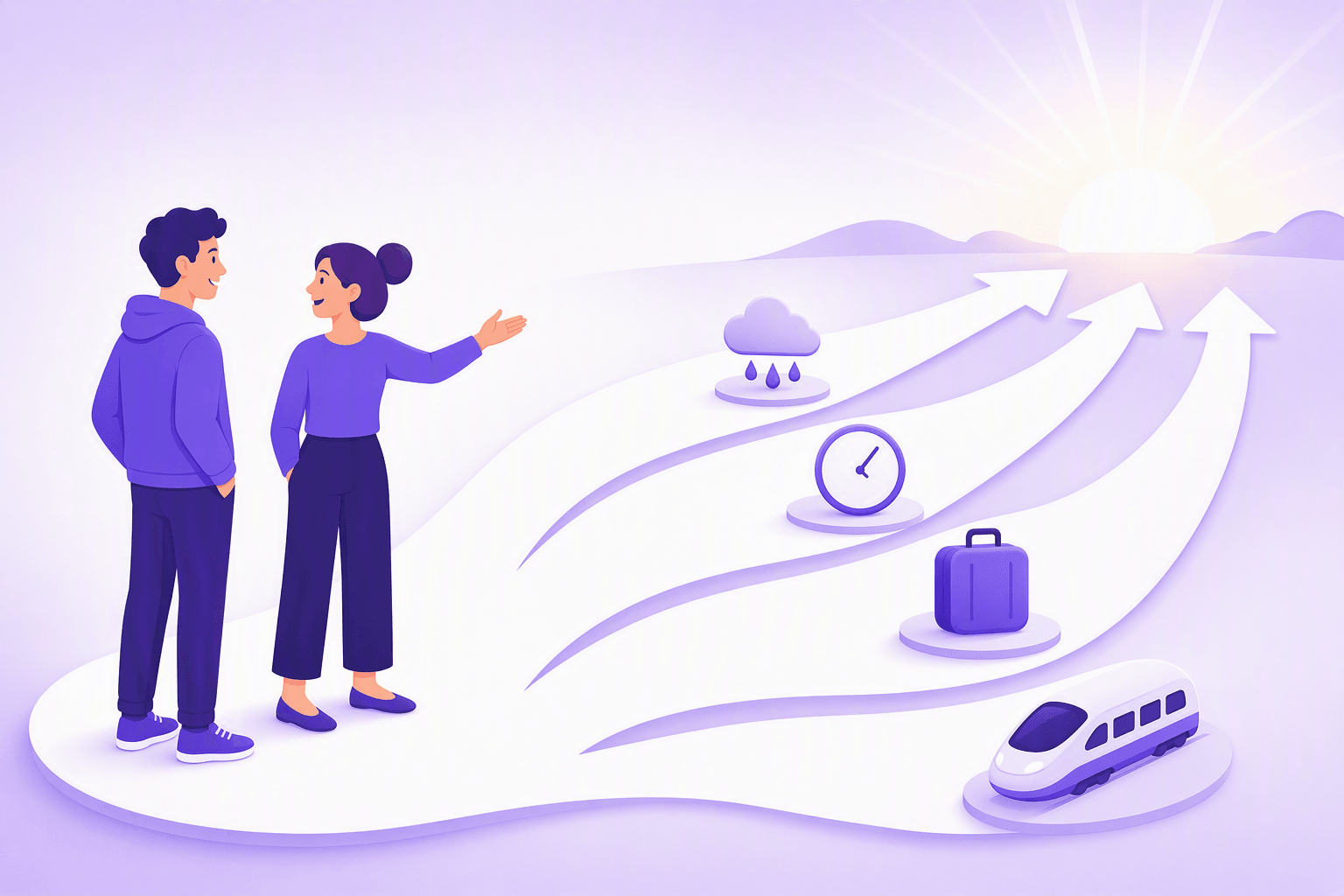
A quick reality check: English "future tense" is really future meaning
Many languages have a dedicated future tense ending. English mostly does not.
In modern grammar descriptions, English is often described as using modal verbs and periphrastic constructions to express future time. Rodney Huddleston and Geoffrey K. Pullum treat "will" primarily as a modal auxiliary, not a simple tense marker, in The Cambridge Grammar of the English Language.
That matters for learners because it explains why "will" is not always the best answer. Native speakers choose forms that communicate intention, evidence, arrangement, or schedule.
Why this matters globally (and a few numbers)
English is the most widely learned second language in the world, and it is used as an official language in dozens of countries. Ethnologue (27th edition, 2024) estimates roughly 1.5 billion total English speakers worldwide when you include L1 and L2 speakers.
That huge spread also means variation. Some future choices are more common in certain regions, and some classroom rules are oversimplified.
💡 A practical goal
Instead of memorizing one "future tense," learn the signal each form sends: decision now, plan already made, arrangement with another person, or fixed schedule. When you can hear the signal, you can choose the form quickly.
The four core future forms you actually need
You can express future time in many ways, but most everyday situations fall into four patterns.
"Will" for decisions, offers, promises, and neutral predictions
"Will" is extremely common when you decide at the moment of speaking.
It is also the default for offers and promises, especially in service situations.
Pronunciation: "will" (WIL), "I'll" (AYL), "we'll" (WEEL), "won't" (WOHNT).
When "will" sounds most natural
Use "will" when the decision is made now:
- "I’m tired." "I’ll go to bed." (decision now)
- "That bag looks heavy. I’ll carry it." (offer)
- "I’ll call you tonight." (promise)
Use "will" for predictions when you are not pointing to specific evidence:
- "I think it’ll be fine."
- "You’ll love this show."
This "neutral prediction" idea is a good learner shortcut, and it lines up with how many teaching references explain it, including the British Council LearnEnglish materials.
Common mistake: "will" for every plan
Learners often say: "Tomorrow I will go to the doctor" when they mean an appointment already arranged.
It is not wrong, but it can sound like you decided just now, or like you are making a formal announcement. For an appointment, native speakers often prefer the present continuous: "I’m going to the doctor tomorrow" or "I’m seeing the doctor tomorrow."
"Be going to" for plans and strong evidence
"Be going to" is the workhorse for future plans that exist before the moment of speaking.
It is also used for predictions when there is visible evidence.
Pronunciation: "going to" is often reduced in speech. You will hear "gonna" (GUH-nuh) in casual conversation, but write "going to" in formal contexts.
Plan meaning: the decision happened earlier
- "I’m going to study tonight." (plan)
- "We’re going to visit my parents this weekend." (plan)
The key is that the plan is already in your head. You are not deciding right now.
Evidence meaning: you can see it coming
- "Look at those clouds. It’s going to rain."
- "He’s driving too fast. He’s going to crash."
Cambridge Dictionary usage notes often teach this contrast: "going to" is common when there is present evidence for a future result.
⚠️ Don't overuse 'gonna'
"Gonna" (GUH-nuh) is normal in casual speech, but it is not appropriate in formal writing, tests, or work emails. Learn it for listening, then choose based on context.
Present continuous for arrangements (especially with other people)
The present continuous can refer to the future when the event is arranged. Think: calendars, tickets, meetings, and plans that involve coordination.
Pronunciation: "I’m meeting" (AYM MEE-ting), "we’re having" (WEER HAV-ing).
What counts as an arrangement?
- "I’m meeting Sam at 6." (agreed plan)
- "We’re flying to Chicago on Friday." (ticketed travel)
- "She’s starting her new job next week." (set start date)
If you can imagine it written in a calendar, the present continuous often fits.
Why it feels different from "going to"
Compare:
- "I’m going to see Sam tonight." (plan, could be flexible)
- "I’m seeing Sam tonight." (arranged, more fixed)
In real speech they can overlap, but the present continuous often sounds more committed.
Present simple for schedules and timetables
The present simple can refer to the future when the time is fixed by a schedule, not by your personal decision.
This is common with transport, classes, TV programs, and official events.
- "The train leaves at 7:10."
- "My class starts at 9."
- "The movie begins in ten minutes."
If you want a related skill, numbers matter here, our English numbers guide helps you say times and dates clearly.
A meaning-first decision chart (the one native speakers actually follow)
When learners ask for "the rule," they often want one sentence. English does not work that way.
Use this meaning-first checklist:
- Decision now, offer, promise, request: use "will".
- Plan already decided, intention: use "be going to" or present continuous.
- Arrangement with a set time or coordination: prefer present continuous.
- Fixed schedule not controlled by you: use present simple.
This is also why future forms show up constantly in dialog. Characters make decisions, negotiate plans, and react to evidence, which is one reason learning from clips can help.
Pronunciation and contraction: future forms in fast speech
Future forms are easy to recognize in textbooks and harder in real audio.
Here are the contractions you must be able to hear:
- I will, I’ll (AYL)
- you will, you’ll (YOOL)
- he will, he’ll (HEEL)
- she will, she’ll (SHEEL)
- we will, we’ll (WEEL)
- they will, they’ll (THAYL)
- will not, won’t (WOHNT)
And common reductions:
- going to, gonna (GUH-nuh) in casual speech
- want to, wanna (WAH-nuh) in casual speech, not a future marker, but often appears with future meaning: "I wanna go later."
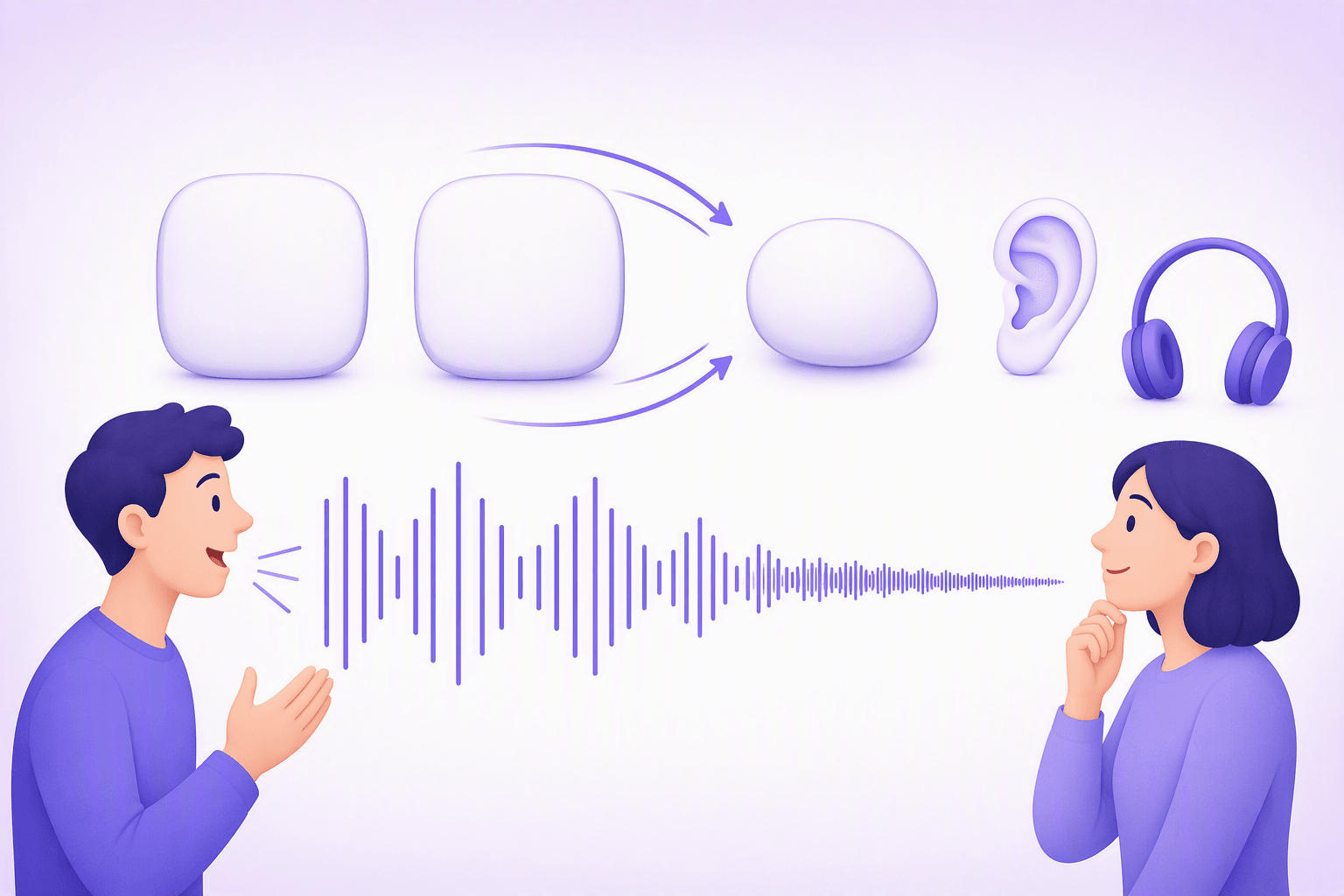
David Crystal discusses how English rhythm and stress shape what learners actually hear, and future contractions are a classic example: function words compress, content words carry stress. If you want targeted listening practice, our English pronunciation guide goes deeper on stress timing.
Future continuous and future perfect: when you really need them
Most daily conversation does not require these, but they are common in business English, storytelling, and exams.
Future continuous: "will be + -ing"
Use it to describe an action in progress at a future time, or to sound less direct.
- "This time tomorrow, I’ll be flying to Chicago."
- "Will you be using the projector?" (polite, less pushy than "Will you use")
It is also used for predictions about what will be happening:
- "Don’t call at 8, they’ll be eating dinner."
Future perfect: "will have + past participle"
Use it to say something will be completed before a future point.
- "By Friday, I’ll have finished the report."
- "By the time you arrive, we’ll have left."
Learners often avoid this form, but it is very useful for deadlines and project updates.
"About to" and "on the verge of": the near future
English has a special way to talk about the immediate future, when something is seconds or minutes away.
"Be about to"
- "I’m about to leave." (right now)
- "The show is about to start."
Pronunciation: "about to" often reduces to "uh-BOWT tuh".
"Be on the verge of"
This is more formal and dramatic:
- "The company is on the verge of bankruptcy."
- "She was on the verge of tears."
Use it when you want a strong, almost-happening feeling.
Common learner errors (and how to fix them fast)
Error 1: mixing "will" and "going to" inside one idea
You will hear: "I will going to call you."
Fix: choose one pattern.
- "I will call you." (promise)
- "I’m going to call you." (plan)
Error 2: forgetting the verb "be" in "going to"
You will hear: "I going to go."
Fix: always include "am/is/are":
- "I’m going to go."
- "She’s going to go."
- "They’re going to go."
Error 3: using present simple for personal plans without context
"I go to the doctor tomorrow" can sound unnatural unless it is a routine schedule.
Prefer:
- "I’m going to the doctor tomorrow."
- "I’m seeing the doctor tomorrow."
Error 4: over-formality in casual conversation
In everyday speech, "I will" can sound stiff compared to "I’ll" or "I’m going to".
If you want to sound natural, contractions matter. This is similar to slang choices: the grammar is correct, but the social signal changes. Our English slang guide is useful for that broader idea of tone.
💡 A one-sentence self-check
If you can add "right now" naturally, use "will". If you can add "already" naturally, use "going to" or present continuous.
Mini scenes: the same situation, different future form
Seeing the contrast in a realistic scene helps you stop translating from your first language.
Scene 1: at home, deciding dinner
- "There’s no food." "I’ll order pizza." (decision now)
- "I’m going to order pizza tonight." (plan you already had)
- "I’m ordering pizza tonight." (arrangement, maybe you already told others)
Scene 2: weather prediction
- "I think it’ll rain later." (general prediction)
- "It’s going to rain." (evidence, you see clouds, radar, etc.)
Scene 3: meeting a friend
- "I’ll meet you at 6." (promise, agreement)
- "I’m meeting you at 6." (arranged, calendar-like)
- "I’m going to meet you at 6." (possible, but often sounds like intention more than arrangement)
Regional and cultural notes: what changes across Englishes
English is spoken across many countries and communities, so future forms carry slightly different habits.
"Shall" and politeness
In American English, "shall" is uncommon outside set phrases and legal language. In British English, it can still appear in polite suggestions and more formal contexts: "Shall we begin?"
Merriam-Webster notes "shall" as a modal with traditional prescriptive rules, but in real usage, "will" dominates for most future meaning. For learners, the practical approach is to recognize "shall we" and not force "shall" into your own speech unless your environment uses it.
"I’m gonna" in movies vs real life
Movies and TV often use reduced forms like "gonna" and "I’ll" heavily because they match natural rhythm. That is great for listening, but it can mislead learners into writing them in essays or work messages.
A good rule: write the full form in formal writing, and learn the reduced form for listening and casual speaking.
If you want an extreme example of register differences, compare how characters speak in casual scenes vs angry scenes. Even swear words follow this register logic, our English swear words guide explains how tone and situation change what is acceptable.
Practice: turn meaning into the right form
Try these as a quick self-test. Say the sentence out loud, then choose the form that matches the meaning.
-
You see someone carrying too many boxes: "I ___ help you."
Natural answer: "I’ll help you." -
You decided yesterday: "I ___ start the gym next week."
Natural answer: "I’m going to start the gym next week." -
You have a calendar invite: "I ___ meet my manager at 3."
Natural answer: "I’m meeting my manager at 3." -
A timetable: "The flight ___ at 9:40."
Natural answer: "The flight leaves at 9:40." -
Deadline update: "By Monday, we ___ finish the first draft."
Natural answer: "By Monday, we’ll have finished the first draft."
How to learn future forms faster with real dialog
Future forms are less about memorizing and more about noticing patterns.
Paul Nation’s work on vocabulary learning emphasizes repeated meaningful exposure, and the same principle applies to grammar choices: you need many examples where meaning is clear. Movies and TV provide that because you can see the situation that triggers "I’ll" vs "I’m going to".
A practical method:
- Watch a short clip and listen for contractions: I’ll, we’ll, won’t, gonna.
- Pause and ask: decision now, plan, arrangement, schedule, or evidence?
- Repeat the line with the same rhythm.
For more structured listening material, start with our best movies to learn English list, then keep a small notebook of future lines you want to reuse.
Summary: the simplest usable rule set
English future meaning is built from choices: "will" for decisions now, offers, promises, and neutral predictions, "be going to" for plans and strong evidence, present continuous for arrangements, and present simple for schedules.
Once you attach each form to a meaning, you stop guessing, and you start sounding like you are responding to the situation, not reciting grammar.
If you want to keep building natural grammar through real speech, browse the Wordy blog and pick one topic at a time, then practice it in clips until it feels automatic.
Frequently Asked Questions
What is the future tense in English?
What is the difference between 'will' and 'going to'?
Can I use the present continuous for the future?
When do we use the present simple for the future?
Is 'shall' still used for the future?
Sources & References
- Cambridge Dictionary, 'will' and 'going to' usage notes, accessed 2026
- British Council, LearnEnglish: future forms (will, going to, present), accessed 2026
- Merriam-Webster Dictionary, entries for 'will' and 'shall', accessed 2026
- Ethnologue, 27th edition, 2024
- Huddleston, R. & Pullum, G.K., The Cambridge Grammar of the English Language, Cambridge University Press
Start learning with Wordy
Watch real movie clips and build your vocabulary as you go. Free to download.


