Quick Answer
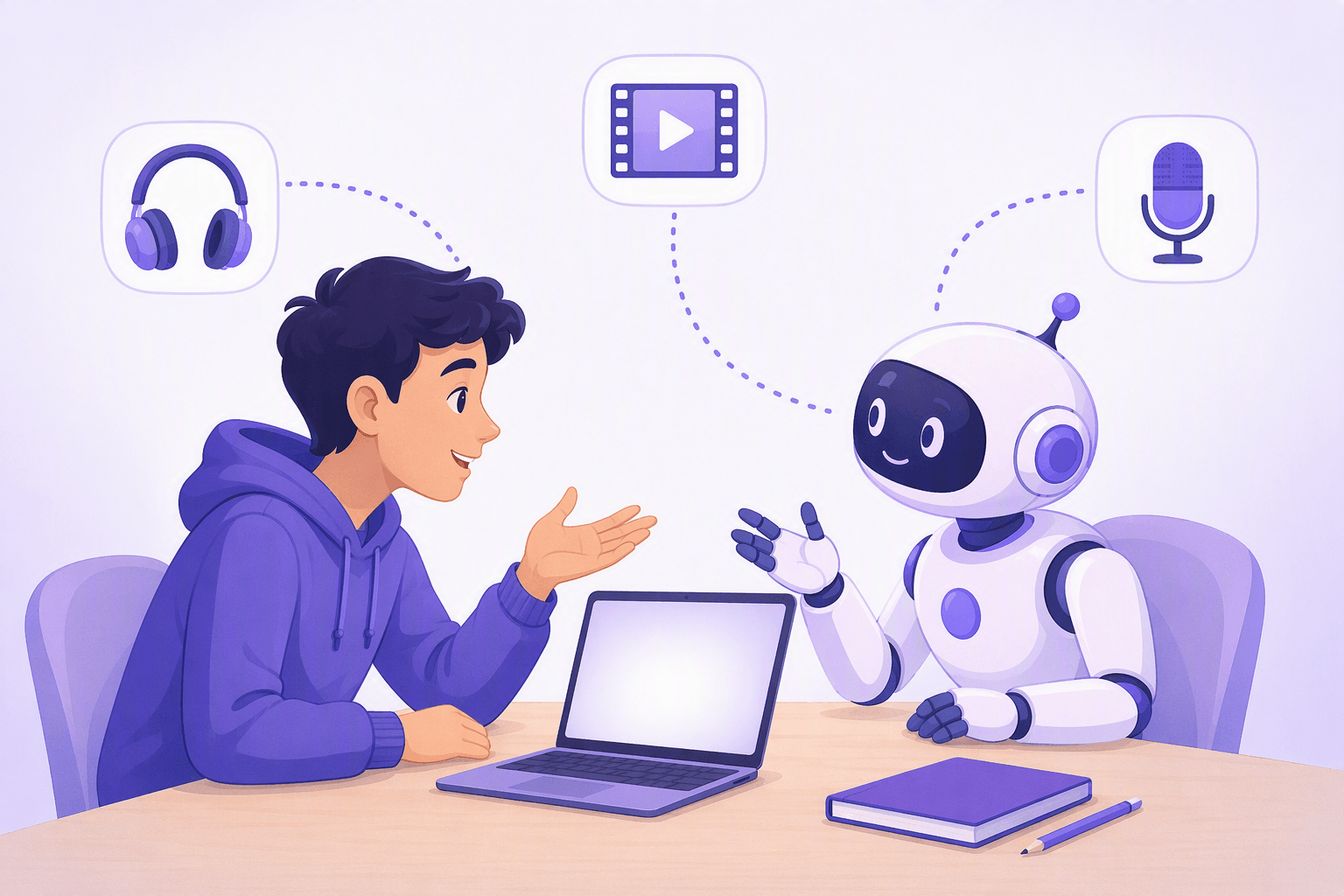
ChatGPT can help you learn a language faster when you use it for targeted practice: roleplays, feedback on your writing, personalized drills, and explanations you can ask for again and again. It works best as a coach, not as your only teacher, because it can make confident mistakes and it does not replace real listening to native speech.
ChatGPT is useful for language learning when you use it as a structured coach: it can generate level-appropriate dialogues, correct your writing, drill your weak points, and explain grammar in plain English, but you should not rely on it as your only source of truth or your only listening practice.
| English | English | Pronunciation | Formality |
|---|---|---|---|
| Set my level | Act as an English tutor for A2 (CEFR). | AKT az an ING-glish TOO-ter for AY-too | polite |
| One question at a time | Ask me one question at a time and wait for my answer. | ASK mee wun KWES-chun at uh TIME | polite |
| Correct me clearly | Correct my mistakes. Show: (1) corrected version, (2) why, (3) 2 alternatives. | kuh-REKT my mis-TAYKS, SHOH: wun, too, three | polite |
| Roleplay | Roleplay a hotel check-in. Keep it to 8 turns. Use simple words. | ROHL-play uh hoh-TEL chek-IN, KEEP it to AYT TERNZ | casual |
| Spaced review | Quiz me on these 12 words tomorrow and again in 3 days. | KWIZ mee on theez twelv WERDZ tuh-MOR-oh | polite |
| Make it natural | Rewrite this to sound natural in everyday American English. | REE-ryt this tuh sownd NATCH-er-uhl | polite |
Why ChatGPT can help, and where it fails
ChatGPT is strong at generating practice on demand. You can ask for ten examples of a grammar pattern, a roleplay for your job, or a mini-lesson that matches your interests.
Its weakness is reliability. It can produce plausible-sounding sentences that are subtly wrong, outdated, or culturally off, especially with slang, taboo words, or regional usage.
The real goal: more high-quality repetitions
Language learning is built on repeated exposure and repeated retrieval. ChatGPT can create infinite variations, which is great, but only if you keep the practice focused and measurable.
A simple benchmark helps: can you understand it, can you respond quickly, and can you reuse the same pattern tomorrow without help?
"We acquire language in one way: by understanding messages, or by receiving 'comprehensible input'."
Stephen Krashen, linguist, The Input Hypothesis (1985)
ChatGPT can support comprehensible input, but it does not guarantee it. You still need real-world input, especially audio.
A reality check with stats (so you set the right expectations)
If your target is English, you are learning the most globally used second language. Ethnologue estimates about 1.5 billion English speakers worldwide when you include L2 speakers, with native speakers around 380 million, depending on the methodology and year (Ethnologue, 2024).
English also has huge variation. It is used across dozens of countries and regions, and accent differences can be large even inside one country.
That matters because ChatGPT tends to produce a clean, neutral register. Real English is messier: interruptions, reductions (like "gonna" pronounced "GUN-uh"), and culture-specific shortcuts.
To bridge that gap, pair ChatGPT with authentic listening. A practical starting point is our list of best movies to learn English, then use ChatGPT to turn what you heard into drills.
The best ways to use ChatGPT (with prompts you can copy)
1) Conversation roleplays that actually train you
Roleplays work when they are constrained. If you just say "let’s chat," you get a pleasant conversation and weak learning.
Use three constraints: level, length, and correction style.
Prompt template (copy/paste):
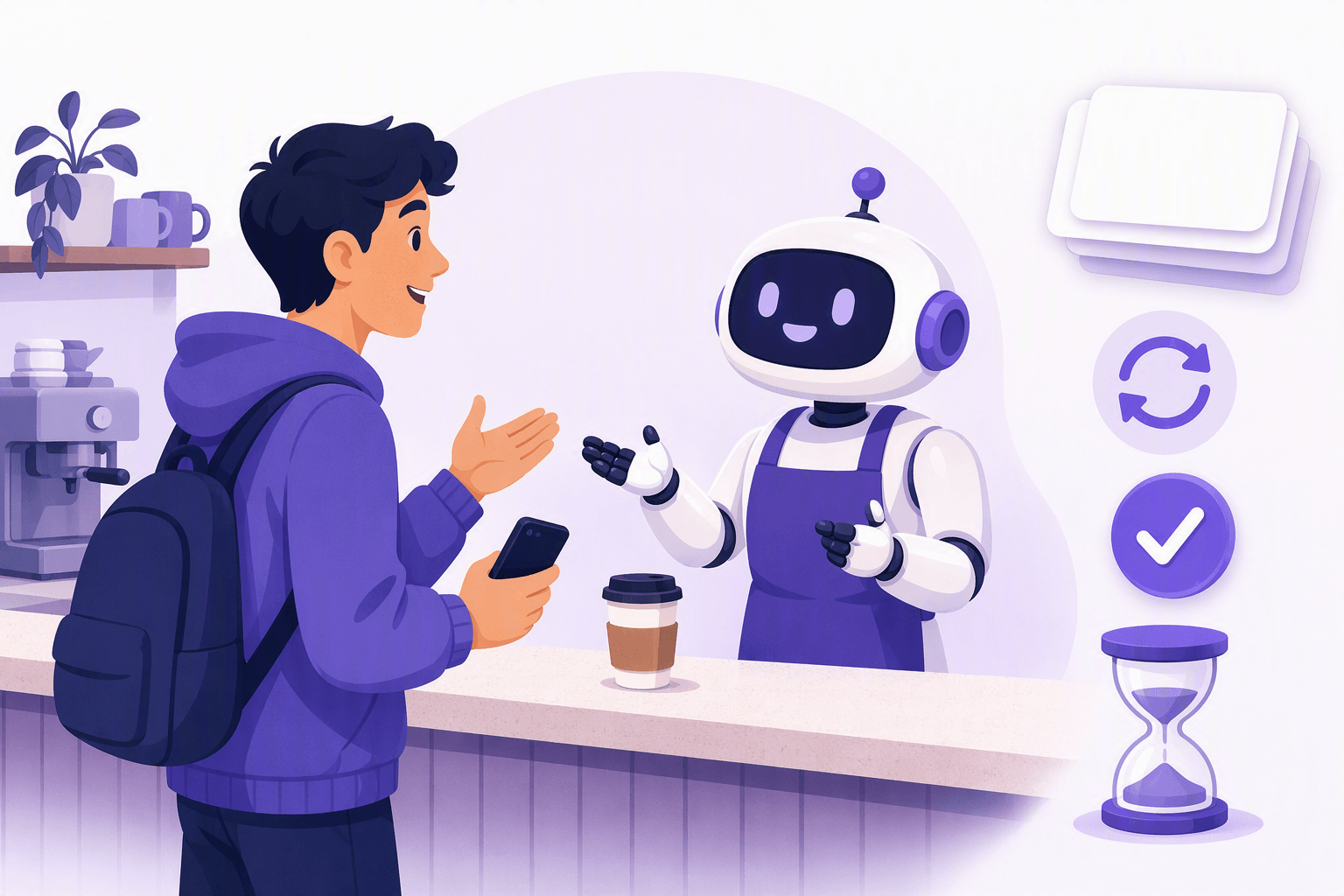
"Act as a friendly English tutor for B1 (CEFR). Roleplay ordering coffee in a busy cafe. Keep it to 10 turns. Ask me one question at a time. After each of my messages, correct my mistakes and give one more natural option. Use pronunciation hints in CAPS for tricky words."
Pronunciation note: CEFR is often said like "SEE-fer" in English classrooms.
💡 Make roleplays feel real
Add friction on purpose: "You are in a hurry," "the item is sold out," "the cashier misheard you." Real conversations have problems, and problem-solving language is what sticks.
2) Writing feedback that teaches, not just fixes
ChatGPT can correct your writing quickly, but you learn more when it labels the error type and forces a rewrite.
Ask for a short list of recurring mistakes. Then ask for a second attempt from you.
Prompt template:
"Here is my text. Correct it, but do not rewrite everything. Mark only the changes in brackets. Then list my top 3 recurring issues (for example: articles, prepositions, verb tense). Finally, ask me to rewrite the same text using your notes."
If you are learning English, this is especially powerful for articles ("a," "an," "the") and prepositions ("in," "on," "at"), which are frequent and hard to master.
3) Vocabulary that matches your life, not a generic list
Vocabulary sticks when it is tied to situations you actually repeat. ChatGPT can build a personal mini-dictionary around your job, hobbies, or commute.
Prompt template:
"Create a 20-word vocabulary set for my job in retail. For each word, give: meaning, pronunciation in English letters, one short example sentence, and one common collocation."
Pronunciation example: "receipt" is often "rih-SEET" (the stress is on the second syllable).
To build a foundation, combine this with a core list like the 100 most common English words, then ask ChatGPT to generate real dialogues that use them.
4) Grammar explanations at your exact confusion point
Grammar books are good, but they cannot answer your specific "why does this sound wrong?" question.
ChatGPT is useful when you provide two sentences and ask it to compare meaning, tone, and context.
Prompt template:
"Explain the difference between: (1) 'I have been to London' and (2) 'I went to London.' Give a simple rule, then 5 short examples, then quiz me with 5 items."
Pronunciation note: "been" can be "BIN" in American English and often "BEEN" (like "bean") in careful speech.
5) Test-style drills and spaced repetition, without an app lock-in
You can ask ChatGPT to create quizzes, but the key is scheduling review. Spaced repetition works because you revisit items after forgetting starts.
Prompt template:
"Make a 12-question quiz on these words. Tomorrow, quiz me again but mix the order and increase difficulty. In 3 days, quiz me again using only definitions and example gaps."
If you want a structured system for review, you can still use ChatGPT as the generator and a separate tool as the tracker. The point is: generation and tracking are different jobs.
What to avoid (the common traps)
Over-trusting it on slang and taboo language
Slang is social. It signals group identity, age, region, and attitude, and it changes fast.
ChatGPT can explain slang, but it may miss the social risk: who can say it, where, and how it lands.
If you are studying modern informal English, cross-check with real usage. Start with our English slang guide, then ask ChatGPT to create safe example dialogues and to label each line as "neutral," "casual," or "risky."
⚠️ Be careful with swearing practice
If you ask for swear words, you can learn meanings, but using them can damage relationships fast. If you want to understand them for movies and social media, use a reference like our English swear words guide and ask ChatGPT to focus on recognition, not production.
Using it as a translator for everything
Translation is sometimes useful, but constant translation prevents you from building direct links between meaning and the target language.
A better pattern is: try in English first, then ask for correction and alternatives.
Long chats that feel productive but do not create retrieval
If you never struggle, you are not training recall. You are only recognizing.
Build "retrieval moments" into your prompts: timed answers, fill-in-the-blank, and forced paraphrases.
A practical 20-minute daily plan (ChatGPT plus real input)
This routine is designed for English learners, but it works for any language.
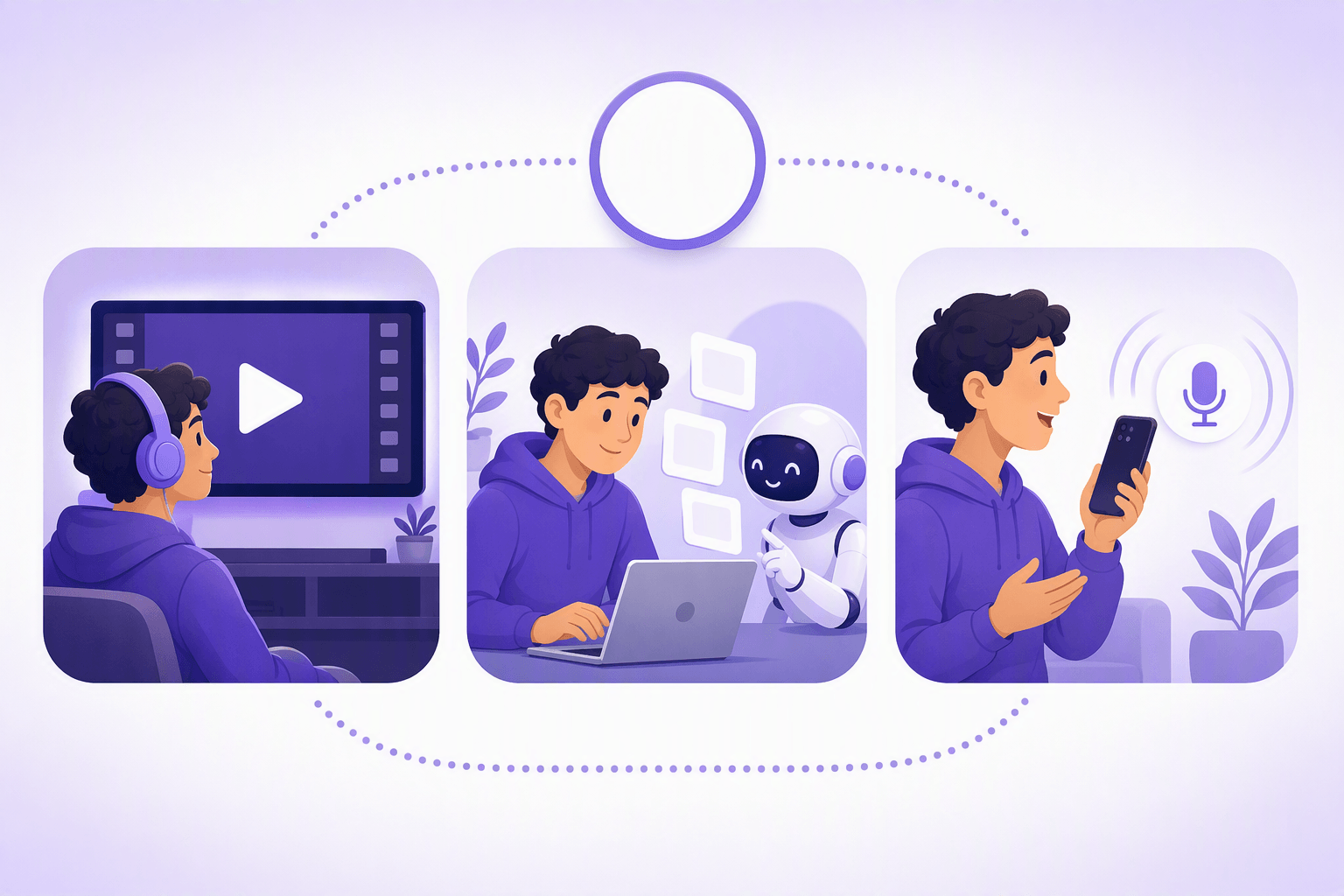
Minute 1 to 7: real listening first
Watch a short clip from a show or movie. Use subtitles if needed, but try one pass without them.
If you need ideas, start with movies that are good for learning English, then pick one scene you can repeat.
Minute 8 to 14: ChatGPT turns the clip into drills
Paste 6 to 10 lines of dialogue (or a summary you wrote). Then use this prompt:
"Turn this dialogue into: (1) a 6-item vocabulary list with pronunciation, (2) 5 comprehension questions, (3) a roleplay that reuses the same phrases, (4) a short shadowing script with pauses marked by slashes."
Pronunciation note: "shadowing" is repeating immediately after audio, pronounced "SHAD-oh-ing."
Minute 15 to 20: output with feedback
Do a 60-second spoken summary. Transcribe it (even roughly). Paste it and ask:
"Correct my transcript. Highlight the 3 most important fixes for clarity. Give me one improved version that still sounds like me, not too formal."
This is where ChatGPT shines: fast feedback, many repetitions, low pressure.
How to make ChatGPT correct you better (so you do not learn mistakes)
Give it a rubric
If you do not specify what you want, you get general advice. A rubric makes feedback consistent.
Use categories like: grammar, vocabulary, naturalness, and coherence.
Prompt template:
"Score my answer from 1 to 5 on: grammar, vocabulary, naturalness, coherence. Then give one specific action for each category. Keep corrections minimal."
Remember: component props cannot use numbers in curly braces in MDX, but in normal chat you can still ask for numeric scoring.
Force it to show uncertainty
When you are learning, you want the model to flag low-confidence claims.
Prompt template:
"If you are not sure, say 'Not sure' and give two possibilities. For idioms or slang, tell me what region and age group it fits."
This is especially important for cultural nuance.
Unique cultural insight: English politeness is often indirect
Many learners think English politeness is just "please" and "thank you." In real life, English often softens requests with distance and options.
You will hear phrases like:
- "Could you possibly...?" (KUD yoo POSS-uh-blee)
- "Do you mind if I...?" (doo yoo MYND if I)
- "Would it be okay to...?" (WUD it bee oh-KAY tuh)
ChatGPT can teach these, but you should practice the tone. The same words can sound polite or demanding depending on stress and speed.
🌍 Why 'Can you' can sound pushy
In many English-speaking workplaces, "Can you do this?" can feel like a command if the tone is flat. People often add softeners: "When you get a chance," "If you have a minute," or "Could you help me with..." Ask ChatGPT to generate three versions: direct, neutral, and very polite.
Using ChatGPT for specific English pain points
Articles: a, an, the
ChatGPT can help if you ask for minimal pairs and rules tied to meaning.
Ask it to explain "the" as shared knowledge: "the meeting" when both people know which meeting.
Prompt template:
"Teach me 'a/an/the' with 12 minimal pairs. For each pair, explain the meaning difference in one sentence. Then quiz me."
Numbers and fast speech
Numbers are a classic listening failure point because native speakers compress them.
If you are working on this, pair ChatGPT drills with a reference like English numbers, then ask for realistic contexts: phone numbers, prices, dates, and times.
Pronunciation notes:
- "thirty" vs "thirteen" is often stress-based: THIR-tee vs thir-TEEN.
- "hundred and" is common in British speech, less so in American speech.
Phrasal verbs and naturalness
ChatGPT can generate phrasal verb practice, but you should anchor it in situations.
Instead of "teach me phrasal verbs," ask for "phrasal verbs used at work meetings" or "when troubleshooting tech."
How Wordy fits: from AI practice to real speech
ChatGPT can generate dialogues, but it cannot replace exposure to real voices, accents, and timing. That is why movie and TV input matters.
Wordy is built around short clips, so you can hear how English is actually spoken, then practice the same patterns. If you want to build a balanced routine, combine ChatGPT for feedback with authentic clips for listening, and keep a small review set each week.
If you want more ways to study through media, browse the Wordy blog and start with one clip-based habit you can keep for a month.
A simple safety checklist (use this before you memorize a phrase)
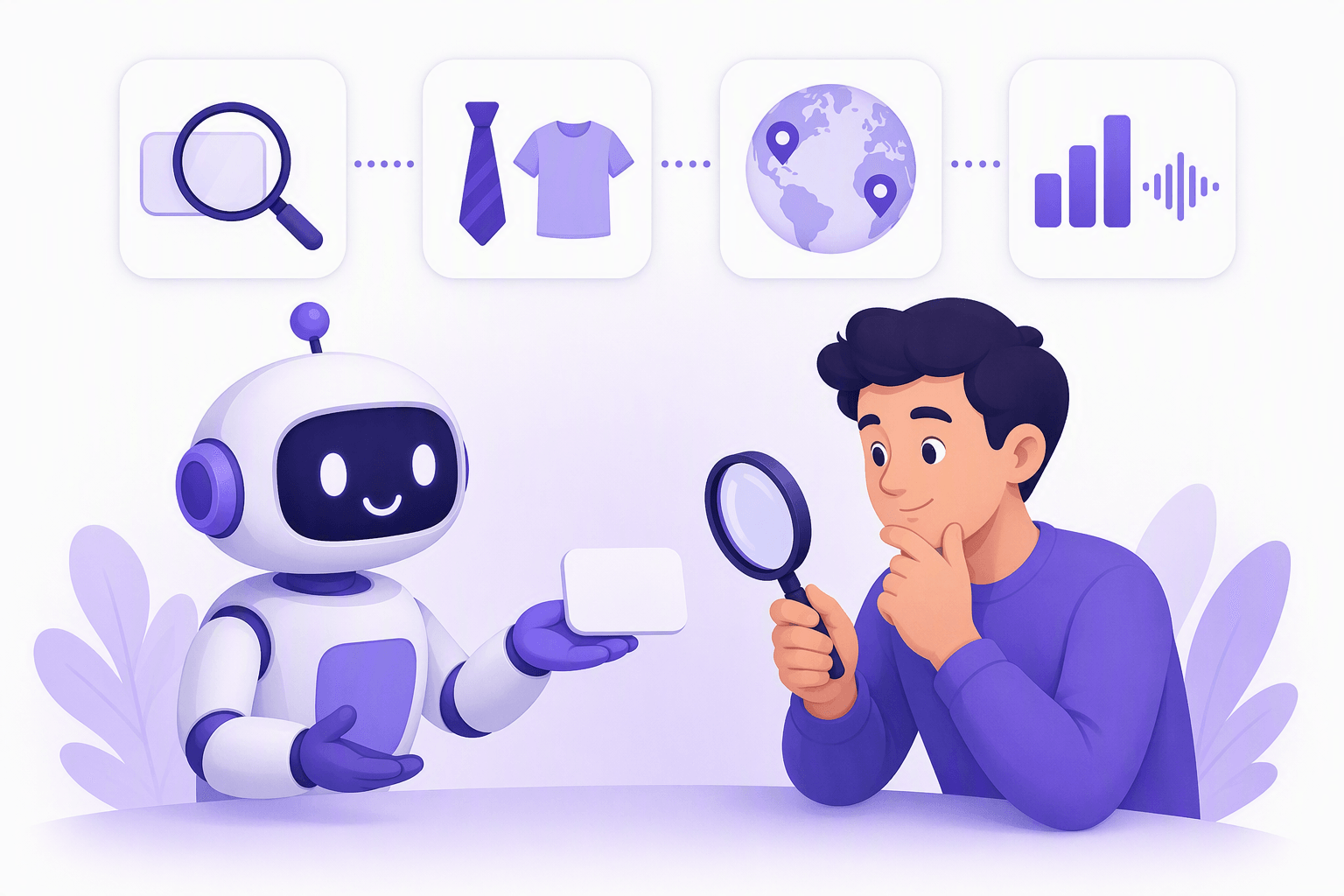
When ChatGPT gives you a phrase you plan to reuse, verify these four things:
- Meaning: does it mean what you think it means in context?
- Register: neutral, casual, formal, or slang?
- Region: US, UK, Australia, or global?
- Frequency: do real people actually say it?
For frequency, the fastest check is: have you heard it in real shows, podcasts, or conversations recently?
💡 Ask for 'most common' alternatives
If a sentence feels stiff, ask: "Give me 3 more common ways to say this in everyday speech, and tell me which one sounds most natural in the US vs the UK." Then compare with what you hear in real clips.
Conclusion: the best way to use ChatGPT for language learning
Use ChatGPT as a practice engine: roleplays, corrections, quizzes, and explanations tailored to your exact level. Then ground everything in authentic input, especially audio, because real speech is where fluency is won.
If you combine ChatGPT feedback with real listening from movies and shows, you get the best of both worlds: unlimited practice plus real language as it is actually spoken.
Frequently Asked Questions
Is ChatGPT good for learning a language?
Can I become fluent using only ChatGPT?
What are the best ChatGPT prompts for language learning?
How do I use ChatGPT to improve my English speaking?
What should I avoid when using ChatGPT to study languages?
Sources & References
- Ethnologue (27th edition). Ethnologue: Languages of the World, 2024.
- Council of Europe. Common European Framework of Reference for Languages (CEFR), Companion Volume, 2020.
- Krashen, Stephen. The Input Hypothesis: Issues and Implications, 1985.
- Godwin-Jones, Robert. Mobile-Assisted Language Learning and Authentic Input. Language Learning & Technology, 2024.
Start learning with Wordy
Watch real movie clips and build your vocabulary as you go. Free to download.


