Learn German with Movies & TV Shows
German has a reputation for being hard, but hearing it in movies changes everything. Word order and cases suddenly make sense when you hear them used naturally. Plus, German TV has been on fire lately, with shows like Dark putting it on the global map.
Why Learn German?
Europe's economic powerhouse
Germany has the largest economy in Europe and the fourth largest in the world. German is the most widely spoken native language in the EU, ahead of French, Italian, and Spanish.
Free university education
German public universities charge almost no tuition, even for international students. Many programs are taught in German, making language skills a ticket to a world-class education at minimal cost.
Rich scientific and literary tradition
German is the second most used language in science. Goethe, Kafka, Nietzsche, and Einstein all wrote in German. Many key academic works remain untranslated.
How to Learn German with Wordy
Three steps to start picking up German from real movies and shows.
Pick a Movie or Show
Browse German content from our library of 15,000+ clips or connect your streaming service.
Watch and Tap Words
Tap any word in the subtitles for instant translation. Save words you want to remember.
Review with Flashcards
Practice saved vocabulary with spaced repetition flashcards linked to the original scene.
Popular German Content for Learning
Great German movies and shows to get you started.

Dark
Clear, deliberate dialogue with a suspenseful plot that makes you want to keep watching and learning.

Good Bye, Lenin!
East German setting with accessible everyday language and a touching story about family.

Babylon Berlin
Period drama set in 1920s Berlin with formal and colloquial German across social classes.

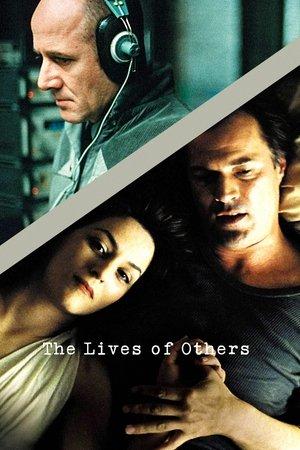
The Lives of Others (Das Leben der Anderen)
Slow, precise dialogue set in East Berlin, perfect for intermediate learners training their ear.

How to Sell Drugs Online (Fast)
Young, casual German with modern slang and fast-paced dialogue for advanced listening practice.
Tips for Learning German from Movies
Embrace compound words
German builds long words by stacking shorter ones. "Handschuh" (hand + shoe) means glove. Once you spot the components, these words become easy to decode. Movies give you context clues that make the meanings click.
Listen for verb position
In German, the verb jumps to the end in subordinate clauses. This sounds confusing on paper, but in movie dialogue it becomes a natural rhythm. Pay attention to how sentences build and where the verb lands.
Learn cases through patterns
German has four grammatical cases, and they change articles and adjective endings. Instead of memorizing tables, listen for phrases like "mit dem," "fuer den," and "in der" in movies. Pattern recognition beats rote memorization every time.
German Fun Facts
German has three grammatical genders (masculine, feminine, neuter), and the gender of a noun is often unpredictable. A girl ("das Maedchen") is grammatically neuter (Duden).
The longest German word ever used in law was "Rindfleischetikettierungsueberwachungsaufgabenuebertragungsgesetz" (63 letters), a beef labeling regulation law that was repealed in 2013 (Der Spiegel).
German and English are closely related Germanic languages. About 40% of German and English vocabulary is similar, including words like "Wasser/water," "Haus/house," and "Buch/book" (Goethe-Institut).
Frequently Asked Questions
How long does it take to learn German?
The FSI estimates 750 to 900 hours for English speakers, placing German in Category II. This is slightly more than Spanish or French because of the case system and word order. The good news is that German and English share Germanic roots, so many words will feel familiar.
Is German really as hard as people say?
No. German grammar has more rules than English, but the rules are very consistent. Once you learn them, there are far fewer exceptions than in English. Pronunciation is mostly phonetic, and the compound word system is logical once you get used to it.
Do I need to learn all four German cases?
Yes, but not all at once. Start with nominative and accusative, which cover most everyday sentences. Dative comes next and is very common in spoken German. Genitive is increasingly rare in casual speech. Movies naturally expose you to the most common patterns first.
What German shows should I start with?
Dark (Netflix) is the most popular choice and has very clear, well-paced dialogue. Good Bye, Lenin! is a great film for beginners with its straightforward language. Avoid starting with Babylon Berlin, as the 1920s setting includes archaic vocabulary that is less useful for modern German.