Quick Answer
The Spanish conditional tense is formed by adding -ía endings to the infinitive (hablaría, comería, viviría) and is used for 'would' meanings, polite requests, advice, and probability in the past. Learn the regular endings, key irregular stems (haría, diría, tendría), and the most common real-life patterns you hear in conversation.
The Spanish conditional tense is the form you use to say "would" (and often "could" or "should") in Spanish, built by adding -ía endings to the infinitive, and it is also the go-to tense for polite requests, advice, and guessing what time it was or what happened.

| English | Spanish | Pronunciation | Formality |
|---|---|---|---|
| I would like (a coffee). | Me gustaría (un café). | meh goo-stah-REE-ah (oon kah-FEH) | polite |
| Could you help me? | ¿Podrías ayudarme? | poh-DREE-ahs ah-yoo-DAR-meh | polite |
| I would do it. | Yo lo haría. | yoh loh ah-REE-ah | casual |
| It would be around eight. | Serían como las ocho. | seh-REE-an KOH-moh lahs OH-choh | casual |
| If I had time, I would go. | Si tuviera tiempo, iría. | see too-VYEH-rah TYEHM-poh, ee-REE-ah | casual |
Why the conditional matters (and how often you will hear it)
Spanish is spoken by hundreds of millions of people across more than 20 countries, and the conditional is one of the key tenses that makes you sound considerate, not robotic. Instituto Cervantes estimates over 500 million native speakers of Spanish worldwide, plus many millions more with Spanish as a second language.
You will hear the conditional constantly in service interactions (cafés, hotels, customer support), in workplace politeness, and in everyday "what would you do?" conversations. It is also common in TV dialogue because it expresses negotiation, hesitation, and social distance in a single verb form.
If you are building conversation basics, pair this guide with a few high-frequency openers from how to say hello in Spanish so you can greet, soften, and ask for things naturally.
How to form the Spanish conditional (regular verbs)
The conditional is mechanically simple: keep the infinitive and add endings. The endings are identical for -ar, -er, and -ir verbs, which is rare in Spanish and good news for learners.
Regular conditional endings
| Person | Ending | hablar (to speak) | comer (to eat) | vivir (to live) |
|---|---|---|---|---|
| yo | -ía | hablaría | comería | viviría |
| tú | -ías | hablarías | comerías | vivirías |
| él/ella/usted | -ía | hablaría | comería | viviría |
| nosotros/as | -íamos | hablaríamos | comeríamos | viviríamos |
| vosotros/as | -íais | hablaríais | comeríais | viviríais |
| ellos/ellas/ustedes | -ían | hablarían | comerían | vivirían |
Pronunciation tip: the accent mark in -ía, -ías, -íamos, -íais tells you where the stress goes. Say it like "EE-ah" (EE-ah) at the end: hablaría (ah-blah-REE-ah).
💡 A memory shortcut that actually works
Think of the conditional as "infinitive + imperfect -ía sound." You keep the infinitive (hablar, comer, vivir) and attach the same stressed -ía rhythm you hear in imperfect forms like tenía. The spelling is different, but the music is similar.
Common mistake: dropping the infinitive ending
Learners sometimes try to conjugate like the future in English and remove -r: "hablaía" instead of hablaría. In Spanish, you keep the full infinitive: hablar + ía.
Another common issue is forgetting the accent: hablaria is wrong in standard spelling. The accent matters because it marks stress and helps reading comprehension.
Irregular conditional verbs (the ones you must know)
Irregular conditionals are not random, they mostly share the same irregular stems as the simple future. You still add the normal endings (-ía, -ías, etc.), you just change the stem.
High-frequency irregular stems
| Infinitive | Conditional (yo) | Pronunciation | Pattern |
|---|---|---|---|
| tener | tendría | ten-DREE-ah | drop e, add d |
| venir | vendría | ben-DREE-ah | drop e, add d |
| poder | podría | poh-DREE-ah | drop e |
| querer | querría | keh-RREE-ah | double r |
| decir | diría | dee-REE-ah | shortened stem |
| hacer | haría | ah-REE-ah | shortened stem |
| salir | saldría | sahl-DREE-ah | add d |
| poner | pondría | pohn-DREE-ah | add d |
| saber | sabría | sah-BREE-ah | drop e |
| caber | cabría | kah-BREE-ah | drop e |
These verbs are extremely common in real life because they cover wants (querría), ability (podría), and polite requests (podrías). If you learn only one set of irregulars early, learn these.
⚠️ Pronunciation trap: rr vs r
Querría has a rolled "rr" sound (keh-RREE-ah). If you say "kería" you risk sounding like quería (I wanted), which is a different tense and a different meaning. Slow down and separate the syllables: que-rrí-a.
The core meanings: what the conditional actually does
Grammar labels are less useful than functions. In everyday Spanish, the conditional does five main jobs.
Hypothetical "would" results
This is the textbook use: what would happen under some condition. Very often, the condition is stated with si + imperfect subjunctive.
Pattern: Si + imperfect subjunctive, conditional.
| English idea | Spanish | Pronunciation |
|---|---|---|
| If I had time, I would go. | Si tuviera tiempo, iría. | see too-VYEH-rah TYEHM-poh, ee-REE-ah |
| If you were here, we would eat together. | Si estuvieras aquí, comeríamos juntos. | see es-too-VYEH-rahs ah-KEE, koh-meh-REE-ah-mohs HOON-tohs |
You will also hear the order flipped: Iría si tuviera tiempo. Both are normal.
🌍 Why this sounds so 'Spanish' in conversation
In many Spanish-speaking cultures, direct refusal can feel abrupt in everyday interaction, especially with strangers. Conditional phrasing lets you show willingness while still setting a boundary: Iría, pero no puedo hoy (I would go, but I can't today). It is a face-saving move, not just grammar.
Polite requests and softening (service Spanish)
If you want to sound polite fast, learn conditional questions with poder and querer. They are everywhere in cafés, shops, and offices.
¿Podrías...?
¿Podrías ayudarme? (poh-DREE-ahs ah-yoo-DAR-meh) is "Could you help me?" It is polite without being stiff.
¿Te importaría...?
Te importaría cerrar la puerta? (teh eem-por-TAH-REE-ah seh-RRAR lah PWEHR-tah) means "Would you mind closing the door?" This is more formal and slightly indirect.
Me gustaría...
Me gustaría un café (meh goo-stah-REE-ah oon kah-FEH) is the classic "I would like a coffee." It is polite and standard across regions.
💡 A practical ordering ladder
In a bar or café, you can choose your tone by verb choice. Quiero un café is direct. Me pones un café is casual in Spain. Me gustaría un café is polite and safe everywhere, especially as a learner.
Advice and recommendations (should)
Spanish often uses the conditional of deber to give gentle advice.
- Deberías descansar. (deh-beh-REE-ahs dehs-kahn-SAR), "You should rest."
- Yo que tú, hablaría con ella. (yoh keh too, ah-blah-REE-ah kohn EH-yah), "If I were you, I'd talk to her."
This advice style is common in family conversations and among friends because it suggests rather than commands.
Reported speech and "future in the past"
When narrating from a past viewpoint, Spanish uses the conditional to express something that was in the future relative to that past moment.
- Dijo que vendría mañana. (DEE-ho keh ben-DREE-ah mah-NYAH-nah), "He said he would come tomorrow."
- Pensé que sería fácil. (pehn-SEH keh seh-REE-ah fah-SEEL), "I thought it would be easy."
This is one of the most useful storytelling tools in Spanish TV dialogue, especially in crime, drama, and romance plots.
"The conditional is not only a marker of hypotheticality, it is also a key tense for managing stance, politeness, and evidential distance in discourse."
Professor John Butt, co-author of A New Reference Grammar of Modern Spanish
Probability and guessing about the past
This use surprises English speakers. In Spanish, the conditional can signal an inference about a past situation, often with ser.
- Serían las ocho. (seh-REE-an lahs OH-choh), "It was probably around eight."
- Estaría en casa. (es-tah-REE-ah en KAH-sah), "He was probably at home."
You will hear this in news-style narration and in casual recounting when someone is not fully sure.
🌍 A subtle tone difference
Serían las ocho sounds like "I am estimating." Eran las ocho sounds like "I know for sure." In conversation, choosing the conditional can make you sound more careful and less absolute, which often reads as more polite.
Conditional vs future: how to stop mixing them up
Spanish future and conditional share a similar structure: infinitive + endings. The difference is the endings and the time reference.
| Tense | Example | Meaning | Pronunciation |
|---|---|---|---|
| Future | hablaré | I will speak | ah-blah-REH |
| Conditional | hablaría | I would speak | ah-blah-REE-ah |
A quick listening cue: conditional endings have the long "EE-ah" sound. Future endings are shorter and sharper (REH, RAS, RAH).
Conditional vs imperfect: "would" in the past vs "would" hypothetical
English "would" is tricky because it can mean habit in the past ("When I was a kid, I would play outside") or a hypothetical ("I would go if I had time"). Spanish separates these.
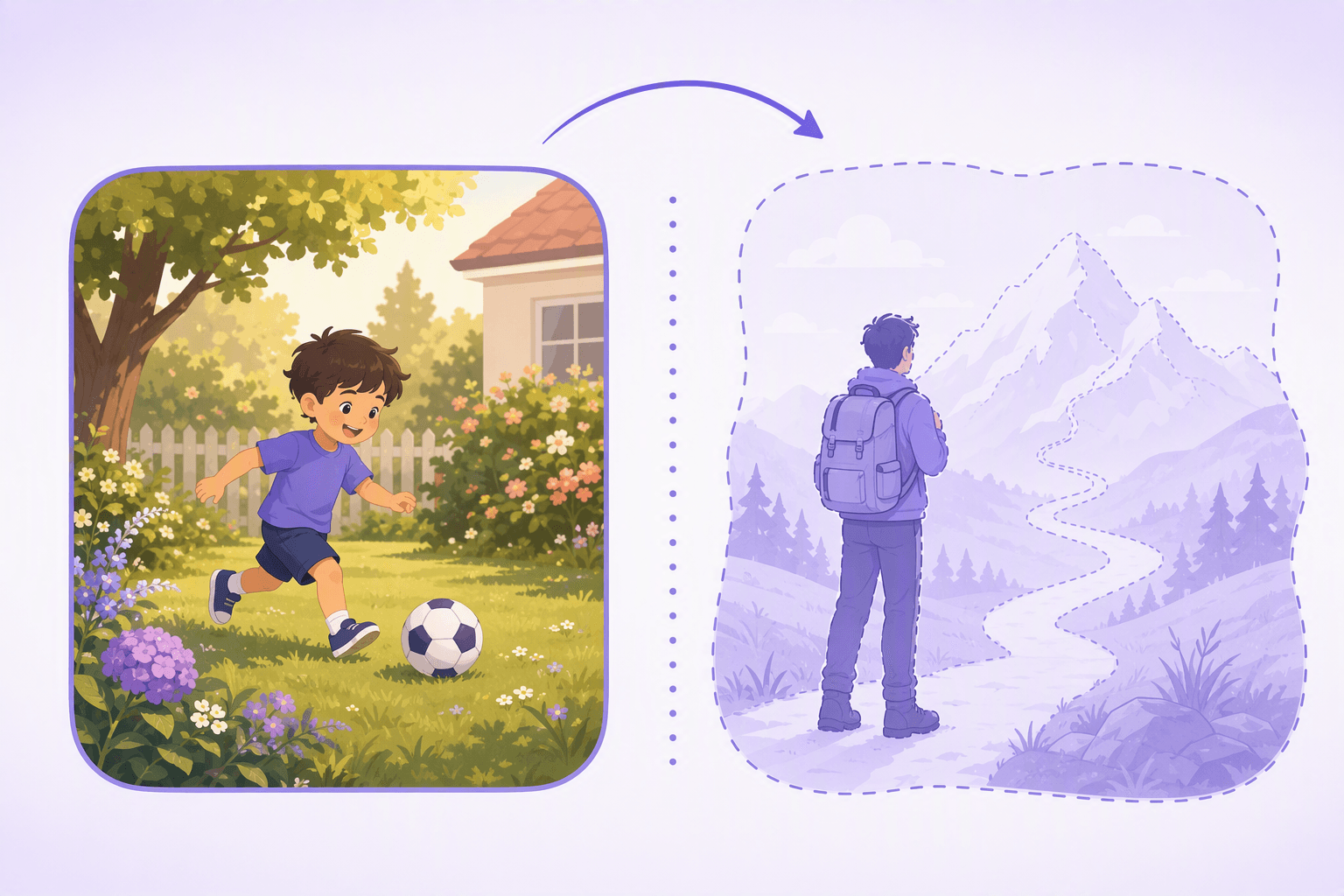
Habitual past: use the imperfect
- Cuando era niño, jugaba afuera. (KWAHN-doh EH-rah NEE-nyoh, hoo-GAH-bah ah-FWEH-rah)
Hypothetical result: use the conditional
- Yo jugaría si tuviera tiempo. (yoh hoo-gah-REE-ah see too-VYEH-rah TYEHM-poh)
If you want a broader refresher on high-frequency forms you will hear constantly, combine this with Spanish verb conjugation basics.
The classic structure: si-clauses with the conditional
The conditional is most stable in the "second conditional" structure: si + imperfect subjunctive + conditional. You do not use si + conditional in standard Spanish for the condition clause.
Correct vs incorrect
| Idea | Correct Spanish | Incorrect Spanish |
|---|---|---|
| If I had money, I would travel. | Si tuviera dinero, viajaría. | Si tendría dinero, viajaría. |
| If we could, we would help. | Si pudiéramos, ayudaríamos. | Si podríamos, ayudaríamos. |
The incorrect forms are common learner errors and also appear in some informal speech, but they are not recommended in careful Spanish and will be marked wrong in exams and writing.
⚠️ If you only remember one rule
After si, use present (real) or imperfect subjunctive (hypothetical), not conditional. Put the conditional in the result clause.
Mini phrase set you can steal for real conversations
These are conditional patterns that show up constantly in movies, TV, and daily talk. Say them slowly at first, then speed up.
Me gustaría
Me gustaría reservar una mesa. (meh goo-stah-REE-ah reh-sehr-VAR OO-nah MEH-sah), "I would like to book a table."
Me gustaría que me ayudaras. (meh goo-stah-REE-ah keh meh ah-yoo-DAR-ahs), "I'd like you to help me." Notice the imperfect subjunctive after que.
Podrías
¿Podrías repetirlo? (poh-DREE-ahs reh-peh-TEER-loh), "Could you repeat it?"
¿Podrías hablar más despacio? (poh-DREE-ahs ah-BLAR mahs dehs-PAH-syoh), "Could you speak more slowly?"
Querría
Querría hablar con el gerente. (keh-RREE-ah ah-BLAR kohn el heh-REHN-teh), "I would like to speak with the manager." This is firm but still polite.
Sería
Sería mejor esperar. (seh-REE-ah meh-HOR es-peh-RAR), "It would be better to wait." This is a gentle suggestion you will hear in advice and planning.
Regional and cultural notes: how conditional politeness feels in different places
Spanish is pluricentric, meaning norms are shared but not identical across regions. The conditional is understood everywhere, but the social feel can shift.
Spain: conditional vs directness in everyday service
In Spain, especially in casual bars, you may hear more direct forms like Ponme un café (POHN-meh oon kah-FEH), literally "Put me a coffee." It is not rude there in context.
As a learner, Me gustaría un café is still safe and polite, and it will not sound strange. It just sounds slightly more formal than the local default in some settings.
Mexico, Colombia, and much of Latin America: conditional as respectful distance
In many Latin American contexts, conditional requests (¿Podría...?, Me gustaría...) align well with everyday courtesy norms, especially with strangers. Using the conditional can help you avoid sounding overly blunt when you are still learning intonation.
Usted and the conditional often travel together
If you are using usted, the conditional is a natural match: ¿Podría ayudarme? (poh-DREE-ah ah-yoo-DAR-meh). This combination is common in customer service and professional contexts across the Spanish-speaking world.
For more on choosing polite vs casual forms, you may also want Tú vs Usted in Spanish.
How to practice the conditional with movie and TV clips
The conditional is perfect for clip-based learning because it is tied to intention and tone. You can hear the difference between a demand and a softened request in one line.
What to listen for
Listen for these trigger words that often introduce conditional meaning:
- si (see), "if"
- pero (PEH-roh), "but"
- me gustaría (meh goo-stah-REE-ah), "I would like"
- podrías / podría (poh-DREE-ahs / poh-DREE-ah), "could you / could I"
- debería(s) (deh-beh-REE-ah(s)), "should"
A simple 10-minute drill
- Pick one clip with a request (podrías, me gustaría).
- Repeat the line three times, matching rhythm and stress on -ía.
- Swap the verb: Podrías ayudarme? Podrías decirme? Podrías explicarme?
This kind of substitution practice builds automaticity fast because the endings never change.
If you want more everyday starter lines to combine with conditional politeness, learn a few farewells from how to say goodbye in Spanish so you can close conversations naturally too.
Common learner errors (and how to fix them quickly)
Confusing conditional with the imperfect subjunctive
You will often see pairs like tuviera (too-VYEH-rah) and tendría (ten-DREE-ah). They are different forms with different jobs.
- tuviera is for the si clause (condition).
- tendría is for the result (what would happen).
Write them as a pair in your notes: Si tuviera..., tendría...
Overusing "yo" with the conditional
Spanish often drops subject pronouns. Yo lo haría is fine for emphasis, but Lo haría is more natural when the subject is obvious.
Translating English "would like" too literally
Me gustaría is the natural choice, not "yo gustaría." Gustar works with an indirect object: me, te, le, nos, les.
If you are also learning expressive Spanish from media, keep in mind that strong language often avoids conditional softening. If you are curious about that contrast, see Spanish swear words, but treat it as cultural listening knowledge, not default speech.
A compact cheat sheet: when to choose the conditional
Use the conditional when you want one of these effects:
- Hypothetical result: Iría si pudiera. (ee-REE-ah see poo-DYEH-rah)
- Polite request: ¿Podrías...? (poh-DREE-ahs)
- Gentle advice: Deberías... (deh-beh-REE-ahs)
- Reported future from the past: Dijo que vendría. (DEE-ho keh ben-DREE-ah)
- Past probability: Serían las ocho. (seh-REE-an lahs OH-choh)
Once you can hear these functions, the conditional stops being a conjugation chart and becomes a tone tool.
Next steps: build a real conditional "kit"
Start with five verbs: poder, querer, gustar, tener, hacer. With those, you can ask, negotiate, and express preferences in most daily situations.
Then add one storytelling pattern: Dijo que + conditional. It will unlock a lot of TV dialogue comprehension, especially in relationship scenes and plot recaps.
To keep your everyday Spanish balanced, pair polite conditional requests with a few warm, natural phrases from how to say I love you in Spanish, because affection in Spanish often relies on softeners and tone just as much as vocabulary.
Frequently Asked Questions
What is the Spanish conditional tense used for?
How do you form the conditional in Spanish?
What are the most common irregular conditional verbs?
Is 'me gustaría' conditional or subjunctive?
How is the conditional different from the imperfect tense?
Sources & References
- Real Academia Española (RAE) & ASALE, Nueva gramática de la lengua española, 2009
- Real Academia Española (RAE), Diccionario panhispánico de dudas, 2005
- Instituto Cervantes, El español: una lengua viva (Informe), 2023
- Butt, John & Benjamin, Carmen, A New Reference Grammar of Modern Spanish, 6th ed., 2011
Start learning with Wordy
Watch real movie clips and build your vocabulary as you go. Free to download.


