Quick Answer
The most common way to say happy birthday in Italian is 'Buon compleanno' (bwohn kohm-pleh-AHN-noh), which literally means 'good birthday.' Italians also use 'Tanti auguri' (many wishes), sing the beloved 'Tanti Auguri a Te' song, and express warmth with phrases like 'Cento di questi giorni' (a hundred of these days). Italian birthday celebrations are deeply social events centered on food, family, and heartfelt wishes.
The Short Answer
The most common way to say happy birthday in Italian is Buon compleanno (bwohn kohm-pleh-AHN-noh), which literally translates to "good birthday." But in practice, many Italians reach for Tanti auguri (TAHN-tee ow-GOO-ree) just as often, a versatile expression meaning "many wishes" that works for birthdays, name days, and celebrations of all kinds.
Italian is spoken by approximately 85 million people worldwide and is an official language in Italy, Switzerland, San Marino, and Vatican City, according to Ethnologue's 2024 data. Italian birthday culture is deeply rooted in social tradition: celebrations are communal events centered on elaborate meals, heartfelt toasts, and a distinctive custom where the birthday person (not the guests) hosts and pays for the festivities.
"Italian celebrations are never just about the occasion itself. They are about affirming bonds, expressing affection publicly, and turning even the simplest gathering into something abundant and warm."
(Tullio De Mauro, Storia linguistica dell'Italia unita, Laterza, 2014)
This guide covers 16 essential Italian birthday expressions organized by category: standard wishes, formal greetings, the birthday song, casual and affectionate phrases, toasts, and written messages. Each includes pronunciation, cultural context, and an example sentence so you can celebrate like a true Italian.
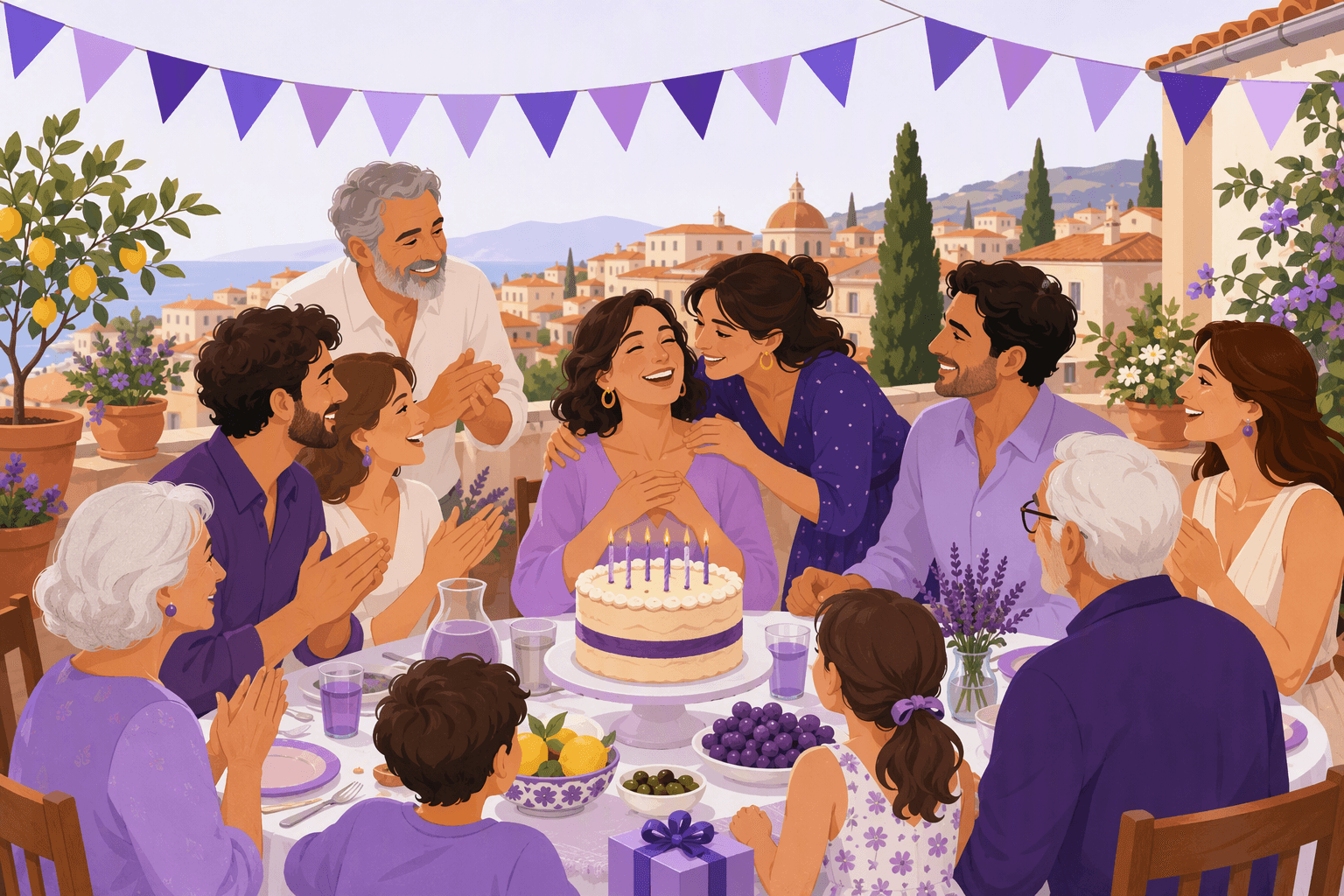
Quick Reference: Italian Birthday Phrases at a Glance
| English | Italian | Pronunciation | Formality |
|---|---|---|---|
| Happy birthday | Buon compleanno | bwohn kohm-pleh-AHN-noh | polite |
| Best wishes / Many wishes | Tanti auguri | TAHN-tee ow-GOO-ree | polite |
| Happy birthday to you (song) | Tanti auguri a te | TAHN-tee ow-GOO-ree ah teh | polite |
| Best wishes (short) | Auguri! | ow-GOO-ree | casual |
| A hundred of these days | Cento di questi giorni | CHEHN-toh dee KWEH-stee JOHR-nee | polite |
| Best wishes for your birthday | Tanti auguri per il tuo compleanno | TAHN-tee ow-GOO-ree pehr eel TOO-oh kohm-pleh-AHN-noh | polite |
| Happy birthday (formal) | Buon compleanno a Lei | bwohn kohm-pleh-AHN-noh ah LEH-ee | formal |
| My warmest wishes | I miei più cari auguri | ee MYEH-ee pyoo KAH-ree ow-GOO-ree | formal |
| All the best | Tanti auguri di buon compleanno | TAHN-tee ow-GOO-ree dee bwohn kohm-pleh-AHN-noh | polite |
| Cheers / To your health | Alla salute! | AHL-lah sah-LOO-teh | casual |
| Best wishes (written) | Cordiali auguri | kohr-dee-AH-lee ow-GOO-ree | formal |
| Have a wonderful birthday | Che sia un compleanno meraviglioso | keh SEE-ah oon kohm-pleh-AHN-noh meh-rah-veel-YOH-zoh | polite |
| Happy name day | Buon onomastico | bwohn oh-noh-MAH-stee-koh | polite |
| Happy birthday bro/sis (slang) | Auguroni! | ow-goo-ROH-nee | slang |
| To us / Let's celebrate | Cin cin! | cheen cheen | casual |
| May all your wishes come true | Che tutti i tuoi desideri si avverino | keh TOOT-tee ee TWOY deh-zee-DEH-ree see ahv-VEH-ree-noh | polite |
Standard Birthday Wishes
These are the core birthday greetings that every Italian uses. The Accademia della Crusca recognizes Buon compleanno and Tanti auguri as the two primary birthday expressions in modern Italian.
Buon compleanno
/bwohn kohm-pleh-AHN-noh/
Literal meaning: Good birthday
“Buon compleanno, Marco! Quanti ne fai?”
Happy birthday, Marco! How old are you turning?
The most direct way to say happy birthday in Italian. Works in all settings: casual, professional, written cards, or spoken greetings. Universally understood across all Italian-speaking regions.
Buon compleanno is the equivalent of "happy birthday" in structure and usage. The word compleanno comes from compiere (to complete) and anno (year), literally "completing a year." It is specific to birthdays and cannot be used for other celebrations. Pair it with a name for a personal touch: Buon compleanno, Giulia!
Tanti auguri
/TAHN-tee ow-GOO-ree/
Literal meaning: Many wishes
“Tanti auguri! Che bella festa hai organizzato!”
Happy birthday! What a beautiful party you organized!
The most versatile Italian celebration phrase. Works for birthdays, name days, Christmas, Easter, and any festive occasion. The word 'auguri' comes from the Latin 'augur,' a Roman priest who interpreted omens and wished good fortune.
Tanti auguri is arguably more common than Buon compleanno in everyday speech because of its flexibility. The word auguri has ancient roots: it derives from the Latin augur, a Roman religious official who read signs and conveyed good omens. When Italians say auguri, they are, in a sense, wishing you good fortune in the most historically Italian way possible.
🌍 Auguri: the Universal Italian Celebration Word
You will hear Auguri! at birthdays, weddings, graduations, name days, Christmas, Easter, New Year's, and even when someone announces good news like a pregnancy or promotion. Learning this single word equips you for nearly every Italian celebration.
Auguri!
/ow-GOO-ree/
Literal meaning: Wishes!
“Auguri, tesoro! Ti ho comprato un regalino.”
Happy birthday, sweetheart! I bought you a little gift.
The short form of 'Tanti auguri.' Punchy, warm, and common among friends and family. Often accompanied by cheek kisses and a hug.
The shortened Auguri! is what you will hear shouted across a room the moment someone enters their own birthday party. It is quick, affectionate, and often repeated multiple times by different guests as they greet the birthday person with kisses on both cheeks.
The Italian Birthday Song
Tanti auguri a te
/TAHN-tee ow-GOO-ree ah teh/
Literal meaning: Many wishes to you
“Tanti auguri a te, tanti auguri a te, tanti auguri a Marco, tanti auguri a te!”
Happy birthday to you, happy birthday to you, happy birthday dear Marco, happy birthday to you!
Sung to the exact same melody as the English 'Happy Birthday to You.' This is the standard birthday song in Italy, sung at every celebration from children's parties to formal dinners.
The Italian birthday song follows the universally recognized melody but replaces the English lyrics entirely. The full lyrics are simple and repetitive:
Tanti auguri a te, Tanti auguri a te, Tanti auguri a [name], Tanti auguri a te!
After the song, Italians typically applaud and the birthday person blows out the candles on the cake. In many families, especially in southern Italy, a second round of singing may follow, or guests break into spontaneous cheering. According to Treccani, this version has been the standard Italian birthday song since the mid-20th century.
💡 What Comes After the Song
After singing, guests often chant "Hip hip, urrà!" (the Italian version of "Hip hip, hooray!") three times. Then comes the cake cutting, which the birthday person does themselves. Unlike in some anglophone countries, Italians rarely smash cake into the birthday person's face, as that would be considered a waste of good cake.
Traditional and Heartfelt Wishes
These expressions go beyond a simple "happy birthday" and carry deeper sentiment. They are especially popular among older generations and in written cards.
Cento di questi giorni
/CHEHN-toh dee KWEH-stee JOHR-nee/
Literal meaning: A hundred of these days
“Cento di questi giorni, nonna! Sei il cuore della famiglia.”
Many happy returns, grandma! You are the heart of the family.
A classic Italian birthday wish equivalent to 'Many happy returns.' Expresses the desire that the person will live to celebrate a hundred more birthdays. Especially popular with grandparents and elderly relatives.
Cento di questi giorni is one of those phrases that reveals Italian culture's deep respect for longevity and family continuity. Wishing someone "a hundred of these days" is not just polite; it reflects a genuine cultural value. Italy consistently ranks among the countries with the highest life expectancy in Europe, and reaching old age surrounded by family is considered the ultimate blessing.
Tanti auguri di buon compleanno
/TAHN-tee ow-GOO-ree dee bwohn kohm-pleh-AHN-noh/
Literal meaning: Many wishes for a good birthday
“Tanti auguri di buon compleanno! Spero che sia una giornata speciale.”
Happy birthday wishes! I hope it's a special day.
The expanded, more emphatic form that combines both key phrases. Common in birthday cards, text messages, and social media posts. More elaborate than either phrase alone.
This combined form is especially popular in written communication: birthday cards, WhatsApp messages, and social media posts. Italians tend to be more elaborate in writing than in speech, and this phrase hits the right note of warmth without being excessively formal.
Che tutti i tuoi desideri si avverino
/keh TOOT-tee ee TWOY deh-zee-DEH-ree see ahv-VEH-ree-noh/
Literal meaning: May all your wishes come true
“Buon compleanno, amore! Che tutti i tuoi desideri si avverino.”
Happy birthday, my love! May all your wishes come true.
A sentimental wish often included in birthday cards or said when the birthday person blows out candles. Carries genuine emotional weight, especially between close family members or romantic partners.
This phrase is typically said right before or after the candles are blown out. In Italian birthday tradition, the birthday person makes a silent wish before extinguishing the candles, and Che tutti i tuoi desideri si avverino serves as the verbal encouragement from those watching.
Formal Birthday Greetings
For professional settings, distant acquaintances, or when addressing elders with the Lei form.
I miei più cari auguri
/ee MYEH-ee pyoo KAH-ree ow-GOO-ree/
Literal meaning: My dearest wishes
“I miei più cari auguri, dottoressa. Le auguro ogni felicità.”
My warmest wishes, doctor. I wish you every happiness.
A refined, elegant birthday wish suitable for professional contexts, formal letters, or when addressing someone with great respect. Common in corporate emails and formal cards.
This is the kind of phrase you would find in a birthday card from a colleague, a formal email from a company, or spoken at a professional dinner. The possessive i miei (my) and the superlative più cari (dearest) elevate the expression above everyday speech.
Cordiali auguri
/kohr-dee-AH-lee ow-GOO-ree/
Literal meaning: Cordial wishes
“Cordiali auguri per il Suo compleanno. Con stima e rispetto.”
Cordial birthday wishes. With esteem and respect.
The most formal written birthday greeting. Used in business correspondence, official cards, and formal letters. Note the use of 'Suo' (capital S) for the formal possessive.
Cordiali auguri is the go-to for business birthday messages. You will see it in corporate emails, signed cards circulated around Italian offices, and official communications. The word cordiale comes from the Latin cor (heart), so even this formal expression retains a touch of Italian warmth.
Che sia un compleanno meraviglioso
/keh SEE-ah oon kohm-pleh-AHN-noh meh-rah-veel-YOH-zoh/
Literal meaning: May it be a wonderful birthday
“Che sia un compleanno meraviglioso, pieno di gioia e sorprese!”
May it be a wonderful birthday, full of joy and surprises!
An expressive wish that works in both spoken and written form. Italians love the subjunctive mood for wishes, and this phrase uses it beautifully. Popular in birthday cards and social media.
The subjunctive sia (may it be) gives this phrase an elegantly wishful quality that Italians particularly appreciate. The subjunctive mood is alive and well in Italian (unlike in many other Romance languages where it is declining) and using it correctly signals linguistic sophistication.
Casual and Slang Birthday Greetings
Among close friends and younger Italians, birthday wishes get creative, playful, and sometimes deliberately exaggerated.
Auguroni!
/ow-goo-ROH-nee/
Literal meaning: Big huge wishes!
“Auguroni, fratello! Stasera si festeggia alla grande!”
Huge birthday wishes, bro! Tonight we celebrate big time!
The augmentative suffix '-oni' makes everything bigger in Italian. 'Auguroni' turns standard wishes into exuberant, oversized ones. Very common among friends, especially in text messages and social media.
Italian's augmentative suffix -oni (which makes things bigger; think gelato to gelatone) turns auguri into the enthusiastic Auguroni! It is playful, warm, and very common in text messages. You might also see the diminutive augurini (little wishes) used affectionately, though auguroni is far more popular for birthdays.
Tanti auguri per il tuo compleanno
/TAHN-tee ow-GOO-ree pehr eel TOO-oh kohm-pleh-AHN-noh/
Literal meaning: Many wishes for your birthday
“Tanti auguri per il tuo compleanno! Che anno stai compiendo?”
Happy birthday! What age are you turning?
The complete, specific form that explicitly links the wishes to the birthday. Natural in spoken Italian and common as a text message or social media caption.
While Tanti auguri alone often suffices, adding per il tuo compleanno makes the wish explicitly birthday-specific. This is useful when Tanti auguri might be ambiguous, for example if the birthday falls near Christmas or another holiday.
Birthday Toasts
Italian birthdays almost always involve food, wine, and toasting. These phrases are essential for raising a glass. For more on Italian social expressions, visit our Italian learning page.

Alla salute!
/AHL-lah sah-LOO-teh/
Literal meaning: To health!
“Alla salute del festeggiato! Buon compleanno!”
To the birthday person's health! Happy birthday!
The standard Italian toast, used at birthdays and all celebrations. Glasses are clinked while making eye contact; looking away is considered bad luck in Italian superstition.
Alla salute is the universal Italian toast, but at birthday dinners it takes on special significance. The full version for birthdays is Alla salute del festeggiato (to the health of the birthday person) or Alla salute della festeggiata for a woman. Remember to make eye contact while clinking glasses; according to Italian superstition, failure to do so brings seven years of bad luck.
Cin cin!
/cheen cheen/
Literal meaning: (onomatopoeia for clinking glasses)
“Cin cin! Al nostro amico che compie trent'anni!”
Cheers! To our friend who's turning thirty!
The playful, onomatopoeic toast imitating the sound of clinking glasses. Used at casual celebrations. Note: avoid this phrase in Japan, where 'chin chin' has a very different meaning.
Cin cin is casual, fun, and universally understood in Italy. It is especially common at casual birthday celebrations among friends. An important cultural travel note: if you travel to Japan, do not use this phrase, as chin chin is a crude term for male anatomy in Japanese.
🌍 The Birthday Person Pays
In Italy, the birthday person traditionally pays for their own celebration dinner or drinks. This surprises many visitors from anglophone countries where friends typically treat. The Italian logic: the birthday person is the host, and the host always pays. If you are invited to an Italian friend's birthday dinner, expect them to pick up the check, and bring a thoughtful gift instead of offering to split the bill.
Name Day Greetings
Buon onomastico
/bwohn oh-noh-MAH-stee-koh/
Literal meaning: Good name day
“Buon onomastico, Francesca! Oggi è Santa Francesca Romana.”
Happy name day, Francesca! Today is Saint Frances of Rome's day.
Italy celebrates 'onomastico,' the feast day of the saint you are named after. In southern Italy and among older generations, name days can rival birthdays in importance. Everyone named Francesco celebrates on October 4 (Saint Francis of Assisi), every Maria on September 12, and so on.
The onomastico is a distinctly Catholic Italian tradition that remains culturally significant even among secular Italians. According to the Accademia della Crusca, the celebration of name days has been documented in Italian culture since the medieval period. While it has declined somewhat among younger generations in northern Italy, it remains strong in the south and in families with traditional values.
How to Respond to Birthday Wishes
Knowing how to graciously receive birthday wishes is just as important as knowing how to give them.
| They Say | You Say | Translation |
|---|---|---|
| Buon compleanno! | Grazie mille! | Thank you so much! |
| Tanti auguri! | Grazie, troppo gentile! | Thanks, too kind! |
| Cento di questi giorni! | Grazie, magari! / Dalla tua bocca! | Thanks, hopefully! / From your lips! |
| Auguroni! | Grazie, sei un grande! | Thanks, you're the best! |
| Alla salute! | Alla salute di tutti! | To everyone's health! |
💡 Expressing Gratitude Warmly
Italians appreciate effusive thanks. Rather than a simple Grazie, try Grazie di cuore (thanks from the heart), Mi hai commosso (you moved me), or Che pensiero carino! (what a sweet thought!) when receiving birthday wishes or gifts. Understated gratitude can come across as cold.
Practice With Real Italian Content
Reading about birthday phrases builds your vocabulary, but hearing native speakers use them in natural conversation is what makes them stick. Italian cinema and television are filled with birthday scenes, from the boisterous family celebrations in southern Italian dramas to the elegant dinner parties in modern Roman comedies.
Wordy lets you watch Italian movies and shows with interactive subtitles. Tap any phrase to see its meaning, pronunciation, and cultural context in real time. Instead of memorizing phrases from a list, you absorb them from authentic conversations with natural intonation and emotion.
For more Italian content, explore our blog for language guides including the best movies to learn Italian. You can also visit our Italian learning page to start practicing with real content today.
Frequently Asked Questions
What is the most common way to say happy birthday in Italian?
What do Italians sing for happy birthday?
What is the difference between 'Buon compleanno' and 'Tanti auguri'?
What does 'Cento di questi giorni' mean?
Do Italians celebrate name days as well as birthdays?
Who pays for the birthday dinner in Italy?
Sources & References
- Accademia della Crusca, Italy's foremost authority on the Italian language, founded 1583
- Treccani, Vocabolario della lingua italiana, online edition (2025)
- Ethnologue: Languages of the World, Italian language entry (2024)
- De Mauro, T. (2014). 'Storia linguistica dell'Italia unita.' Laterza.
Start learning with Wordy
Watch real movie clips and build your vocabulary as you go. Free to download.


