Quick Answer
The most important German body parts to learn first are 'der Kopf' (head), 'der Arm' (arm), 'das Bein' (leg), and 'das Herz' (heart). German has three grammatical genders (masculine der, feminine die, and neuter das), and body parts are distributed across all three with no consistent pattern.
Why Learn Body Parts in German?
Knowing body parts in German is essential for medical situations, understanding compound words, and decoding the rich idiomatic expressions that permeate everyday conversation. According to Ethnologue's 2024 data, approximately 134 million people speak German worldwide, making it the most widely spoken native language in the European Union.
German body parts present a particular challenge because of the three-gender system: masculine (der), feminine (die), and neuter (das). Unlike Romance languages with two genders, German distributes body parts across all three with no predictable pattern. Der Kopf (head) is masculine, die Hand (hand) is feminine, and das Auge (eye) is neuter. Each word must be learned with its article.
"The assignment of grammatical gender to body-part nouns in German is largely arbitrary from a modern perspective, reflecting historical sound changes and analogical leveling over centuries of Germanic language development."
(Martin Durrell, Hammer's German Grammar and Usage, Routledge, 2017)
German also excels at building compound nouns from body parts: Kopfschmerzen (head-pains = headache), Handschuh (hand-shoe = glove), Augenlid (eye-lid = eyelid). Understanding these building blocks unlocks hundreds of related words. For interactive practice, visit our German learning page.
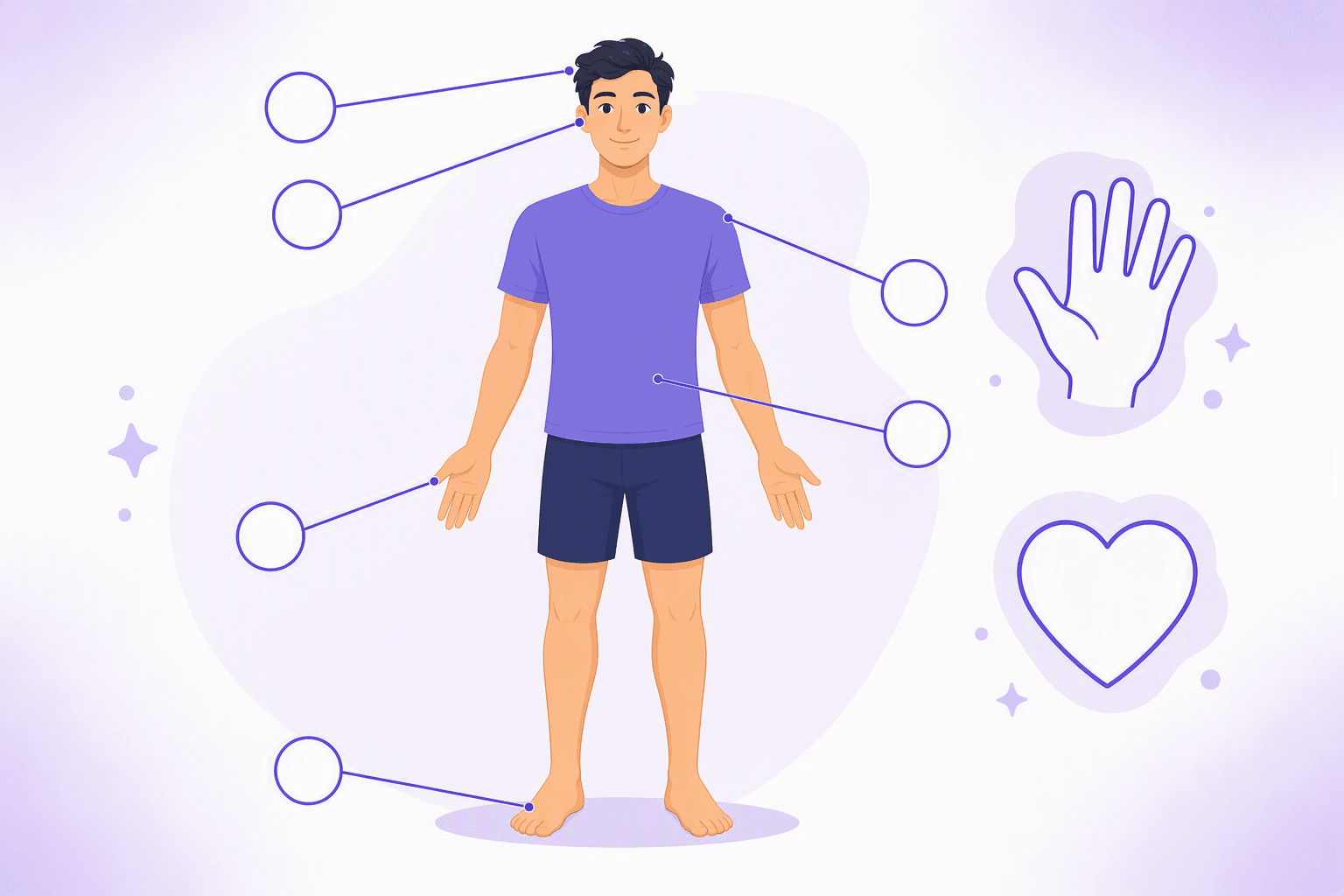
Head and Face
The head and face provide the largest cluster of essential body vocabulary. German speakers use many of these words daily in idioms, compound words, and medical descriptions.
| English | German | Pronunciation | Note |
|---|---|---|---|
| Head | der Kopf (m) | dehr kopf | Compound base: Kopfschmerzen |
| Face | das Gesicht (n) | dahs guh-ZIKHT | Also means 'vision' |
| Eye | das Auge (n) | dahs OW-guh | Plural: die Augen |
| Ear | das Ohr (n) | dahs ohr | Plural: die Ohren |
| Nose | die Nase (f) | dee NAH-zuh | Very common in idioms |
| Mouth | der Mund (m) | dehr moont | Mundart = dialect |
| Tongue | die Zunge (f) | dee TSOON-guh | |
| Tooth | der Zahn (m) | dehr tsahn | Plural: die Zähne (umlaut!) |
| Lip | die Lippe (f) | dee LIP-puh | Plural: die Lippen |
| Chin | das Kinn (n) | dahs kin | |
| Forehead | die Stirn (f) | dee shteern | |
| Cheek | die Wange (f) | dee VAHNG-uh | Also 'die Backe' (informal) |
| Eyebrow | die Augenbraue (f) | dee OW-guhn-brow-uh | Compound: Auge + Braue |
| Hair | das Haar (n) | dahs hahr | Plural: die Haare |
💡 Umlaut Plurals in Body Parts
Several German body parts gain an umlaut in the plural: der Zahn → die Zähne (tooth/teeth), der Fuß → die Füße (foot/feet), die Hand → die Hände (hand/hands), der Kopf → die Köpfe (head/heads). This umlaut shift is a characteristic feature of German plural formation and must be memorized, since there is no universal rule for when it applies.
Key Medical Phrases for Head and Face
German medical vocabulary relies heavily on compound nouns. Here are the essential phrases for head and face ailments:
- Ich habe Kopfschmerzen (ikh HAH-buh KOPF-shmehr-tsuhn) = "I have a headache" (compound: Kopf + Schmerzen)
- Mir tut der Kopf weh (meer toot dehr kopf vay) = "My head hurts"
- Ich habe Zahnschmerzen (ikh HAH-buh TSAHN-shmehr-tsuhn) = "I have a toothache"
- Meine Nase blutet (MY-nuh NAH-zuh BLOO-tet) = "My nose is bleeding"
- Mir tun die Augen weh (meer toon dee OW-guhn vay) = "My eyes hurt"
The construction wehtun (to hurt) takes a dative pronoun: Mir tut ... weh (singular) and Mir tun ... weh (plural). Alternatively, compound nouns with -schmerzen (pains) are extremely common in German medical language.
Upper Body and Torso
German upper body vocabulary features a mix of all three genders and serves as the foundation for many compound medical terms.
| English | German | Pronunciation | Note |
|---|---|---|---|
| Neck | der Hals (m) | dehr hahls | Also means 'throat' |
| Shoulder | die Schulter (f) | dee SHOOL-tehr | Plural: die Schultern |
| Chest | die Brust (f) | dee broost | Also 'der Brustkorb' (rib cage) |
| Back | der Rücken (m) | dehr RÜK-uhn | Rückenschmerzen = back pain |
| Stomach | der Magen (m) | dehr MAH-guhn | Belly = der Bauch |
| Waist | die Taille (f) | dee TAH-lyuh | From French |
| Hip | die Hüfte (f) | dee HÜUF-tuh | Plural: die Hüften |
| Rib | die Rippe (f) | dee RIP-puh | Plural: die Rippen |
🌍 Der Hals: Neck and Throat Combined
German uses der Hals to mean both "neck" (the external body part) and "throat" (the internal passage). Halsschmerzen means "sore throat," not "neck pain." If you need to distinguish, der Nacken refers specifically to the back of the neck (nape), while die Kehle is the throat in a more literary or anatomical sense. In medical settings, doctors may ask specifically about Nacken or Hals to clarify.
Medical Phrases for the Upper Body
- Ich habe Rückenschmerzen (ikh HAH-buh RÜK-uhn-shmehr-tsuhn) = "I have back pain"
- Ich habe Bauchschmerzen (ikh HAH-buh BOWKH-shmehr-tsuhn) = "I have a stomachache"
- Mir tut die Brust weh (meer toot dee broost vay) = "My chest hurts" (seek immediate help)
- Mir ist übel (meer ist ÜÜ-buhl) = "I feel nauseous"
- Ich habe Halsschmerzen (ikh HAH-buh HAHLS-shmehr-tsuhn) = "I have a sore throat"
Arms and Hands
German arm and hand vocabulary follows standard patterns. Die Hand (hand) is one of the most productive words in the language for compound formation: Handschuh (glove), Handtuch (towel), Handwerk (craft/trade).
| English | German | Pronunciation | Note |
|---|---|---|---|
| Arm | der Arm (m) | dehr ahrm | Plural: die Arme |
| Elbow | der Ellbogen (m) | dehr EHL-boh-guhn | Also 'der Ellenbogen' |
| Wrist | das Handgelenk (n) | dahs HAHNT-guh-lehnk | Lit. 'hand-joint' |
| Hand | die Hand (f) | dee hahnt | Plural: die Hände (umlaut!) |
| Finger | der Finger (m) | dehr FING-uhr | Plural: die Finger |
| Thumb | der Daumen (m) | dehr DOW-muhn | Daumen drücken = wish luck |
| Nail | der Nagel (m) | dehr NAH-guhl | Also means 'nail' (hardware) |
💡 Compound Words With Hand
Die Hand is one of German's most productive compound bases. Here are everyday compounds every learner should know: Handschuh (hand-shoe = glove), Handtuch (hand-cloth = towel), Handtasche (hand-bag = purse), Handwerk (hand-work = craft), Handgelenk (hand-joint = wrist). The gender of each compound follows the last element, so das Handgelenk is neuter because das Gelenk is neuter.
Body Part Idioms: Arms and Hands
German has many vivid arm and hand expressions:
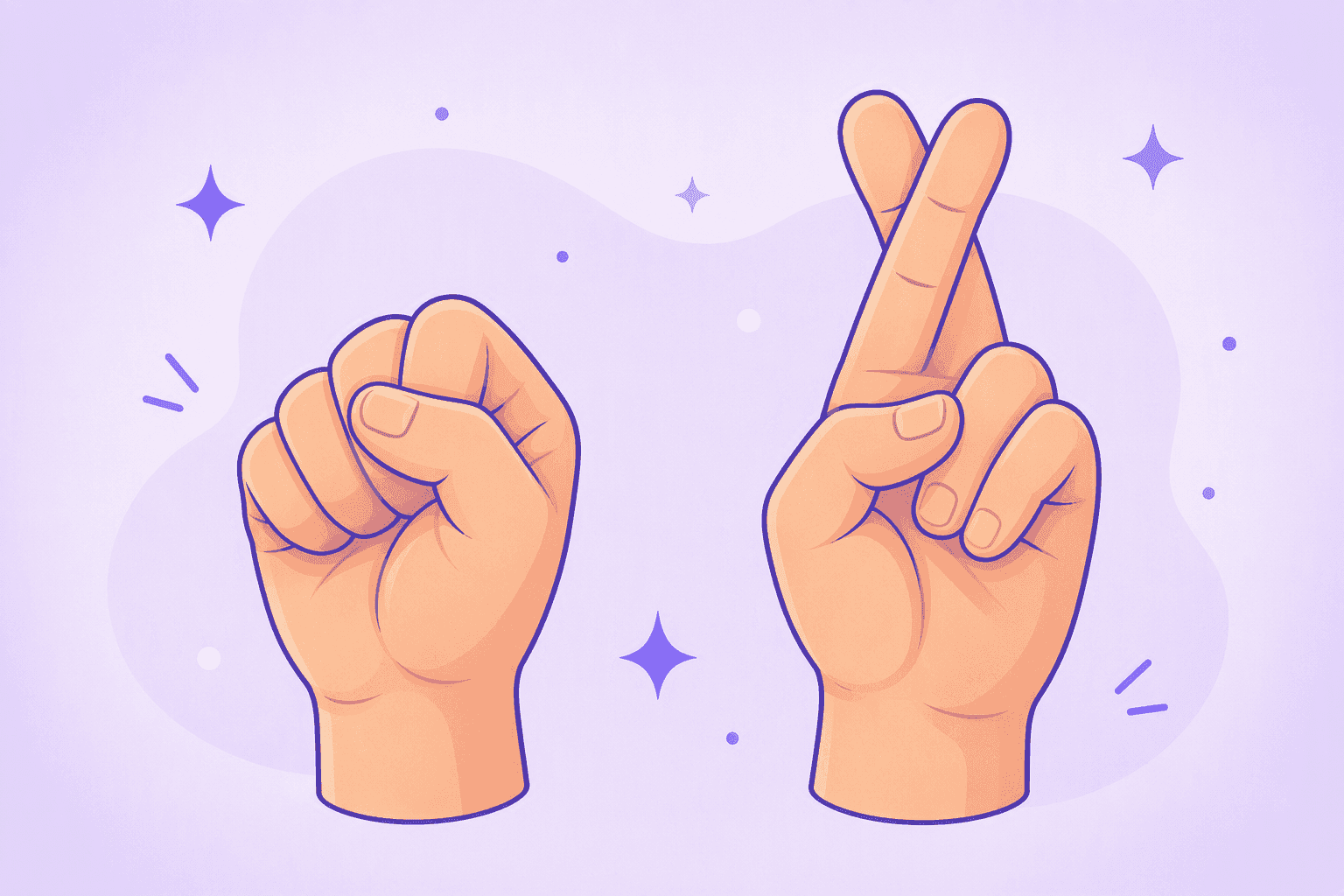
- Jemandem die Daumen drücken (to press the thumbs for someone) = to wish someone good luck (Germans press thumbs instead of crossing fingers)
- Zwei linke Hände haben (to have two left hands) = to be clumsy, all thumbs
- Hand und Fuß haben (to have hand and foot) = to be well thought out, solid
- Jemandem unter die Arme greifen (to grab under someone's arms) = to help someone out
- Von der Hand in den Mund leben (to live from hand to mouth) = to live hand to mouth
🌍 Daumen drücken: The German Way to Wish Luck
Where English speakers cross their fingers for good luck, Germans press their thumbs: die Daumen drücken. You will see this gesture constantly: the thumb is tucked inside a closed fist and squeezed. Saying Ich drücke dir die Daumen! (I'm pressing my thumbs for you!) is the standard way to wish someone luck before an exam, interview, or important event.
Lower Body and Legs
Lower body vocabulary in German includes the important distinction between das Bein (leg) and der Knochen (bone), a distinction that trips up many learners, since Bein historically meant "bone" in older German.
| English | German | Pronunciation | Note |
|---|---|---|---|
| Leg | das Bein (n) | dahs byne | Neuter! Historically meant 'bone' |
| Thigh | der Oberschenkel (m) | dehr OH-behr-sheng-kuhl | Lit. 'upper-thigh' |
| Knee | das Knie (n) | dahs k-nee | The K is pronounced! |
| Shin | das Schienbein (n) | dahs SHEEN-byne | Lit. 'shin-bone' |
| Calf | die Wade (f) | dee VAH-duh | |
| Ankle | der Knöchel (m) | dehr KNUH-khuhl | Also means 'knuckle' |
| Foot | der Fuß (m) | dehr foos | Plural: die Füße (umlaut!) |
| Toe | der Zeh (m) | dehr tseh | Also 'die Zehe (f)' |
| Heel | die Ferse (f) | dee FEHR-zuh | Achillesferse = Achilles' heel |
Lower Body Idioms
- Auf großem Fuß leben (to live on a big foot) = to live lavishly, extravagantly
- Hals- und Beinbruch! (neck and leg break!) = break a leg! / good luck!
- Jemandem auf die Füße treten (to step on someone's feet) = to offend someone
- Kalte Füße bekommen (to get cold feet) = to get cold feet, to back out
- Auf eigenen Beinen stehen (to stand on one's own legs) = to be independent
💡 Das Knie: Pronounce the K!
Unlike English "knee" where the K is silent, German das Knie pronounces both consonants: "k-nee." This applies to all German words starting with Kn-: der Knöchel (ankle/knuckle), der Knochen (bone), das Knie (knee), der Knoblauch (garlic). Always sound the K.
Internal Organs
Internal organ vocabulary is particularly important for medical communication in German-speaking countries. The Goethe-Institut includes organ vocabulary in its A2-level curriculum, reflecting its practical importance for learners.
| English | German | Pronunciation | Note |
|---|---|---|---|
| Heart | das Herz (n) | dahs hehrts | Neuter! Term of endearment: Schatz |
| Brain | das Gehirn (n) | dahs guh-HEERN | |
| Lung | die Lunge (f) | dee LOONG-uh | Plural: die Lungen |
| Liver | die Leber (f) | dee LEH-behr | Frei von der Leber weg = frankly |
| Kidney | die Niere (f) | dee NEE-ruh | Plural: die Nieren |
| Bone | der Knochen (m) | dehr KNOH-khuhn | K is pronounced! |
| Blood | das Blut (n) | dahs bloot | |
| Skin | die Haut (f) | dee howt | Also means 'hide, membrane' |
| Muscle | der Muskel (m) | dehr MOOS-kuhl | Plural: die Muskeln |
Essential Medical Phrases With Organs
- Mein Herz schlägt schnell (myne hehrts shlehkt shnehl) = "My heart is beating fast"
- Mir tut die Leber weh (meer toot dee LEH-behr vay) = "My liver hurts"
- Ich habe mir den Knochen gebrochen (ikh HAH-buh meer dehn KNOH-khuhn guh-BROKH-uhn) = "I broke the bone"
- Meine Haut ist gereizt (MY-nuh howt ist guh-RYETST) = "My skin is irritated"
🌍 Das Herz: A Neuter Heart
German's das Herz is neuter, neither masculine nor feminine. This sometimes surprises learners who expect the heart to carry a gendered weight. In endearments, Germans more often use Schatz (treasure) or Liebling (darling) than heart-based terms, though Herzchen (little heart) and Herzblatt (heart-leaf) do exist. The compound Herzschmerz (heart-pain) poetically refers to heartache or lovesickness.
The Wehtun Construction and Compound Pain Words
German has two main ways to express body pain:
Pattern 1: Wehtun (to do pain) with dative pronoun
| English | German | Literal Translation |
|---|---|---|
| My head hurts | Mir tut der Kopf weh | To me does the head pain |
| My eyes hurt | Mir tun die Augen weh | To me do the eyes pain |
| Does your back hurt? | Tut dir der Rücken weh? | Does to you the back pain? |
Pattern 2: Compound nouns with -schmerzen
| English | German | Components |
|---|---|---|
| Headache | Kopfschmerzen | Kopf (head) + Schmerzen (pains) |
| Stomachache | Bauchschmerzen | Bauch (belly) + Schmerzen (pains) |
| Back pain | Rückenschmerzen | Rücken (back) + Schmerzen (pains) |
| Sore throat | Halsschmerzen | Hals (throat) + Schmerzen (pains) |
The compound pattern is distinctly German and extremely productive. Almost any body part can combine with -schmerzen to create a pain term.
Body Part Idioms Native Speakers Actually Use
German body-part idioms are vivid, often humorous, and frequently used in daily conversation. The Duden dictionary, Germany's authoritative reference, catalogs hundreds of these fixed expressions. You will encounter them constantly in German films and television:
- Die Nase voll haben (to have the nose full) = to be fed up, to have had enough
- Jemandem den Rücken stärken (to strengthen someone's back) = to support someone
- Kein Blatt vor den Mund nehmen (to take no leaf before the mouth) = to speak frankly
- Sich etwas hinter die Ohren schreiben (to write something behind the ears) = to make a mental note
- Frei von der Leber weg reden (to talk freely from the liver) = to speak openly and frankly
- Ins Auge fallen (to fall into the eye) = to catch one's attention
"German idiomatic expressions built on body-part metaphors represent one of the richest subsystems of German phraseology, with the head, hand, and nose serving as the three most productive source domains."
(Duden, Deutsches Universalwörterbuch, 9th edition)
Practice Body Parts With Real German Content
Structured vocabulary tables provide the essential foundation, but encountering these words in natural German speech is what cements long-term retention. German-language films, series, and documentaries are packed with body-part vocabulary, from medical dramas to action films to everyday comedies.
Wordy lets you watch German content with interactive subtitles. Tap any body-part word to instantly see its gender, plural form, pronunciation, and meaning in context. Instead of drilling flashcards, you encounter der Kopf, das Herz, and die Hand naturally, the way native speakers use them.
Explore our blog for more German guides, or check out the best movies to learn German for viewing recommendations that bring this vocabulary to life.
Frequently Asked Questions
What are the most common body parts in German?
How do you say 'my head hurts' in German?
How does German compound word formation work with body parts?
Why is 'das Bein' neuter but 'der Arm' masculine?
What are some German idioms that use body parts?
How do you describe symptoms to a German doctor?
Sources & References
- Duden, Deutsches Universalwörterbuch, 9th edition (2023)
- Goethe-Institut, Deutsch als Fremdsprache curriculum standards
- Ethnologue: Languages of the World, German language entry (2024)
- Durrell, M. (2017). Hammer's German Grammar and Usage, 6th edition. Routledge.
- World Health Organization, Multilingual Health Phrase Guide (2023)
Start learning with Wordy
Watch real movie clips and build your vocabulary as you go. Free to download.


