Quick Answer
The Spanish word for family is 'la familia' (lah fah-MEE-lee-ah). Core family terms follow a clean -o/-a gender pattern: 'padre' (father) and 'madre' (mother), 'hermano' (brother) and 'hermana' (sister), 'hijo' (son) and 'hija' (daughter). Spanish also has unique concepts like 'compadre/comadre' (godfather/godmother relationship) and 'familia política' (in-laws) that reflect the deep cultural importance of extended family.
The Spanish word for family is la familia (lah fah-MEE-lee-ah), and it carries far more weight in Spanish-speaking cultures than a simple translation suggests. With approximately 559 million speakers across 21 countries according to Ethnologue's 2024 data, Spanish family vocabulary is among the most frequently used word sets in the language.
Family terms in Spanish follow one of the cleanest gender patterns in the language: most pairs differ only by their final vowel, with -o for masculine and -a for feminine. Hermano becomes hermana, abuelo becomes abuela, tío becomes tía. This makes family vocabulary an ideal entry point for understanding grammatical gender in Spanish.
"Kinship terminology in Spanish preserves a remarkably complete Latin system, with distinct lexical items for relationships that many languages collapse into single terms. The systematic -o/-a gender alternation in Spanish kinship terms is among the most regular in the Romance family." (G.P. Murdock, Social Structure, Macmillan, 1949; María Moliner, Diccionario de uso del español)
This guide covers 30+ family words organized by category (immediate family, extended family, in-laws, and affectionate forms) along with the cultural context that makes la familia central to life in the Spanish-speaking world.
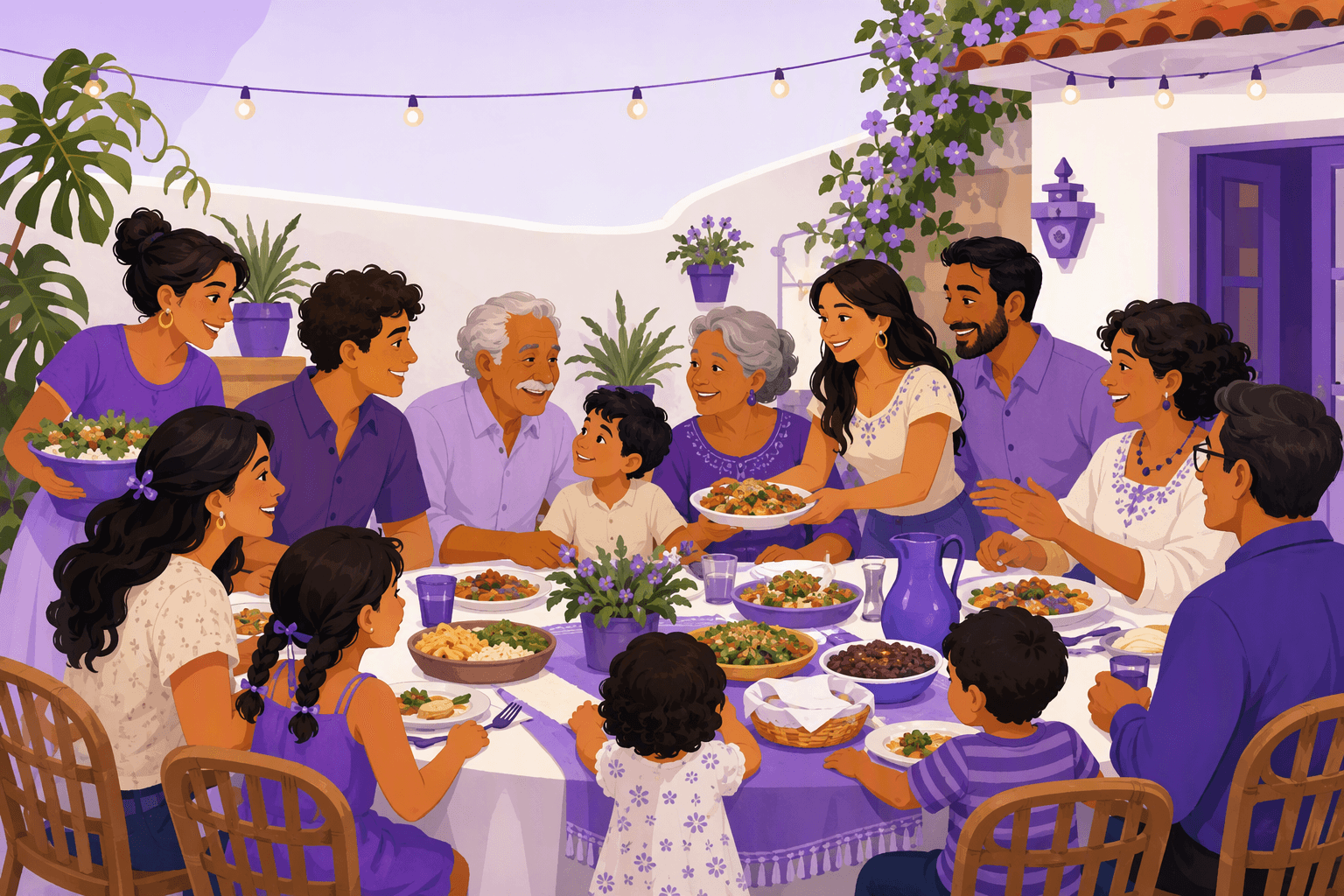
Complete Family Vocabulary at a Glance
Here are the most essential Spanish family words you need to know, all in one reference table.
| English | Spanish | Pronunciation |
|---|---|---|
| Family | La familia | lah fah-MEE-lee-ah |
| Father | El padre | ehl PAH-dreh |
| Mother | La madre | lah MAH-dreh |
| Son | El hijo | ehl EE-hoh |
| Daughter | La hija | lah EE-hah |
| Brother | El hermano | ehl ehr-MAH-noh |
| Sister | La hermana | lah ehr-MAH-nah |
| Grandfather | El abuelo | ehl ah-BWEH-loh |
| Grandmother | La abuela | lah ah-BWEH-lah |
| Uncle | El tío | ehl TEE-oh |
| Aunt | La tía | lah TEE-ah |
| Cousin (male) | El primo | ehl PREE-moh |
| Cousin (female) | La prima | lah PREE-mah |
| Nephew | El sobrino | ehl soh-BREE-noh |
| Niece | La sobrina | lah soh-BREE-nah |
| Husband | El esposo / marido | ehl ehs-POH-soh / mah-REE-doh |
| Wife | La esposa / mujer | lah ehs-POH-sah / moo-HEHR |
| Father-in-law | El suegro | ehl SWEH-groh |
| Mother-in-law | La suegra | lah SWEH-grah |
| Son-in-law | El yerno | ehl YEHR-noh |
| Daughter-in-law | La nuera | lah NWEH-rah |
| Brother-in-law | El cuñado | ehl koo-NYAH-doh |
| Sister-in-law | La cuñada | lah koo-NYAH-dah |
| Godfather | El padrino | ehl pah-DREE-noh |
| Godmother | La madrina | lah mah-DREE-nah |
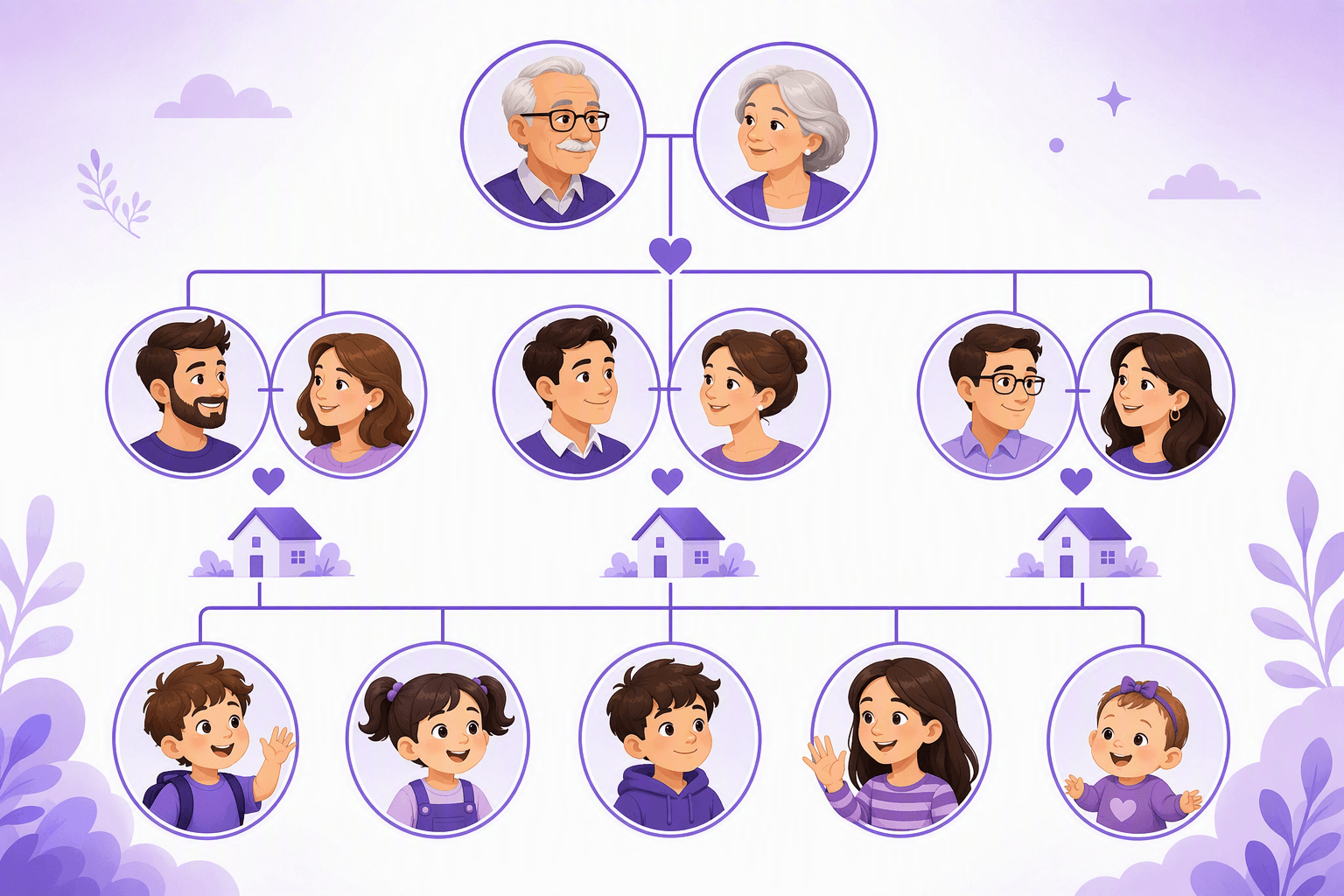
Immediate Family: La Familia Nuclear
The immediate family (parents, children, and siblings) forms the core of Spanish family vocabulary. These are words you will hear in virtually every conversation about personal life.
Padre
El padre (ehl PAH-dreh) is the formal word for father. In everyday speech, most Spanish speakers use papá (pah-PAH) instead, just as English speakers say "dad" more often than "father." The plural los padres means "parents," covering both father and mother together.
⚠️ Padres vs. Parientes: A Common Trap
Los padres means "parents," NOT "relatives." The word for relatives is los parientes (lohs pah-ree-EHN-tehs). This is one of the most common false friends between English and Spanish. Saying mis parientes when you mean "my parents" will confuse native speakers.
Madre
La madre (lah MAH-dreh) is the formal word for mother. Like padre, the everyday form is mamá (mah-MAH). In Mexico, madre appears in dozens of slang expressions (some affectionate, some crude), making it one of the most culturally loaded words in Mexican Spanish.
Hijo / Hija
El hijo (ehl EE-hoh) means son and la hija (lah EE-hah) means daughter. The H is silent in both words. The plural los hijos can mean "sons" or "children" (sons and daughters combined). When a parent says mis hijos, they typically mean all their children regardless of gender.
Hermano / Hermana
El hermano (ehl ehr-MAH-noh) means brother and la hermana (lah ehr-MAH-nah) means sister. The plural los hermanos covers "siblings" of any gender. Spanish has no single word that translates directly to the gender-neutral English "sibling"; hermanos serves that function.
| English | Spanish | Pronunciation | Note |
|---|---|---|---|
| Parents | Los padres | lohs PAH-drehs | NOT 'parientes' (= relatives) |
| Children | Los hijos | lohs EE-hohs | Sons + daughters combined |
| Siblings | Los hermanos | lohs ehr-MAH-nohs | Brothers + sisters combined |
| Twins | Los gemelos / mellizos | lohs heh-MEH-lohs / meh-YEE-sohs | Gemelos = identical; mellizos = fraternal |
Extended Family: La Familia Extensa
Extended family plays a much larger role in Spanish-speaking cultures than in many English-speaking countries. According to the Instituto Cervantes, multigenerational households remain common across Latin America, with grandparents, aunts, uncles, and cousins often living together or in close proximity.
Abuelo / Abuela
El abuelo (ehl ah-BWEH-loh) means grandfather and la abuela (lah ah-BWEH-lah) means grandmother. The plural los abuelos means "grandparents." Grandparents hold a position of deep respect in Spanish-speaking families, and it is common for them to be actively involved in raising grandchildren.
Tío / Tía
El tío (ehl TEE-oh) means uncle and la tía (lah TEE-ah) means aunt. In Spain, tío/tía has an additional informal meaning: it is used like "dude" or "mate" among young people. Hearing ¡Eh, tío! on the streets of Madrid does not mean someone is calling their uncle.
Primo / Prima
El primo (ehl PREE-moh) means male cousin and la prima (lah PREE-mah) means female cousin. Unlike English, Spanish does not distinguish between first, second, or third cousins in everyday speech. When the distinction matters, speakers say primo hermano (first cousin, literally "brother cousin") or primo segundo (second cousin).
Sobrino / Sobrina
El sobrino (ehl soh-BREE-noh) means nephew and la sobrina (lah soh-BREE-nah) means niece. In many Latin American families, the terms tío and sobrino are used loosely for any older or younger relative, even when the precise relationship is more distant.
| English | Spanish | Pronunciation | Note |
|---|---|---|---|
| Grandchildren | Los nietos | lohs nee-EH-tohs | Grandson = nieto; granddaughter = nieta |
| Great-grandfather | El bisabuelo | ehl bee-sah-BWEH-loh | Great-grandmother = bisabuela |
| Great-grandchild | El bisnieto | ehl bees-nee-EH-toh | Great-granddaughter = bisnieta |
🌍 Tío/Tía as 'Dude' in Spain
In Spain (but not Latin America), tío and tía are casual terms of address among friends, equivalent to "dude," "man," or "girl." ¿Qué tal, tío? means "What's up, dude?" This usage is strictly informal and mainly among younger speakers. In Latin America, tío/tía only means uncle/aunt.
In-Laws: La Familia Política
Spanish has a distinctive way of referring to in-laws: la familia política (the "political family"). Each in-law relationship has its own specific term, and these follow the same -o/-a gender pattern as blood relatives.
Suegro / Suegra
El suegro (ehl SWEH-groh) means father-in-law and la suegra (lah SWEH-grah) means mother-in-law. The relationship with la suegra is the subject of countless jokes across the Spanish-speaking world, a cultural trope that mirrors the mother-in-law humor found in many other cultures.
Cuñado / Cuñada
El cuñado (ehl koo-NYAH-doh) means brother-in-law and la cuñada (lah koo-NYAH-dah) means sister-in-law. In Spain, cuñado has taken on an additional colloquial meaning: it describes someone who confidently holds forth on topics they know little about, similar to a "know-it-all." This usage became a cultural meme in the 2010s.
Yerno / Nuera
El yerno (ehl YEHR-noh) means son-in-law and la nuera (lah NWEH-rah) means daughter-in-law. These are among the few family terms that do NOT follow the -o/-a pattern; yerno and nuera are entirely different words rather than gender variants of the same root.
| English | Spanish | Pronunciation | Note |
|---|---|---|---|
| In-laws (general) | La familia política | lah fah-MEE-lee-ah poh-LEE-tee-kah | Lit. 'political family' |
| Stepfather | El padrastro | ehl pah-DRAHS-troh | Step- = '-astro/-astra' |
| Stepmother | La madrastra | lah mah-DRAHS-trah | Carries negative fairy-tale connotation |
| Stepson | El hijastro | ehl ee-HAHS-troh | Stepdaughter = hijastra |
| Half-brother | El medio hermano | ehl MEH-dee-oh ehr-MAH-noh | Half-sister = media hermana |
Family Endearments and Diminutives
Spanish speakers almost never use the formal family terms in everyday conversation. Instead, they use affectionate short forms and diminutives. The diminutive suffix -ito/-ita adds warmth and closeness to any family word.
| English | Spanish | Pronunciation | Note |
|---|---|---|---|
| Dad / Daddy | Papá / Papi | pah-PAH / PAH-pee | Papi common in Caribbean Spanish |
| Mom / Mommy | Mamá / Mami | mah-MAH / MAH-mee | Mami common in Caribbean Spanish |
| Grandpa | Abuelito / Abuelo | ah-bweh-LEE-toh | Also 'yayo' in Spain |
| Grandma | Abuelita / Abuela | ah-bweh-LEE-tah | Also 'yaya' in Spain |
| Auntie | Tita / Tiíta | TEE-tah / tee-EE-tah | Affectionate form of tía |
| Little brother | Hermanito | ehr-mah-NEE-toh | Affectionate, not just for small children |
| Little sister | Hermanita | ehr-mah-NEE-tah | Also used between adult siblings |
| Little son | Hijito / Mijo | ee-HEE-toh / MEE-hoh | Mijo = contraction of 'mi hijo' |
| Little daughter | Hijita / Mija | ee-HEE-tah / MEE-hah | Mija = contraction of 'mi hija' |
💡 Mijo and Mija: The Beloved Contractions
Mijo (MEE-hoh) is a contraction of mi hijo (my son), and mija (MEE-hah) comes from mi hija (my daughter). These are used not only by parents but by grandparents, older relatives, and even between close friends. In Mexico and Central America especially, a shopkeeper might call a young customer mija or mijo as a term of casual warmth.
The -O/-A Gender Pattern in Family Words
Spanish family vocabulary is the perfect place to learn the language's grammatical gender system. Most family terms come in neat masculine-feminine pairs that differ only in their final vowel.
| Masculine (-o) | Feminine (-a) | English |
|---|---|---|
| hermano | hermana | brother / sister |
| abuelo | abuela | grandfather / grandmother |
| tío | tía | uncle / aunt |
| primo | prima | cousin (m/f) |
| sobrino | sobrina | nephew / niece |
| hijo | hija | son / daughter |
| suegro | suegra | father / mother-in-law |
| cuñado | cuñada | brother / sister-in-law |
| nieto | nieta | grandson / granddaughter |
| padrino | madrina | godfather / godmother |
The exceptions are worth noting. Padre and madre do not follow the -o/-a pattern; they end in -e instead. Yerno (son-in-law) and nuera (daughter-in-law) are completely different words. And papá/mamá use the same ending for both genders. These few irregularities are easily memorized because the -o/-a pattern covers the vast majority.
💡 The Masculine Plural Rule
When referring to a mixed-gender group, Spanish uses the masculine plural. Los hermanos can mean "brothers" or "brothers and sisters." Los tíos can mean "uncles" or "aunts and uncles." Los abuelos can mean "grandfathers" or "grandparents." Context always clarifies the meaning.
Compadre and Comadre: A Uniquely Spanish Concept
One of the most culturally significant family concepts in the Spanish-speaking world has no direct English equivalent. El compadre (ehl kohm-PAH-dreh) and la comadre (lah koh-MAH-dreh) describe the relationship between a child's parents and godparents.
When you baptize your child and choose a padrino (godfather) and madrina (godmother), you and the godparents become compadres. This is not a casual label; it creates a bond of mutual obligation, respect, and trust that can be as strong as a blood relationship. According to anthropological research by Murdock and subsequent Latin American kinship studies, the compadrazgo system has roots in both Catholic tradition and pre-Columbian indigenous social structures.
In everyday usage across Latin America, compadre has expanded beyond its religious meaning to become a term for a very close male friend, someone you trust like family. You will hear ¿Qué onda, compadre? (What's up, buddy?) in casual conversation from Mexico to Argentina.
Family Structure in the Spanish-Speaking World
Understanding Spanish family vocabulary requires understanding how family functions culturally. The Instituto Cervantes notes several features that distinguish family life across the Spanish-speaking world.
Multigenerational living remains far more common in Spain and Latin America than in the United States or Northern Europe. Adult children often live with parents until marriage, and sometimes after. In countries like Mexico, Colombia, and Spain, three-generation households are culturally normal, not a sign of financial difficulty.
Extended family gatherings are a cornerstone of social life. Sunday lunch (la comida del domingo) with grandparents, aunts, uncles, and cousins is a weekly tradition in many families. These gatherings can involve 20 or more relatives.
Naming conventions reflect family ties. In most Spanish-speaking countries, a person carries two surnames: the father's first surname followed by the mother's first surname. María López García is María, daughter of a López father and a García mother. This system explicitly preserves both family lines.
Godparent relationships carry real weight. Choosing a padrino or madrina for your child is a serious decision. Godparents are expected to play an active role in the child's life, and the compadrazgo bond between the parents and godparents creates lifelong social obligations.
"The extended family unit in Spanish-speaking societies functions as both an economic safety net and a primary social structure. The vocabulary reflects this: Spanish maintains distinct terms for relationships that English speakers might lump together as 'relatives.'" (Instituto Cervantes, El español en el mundo, 2024)
Practice Family Vocabulary With Real Spanish Content
Family vocabulary appears constantly in Spanish media, from telenovelas where family drama drives every plot to animated films perfect for learners. Hearing mamá, papá, abuelita, and hermano in authentic dialogue is the fastest way to internalize these words beyond flashcards.
Check out our guide to the best movies for learning Spanish for recommendations that feature rich family dynamics. Films like Coco and Roma showcase la familia in all its complexity: grandparents, cousins, compadres, and the Sunday meals that bring everyone together.
Wordy lets you practice family vocabulary in context by watching Spanish content with interactive subtitles. Tap any family term to see its meaning, pronunciation, and related words. Explore our blog for more Spanish learning guides, or visit our Spanish learning page to start building your vocabulary today.
Frequently Asked Questions
What is the Spanish word for family?
How do you say 'parents' in Spanish?
What is the difference between 'abuelo' and 'abuelito' in Spanish?
How do you say in-laws in Spanish?
What does 'compadre' mean in Spanish?
Sources & References
- Real Academia Española (RAE), Diccionario de la lengua española, 23rd edition
- Instituto Cervantes, El español en el mundo, 2024 annual report
- Ethnologue: Languages of the World, Spanish language entry (2024)
- Murdock, G.P. (1949). Social Structure. Macmillan, kinship terminology systems
Start learning with Wordy
Watch real movie clips and build your vocabulary as you go. Free to download.


