Days of the Week in Japanese: Complete Guide With Kanji, Pronunciation, and Origins
Quick Answer
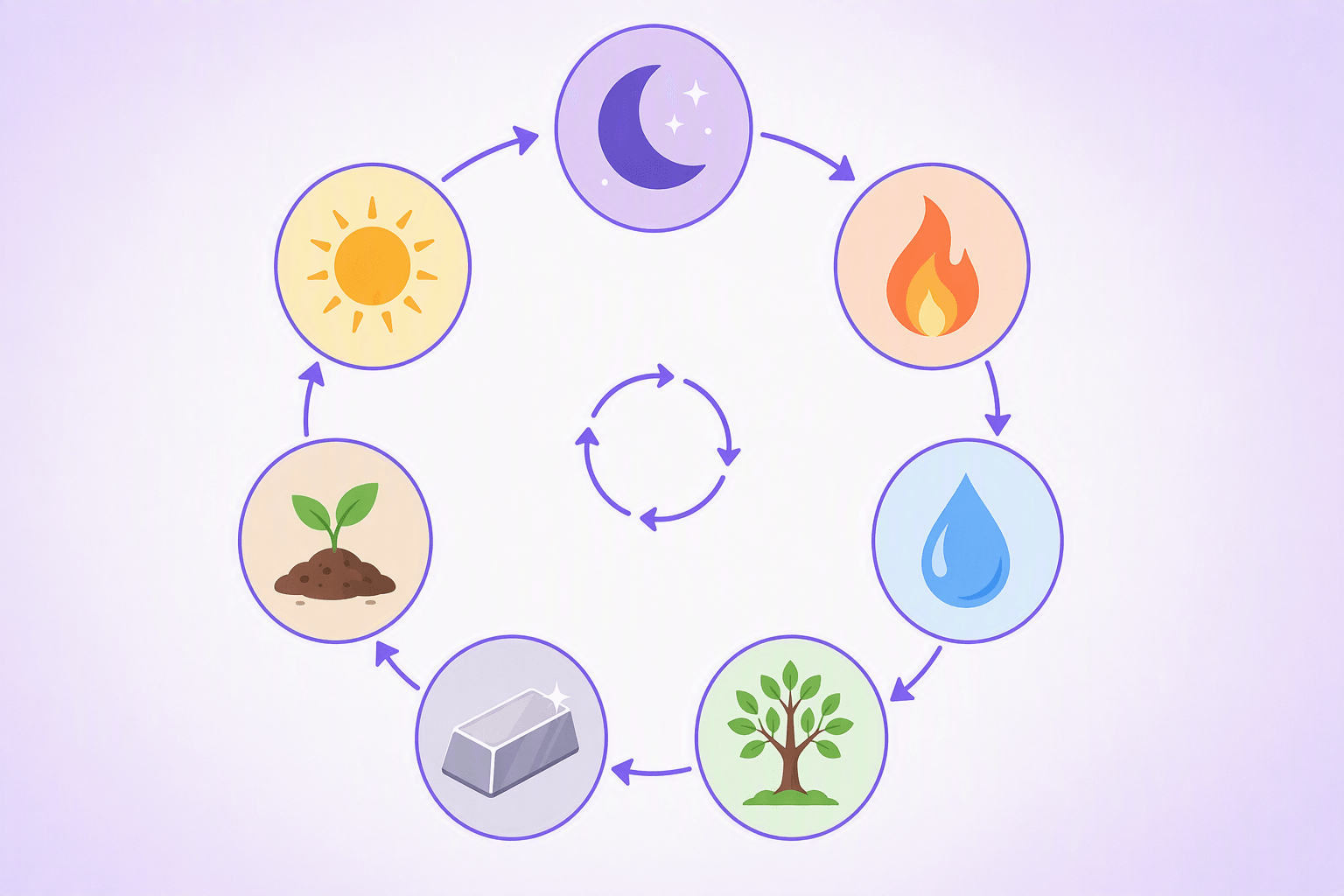
The days of the week in Japanese are 月曜日 getsu-yōbi (Monday), 火曜日 ka-yōbi (Tuesday), 水曜日 sui-yōbi (Wednesday), 木曜日 moku-yōbi (Thursday), 金曜日 kin-yōbi (Friday), 土曜日 do-yōbi (Saturday), and 日曜日 nichi-yōbi (Sunday). Each day is named after one of seven celestial bodies from the ancient Chinese-Japanese cosmological system.
The Short Answer
The seven days of the week in Japanese are 月曜日 getsu-yōbi, 火曜日 ka-yōbi, 水曜日 sui-yōbi, 木曜日 moku-yōbi, 金曜日 kin-yōbi, 土曜日 do-yōbi, and 日曜日 nichi-yōbi. Each day is named after a celestial body from the ancient East Asian cosmological tradition, using kanji for the moon, fire, water, wood, gold, earth, and sun.
Japanese is spoken by approximately 123 million native speakers, according to Ethnologue's 2024 data. The Japan Foundation's 2021 survey found over 3.79 million people studying Japanese worldwide, making it one of the most popular foreign languages globally. The days of the week are among the first vocabulary taught in any Japanese course because they appear on every calendar, schedule, and train timetable in Japan.
"The Japanese weekday system is a remarkable case of cultural transmission: a Hellenistic astrological concept, passing through India and China, finally settling into the kanji characters that modern Japanese speakers use every day."
(Masato Tsukimoto, The Seven-Day Week System in East Asia)
This guide covers all seven days with kanji, hiragana, romaji, etymology, grammar patterns, and cultural context.

All 7 Days at a Glance
| English | Japanese | Pronunciation | Note |
|---|---|---|---|
| Monday | 月曜日 (げつようび) | getsu-yōbi | 月 = Moon |
| Tuesday | 火曜日 (かようび) | ka-yōbi | 火 = Fire (Mars) |
| Wednesday | 水曜日 (すいようび) | sui-yōbi | 水 = Water (Mercury) |
| Thursday | 木曜日 (もくようび) | moku-yōbi | 木 = Wood (Jupiter) |
| Friday | 金曜日 (きんようび) | kin-yōbi | 金 = Gold (Venus) |
| Saturday | 土曜日 (どようび) | do-yōbi | 土 = Earth (Saturn) |
| Sunday | 日曜日 (にちようび) | nichi-yōbi | 日 = Sun |
Every day follows the same structure: element kanji + 曜日 (yōbi). Once you learn the seven element kanji, the pattern is completely predictable.
Celestial Origins: The Cosmological System Behind Each Day
Japanese weekday names trace back to the same Hellenistic planetary system that gave European languages their day names, but the route was very different. The seven-day planetary week traveled from the Roman Empire eastward through India and Central Asia, arriving in China by the 4th century and reaching Japan during the Heian period (794-1185). The Chinese mapped the five visible planets onto their five-element system (五行 gogyō), creating a uniquely East Asian version of the planetary week.
月曜日 (getsu-yōbi)
月 (tsuki/getsu) means "moon." This is the most straightforward parallel: Monday is the moon's day in both the Japanese and Western systems. The kanji 月 also means "month" in Japanese, reflecting the ancient connection between the moon and monthly cycles.
月曜日 is widely considered the least popular day of the week in Japan. Surveys consistently show it ranks last in "favorite day" polls, mirroring the universal Monday blues phenomenon.
火曜日 (ka-yōbi)
火 (hi/ka) means "fire." Mars is called 火星 (kasei, literally "fire star") in Japanese because it was associated with the fire element in Chinese five-element theory. The red color of Mars made the fire association natural across multiple cultures.
水曜日 (sui-yōbi)
水 (mizu/sui) means "water." Mercury is called 水星 (suisei, "water star") in Japanese. The planet Mercury, being the fastest-moving visible planet, was associated with water in the Chinese system due to water's flowing, quick nature.
🌍 The Five Elements Connection
The Chinese five-element system (五行 gogyō) maps directly onto the weekdays: 火 (fire/Tuesday), 水 (water/Wednesday), 木 (wood/Thursday), 金 (metal-gold/Friday), 土 (earth/Saturday). These same elements appear throughout Japanese culture in martial arts, traditional medicine, feng shui, and even blood type personality theories.
木曜日 (moku-yōbi)
木 (ki/moku) means "wood" or "tree." Jupiter is called 木星 (mokusei, "wood star"). As the largest planet, Jupiter was associated with growth and expansion, qualities shared with the wood element, which represents vitality and upward growth in the five-element system.
金曜日 (kin-yōbi)
金 (kane/kin) means "gold" or "metal." Venus is called 金星 (kinsei, "gold star"), named for its brilliant, metallic brightness in the sky. The kanji 金 also means "money" in modern Japanese, which has led to the popular joke that 金曜日 is the best day because it sounds like "money day," conveniently also payday for many workers.
🌍 金曜ロードショー: Friday Night Movies
金曜ロードショー (Kin'yō Rōdoshō, "Friday Road Show") is a long-running Nippon TV program that airs popular movies every Friday night. It has been a fixture of Japanese television since 1985 and is famous for regularly broadcasting Studio Ghibli films. For many Japanese people, 金曜日 is synonymous with movie night.
土曜日 (do-yōbi)
土 (tsuchi/do) means "earth" or "soil." Saturn is called 土星 (dosei, "earth star"). The association with earth comes from Saturn's position as the outermost visible planet, symbolizing stability and groundedness in the five-element system.
日曜日 (nichi-yōbi)
日 (hi/nichi) means "sun" or "day." This parallels the Western "Sunday" perfectly. The kanji 日 is one of the most common characters in Japanese. It appears in 日本 (Nihon, "Japan," literally "origin of the sun"), 今日 (kyō, "today"), and countless other words.
Abbreviations: The Single-Kanji System
In daily life, Japanese speakers routinely abbreviate the days by dropping 曜日 and using just the element kanji. You will see these everywhere.
| English | Japanese | Pronunciation |
|---|---|---|
| Mon | 月 | getsu |
| Tue | 火 | ka |
| Wed | 水 | sui |
| Thu | 木 | moku |
| Fri | 金 | kin |
| Sat | 土 | do |
| Sun | 日 | nichi |
These abbreviations appear on calendars, train schedules, TV guides, restaurant hours, and business signs. On Japanese calendars, the color coding is also important: 土 (Saturday) is often printed in blue, and 日 (Sunday) and public holidays in red.
Grammar: How to Use Days in Sentences
Japanese grammar for days of the week is straightforward once you understand the particle system.
Saying "On [Day]", The に (ni) Particle
To say "on Monday," "on Tuesday," etc., add the particle に (ni) after the day name.
- 月曜日に会議があります。(Getsu-yōbi ni kaigi ga arimasu.) "There is a meeting on Monday."
- 金曜日にパーティーに行きます。(Kin-yōbi ni pātī ni ikimasu.) "I'm going to a party on Friday."
In casual speech, the に particle can be dropped:
- 土曜日、映画を見に行こう。(Do-yōbi, eiga o mi ni ikō.) "Let's go see a movie on Saturday."
Asking "What Day?"
- 今日は何曜日ですか?(Kyō wa nan-yōbi desu ka?) "What day of the week is today?"
- 今日は水曜日です。(Kyō wa sui-yōbi desu.) "Today is Wednesday."
"Every [Day]", 毎 (mai)
Add 毎 (mai, "every") before the day:
- 毎週月曜日 (maishū getsu-yōbi): every Monday
- 毎週金曜日にジムに行きます。(Maishū kin-yōbi ni jimu ni ikimasu.) "I go to the gym every Friday."
"Last" and "Next"
| Japanese | Romaji | English |
|---|---|---|
| 先週の月曜日 | senshū no getsu-yōbi | last Monday |
| 来週の火曜日 | raishū no ka-yōbi | next Tuesday |
| 今週の水曜日 | konshū no sui-yōbi | this Wednesday |
💡 Dropping 曜日 in Speech
In casual conversation, Japanese speakers often shorten day names by dropping 曜日 entirely: 月曜 (getsu-yō) instead of 月曜日 (getsu-yōbi). This is common in spoken Japanese and informal texting but less so in formal writing.
The Week Structure: Sunday or Monday First?
Japan has a dual convention for the first day of the week. Traditional Japanese calendars start on Sunday (日曜日), with the days arranged left to right: 日月火水木金土. This Sunday-first format is still the most common on printed calendars and in daily planners.
However, business contexts, ISO-standard systems, and many digital calendars now use Monday as the first day. The Japanese government and most corporations follow the Monday-to-Friday workweek (平日 heijitsu, weekdays), with Saturday and Sunday as the weekend (週末 shūmatsu).
The standard Japanese workweek has undergone significant changes. Before the 1990s, a six-day workweek (Monday through Saturday) was common. Today, the five-day week is standard, though many Japanese workers still work long hours and overtime is a well-documented cultural issue.
Useful Phrases With Days of the Week
| English | Japanese | Pronunciation |
|---|---|---|
| What day is it today? | 今日は何曜日ですか? | kyō wa nan-yōbi desu ka |
| Today is Monday. | 今日は月曜日です。 | kyō wa getsu-yōbi desu |
| See you on Friday. | 金曜日にまた会いましょう。 | kin-yōbi ni mata aimashō |
| I work Monday to Friday. | 月曜日から金曜日まで働いています。 | getsu-yōbi kara kin-yōbi made hataraite imasu |
| The weekend | 週末 (しゅうまつ) | shūmatsu |
| Every Tuesday | 毎週火曜日 | maishū ka-yōbi |
| Last Wednesday | 先週の水曜日 | senshū no sui-yōbi |
| Next Thursday | 来週の木曜日 | raishū no moku-yōbi |
Months of the Year: The Numbered System
Japanese months follow a beautifully simple pattern: the number + 月 (gatsu, "month"). There are no unique month names to memorize.
| English | Japanese | Pronunciation | Note |
|---|---|---|---|
| January | 一月 (いちがつ) | ichi-gatsu | Month 1 |
| February | 二月 (にがつ) | ni-gatsu | Month 2 |
| March | 三月 (さんがつ) | san-gatsu | Month 3 |
| April | 四月 (しがつ) | shi-gatsu | Month 4 |
| May | 五月 (ごがつ) | go-gatsu | Month 5 |
| June | 六月 (ろくがつ) | roku-gatsu | Month 6 |
| July | 七月 (しちがつ) | shichi-gatsu | Month 7 |
| August | 八月 (はちがつ) | hachi-gatsu | Month 8 |
| September | 九月 (くがつ) | ku-gatsu | Month 9 |
| October | 十月 (じゅうがつ) | jū-gatsu | Month 10 |
| November | 十一月 (じゅういちがつ) | jū-ichi-gatsu | Month 11 |
| December | 十二月 (じゅうにがつ) | jū-ni-gatsu | Month 12 |
Japanese dates use the format: month + day + 日 (nichi). For example, 三月十五日 (san-gatsu jū-go-nichi) is March 15th. Japan also uses the year-month-day order (2026年3月15日), which aligns with the ISO 8601 standard.
Cultural Notes: How Days Shape Japanese Life
The Color-Coded Calendar
Japanese calendars use a distinctive color system: weekdays are typically in black, Saturdays in blue, and Sundays and national holidays in red. This color coding extends to train schedules, where different service patterns run on 平日 (weekdays), 土曜日 (Saturdays), and 日曜・祝日 (Sundays and holidays). Always check the color/day category when reading Japanese timetables.
Golden Week and Calendar Culture
Japan has an elaborate system of national holidays that can turn ordinary weekdays into extended breaks. The most famous is ゴールデンウィーク (Gōruden Wīku, Golden Week) in late April/early May, which clusters four national holidays into a single week. During Golden Week, travel prices spike and tourist destinations are packed.
🌍 花金 (Hanakin): Flower Friday
花金 (hanakin, literally "flower Friday") is Japanese slang for going out to enjoy yourself on Friday evening. The term was hugely popular during Japan's bubble economy era (1980s) and has seen a revival among younger generations. It captures the same spirit as the English "TGIF" but with a distinctly Japanese aesthetic flair.
Practice With Real Japanese Content
Memorizing kanji from a table gives you the foundation, but hearing 月曜日 and 金曜日 spoken naturally in context is what builds real comprehension. Japanese anime, dramas, and films are filled with scheduling conversations and day-of-the-week references.
Wordy lets you watch Japanese movies and shows with interactive subtitles. Tap any word to see its kanji, hiragana, romaji, and meaning instantly. Instead of drilling flashcards, you absorb vocabulary from authentic Japanese conversations.
For more Japanese learning resources, explore our blog for guides on topics from greetings to the best movies for learning Japanese. Visit our Japanese learning page to start practicing today.
Frequently Asked Questions
What are the 7 days of the week in Japanese?
Does the week start on Monday or Sunday in Japan?
How do you say 'on Monday' in Japanese?
What do the kanji in Japanese day names mean?
Can I abbreviate the days of the week in Japanese?
Why are Japanese days named after celestial bodies and elements?
Sources & References
- Agency for Cultural Affairs, Japan, Japanese Language Education Reference
- Japan Foundation, Survey on Japanese-Language Education Abroad (2021)
- Ethnologue: Languages of the World, Japanese language entry (2024)
- Sato, E. (2016). Japanese: A Comprehensive Grammar. Routledge, 2nd edition.
- Tsukimoto, M. (2003). The Seven-Day Week System in East Asia: Its Introduction and Transformation.
Start learning with Wordy
Watch real movie clips and build your vocabulary as you go. Free to download.


