Quick Answer
The most common way to say sorry in Korean is '죄송합니다' (Joesonghamnida) in formal situations and '미안합니다' (Mianhamnida) in standard polite speech. The core distinction: 죄송 (joesong) literally means 'I have committed a sin' and conveys deep humility, while 미안 (mian) means 'I feel uncomfortable/sorry' and is lighter and more personal. Choosing the wrong one for the situation can cause genuine social friction.
The Short Answer
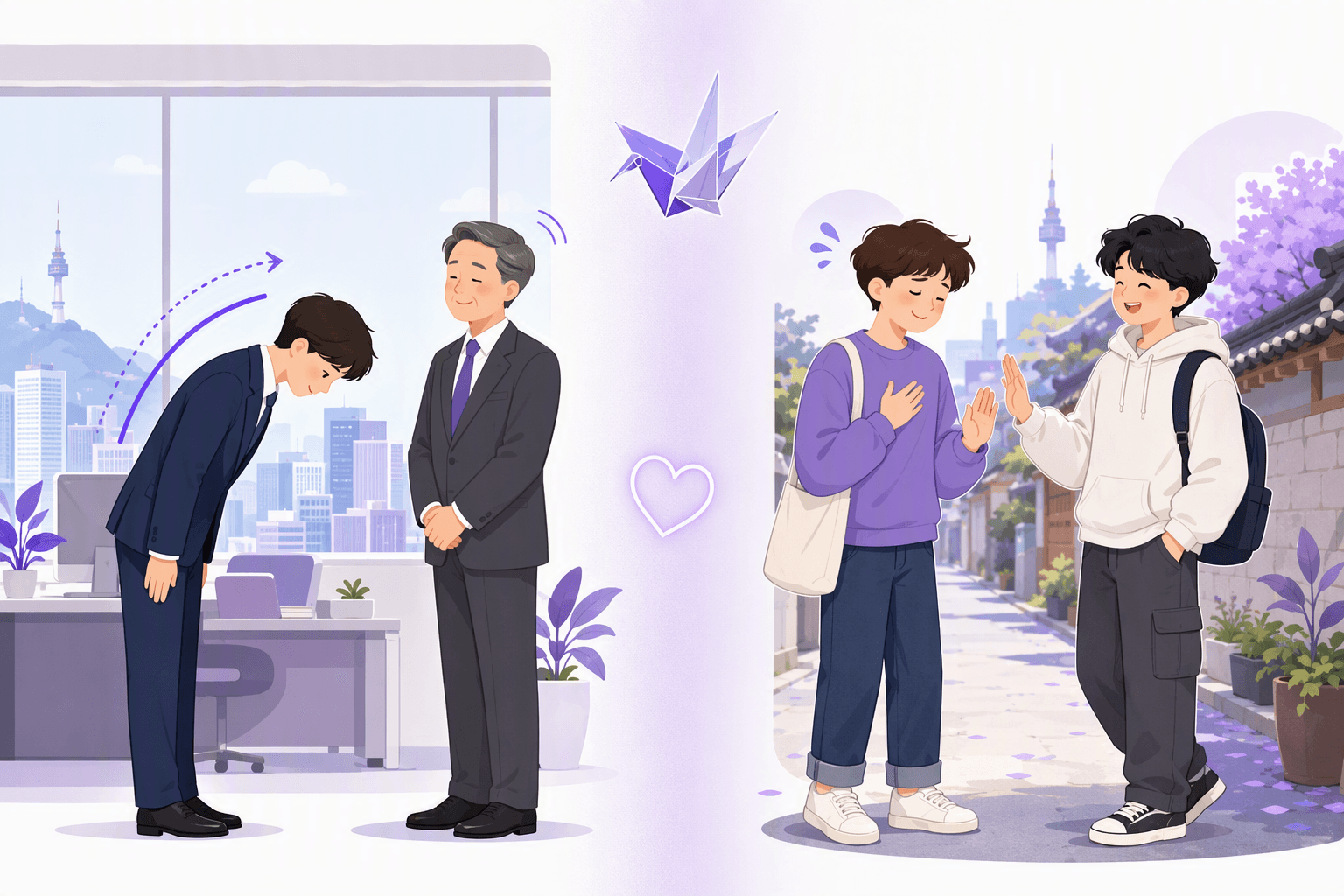
The most common way to say sorry in Korean is 죄송합니다 (Joesonghamnida) for formal apologies and 미안합니다 (Mianhamnida) for standard polite apologies. The choice between them depends on who you are apologizing to, how serious the situation is, and your relationship with the listener.
Korean is spoken by over 80 million people worldwide, primarily in South Korea and North Korea, according to Ethnologue's 2024 data. What makes Korean apologies unique is that the language offers two entirely separate root words for "sorry," each carrying different weight, different etymology, and different social expectations. Using the wrong one in the wrong context is not merely awkward; it can be interpreted as disrespectful.
"In Korean, an apology is not simply an expression of regret; it is a social act that explicitly positions the speaker's status relative to the listener. The choice of apology form encodes humility, formality, and the perceived severity of the offense."
(Brown & Levinson, Politeness: Some Universals in Language Usage, Cambridge University Press, 1987; Ho-min Sohn, The Korean Language, Cambridge University Press)
This guide covers 15+ ways to say sorry in Korean organized by speech level and situation: formal apologies, standard polite apologies, casual apologies, and "excuse me" expressions. Each one includes Hangul, romanization, pronunciation, example sentences, and cultural context so you always know which form to reach for.
Quick Reference: Korean Apology Phrases at a Glance
| English | Korean | Pronunciation | Formality |
|---|---|---|---|
| I'm sorry (formal/humble) | 죄송합니다 | Joe-song-ham-ni-da | formal |
| I'm sorry (polite/humble) | 죄송해요 | Joe-song-hae-yo | polite |
| I'm sorry (formal) | 미안합니다 | Mi-an-ham-ni-da | formal |
| I'm sorry (polite) | 미안해요 | Mi-an-hae-yo | polite |
| Sorry (casual) | 미안해 | Mi-an-hae | casual |
| Sorry (abbreviated casual) | 미안 | Mi-an | casual |
| Sorry (Konglish slang) | 쏘리 | Sso-ri | slang |
| I deeply apologize | 사과드립니다 | Sa-gwa-deu-rim-ni-da | very formal |
| Excuse me (formal) | 실례합니다 | Shil-lye-ham-ni-da | formal |
| Just a moment, please | 잠시만요 | Jam-si-man-yo | polite |
| Excuse me (getting attention) | 저기요 | Jeo-gi-yo | polite |
| I have nothing to say (deep regret) | 할 말이 없습니다 | Hal ma-ri eop-seum-ni-da | formal |
| I won't do it again | 다시는 안 그럴게요 | Da-si-neun an geu-reol-ge-yo | polite |
| It's my fault | 제 잘못이에요 | Je jal-mo-si-e-yo | polite |
Understanding 죄송 vs. 미안: The Core Distinction
Before exploring individual phrases, understanding the difference between Korea's two "sorry" roots is essential. They are not interchangeable.
| Feature | 죄송 (Joesong) | 미안 (Mian) |
|---|---|---|
| Origin | Sino-Korean (Chinese characters 罪悚) | Native Korean |
| Literal meaning | "I have committed a sin and tremble" | "I feel uneasy/uncomfortable" |
| Emotional weight | Heavy, deeply humble | Lighter, personal, empathetic |
| Used with | Elders, superiors, strangers, formal contexts | Friends, peers, lighter offenses |
| Speech register | Inherently humble (겸양어) | Neutral (formality comes from verb ending) |
According to the National Institute of Korean Language (국립국어원), 죄송 contains the Sino-Korean character 죄 (罪), meaning "sin" or "crime," and 송 (悚), meaning "to tremble with fear." When you say 죄송합니다, you are literally expressing that you have committed a wrong so grave that you tremble. This built-in humility makes it the default for any situation involving someone of higher social standing.
미안, by contrast, is a native Korean word meaning "I feel uneasy about what happened." It conveys personal regret without the deep self-lowering of 죄송. Among peers, 미안 feels warmer and more genuine; among elders, it can feel insufficient.
🌍 The Weight of Korean Apologies
Korean culture places high value on the act of apologizing itself. A well-chosen apology (the right words, the right speech level, accompanied by the right bow) can repair relationships that would be difficult to mend in more individualistic cultures. Conversely, an apology perceived as insufficiently humble (using 미안 when 죄송 is expected) can deepen the offense rather than resolve it.
Formal Apologies (죄송, Humble Register)
These apologies use the 죄송 root and are appropriate for elders, superiors, strangers, professional settings, and serious offenses. When in doubt, 죄송합니다 is always the safest choice.
죄송합니다
/Joe-song-ham-ni-da/
Literal meaning: I have sinned and tremble (formal)
“늦어서 정말 죄송합니다, 부장님.”
I am truly sorry for being late, Director.
The go-to formal apology for nearly every situation involving someone older, higher-ranking, or unfamiliar. Always safe, never excessive. Accompanied by a bow: the deeper the bow, the more sincere the apology.
This is the single most important apology phrase in Korean. The -ㅂ니다 ending places it in the formal speech level (격식체, gyeokshikche), making it appropriate for business, public interactions, and conversations with anyone deserving of respect.
A 2023 survey by the National Institute of Korean Language found that 죄송합니다 remains the most frequently used apology expression in Korean workplace communication, outpacing all other forms by a significant margin. Its built-in humility makes it impossible to over-use: no Korean person will ever think less of you for choosing 죄송합니다.
죄송해요
/Joe-song-hae-yo/
Literal meaning: I have sinned and tremble (polite)
“아, 죄송해요. 제가 실수했어요.”
Oh, I'm sorry. I made a mistake.
The polite-level version of 죄송합니다. Retains the humble 죄송 root but uses the -요 ending instead of the formal -ㅂ니다. Appropriate for everyday polite interactions where full formality feels stiff.
This form keeps the humble weight of 죄송 while softening the formality level with the -요 (yo) ending. It is ideal for situations like accidentally bumping into someone at a cafe or making a minor mistake in front of an acquaintance. As Yeon and Brown explain in Korean: A Comprehensive Grammar (Routledge, 2011), the polite level (-요) accounts for the majority of everyday Korean speech.
사과드립니다
/Sa-gwa-deu-rim-ni-da/
Literal meaning: I offer an apology (very formal humble)
“이번 사태에 대해 깊이 사과드립니다.”
I deeply apologize for this incident.
The most formal apology in Korean. Uses the humble verb 드리다 (to offer/give humbly). Reserved for public apologies, corporate statements, press conferences, and extremely serious personal offenses.
You will see this expression in corporate press conferences, government apologies, and public statements. The verb 드리다 (deurida) is the humble form of 주다 (juda, "to give"), so the phrase literally means "I humbly offer an apology." In everyday conversation, this would sound dramatically overblown, so reserve it for genuinely serious situations.
Standard Polite Apologies (미안, Personal Register)
These apologies use the 미안 root and carry a warmer, more personal tone. They are appropriate for everyday situations with peers, acquaintances, and lighter offenses. Adding formal verb endings (-ㅂ니다 or -요) makes them suitable for polite contexts.
미안합니다
/Mi-an-ham-ni-da/
Literal meaning: I feel uncomfortable/sorry (formal)
“미안합니다, 제가 잘못 알고 있었어요.”
I'm sorry, I was mistaken.
Formal speech level with the 미안 root. Less humble than 죄송합니다 but still respectful. Works in semi-formal situations, with older acquaintances, or when the offense is moderate. Some speakers use it interchangeably with 죄송합니다, though purists note the difference.
미안합니다 occupies a middle ground. The formal verb ending (-ㅂ니다) elevates it above casual speech, but the 미안 root keeps it from reaching the deep humility of 죄송합니다. It works well for moderate situations: apologizing to a neighbor, expressing regret to a colleague you know reasonably well, or acknowledging a mistake that is not severe.
미안해요
/Mi-an-hae-yo/
Literal meaning: I feel sorry (polite)
“미안해요, 깜빡 잊어버렸어요.”
Sorry, I completely forgot.
The polite-level 미안 apology. The most common form in everyday polite conversation among acquaintances and in casual-but-respectful settings. A K-drama staple; you'll hear this one constantly.
This is the everyday workhorse apology for polite situations. You forgot to reply to a message, you accidentally took someone's seat, you need to cancel plans, 미안해요 covers all of it. The -요 ending keeps it respectful without the heaviness of the formal register.
K-drama fans will recognize this form immediately. It appears in nearly every Korean drama, often in emotionally charged scenes where characters express personal regret. For more authentic Korean dialogue in context, check out our guide to the best Korean movies and dramas.
Casual Apologies (반말 Banmal)
These forms drop the polite endings and should only be used with close friends your age or younger. Using casual apologies with the wrong person is a genuine social mistake in Korean culture.
미안해
/Mi-an-hae/
Literal meaning: I feel sorry (casual)
“미안해, 내가 늦었지? 길이 막혔어.”
Sorry, I was late, right? Traffic was bad.
The casual apology for close friends and people younger than you. One of the most recognized Korean phrases globally thanks to K-dramas and K-pop. Never use with elders or superiors; it will be taken as disrespectful.
Thanks to the global spread of Korean entertainment, 미안해 (mianhae) has become one of the most internationally recognized Korean words. BTS lyrics, K-drama confession scenes, and variety shows have made it familiar to millions of non-Korean speakers. But within Korea, its usage is strictly governed by age hierarchy. Saying 미안해 to your boss or an elder would be comparable to addressing a judge as "dude."
미안
/Mi-an/
Literal meaning: Sorry (abbreviated)
“아 미안, 안 봤어.”
Oh sorry, I didn't see it.
The most abbreviated form of apology. Extremely casual, used in quick texting and among very close friends. Dropping the verb ending entirely makes it sound offhand and lightweight.
Even more abbreviated than 미안해, this form strips the apology down to the bare root. It is common in KakaoTalk messages and quick verbal exchanges between close friends. The brevity itself communicates that the offense is minor; you would never use just 미안 for something serious.
쏘리
/Sso-ri/
Literal meaning: Sorry (from English)
“아 쏘리쏘리~ 내가 살게.”
Oh sorry sorry~ I'll buy it for you.
Konglish borrowed from English 'sorry.' Used playfully among younger Koreans. The doubled form '쏘리쏘리' was popularized by Super Junior's 2009 hit song 'Sorry Sorry.' Never appropriate for genuine or serious apologies.
쏘리 is a prime example of Konglish, English words adapted into Korean pronunciation and usage. Among younger Koreans, it carries a playful, lighthearted tone. Saying 쏘리 for bumping into a friend or forgetting a minor detail is common. But using it for anything requiring genuine remorse would come across as flippant and insincere.
💡 K-pop Made It Famous
Super Junior's 2009 mega-hit "Sorry Sorry" (쏘리 쏘리) cemented this Konglish form in global pop culture. The song's repetitive chorus made 쏘리 one of the first Korean words many international fans learned, though it represents only the most casual end of the Korean apology spectrum.
"Excuse Me" Expressions
Korean has distinct phrases for situations where English speakers would say "excuse me": interrupting someone, squeezing past, or getting a stranger's attention.
실례합니다
/Shil-lye-ham-ni-da/
Literal meaning: I am being rude
“실례합니다, 지금 시간이 어떻게 되십니까?”
Excuse me, what time is it now?
Used before interrupting someone, entering a room, or approaching a stranger formally. Functions as a pre-apology: you are acknowledging the rudeness of the interruption before it happens. Common in business settings and with strangers.
실례합니다 is structurally fascinating. The word 실례 (sillye) means "rudeness" or "breach of etiquette," so the phrase literally announces "I am committing an act of rudeness." By naming the breach upfront, the speaker demonstrates awareness of social norms, which paradoxically makes the interruption feel polite. The King Sejong Institute lists it as an essential phrase for learners navigating professional Korean environments.
잠시만요
/Jam-si-man-yo/
Literal meaning: Just a moment, please
“잠시만요, 제가 확인해 볼게요.”
Just a moment, please. Let me check.
Used when you need someone to wait briefly: taking a call, checking information, or pausing a conversation. Also works when squeezing past someone on the subway or in a crowded space.
A versatile phrase that works both as "excuse me, one moment" and as a polite way to physically pass through a crowd. On the Seoul subway during rush hour, a gentle 잠시만요 while navigating through packed commuters is standard etiquette.
저기요
/Jeo-gi-yo/
Literal meaning: Over there (polite)
“저기요, 주문할게요!”
Excuse me, I'd like to order!
The standard way to get a stranger's attention, especially in restaurants and shops. Literally means 'over there'; you are pointing out the person you need. Calling out 저기요 in a Korean restaurant to order is perfectly normal and expected.
If you visit any restaurant in South Korea, you will need this phrase. Korean dining culture does not rely on waitstaff checking in periodically. Diners call servers when they are ready. A clear 저기요 (or pressing the table bell, increasingly common in modern restaurants) is the standard approach. It is not considered rude; it is expected.
How to Respond to Korean Apologies
Knowing how to accept an apology is just as important as knowing how to give one. Here are the most common responses.
| They Say | You Say | Notes |
|---|---|---|
| 죄송합니다 | 괜찮습니다 (Gwaenchansseumnida) | "It's fine" (formal) |
| 미안해요 | 괜찮아요 (Gwaenchanayo) | "It's okay" (polite) |
| 미안해 | 괜찮아 (Gwaenchana) | "It's fine" (casual) |
| 죄송합니다 | 아닙니다 (Animnida) | "Not at all" (formal, dismissing the need for apology) |
| 미안해요 | 아니에요 (Anieyo) | "No, no" (polite, downplaying the offense) |
| 미안해 | 아니야 (Aniya) | "Nah, it's nothing" (casual) |
| Any serious apology | 신경 쓰지 마세요 (Singyeong sseuji maseyo) | "Don't worry about it" (polite and reassuring) |
💡 The Korean Art of Downplaying
When accepting an apology in Korean, the cultural expectation is to minimize the offense. Saying 괜찮아요 (it's okay) or 아니에요 (not at all), even if you are still upset, maintains social harmony (화합, hwahap). Holding a grudge visibly or refusing an apology directly is considered a serious social misstep in Korean culture.
Follow-Up Phrases: Strengthening Your Apology
Korean apologies often do not stand alone. Adding a follow-up phrase shows sincerity and completeness.
| Korean | Romanization | Meaning | When to Use |
|---|---|---|---|
| 제 잘못이에요 | Je jalmosieyo | It's my fault | Accepting responsibility |
| 다시는 안 그럴게요 | Dasineun an geureolgeyo | I won't do it again | Promising change |
| 할 말이 없습니다 | Hal mari eopseumnida | I have nothing to say | Deep regret, serious situations |
| 용서해 주세요 | Yongseo hae juseyo | Please forgive me | Requesting explicit forgiveness |
| 정말 죄송합니다 | Jeongmal joesonghamnida | I am truly sorry | Intensifying a formal apology |
🌍 Bowing With Your Apology
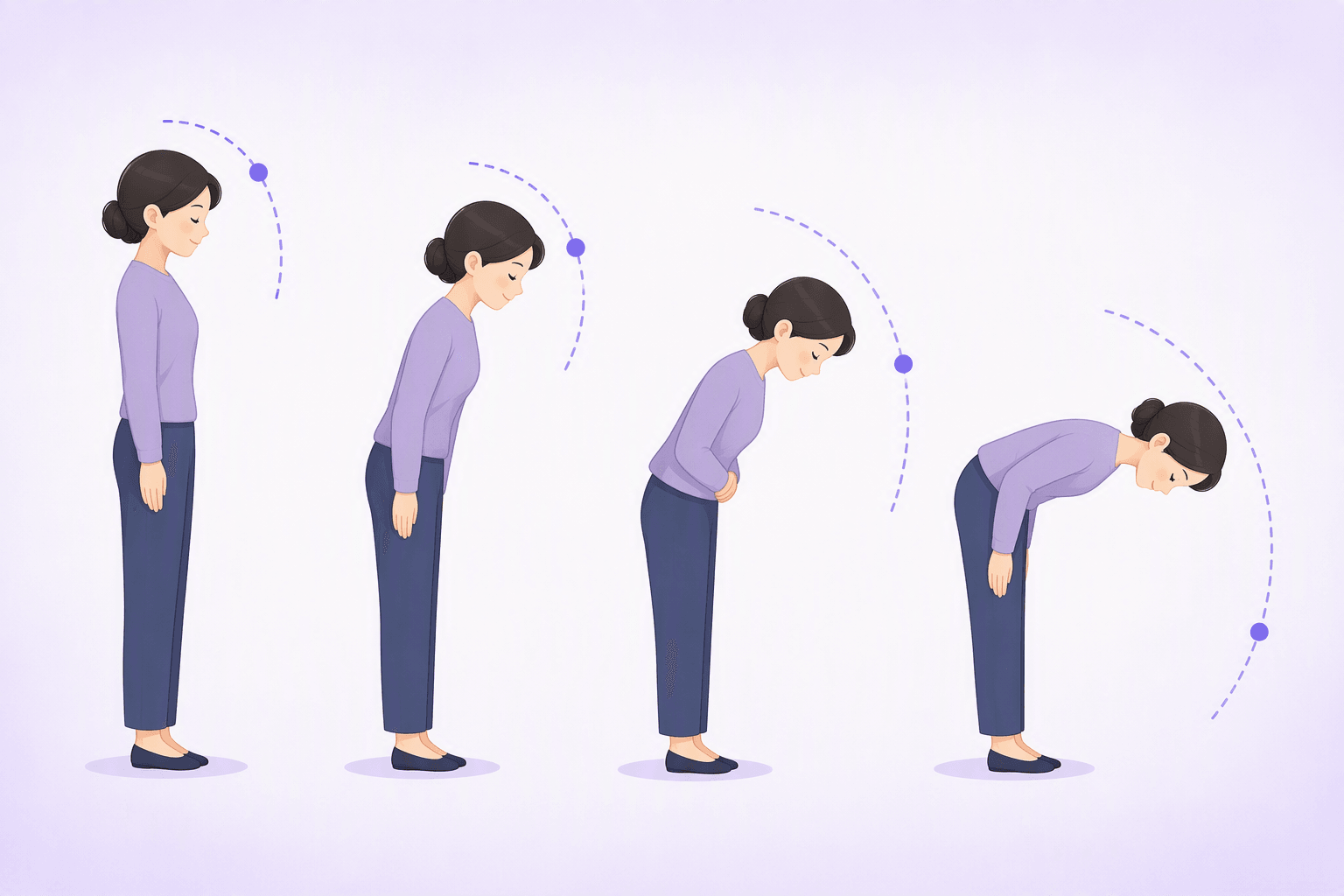
In Korean culture, a verbal apology is almost always accompanied by a physical bow. For casual apologies among friends, a slight head nod is enough. For polite apologies, a 30-degree bow shows genuine regret. For serious formal apologies, a deep 45- to 90-degree bow communicates that you take full responsibility. In extreme public apologies (corporate scandals, political controversies) you may see the full 큰절 (keunjeol), a kneeling bow that touches the forehead to the ground. The physical gesture is considered inseparable from the words.
Practice With Real Korean Content
Reading about apology phrases builds understanding, but hearing them in natural Korean speech is what makes them instinctive. Korean dramas are an outstanding resource: My Mister for heartfelt formal apologies between characters navigating complex social relationships, Crash Landing on You for the contrast between North and South Korean speech patterns, and Vincenzo for sharp formal-register dialogue in legal and business contexts.
Wordy lets you watch Korean movies and shows with interactive subtitles, tapping on any apology phrase to see its meaning, speech level, and cultural context in real time. Instead of memorizing phrases from a list, you absorb them from authentic conversations with natural intonation and the accompanying body language that makes Korean apologies complete.
For more Korean content, explore our blog for guides including the best movies to learn Korean. You can also visit our Korean learning page to start practicing today.
Frequently Asked Questions
What is the difference between 죄송합니다 and 미안합니다?
Can I use 미안해 with someone older than me?
How do Koreans physically apologize?
What does 쏘리 (ssori) mean in Korean?
How do you say 'excuse me' in Korean?
Sources & References
- National Institute of Korean Language (국립국어원), Standard Korean Language Dictionary
- King Sejong Institute Foundation, Korean Language Education Guidelines (2024)
- Ethnologue: Languages of the World, Korean language entry (2024)
- Brown, P. & Levinson, S. (1987). 'Politeness: Some Universals in Language Usage.' Cambridge University Press.
- Yeon, J. & Brown, L. (2011). 'Korean: A Comprehensive Grammar.' Routledge.
Start learning with Wordy
Watch real movie clips and build your vocabulary as you go. Free to download.


