Quick Answer
The most essential emotions in French are heureux (happy), triste (sad), en colère (angry), effrayé (scared), surpris (surprised), and dégoûté (disgusted). The key grammar distinction: most emotions use être + adjective (je suis triste), but several important ones use avoir + noun instead (j'ai peur, j'ai honte). French also has untranslatable emotion words like dépaysement and ennui that reveal deep cultural attitudes toward feeling.
French emotions vocabulary is far more than a translation exercise. The way French encodes feelings reveals a fundamentally different relationship between language and inner experience, from grammar structures that treat fear as something you have rather than something you are, to untranslatable words like dépaysement that capture emotional states English simply cannot name. Mastering les émotions in French means understanding these distinctions, not just memorizing word lists.
With approximately 321 million speakers across 29 countries according to the Organisation internationale de la Francophonie's 2024 report, French is spoken on every inhabited continent. Emotional expression varies across the Francophone world, from the reserved pudeur (emotional modesty) of Parisian conversation to the more expressive registers of Québécois French and West African French. Yet the core vocabulary remains remarkably consistent.
"Emotion concepts are not universal. Each language carves up the emotional landscape differently, and French, with words like ennui, dépaysement, and spleen, offers windows into states of feeling that English-only speakers may never have consciously distinguished."
(Anna Wierzbicka, Emotions Across Languages and Cultures, Cambridge University Press)
This guide covers 40+ French emotion words organized by category, with pronunciation, gender agreement, grammar patterns, cultural insights, and the untranslatable terms that make French emotional vocabulary uniquely expressive. For interactive practice with real French content, visit our French learning page.
Quick Reference: Basic Emotions
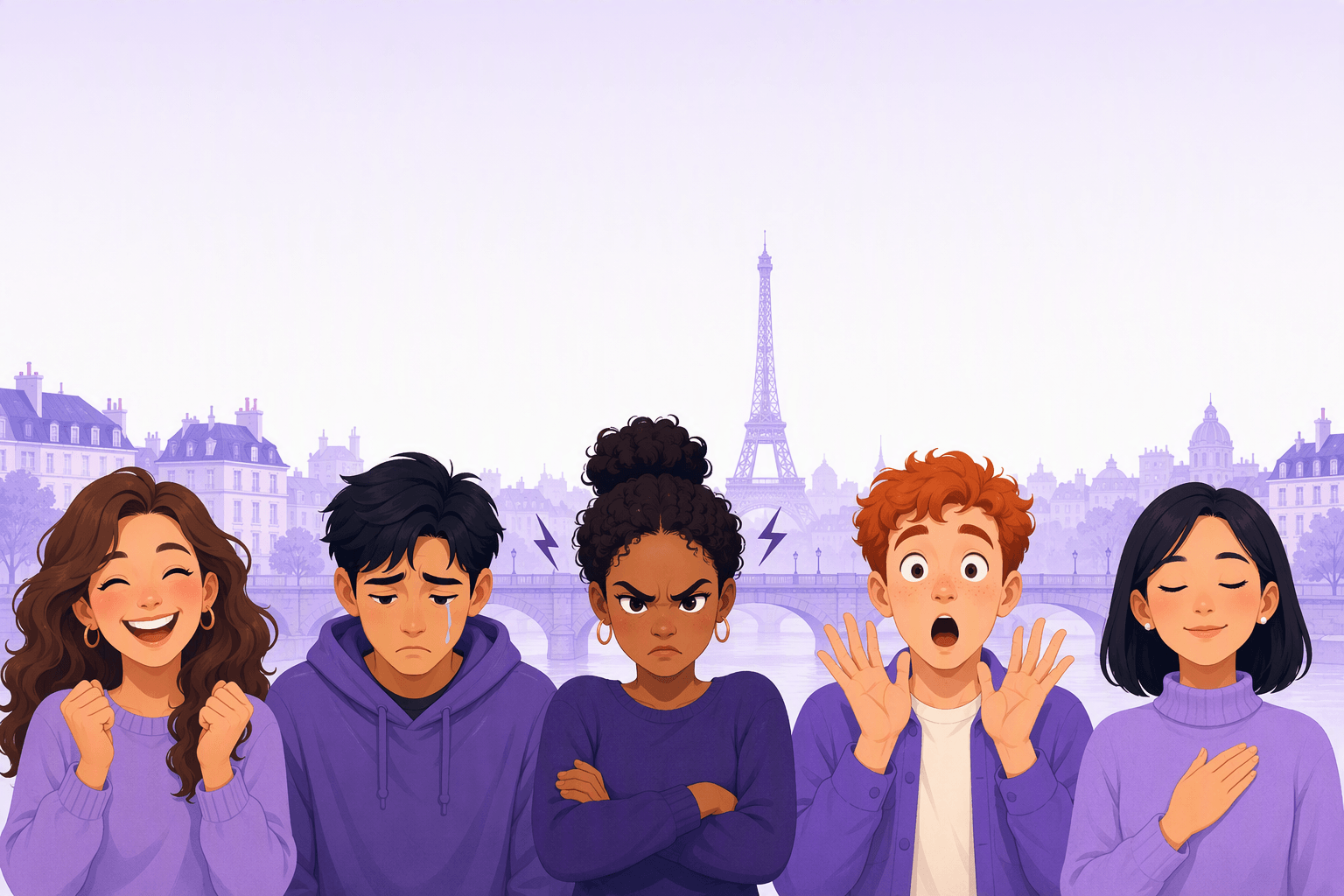
Psychologist Paul Ekman's foundational research identified six basic emotions recognized across cultures. Here is how French expresses each one. Pay attention to the notes column, which marks gender agreement patterns you will need for every conversation.
| English | French | Pronunciation | Note |
|---|---|---|---|
| Happy | Heureux / Heureuse | uh-RUH / uh-RUHZ | être heureux/heureuse |
| Sad | Triste | treest | être triste (same both genders) |
| Angry | En colère | ahn koh-LEHR | être en colère (invariable) |
| Scared | Effrayé / Effrayée | eh-freh-YEH | avoir peur (more common) |
| Surprised | Surpris / Surprise | soor-PREE / soor-PREEZ | être surpris/surprise |
| Disgusted | Dégoûté / Dégoûtée | deh-goo-TEH | être dégoûté/dégoûtée |
💡 Être vs. Avoir: The Core Distinction
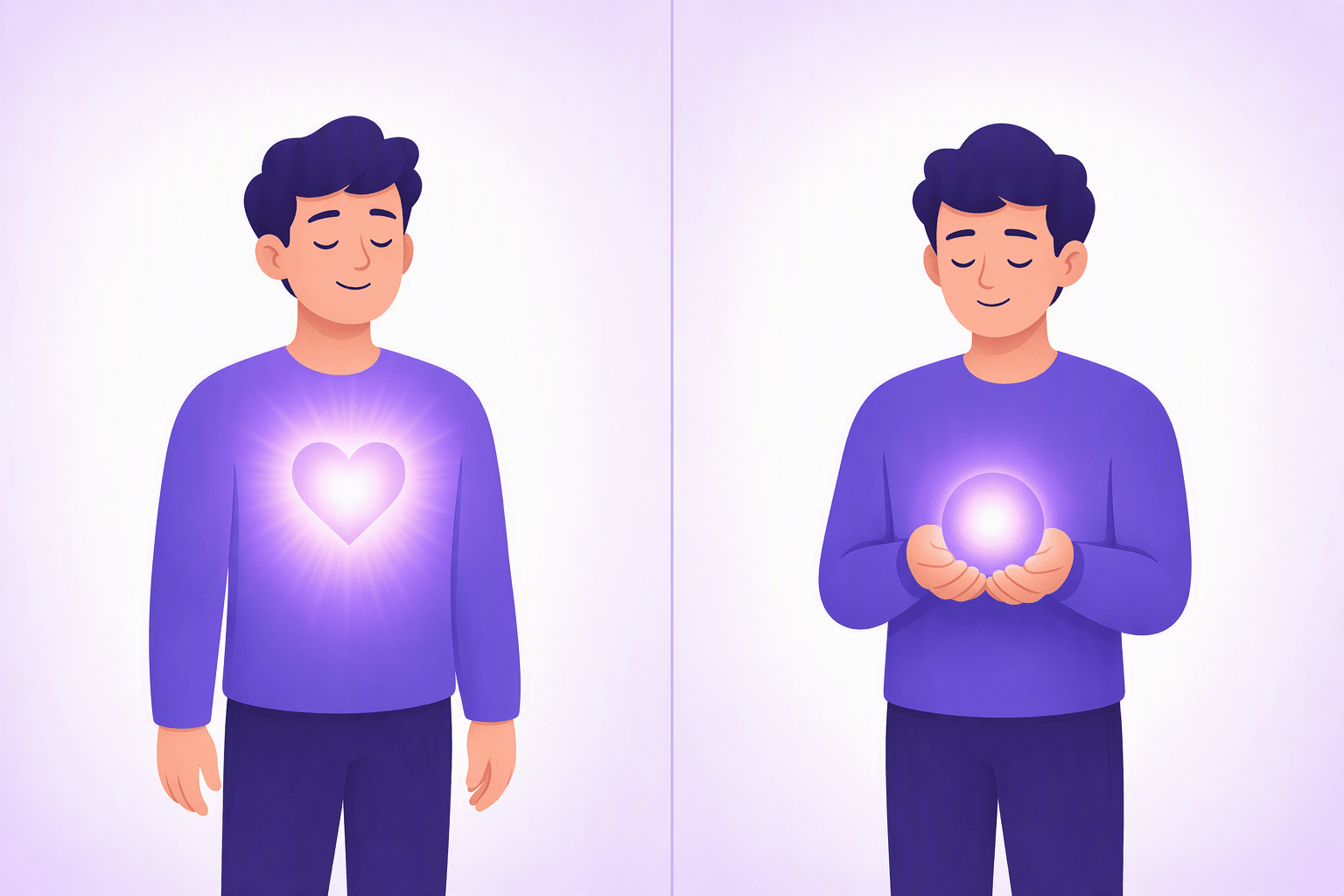
English uses "to be" for nearly all emotions: I am happy, I am scared, I am ashamed. French splits these between two verbs. Most emotions use être (to be): je suis triste (I am sad). But several important emotions use avoir (to have): j'ai peur (I have fear), j'ai honte (I have shame). This is not optional; using the wrong verb sounds immediately wrong to French speakers.
Positive Emotions
French has a rich vocabulary for expressing positive feelings, with fine distinctions between types of happiness that English often collapses into a single word.
| English | French | Pronunciation | Note |
|---|---|---|---|
| Excited / Thrilled | Ravi / Ravie | rah-VEE | être ravi(e), stronger than content |
| Grateful | Reconnaissant / Reconnaissante | ruh-koh-neh-SAHN | être reconnaissant(e) |
| Proud | Fier / Fière | fee-EHR / fee-EHR | être fier/fière |
| Calm / Peaceful | Calme | kahlm | être calme (same both genders) |
| Pleased / Content | Content / Contente | kohn-TAHN / kohn-TAHNT | être content(e), softer than heureux |
| In love | Amoureux / Amoureuse | ah-moo-RUH / ah-moo-RUHZ | être amoureux/amoureuse |
| Relieved | Soulagé / Soulagée | soo-lah-ZHEH | être soulagé(e) |
| Moved / Touched | Ému / Émue | eh-MOO | être ému(e) |
Heureux vs. Content
These two words both translate to "happy" in English, but French speakers use them quite differently. Heureux (uh-RUH) describes deep, lasting happiness, a state of well-being. Content (kohn-TAHN) is lighter, closer to "pleased" or "satisfied." Saying je suis content de te voir (I'm pleased to see you) is warm but measured. Saying je suis heureux de te voir carries more emotional weight, suggesting genuine joy.
The Académie française notes that heureux derives from the Latin augurium (omen, fortune), connecting happiness etymologically to luck and fate. This gives heureux a richness that content, from the Latin contentus (contained, satisfied), lacks.
Ravi
Ravi (rah-VEE) expresses a delighted, almost ecstatic happiness. It is the standard word for "thrilled" or "delighted" in formal and semi-formal contexts. The classic French greeting enchanté (enchanted, used when meeting someone) has a close cousin in ravi de vous rencontrer (delighted to meet you), which feels slightly warmer and more personal.
Ému
Ému (eh-MOO) describes being emotionally moved or touched: a tear at a wedding, a lump in the throat during a film. French culture values this emotion highly. Being ému is not weakness; it is proof of depth. You will hear this word constantly in French cinema, where characters describe being profondément ému (deeply moved) by art, music, or human connection.
Negative Emotions
French distinguishes between many shades of negative feeling that English often lumps together. Understanding these distinctions is essential for both comprehension and self-expression.
| English | French | Pronunciation | Note |
|---|---|---|---|
| Anxious / Worried | Anxieux / Anxieuse | ahnk-see-UH / ahnk-see-UHZ | être anxieux/anxieuse |
| Frustrated | Frustré / Frustrée | froos-TREH | être frustré(e) |
| Jealous | Jaloux / Jalouse | zhah-LOO / zhah-LOOZ | être jaloux/jalouse |
| Lonely | Seul / Seule | suhl | se sentir seul(e) |
| Ashamed | Honteux / Honteuse | ohn-TUH / ohn-TUHZ | avoir honte (avoir + noun) |
| Disappointed | Déçu / Déçue | deh-SOO | être déçu(e) |
| Nervous | Nerveux / Nerveuse | nehr-VUH / nehr-VUHZ | être nerveux/nerveuse |
| Overwhelmed | Débordé / Débordée | deh-bor-DEH | être débordé(e), lit. 'overflowing' |
| Nostalgic | Nostalgique | nohs-tahl-ZHEEK | être nostalgique (same both genders) |
Déçu
Déçu (deh-SOO) means disappointed, but in French conversation it often carries more weight than the English word suggests. When a French speaker says je suis un peu déçu (I am a little disappointed), the understatement frequently masks significant displeasure. This is part of the broader French communicative style where emotional restraint and litotes (deliberate understatement) are valued. Research by Lisa Feldman Barrett in How Emotions Are Made emphasizes that emotional expression is shaped by cultural "emotion concepts," and French concepts lean toward measured expression.
Avoir Honte
Shame in French uses the avoir construction: j'ai honte (I have shame), not je suis honteux. While honteux/honteuse exists as an adjective meaning "shameful" or "ashamed," the most natural way to express feeling ashamed is with avoir honte. You can specify what you are ashamed of with de: j'ai honte de mon comportement (I am ashamed of my behavior).
Débordé
Débordé (deh-bor-DEH) literally means "overflowing," as in a river bursting its banks. French uses this vivid metaphor for the feeling of being overwhelmed, swamped, or in over your head. Je suis complètement débordé au travail (I am completely overwhelmed at work) is one of the most common complaints in French professional life.
Uniquely French Emotions: Words Without English Equivalents
French contains several emotion words that resist direct translation into English. These terms reveal cultural attitudes and perceptual distinctions that are genuinely unique to French-speaking culture.
| English | French | Pronunciation | Note |
|---|---|---|---|
| Disorientation in a foreign place | Dépaysement | deh-peh-eez-MAHN | From dé- (un-) + pays (country) |
| Existential boredom / Listlessness | Ennui | ahn-NWEE | Deeper than English 'boredom' |
| Exuberant joy of living | Joie de vivre | zhwah duh VEEV-ruh | Adopted into English unchanged |
| Poetic melancholy / World-weariness | Spleen | spleen | Redefined by Baudelaire |
| Pleasure of aimless wandering | Flâner | flah-NEH | Verb: to stroll without purpose |
| Bittersweet longing | Langueur | lahn-GUHR | A dreamy, pleasant sadness |
Dépaysement
Dépaysement (deh-peh-eez-MAHN) is built from dé- (un-, removal) and pays (country, land). It describes the feeling of disorientation, strangeness, and slight unease you experience when removed from your familiar surroundings: landing in a foreign city where you do not speak the language, where the food smells different, where the rhythm of daily life is unfamiliar. Crucially, dépaysement is not entirely negative. Many French speakers actively seek it out as a form of personal growth. Travel agencies advertise un vrai dépaysement (a real change of scenery) as a selling point.
Ennui
Ennui (ahn-NWEE) has been borrowed into English, but the French meaning is deeper and more philosophical than the English adoption suggests. Where English "boredom" is simply not having anything to do, French ennui carries overtones of existential weariness, a spiritual fatigue with the repetitiveness of existence. The word runs through French literature from Pascal's Pensées to Flaubert's Madame Bovary to Sartre's La Nausée. It is an emotion that French intellectual culture takes seriously as a philosophical condition, not merely a passing inconvenience.
Spleen
Spleen was borrowed from English (where it refers to the organ and, archaically, to ill temper) but was transformed by Charles Baudelaire in his 1857 poetry collection Les Fleurs du mal into something entirely different: a state of poetic melancholy, world-weariness, and aesthetic despair. Baudelaire's four poems titled "Spleen" established the word as a cornerstone of French literary emotion. Today, saying j'ai le spleen conveys a dark, romantic, intellectualized sadness that has no single English equivalent.
Joie de Vivre
Joie de vivre (zhwah duh VEEV-ruh), literally "joy of living," has been adopted into English precisely because no English phrase captures its meaning with the same economy. It describes an exuberant, full-bodied enjoyment of life: relishing good food, conversation, laughter, beauty, and human connection. The OIF's cultural reports frequently cite joie de vivre as a central value of Francophone identity, particularly in contexts of food culture and social gatherings.
Grammar: Être + Adjective vs. Avoir + Noun
This is the single most important grammar pattern for French emotions. Getting it wrong marks you immediately as a beginner.
Emotions that use être (to be) + adjective:
| French | English | Gender Change |
|---|---|---|
| Je suis heureux/heureuse | I am happy | Yes |
| Je suis triste | I am sad | No (same form) |
| Je suis en colère | I am angry | No (invariable phrase) |
| Je suis surpris/surprise | I am surprised | Yes |
| Je suis fier/fière | I am proud | Yes |
| Je suis jaloux/jalouse | I am jealous | Yes |
| Je suis déçu/déçue | I am disappointed | Yes |
| Je suis calme | I am calm | No (same form) |
Emotions that use avoir (to have) + noun:
| French | Literal Translation | English Meaning |
|---|---|---|
| J'ai peur | I have fear | I am scared |
| J'ai honte | I have shame | I am ashamed |
| J'ai de la peine | I have sorrow | I am sorrowful |
| J'ai le cafard | I have the cockroach | I am feeling blue |
| J'ai le mal du pays | I have the sickness of country | I am homesick |
| J'ai le trac | I have the stage fright | I have stage fright |
🌍 Pudeur: French Emotional Restraint
French culture practices pudeur (poo-DUHR), a concept of emotional modesty with no precise English equivalent. While the French emotion vocabulary is vast and nuanced, the cultural code around expressing emotions is one of restraint. Compared to American or Italian communicative styles, French speakers tend toward understatement: ce n'est pas mal (it's not bad) often means "it's quite good," and je suis un peu contrarié (I'm a little annoyed) can signal genuine anger. This does not mean French people feel less; it means they encode emotional intensity through subtlety rather than volume. Understanding pudeur is essential for reading between the lines in French conversation.
The avoir le cafard expression deserves special attention. Literally "to have the cockroach," it means to feel down or blue. The origin is debated, but the Académie française traces it to Baudelaire's era, when cafard shifted from meaning "hypocrite" to denoting a creeping, low-grade depression. It remains one of the most commonly used informal expressions for mild sadness in modern French.
Gender Agreement Patterns
French emotion adjectives follow predictable patterns for gender agreement. Mastering these patterns means you can correctly form any emotion word without memorizing each one individually.
Pattern 1: -eux / -euse (the most common emotion pattern)
- heureux / heureuse (happy)
- nerveux / nerveuse (nervous)
- anxieux / anxieuse (anxious)
- jaloux / jalouse (jealous)
- honteux / honteuse (shameful)
Pattern 2: -é / -ée (past participles used as adjectives)
- frustré / frustrée (frustrated)
- déçu / déçue (disappointed)
- soulagé / soulagée (relieved)
- effrayé / effrayée (frightened)
- ému / émue (moved)
Pattern 3: Same form for both genders
- triste (sad)
- calme (calm)
- nostalgique (nostalgic)
- en colère (angry)
Pattern 4: Irregular
- fier / fière (proud): the -er / -ère pattern
Literary Emotions: From Proust to Camus
French literature has contributed emotion concepts that have shaped how the entire Western world thinks about feeling. Encountering these in their original language adds a layer of meaning that translation cannot fully preserve.
Proustian nostalgia. Marcel Proust's À la recherche du temps perdu (In Search of Lost Time) gave the world the concept of involuntary memory triggered by sensory experience. The famous madeleine passage, where a taste of cake dipped in tea unleashes an avalanche of childhood memories, has made proustien (Proustian) a French adjective meaning "relating to vivid, sensory-triggered nostalgia."
Sartrean nausée. Jean-Paul Sartre's 1938 novel La Nausée describes an existential revulsion at the absurdity and contingency of existence. The word nausée in French literary contexts carries this philosophical weight alongside its physical meaning.
Camusian absurdité. Albert Camus's concept of the absurd, the tension between humanity's desire for meaning and the universe's indifference, introduced l'absurde as an emotional-philosophical state. It is not despair exactly, but a clear-eyed confrontation with meaninglessness that paradoxically frees one to create meaning through action.
These literary emotions appear constantly in French conversation and media. A French speaker might describe a moment as très proustien or a situation as absurde au sens camusien with the expectation that the reference will be understood.
Practice Emotions With Real French Content
Reading emotion words in a table builds recognition, but hearing them spoken in context, with tone, facial expression, and situational meaning, is what makes them stick. French films and series are particularly rich ground for emotional vocabulary because French cinema values psychological complexity and emotional nuance over action and spectacle.
Wordy lets you watch French content with interactive subtitles. When an emotion word appears in dialogue, you can tap it to see its meaning, gender form, and grammatical context. Instead of studying heureux and heureuse from a table, you absorb the distinction naturally as characters use them in real conversation.
Explore our blog for more French vocabulary guides, or check out the best movies to learn French for viewing recommendations that bring emotional vocabulary to life in authentic dialogue.
Frequently Asked Questions
How do you say 'I am happy' in French?
What is the difference between être and avoir for emotions in French?
What are some untranslatable French emotion words?
Do French emotion adjectives change for gender?
How do French people express emotions differently than English speakers?
What is the most common way to ask 'How are you feeling?' in French?
Sources & References
- Académie française, Dictionnaire de l'Académie française, 9th edition
- Ekman, P. Basic Emotions (Handbook of Cognition and Emotion, Wiley)
- Wierzbicka, A. Emotions Across Languages and Cultures (Cambridge University Press)
- Organisation internationale de la Francophonie (OIF), La langue française dans le monde, 2024
- Barrett, L.F. How Emotions Are Made: The Secret Life of the Brain (Houghton Mifflin Harcourt)
Start learning with Wordy
Watch real movie clips and build your vocabulary as you go. Free to download.


