Quick Answer
The best place to start building your English body parts vocabulary is learning words for the head (head), hand (hand), and foot/leg (foot/leg). Watch out for irregular plurals: foot → feet, tooth → teeth. At the doctor and in emergencies, these are some of the most important words.
English is the most widely learned second language in the world. According to Ethnologue’s 2024 data, nearly 1.5 billion people speak it as a first or second language, and it has official status in 67 countries. Body-part vocabulary is one of the first and most practical topics every English learner should master, for doctor visits, emergency care, sports and fitness, or simply explaining where something hurts.
For English speakers, two typical difficulties come up when learning English body-part vocabulary. The first is conceptual splitting: in English, we often use two words where another language uses one, for example leg (the whole lower limb) versus foot (below the ankle). Similarly, arm (shoulder to wrist) versus hand (below the wrist). The second difficulty is irregular plurals: foot → feet, tooth → teeth, man → men, you need to watch for these, especially in medical contexts.
"Body-part vocabulary is among the first semantic fields that language learners internalize, because it is universally relevant and emotionally salient, we all have the same body, which makes cross-linguistic mapping both intuitive and surprisingly tricky where category boundaries differ."
(David Crystal, The Cambridge Encyclopedia of the English Language, Cambridge University Press, 2019)
This guide presents 50+ English body-part words in organized groups: head and face, torso, upper limbs, lower limbs, internal organs, and finally the most common English body-part idioms. For each word, you will find a pronunciation guide and useful notes. With the Wordy app, you can practice these words in real English content too.
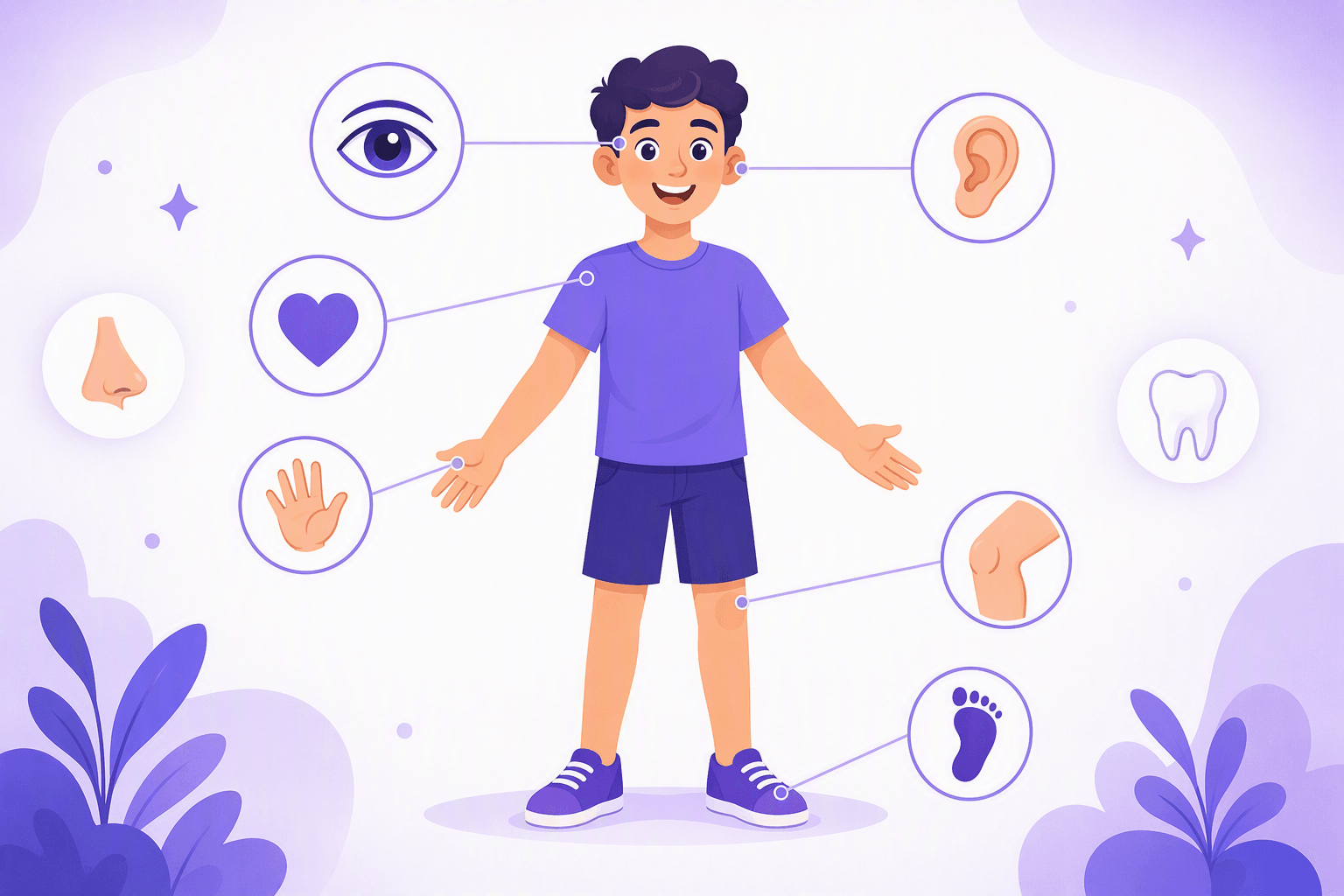
The head and face
The head and face are the first and most frequently mentioned body-part group. In this group, most words are one syllable and easy to pronounce, which makes it ideal for starting. The only pronunciation challenge may be forehead: although it looks like “fore-HEAD” in writing, you will commonly hear /ˈfɔːrhɛd/ or /ˈfɔːrɪd/, with the latter being a more informal British pronunciation.
| English | Pronunciation | Note |
|---|---|---|
| head | hɛd | |
| face | feɪs | |
| eye | aɪ | Plural: eyes /aɪz/ |
| ear | ɪr | Inner ear: inner ear |
| nose | noʊz | |
| mouth | maʊθ | |
| lip | lɪp | Usually used in the plural: lips |
| tooth | tuːθ | Plural: teeth /tiːθ/ , irregular! |
| tongue | tʌŋ | The 'gue' is silent: say 'tʌŋ' |
| jaw | dʒɔː | |
| forehead | ˈfɔːrhɛd | British pronunciation: /ˈfɔːrɪd/ is also common |
| cheek | tʃiːk | |
| chin | tʃɪn |
⚠️ tooth → teeth: the most important irregular plural
The plural of tooth is teeth, not tooths. This is one of the most common irregular plurals in English. It matters a lot at the dentist: “I have a toothache” and “My teeth hurt.” Similar irregular forms include foot → feet, man → men, woman → women, child → children.
Useful sentences about the head and face
- I have a headache (/aɪ hæv ə ˈhɛdeɪk/): I have a headache
- My eyes are tired (/maɪ aɪz ər ˈtaɪərd/): My eyes are tired
- I have a toothache (/aɪ hæv ə ˈtuːθeɪk/): I have a toothache
- My jaw is sore (/maɪ dʒɔː ɪz sɔːr/): My jaw is sore
The torso
Body parts on the torso are especially important in medical contexts. According to the British Council’s 2023 global English teaching research, body-part vocabulary, especially the torso and internal organs, are the words learners most often look up before medical visits.
| English | Pronunciation | Note |
|---|---|---|
| neck | nɛk | |
| shoulder | ˈʃoʊldər | |
| chest | tʃɛst | Medical: thorax |
| back | bæk | |
| stomach/belly | ˈstʌmək / ˈbɛli | Stomach = the organ and also the general area; belly = informal |
| waist | weɪst | |
| hip | hɪp |
💡 stomach vs. belly vs. abdomen
In English, three words can refer to the “stomach area.” stomach (/ˈstʌmək/) can mean the organ and also the general area. belly (/ˈbɛli/) is informal and everyday, it is natural and not rude. abdomen (/ˈæbdəmən/) is a medical and anatomical term. In everyday speech, stomach and belly alternate: “My stomach hurts” and “I have a stomachache” are both fine.
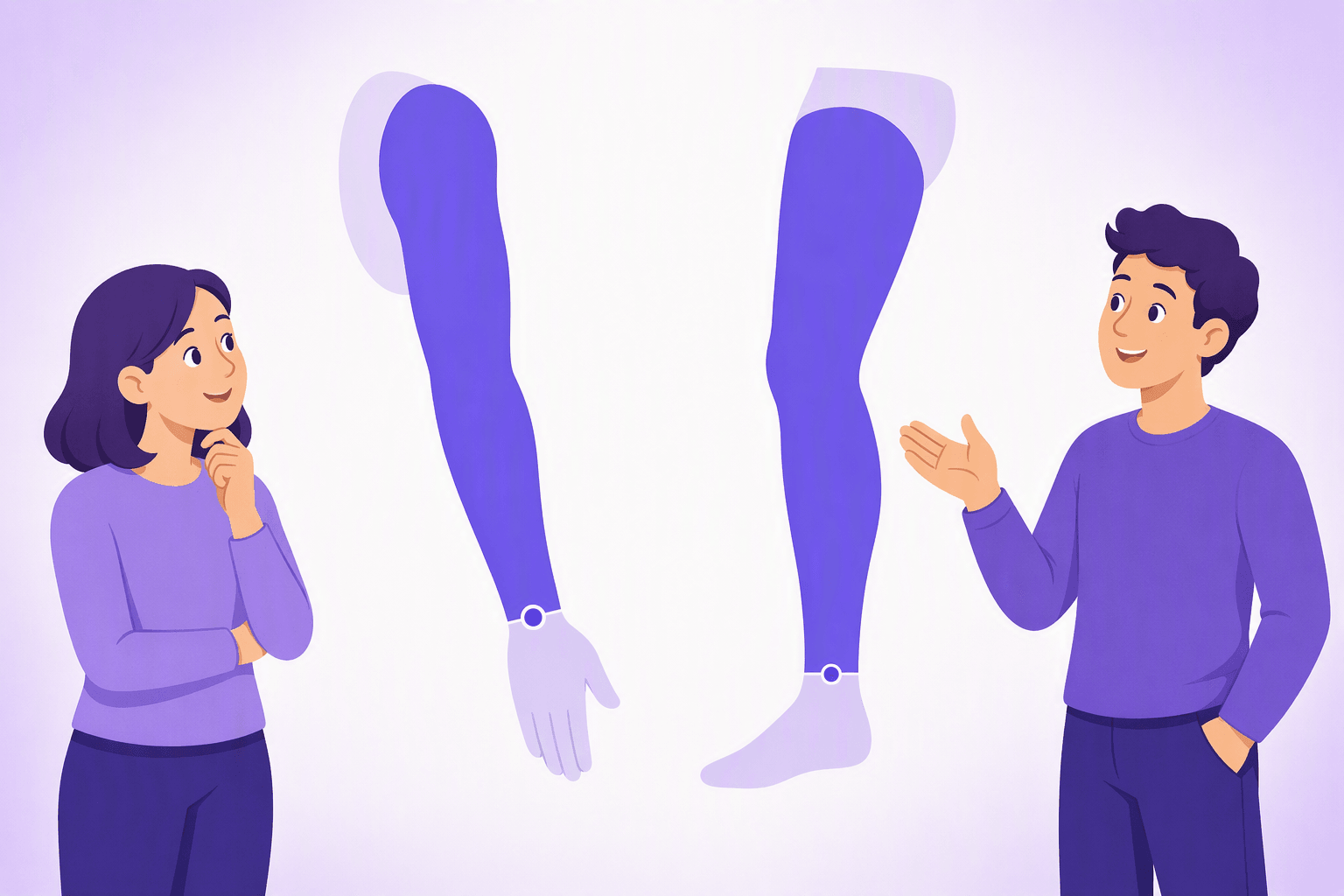
⚠️ leg vs. foot: two different words in English
In English, we use two words: leg (/lɛɡ/) means the whole lower limb from the hip to the ankle. foot (/fʊt/) means only the part below the ankle. Similarly, arm (/ɑːrm/) is from the shoulder to the wrist, and hand (/hænd/) is below the wrist. If you need to tell a doctor where it hurts, this difference is critical.
Useful sentences about the torso
- My back hurts (/maɪ bæk hɜːrts/): My back hurts, one of the most searched medical complaints in English
- I have pain in my chest (/aɪ hæv peɪn ɪn maɪ tʃɛst/): I have pain in my chest, a critical sentence in an emergency
- I have a stiff neck (/aɪ hæv ə stɪf nɛk/): I have a stiff neck
- My shoulder is sore (/maɪ ˈʃoʊldər ɪz sɔːr/): My shoulder is sore
Upper limbs (arm, hand)
In upper-limb vocabulary, remember that arm runs from the shoulder to the wrist, and it includes the elbow. hand starts exactly at the wrist. This split is very clear in English, and it matters in medical situations.
| English | Pronunciation | Note |
|---|---|---|
| arm | ɑːrm | |
| elbow | ˈɛlboʊ | |
| wrist | rɪst | The 'w' is silent: say 'rɪst' |
| hand | hænd | |
| finger | ˈfɪŋɡər | Thumb is separate: thumb |
| thumb | θʌm | The 'b' is silent: say 'θʌm' |
| nail | neɪl | Toenail: toenail |
💡 Finger names in English
English names all five fingers individually. The thumb is thumb (/θʌm/). The index finger is index finger or pointer finger. The middle finger is middle finger. The ring finger is ring finger. The little finger is pinky (informal) or little finger. The word finger usually refers to the four longer fingers, but it can sometimes include all five, which is why English has a separate word for thumb.
🌍 The thumb and cultural differences
The “thumbs up” (/θʌmz ʌp/) gesture usually means approval in English-speaking cultures. The phrase has spread globally through English internet culture. The English phrase “give someone a hand” (/ɡɪv ... ə hænd/) has two meanings: help someone, and applaud someone (give someone a round of applause). Learn both meanings, context decides which one it is.
Useful sentences about the upper limbs
- I broke my wrist (/aɪ broʊk maɪ rɪst/): I broke my wrist
- My elbow is swollen (/maɪ ˈɛlboʊ ɪz ˈswoʊlən/): My elbow is swollen
- I cut my finger (/aɪ kʌt maɪ ˈfɪŋɡər/): I cut my finger
- Can you give me a hand? (/kæn juː ɡɪv miː ə hænd/): Can you help me? (idiomatic)
Lower limbs (leg)
For lower-limb vocabulary, focus most on the difference between leg and foot, as mentioned in the torso section. Another common issue is the irregular plural of foot, which is feet. This matters because the unit of length also uses feet in the plural (1 foot = 30,48 cm).
| English | Pronunciation | Note |
|---|---|---|
| thigh | θaɪ | The 'gh' is silent: say 'θaɪ' |
| knee | niː | The 'k' is silent: say 'niː' |
| shin | ʃɪn | Front part; the back is calf /kæf/ |
| ankle | ˈæŋkəl | |
| foot | fʊt | Plural: feet /fiːt/ , irregular! |
| toe | toʊ | |
| heel | hiːl |
⚠️ foot → feet and knee: two important pronunciation traps
The plural of foot (/fʊt/) is feet (/fiːt/), do not say “foots.” This is one of the most common mistakes. In knee (/niː/), the initial k is completely silent, pronounce it like “nee.” Similar silent-letter words include kneel (to kneel), knob (knob), know (to know), the k is silent in these too.
Useful sentences about the lower limbs
- My knee hurts (/maɪ niː hɜːrts/): My knee hurts
- I twisted my ankle (/aɪ ˈtwɪstɪd maɪ ˈæŋkəl/): I twisted my ankle
- I have a blister on my heel (/aɪ hæv ə ˈblɪstər ɒn maɪ hiːl/): I have a blister on my heel
- My feet are sore (/maɪ fiːt ər sɔːr/): My feet are sore
The pronunciation of thigh can also surprise learners: the gh is silent here too, just say /θaɪ/, like the English word “thy.”
Internal organs (simplified list)
Knowing internal organs is essential for medical consultations. According to the Oxford English Dictionary, these words form one of the oldest and most stable layers of English health vocabulary. Most trace back to medical terminology via Latin or Old French.
| English | Pronunciation | Note |
|---|---|---|
| brain | breɪn | |
| heart | hɑːrt | |
| lung | lʌŋ | Usually used in the plural: lungs |
| liver | ˈlɪvər | |
| kidney | ˈkɪdni | Usually used in the plural: kidneys |
| stomach | ˈstʌmək | Anatomically, the stomach organ |
🌍 Heart: the heart's double role in English too
In English, heart (/hɑːrt/) is far more than the name of an organ. It is a key word in emotional life: “broken heart,” “heartfelt,” “from the bottom of my heart.” English and many other cultures think about this in a similar way, the heart symbolizes emotions and sincerity. This makes it easier to remember because the cultural meaning matches.
The most important medical sentences about internal organs:
- I have chest pain (/aɪ hæv tʃɛst peɪn/): I have chest pain, always tell healthcare staff
- My stomach is upset (/maɪ ˈstʌmək ɪz ʌpˈsɛt/): My stomach is upset / I feel nauseous
- I have kidney pain (/aɪ hæv ˈkɪdni peɪn/): I have kidney pain
- I feel short of breath (/aɪ fiːl ʃɔːrt əv brɛθ/): I feel short of breath, for lung-related symptoms
Body-part expressions and idioms in English
English is extremely rich in body-part based idioms. Merriam-Webster lists hundreds. These expressions are not literal, but without them, much of the humor and meaning in real English movies and series gets lost. Here are the most common ones you will definitely meet in real English content.
Break a leg!
break a leg (/breɪk ə lɛɡ/), literally “break a leg,” actually means “good luck!” People mainly say it before a performance, appearance, or exam. The origin is debated, but it is linked to theater. Some theories connect it to “taking a bow,” which involves bending at the ankle or knee, as a symbol of success.
Cost an arm and a leg
cost an arm and a leg (/kɒst ən ɑːrm ənd ə lɛɡ/), literally “it costs an arm and a leg,” means something is extremely expensive. “That car costs an arm and a leg” means that car is insanely expensive.
Turn a blind eye
turn a blind eye (/tɜːrn ə blaɪnd aɪ/), literally “turn a blind eye to something,” means to deliberately ignore something. “The manager turned a blind eye to the problem.” The origin is often linked to Admiral Nelson, who supposedly held his telescope to his blind eye so he would not have to follow a retreat signal.
Keep an eye on
keep an eye on (/kiːp ən aɪ ɒn/), literally “keep an eye on something,” means to watch or look after someone or something. “Can you keep an eye on my bag?” It is an everyday and very useful expression.
💡 Four idioms you should definitely learn
These four idioms appear very often in real English materials, movies, series, and podcasts. When you understand a scene or dialogue where they appear, you will feel how much richer your English vocabulary is: break a leg (good luck), cost an arm and a leg (very expensive), turn a blind eye (ignore on purpose), keep an eye on (watch or look after).
Irregular plurals: summary table
When you learn body-part vocabulary, pay special attention to irregular plurals. You cannot reliably derive them from a rule, you need to memorize them.
| English | Singular | Plural | Pronunciation (plural) |
|---|---|---|---|
| tooth | tooth | teeth | /tiːθ/ |
| foot | foot | feet | /fiːt/ |
| eye | eye | eyes | /aɪz/ (regular) |
| finger | finger | fingers | /ˈfɪŋɡərz/ (regular) |
In medical and sports contexts, these come up most often. “teeth” and “feet” are real inflection traps, even more advanced learners often make mistakes in spoken communication.
Practice with real English content
Learning English body-part vocabulary starts with lists, but real retention happens when you hear the words in natural context. In medical dramas (for example, Grey's Anatomy), sports commentary, action movies, and everyday conversations, these words come up again and again, and each encounter strengthens your memory.
With the Wordy app, you can watch English movies and series with interactive subtitles. If an unfamiliar body-part word is spoken or appears in the subtitles, you can tap once to see the pronunciation, the translation, and the context. This is one of the most effective ways to make shoulder, wrist, shin, and the rest become active vocabulary, not just items on a list.
You should also check our guide to the best movies for learning English: we share curated recommendations to help you find movies where everyday vocabulary about the body, health, and sports appears in natural dialogue.
Frequently Asked Questions
How do you say body parts in English?
What is the difference between "foot" and "leg" in English?
What is the difference between "arm" and "hand" in English?
How do you say internal organs in English?
How do you say "fáj a fejem" in English?
Sources & References
- Merriam-Webster Dictionary (2026). merriam-webster.com.
- Oxford English Dictionary (2025). oed.com.
- Crystal, David (2019). The Cambridge Encyclopedia of the English Language. Cambridge University Press.
- British Council (2023). English Language Teaching: Global Research Report.
Start learning with Wordy
Watch real movie clips and build your vocabulary as you go. Free to download.


