त्वरित जवाब
अंग्रेज़ी में सुबह का सबसे आम अभिवादन औपचारिक और अर्ध-औपचारिक स्थितियों में “Good morning” (/ɡʊd ˈmɔːrnɪŋ/) है, और दोस्तों व सहकर्मियों के बीच कैज़ुअल “Morning!”। “Rise and shine!” दोस्ताना लेकिन थोड़ा पुराने ज़माने का जगाने वाला वाक्य है। दोपहर (noon) से “Good morning” की जगह “Good afternoon” कहें।
छोटा जवाब
अंग्रेज़ी में सबसे आम सुबह का अभिवादन Good morning (/ɡʊd ˈmɔːrnɪŋ/) है, जिसे आप सूर्योदय से लेकर लगभग दोपहर (12:00) तक इस्तेमाल कर सकते हैं। अनौपचारिक स्थितियों में, ज़्यादातर मूल अंग्रेज़ी बोलने वाले इसका छोटा रूप Morning! पसंद करते हैं, यह रोज़मर्रा की बातचीत में “morning” कहने जितना ही स्वाभाविक लगता है।
Ethnologue 2024 के अनुसार, आज अंग्रेज़ी लगभग 1.5 अरब लोग बोलते हैं, जिनमें करीब 380 मिलियन मूल वक्ता शामिल हैं। अमेरिकी, ब्रिटिश, और ऑस्ट्रेलियाई अंग्रेज़ी में सुबह के अभिवादन की आदतें थोड़ी अलग हो सकती हैं, लेकिन Good morning हर जगह स्वाभाविक लगता है।
“अंग्रेज़ी बोलने वाले समुदायों में सुबह के अभिवादन का मकसद जानकारी का आदान-प्रदान नहीं, बल्कि जुड़ाव का संकेत देना है। ‘Good morning’ का मतलब है: ‘मैं आपकी मौजूदगी को मानता/मानती हूं, और दिन की शुरुआत दोस्ताना इरादे से करता/करती हूं।’ दफ्तरों और साझा जगहों में यह एक मजबूत, तय सांस्कृतिक अपेक्षा है।”
(David Crystal, The Cambridge Encyclopedia of the English Language, Cambridge University Press, 2019)
यह गाइड अंग्रेज़ी में 15 सुबह के अभिवादन और उनसे जुड़ी पंक्तियां दिखाती है, जिन्हें श्रेणियों में बांटा गया है: formal, informal, wake-up, और workplace। हर वाक्यांश के लिए आपको IPA उच्चारण, एक उदाहरण वाक्य, और सांस्कृतिक संदर्भ मिलेगा। अगर आप असली संदर्भ में सुबह के अभिवादन सुनना चाहते हैं, तो Wordy अंग्रेज़ी सीखने वाला पेज देखें।

त्वरित झलक: अंग्रेज़ी में सुबह के अभिवादन
| हिन्दी | अंग्रेज़ी | उच्चारण | औपचारिकता |
|---|---|---|---|
| Good morning | Good morning | /ɡʊd ˈmɔːrnɪŋ/ | polite |
| Morning (shortened) | Morning! | /ˈmɔːrnɪŋ/ | casual |
| Good morning, how are you? | Good morning, how are you? | /ɡʊd ˈmɔːrnɪŋ haʊ ɑːr juː/ | polite |
| Rise and shine! | Rise and shine! | /raɪz ænd ʃaɪn/ | casual |
| Good morning, everyone | Good morning, everyone! | /ɡʊd ˈmɔːrnɪŋ ˈɛvrɪwʌn/ | polite |
| Have a good morning! | Have a good morning! | /hæv ə ɡʊd ˈmɔːrnɪŋ/ | polite |
| Hey, morning! | Hey, morning! | /heɪ ˈmɔːrnɪŋ/ | casual |
| How did you sleep? | How did you sleep? | /haʊ dɪd juː sliːp/ | casual |
| Good afternoon (from noon) | Good afternoon | /ɡʊd ˌæftərˈnuːn/ | polite |
| Good evening (after 18:00) | Good evening | /ɡʊd ˈiːvnɪŋ/ | formal |
| Wake up, sleepyhead! | Wake up, sleepyhead! | /weɪk ʌp ˈsliːpɪhɛd/ | casual |
| Time to get up! | Time to get up! | /taɪm tə ɡɛt ʌp/ | casual |
औपचारिक सुबह के अभिवादन
अंग्रेज़ी में औपचारिक सुबह के अभिवादन दिन के समय पर निर्भर करते हैं। British Council की 2023 की अंग्रेज़ी शिक्षण रिपोर्ट बताती है कि बिज़नेस और संस्थागत संचार में समय के अनुसार अभिवादन बहुत मायने रखते हैं।
Good morning
//ɡʊd ˈmɔːrnɪŋ//
शाब्दिक अर्थ: Good morning
“Good morning! Could I get a coffee, please?”
Good morning! Could I get a coffee, please?
You can use it from sunrise until about 12:00. It sounds natural in an office, a shop, or a meeting. It also works in informal settings, it does not sound stiff. In both British and American English, this is the basic formal morning greeting.
Good morning की संरचना सरल है: adjective + noun। सीखने वालों के लिए एक आम उच्चारण समस्या “morning” में स्वर (vowel) होती है। IPA /ɔː/ एक लंबा, गोल (rounded) स्वर है।
Merriam-Webster के अनुसार, Good morning वह एक औपचारिक अभिवादन है जो अंग्रेज़ी की अलग-अलग किस्मों और सामाजिक संदर्भों में लगभग एक जैसा रहता है। इसलिए अंग्रेज़ी में सुबह बातचीत शुरू करने के लिए यह सबसे सुरक्षित डिफॉल्ट विकल्प है।
💡 आप Good morning कितनी देर तक कह सकते हैं?
“Good morning” परंपरागत रूप से दोपहर (12:00) तक ठीक माना जाता है। दोपहर और afternoon में “Good afternoon” सही रूप है, और 18:00 के बाद “Good evening।” अनौपचारिक स्थितियों में, जैसे दोस्तों के साथ, कई लोग इसे सख्ती से नहीं मानते, वे समय की परवाह किए बिना “Hi” या “Hey” इस्तेमाल कर लेते हैं।
Good afternoon
//ɡʊd ˌæftərˈnuːn//
शाब्दिक अर्थ: Good afternoon
“Good afternoon, Dr. Patel. Your appointment is at two.”
Good afternoon, Dr. Patel. Your appointment is at two.
Used between 12:00 and 18:00. It is a natural opener in business meetings, at the start of a phone call, and in formal emails. Because it is long, many people switch to 'Hi' in informal afternoon situations.
Good afternoon दोपहर के बाद का मानक, विनम्र अभिवादन है। उच्चारण टिप: “afternoon” में stress आखिरी syllable पर आता है। यह afternoon में बिज़नेस ईमेल और फोन कॉल शुरू करने के लिए अच्छा है, यह प्रोफेशनल लगता है और दिखाता है कि आप समय के अनुसार शिष्टाचार मानते हैं।
Good evening
//ɡʊd ˈiːvnɪŋ//
शाब्दिक अर्थ: Good evening
“Good evening, ladies and gentlemen. Welcome to the ceremony.”
Good evening, ladies and gentlemen. Welcome to the ceremony.
Used after 18:00 as a greeting, NEVER as a goodbye. It is standard in restaurants, hotels, and events. Among friends, it is rare, 'Hi' or 'Hey' is the default.
एक बहुत आम गलती Good evening और Good night को गड़बड़ा देना है। नियम सरल है: Good evening एक GREETING है (आप शाम को कहीं पहुंचते हैं), और Good night एक GOODBYE है (आप निकलते हैं या सोने जा रहे होते हैं)। अंग्रेज़ी में आप किसी से मिलते समय Good night नहीं कहते, आप इसे सिर्फ रात में विदा लेते समय कहते हैं।
⚠️ Good night कभी भी greeting नहीं है
अंग्रेज़ी में “Good night” का इस्तेमाल सिर्फ goodbye कहते समय होता है, पहुंचने पर कभी नहीं। अगर आप शाम को कहीं पहुंचते हैं: “Good evening।” अगर आप रात में निकलते हैं: “Good night।” मूल वक्ता गलती समझ जाएंगे, लेकिन यह अजीब लगता है।
अनौपचारिक सुबह के अभिवादन
अंग्रेज़ी में अनौपचारिक सुबह के अभिवादन औपचारिक वाले से काफी छोटे होते हैं। British Council के अनुसार, अंग्रेज़ी बोलने वाले कार्यस्थलों में सहकर्मियों के बीच कम से कम 60% सुबह के अभिवादन किसी न किसी छोटे या relaxed रूप में होते हैं।
Morning!
//ˈmɔːrnɪŋ//
शाब्दिक अर्थ: Morning (shortened)
“Morning! Sleep well?”
Morning! Sleep well?
A relaxed, shortened version of 'Good morning.' It is the most common morning greeting among friends, familiar coworkers, and family members. It sounds natural, not rude or careless, it is simply informal. In offices, familiar coworkers often use this almost exclusively.
Morning! अंग्रेज़ी में सबसे आम अनौपचारिक सुबह का अभिवादन है। इसका रिश्ता Good morning से वैसा ही है जैसा किसी पूरे अभिवादन का छोटा रूप होता है: संदेश वही, रूप छोटा, और टोन ज्यादा दोस्ताना।
Peter Trudgill और Jean Hannah की International English (Routledge, 2008) बताती है कि ऐसे elliptical greeting forms अक्सर अंग्रेज़ी बोलने वाली संस्कृतियों में नज़दीकी और अपनापन दिखाते हैं। अगर कोई Morning! कहता है, तो वह यह भी संकेत देता है कि आपके बीच पूरा रूप जरूरी नहीं है।
Hey, morning!
//heɪ ˈmɔːrnɪŋ//
शाब्दिक अर्थ: Hey, morning!
“Hey, morning! How was your weekend?”
Hey, morning! How was your weekend?
The 'Hey' + 'morning' combination sounds especially youthful and friendly. It is common in the US as a workplace greeting when coworkers know each other well. English is unusually flexible in how freely it combines greeting elements.
Hey, morning! दिखाता है कि अंग्रेज़ी के greetings कितने flexible हो सकते हैं। अंग्रेज़ी में आप तत्वों को आसानी से मिला सकते हैं: Hey + morning, Hi + morning, Oh, morning!, ये सब अनौपचारिक ऑफिस बातचीत में स्वाभाविक लग सकते हैं।
How's your morning going?
//haʊz jɔːr ˈmɔːrnɪŋ ˈɡoʊɪŋ//
शाब्दिक अर्थ: How's your morning going?
“Hey! How's your morning going so far?”
Hey! How's your morning going so far?
A friendly morning check-in that goes beyond a simple greeting and shows real interest. It sounds natural with friends and familiar coworkers. The expected answer is short and positive: 'Pretty good, thanks!' or 'Not bad, you?'
How's your morning going? एक अनौपचारिक greeting का दोस्ताना विस्तार है। यह संकेत देता है कि आप सच में जानना चाहते हैं कि सामने वाले का दिन कैसे शुरू हो रहा है। एक अहम सांस्कृतिक नियम: मूल अंग्रेज़ी बोलने वाले फिर भी छोटा, सकारात्मक जवाब उम्मीद करते हैं, अपने commute की लंबी शिकायत शुरू न करें।
🌍 अंग्रेज़ी में सुबह की small talk का नियम
अंग्रेज़ी में सुबह के greetings और छोटे follow-up सवाल (How are you? How's your morning?) एक तरह का ritual exchange हैं, असली जानकारी जुटाने का तरीका नहीं। सही जवाब छोटा और सकारात्मक रहता है: “Good, thanks!” या “Not bad, you?” लंबी शिकायत अंग्रेज़ी के सामाजिक मानकों में असहज लग सकती है।
सुबह किसी को जगाने वाले वाक्य
अंग्रेज़ी में किसी को जगाने के लिए कुछ खास वाक्य होते हैं। ये strict अर्थ में greetings नहीं हैं। ये wake-up formulas हैं, जिन्हें माता-पिता और roommates अक्सर इस्तेमाल करते हैं।
Rise and shine!
//raɪz ænd ʃaɪn//
शाब्दिक अर्थ: Rise and shine!
“Rise and shine, kids! Breakfast is ready.”
Rise and shine, kids! Breakfast is ready.
A cheerful, kind wake-up phrase, often used by parents with children. Many younger people find it a bit old-fashioned, but everyone knows it. People usually say it with a playful, energetic intonation, not as a command.
Rise and shine! अंग्रेज़ी के सबसे पहचाने जाने वाले wake-up formulas में से एक है। “rise” और “shine” शब्द सूर्योदय की छवि बनाते हैं। यह जैसे किसी बच्चे से कहना कि दिन की शुरुआत में चमकने का समय है। Crystal लिखते हैं कि यह वाक्यांश कम से कम 19वीं सदी के मध्य तक जाता है, और यह अंग्रेज़ी साहित्य और फिल्मों में अक्सर मिलता है।
Wake up, sleepyhead!
//weɪk ʌp ˈsliːpɪhɛd//
शाब्दिक अर्थ: Wake up, sleepyhead!
“Wake up, sleepyhead! You're going to be late for school.”
Wake up, sleepyhead! You're going to be late for school.
A sweet, playful wake-up phrase for kids and also in relationships. 'Sleepyhead' is an affectionate term, not an insult. It only fits close, warm relationships, it is not appropriate for strangers.
sleepyhead अंग्रेज़ी में उस व्यक्ति के लिए एक affectionate शब्द है जिसे जागने में दिक्कत होती है। माता-पिता और कपल्स इसे अक्सर इस्तेमाल करते हैं। इसमें हमेशा playful, warm टोन होता है।
Time to get up!
//taɪm tə ɡɛt ʌp//
शाब्दिक अर्थ: Time to get up!
“Time to get up! The bus comes in twenty minutes.”
Time to get up! The bus comes in twenty minutes.
A direct wake-up line, a bit more firm than 'Rise and shine.' Parents say it to kids, and roommates say it to each other. It sounds more urgent, but not rude. It often comes with a reason: 'Time to get up! Breakfast is ready.'
Time to get up! सबसे सरल और सबसे आम wake-up formula है। इसका छोटा, साफ रूप इसे हर उम्र में आम बनाता है। इसका एक करीबी variant Time to wake up! है, जो उन्हीं स्थितियों में उतना ही स्वाभाविक लगता है।
🌍 अंग्रेज़ी के wake-up phrases का टोन
अंग्रेज़ी के wake-up formulas, खासकर “Rise and shine!” और “Wake up, sleepyhead!”, आमतौर पर सकारात्मक, energizing टोन रखते हैं। कई अंग्रेज़ी बोलने वाली संस्कृतियों में लोग सुबह को upbeat, productive शुरुआत की तरह पेश करते हैं, और यह greeting rituals में भी दिखता है। यह एक सांस्कृतिक अंतर है: कुछ संस्कृतियों में सुबह के greetings ज्यादा neutral लगते हैं, लेकिन अंग्रेज़ी में टोन अक्सर encouraging लगता है।
कार्यस्थल और बिज़नेस में सुबह के अभिवादन
अंग्रेज़ी बोलने वाले कार्यस्थलों में सुबह के अभिवादन का शिष्टाचार सरल है, लेकिन कुछ बातें मायने रखती हैं।
British Council की 2023 की अंग्रेज़ी शिक्षण रिपोर्ट के आधार पर, अंग्रेज़ी बोलने वाले कार्यस्थलों में, खासकर ब्रिटिश और ऑस्ट्रेलियाई संदर्भों में, लोग अक्सर सुबह का greeting उम्मीद करते हैं। अगर कोई आए और कुछ न कहे, तो दूसरे इसे दूरी बनाना या बदतमीज़ी समझ सकते हैं।
| स्थिति | सुझाया गया greeting | नोट |
|---|---|---|
| आप ऑफिस में प्रवेश करते हैं | Good morning! / Morning! | यह हर उस व्यक्ति पर असर डालता है जो आपको देखता है |
| मीटिंग शुरू करना | Good morning, everyone. | समूह के लिए ज्यादा औपचारिक विकल्प |
| सुबह ईमेल | Good morning, [Name]. | बिज़नेस ईमेल का मानक opener |
| सुबह फोन कॉल | Good morning, this is [Name]. | प्रोफेशनल फोन greeting |
| ज्यादा relaxed ऑफिस माहौल | Morning! How are you? | अनौपचारिक, लेकिन आम |
| क्लाइंट से पहली मुलाकात | Good morning. [Handshake] | औपचारिक first impression |
अंग्रेज़ी workplace culture में, सुबह के greetings और थोड़ी brief small talk (weather, weekend, plans) को “phatic communion” कहा जाता है। इसका मतलब है ऐसी बातचीत जो मुख्य रूप से सामाजिक जुड़ाव का संकेत देती है और उसे मजबूत करती है, जानकारी का आदान-प्रदान नहीं।
💡 अंग्रेज़ी में सुबह ऑफिस etiquette
अंग्रेज़ी बोलने वाले कार्यस्थलों में सुबह गुजरते समय सहकर्मियों को संक्षेप में greet करना सामान्य है। एक शब्द का “Morning!” काफी है। आपको हर व्यक्ति के साथ रुककर लंबी बातचीत शुरू करने की जरूरत नहीं है, यह ध्यान भटका सकता है। छोटा, सकारात्मक greeting दिखाता है कि आप मौजूद हैं और दोस्ताना हैं।
समय के अनुसार greetings का सारांश
अंग्रेज़ी में time-of-day greetings का सिस्टम कई दूसरी भाषाओं की तुलना में सरल है। अनौपचारिक स्थितियों में समय की सीमाएं काफी flexible रहती हैं।
| दिन का समय | Greeting | समय सीमा | नोट |
|---|---|---|---|
| Morning | Good morning | from sunrise to 12:00 | औपचारिक और casual दोनों में चलता है |
| Morning (casual) | Morning! | from sunrise to 12:00 | छोटा अनौपचारिक रूप |
| Afternoon | Good afternoon | from 12:00 to 18:00 | ज्यादातर औपचारिक स्थितियों में |
| Evening | Good evening | from 18:00 | एक GREETING है, goodbye नहीं |
| रात में विदा | Good night | any time at night | कभी greeting नहीं, सिर्फ goodbye |
| कभी भी, casual | Hi / Hey | all day | अनौपचारिक डिफॉल्ट |
यह सिस्टम एक अहम तरीके से अलग है: अंग्रेज़ी में Good night कभी भी greeting नहीं है। यह हमेशा goodbye है। अगर आप शाम को कहीं पहुंचते हैं, तो सही रूप Good evening है, Good night नहीं।
⚠️ सबसे आम गलती: Good night को greeting की तरह इस्तेमाल करना
कई अंग्रेज़ी सीखने वाले शाम को किसी से मिलते समय “Good night!” कह देते हैं। यह ज़्यादातर मूल वक्ताओं को चौंकाता है, क्योंकि अंग्रेज़ी में Good night सिर्फ goodbye है। 20:00 की मीटिंग में सही opener “Good evening, everyone,” है, “Good night, everyone” नहीं।
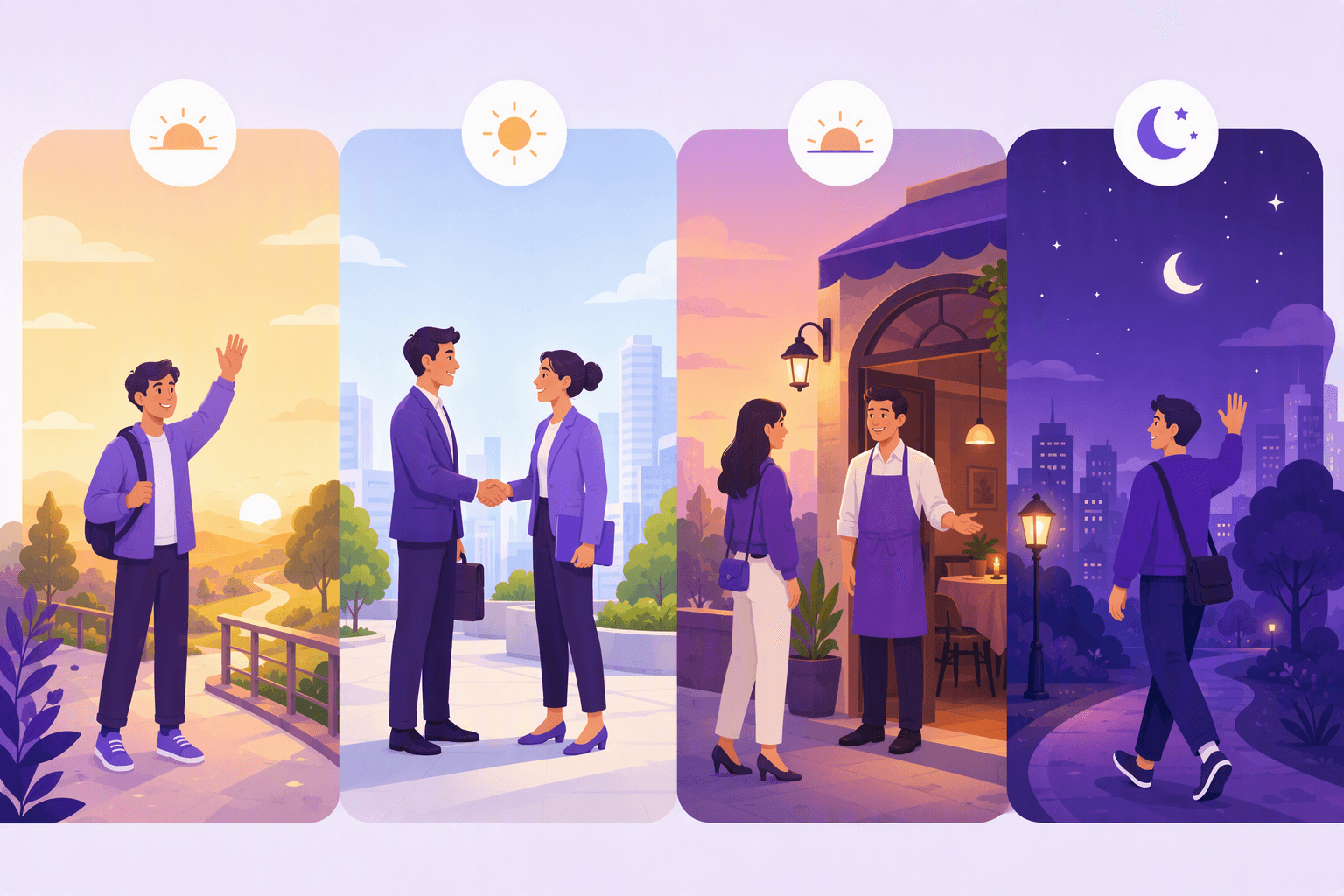
सुबह के greetings का जवाब कैसे दें
सही response उतना ही जरूरी है जितना greeting खुद। अंग्रेज़ी में अपेक्षा यह है: छोटा, सकारात्मक, फिर चाहें तो सामने वाले से वापस पूछें।
| Greeting | Formal response | Casual response |
|---|---|---|
| Good morning | Good morning! | Morning! |
| Morning! | Good morning! | Morning! / Hey! |
| How are you? | Fine, thank you. And you? | Good, thanks! You? |
| How's your morning? | Very well, thank you. | Pretty good! You? |
| Rise and shine! | (smiles and gets up) | Ugh, five more minutes... |
| How did you sleep? | Very well, thank you. | Good, thanks! |
असली अंग्रेज़ी कंटेंट के साथ अभ्यास
आप सुबह के greetings सबसे अच्छा natural context में सीखते हैं, जब आप उन्हें असली बातचीत में सुनते हैं। अंग्रेज़ी सीखने के लिए सबसे अच्छी फिल्में वाली गाइड में, ब्रिटिश series लगभग हर office scene में Morning! और How are you? दिखाती हैं। अमेरिकी shows अक्सर Hey! और Good morning, everyone! को लगभग डिफॉल्ट office lines की तरह इस्तेमाल करते हैं।
Wordy अंग्रेज़ी सीखने वाले पेज पर, आप interactive subtitles के साथ फिल्में और series देख सकते हैं। अगर आप कोई ऐसा morning greeting सुनें जिसे आप नहीं जानते, तो उस पर tap करें। आपको तुरंत pronunciation, meaning, और cultural context दिखेगा। इससे आप असली dialogue के अंदर morning formulas सीखते हैं, authentic intonation और body language के साथ।
अक्सर पूछे जाने वाले सवाल
अंग्रेज़ी में 'jó reggelt' कैसे कहते हैं?
कितने बजे तक “Good morning” कहा जा सकता है?
“Good morning” और “Morning!” में क्या फर्क है?
“Rise and shine” का क्या मतलब होता है?
अंग्रेज़ी में ऑफिस में सुबह लोगों को कैसे greet करें?
स्रोत और संदर्भ
- Crystal, David (2019). अंग्रेज़ी भाषा का Cambridge Encyclopedia. Cambridge University Press, 3rd edition.
- British Council (2023). English Language Teaching: वैश्विक शोध रिपोर्ट.
- Merriam-Webster Dictionary (2026). merriam-webster.com.
- Trudgill, Peter and Hannah, Jean (2008). International English. Routledge, 5th edition.
Wordy के साथ सीखना शुरू करें
असली मूवी क्लिप्स देखें और चलते-चलते अपना शब्द-भंडार बढ़ाएँ। डाउनलोड मुफ़्त है।


