快速回答
英语是旅行中的通用语言, 在全球的机场、酒店和餐厅, 你都可以用英语沟通。常用关键句包括: “Where is...?” (/wɛr ɪz/), “How much does this cost?” (/haʊ mʌtʃ dʌz ðɪs kɒst/), “Could I have the bill, please?” (/kʊd aɪ hæv ðə bɪl/) 以及 “I need help, please.” (/aɪ niːd hɛlp/)。
简短答案
英语是全球旅行的通用语言,只要你会一句英语,几乎到哪里都能沟通。 最重要的一句是:"Could you help me, please?" (/kʊd juː hɛlp miː pliːz/)。在任何机场、酒店或街头,这句话都能立刻表达你需要帮助,而且很有礼貌。
根据 Ethnologue 2024,接近 15 亿人用英语进行日常交流,这让它成为世界上最广泛使用的通用语。语言学家 David Crystal(The Cambridge Encyclopedia of the English Language,Cambridge University Press,2019)指出,英语是唯一一种在每个大洲都具有官方地位或被广泛使用的语言。它也是航空、旅游和酒店行业事实上的标准语言。
“English is not just a language, it is the code that the world’s travelers use to communicate with each other. Anyone who learns a few polite phrases becomes part of this global conversation right away."
(British Council,English Language Teaching: Global Research Report,2023)
本指南包含 50+ 条必备英语旅行短句,并按场景分组:机场与海关、酒店、餐厅、交通、购物和紧急情况。每句话都提供发音、真实例句和文化语境,帮助你知道什么时候用,以及怎么用。
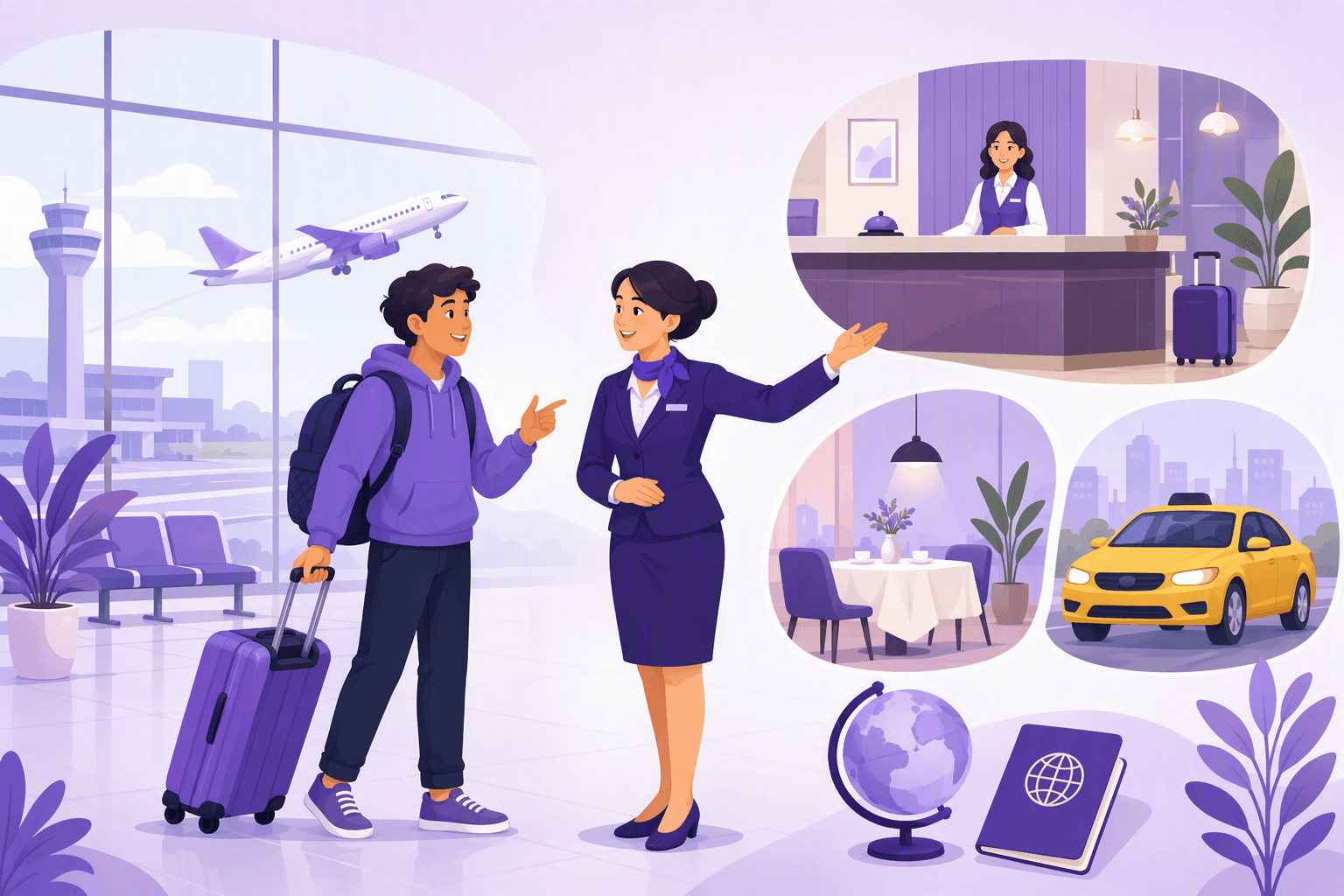
快速概览:12 句最重要的英语旅行短句
| 英语 | 发音 | 语体 |
|---|---|---|
| Where is...? | /wɛr ɪz/ | polite |
| How much does this cost? | /haʊ mʌtʃ dʌz ðɪs kɒst/ | polite |
| Could you help me, please? | /kʊd juː hɛlp miː pliːz/ | polite |
| I have a reservation | /aɪ hæv ə rɛzərˈveɪʃən/ | formal |
| Could I have the bill, please? | /kʊd aɪ hæv ðə bɪl pliːz/ | polite |
| I don't understand | /aɪ doʊnt ʌndərˈstænd/ | polite |
| Please speak more slowly | /pliːz spiːk mɔːr ˈsloʊli/ | polite |
| I need a doctor | /aɪ niːd ə ˈdɒktər/ | polite |
| Help! | /hɛlp/ | casual |
| Thank you | /θæŋk juː/ | polite |
| Please | /pliːz/ | polite |
| Excuse me | /ɪkˈskjuːz miː/ | polite |
机场与海关
现代机场几乎到处都有英语标识。即便如此,掌握几句关键句子也能让你更独立。尤其是在海关和入境检查时,工作人员常用英语提问。British Council 表示,在所有主要国际机场,英语都是主要沟通语言。
Where is the gate?
//wɛr ɪz ðə ɡeɪt//
字面意思: Where is the gate?
“Excuse me, where is gate B12?”
Excuse me, where is gate B12?
在机场里,'gate' 指登机口,不是入口。如果你迷路了,可以问工作人员。机场员工习惯接待国际旅客。
Where is...? 这个结构是英语里最灵活的问路方式。把地点替换掉就行:Where is the baggage claim?、Where is the customs?、Where is the exit?。
Is this seat taken?
//ɪz ðɪs siːt ˈteɪkən//
字面意思: Is this seat taken?
“Excuse me, is this seat taken? Can I sit here?”
Excuse me, is this seat taken? Can I sit here?
你可以在候车区、公交车上或飞机上用这句话。如果座位空着,对方会说:'No, go ahead.' 如果有人占了,会说:'Yes, sorry.'
Do you have anything to declare?
//duː juː hæv ˈɛniθɪŋ tə dɪˈklɛr//
字面意思: Do you have anything to declare?
“Do you have anything to declare?, No, just personal items.”
Do you have anything to declare?, No, just personal items.
海关人员会问这个问题。一个常见回答是:'No, just personal belongings.' 保持冷静,回答简短即可。海关人员问的通常都是例行问题。
💡 实用机场词汇
你会在标识上看到一些关键词:Departures、Arrivals、Boarding、Gate、Baggage claim、Customs、Immigration、Transit。你不一定要会说这些词。你只要能认出来,就会更有把握地在机场行动。
酒店与住宿
无论是在伦敦、纽约还是迪拜,会说英语的酒店员工都习惯接待国际客人,也很乐意帮忙。入住流程几乎到处都一样。你报姓名,出示护照,然后拿到房卡或钥匙。
I have a reservation
//aɪ hæv ə rɛzərˈveɪʃən//
字面意思: I have a reservation
“Good evening. I have a reservation under the name Kovács.”
Good evening. I have a reservation under the name Kovács.
在前台先打招呼:'Good morning / afternoon / evening.' 这是英语里基本的礼貌表达,也能让交流更顺畅。'under the name' 表示预订登记在这个名字名下。
Could I have a room for two nights?
//kʊd aɪ hæv ə ruːm fər tuː naɪts//
字面意思: Could I have a room for two nights?
“Could I have a double room for two nights, please?”
Could I have a double room for two nights, please?
'Could I have...?' 是英语里很基础的礼貌请求句式。房型常见说法:'single room'、'double room'、'twin room'、'suite'。
What time is check-out?
//wɒt taɪm ɪz tʃɛk aʊt//
字面意思: What time is check-out?
“What time is check-out? Can I leave my luggage here?”
What time is check-out? Can I leave my luggage here?
退房时间通常在上午 11 点到中午 12 点之间。如果你想晚点退房,可以问:'Is a late check-out possible?' 通常需要额外付费。
Could I have an extra towel?
//kʊd aɪ hæv ən ˈɛkstrə ˈtaʊəl//
字面意思: Could I have an extra towel?
“Excuse me, could I have an extra towel and some more soap?”
Excuse me, could I have an extra towel and some more soap?
在酒店里,用 'Could I have...' 或 'Could you bring me...' 来提需求最合适。尽量避免 'Give me...',在英语里听起来会比较粗鲁。
🌍 英语国家酒店的小费习惯
在美国,给行李员和客房清洁人员小费很常见:每件行李 $1 到 $2,房间清洁每天 $2 到 $5。在英国,这不是必须的,但给了会被感谢。在澳大利亚和新西兰,小费不是要求,但给了也会被接受。
餐厅与咖啡馆
英语国家的餐厅文化可能会让你觉得不一样,尤其是在美国。服务员通常会经常回到桌边询问。用餐体验更互动。你只要会几句话,就能更自信地点餐和结账。
I'd like a table for two
//aɪd laɪk ə ˈteɪbl fər tuː//
字面意思: I'd like a table for two
“Hi, I'd like a table for two, please. Do you have a reservation?”
Hi, I'd like a table for two, please. Do you have a reservation?
在美国和英国,很多餐厅需要预订。如果你没有预订,可以说:'We don't have a reservation, do you have anything available?'
Could I see the menu?
//kʊd aɪ siː ðə ˈmɛnjuː//
字面意思: Could I see the menu?
“Could I see the menu, please? And could we get some water?”
Could I see the menu, please? And could we get some water?
在美国,菜单常常已经放在桌上,服务员也通常会自动提供免费水。在英国和澳大利亚,这些不一定会自动提供,所以问一句很值得。
I'll have...
//aɪl hæv//
字面意思: I'll have...
“I'll have the grilled salmon and a side salad, please.”
I'll have the grilled salmon and a side salad, please.
'I'll have...' 是最自然的点餐方式。'I want...' 语法没错,但在餐厅里可能显得太直接。'I'll have...' 听起来更礼貌、更自然。
The bill, please / Check, please
//ðə bɪl pliːz / tʃɛk pliːz//
字面意思: The bill, please
“Excuse me, could we get the bill, please?”
Excuse me, could we get the bill, please?
一个重要的文化差异:在英国和澳大利亚,人们说 'bill'。在美国和加拿大,人们说 'check'。两种说法在各地都能听懂。在美国,服务员常常会不等你开口就把账单送来。
🌍 餐厅小费:美国 vs. 英国
在美国,餐厅小费通常是 18 到 20%。这往往是最低标准,因为服务员的收入很大一部分来自小费。计算很简单:账单乘以 0.2。在英国,10 到 12% 很常见。有时会自动加服务费,付款前先看一下账单。在澳大利亚和新西兰,小费不是必须,但给了对方也会很开心。
交通出行
在英语国家城市里,公共交通系统,无论是伦敦地铁、纽约地铁还是悉尼的公交车,通常都有英语标识,也常用英语播报。如果你错过换乘或找不到下车站点,几句话就能帮上忙。
How do I get to...?
//haʊ duː aɪ ɡɛt tuː//
字面意思: How do I get to...?
“Excuse me, how do I get to the city centre?”
Excuse me, how do I get to the city centre?
这是英语里最自然的问路方式。你还可以加一句:'Is it far from here?'、'Can I walk?' 或 'Should I take the bus or the subway?'
Where is the nearest...?
//wɛr ɪz ðə ˈnɪərɪst//
字面意思: Where is the nearest...?
“Where is the nearest ATM / pharmacy / subway station?”
Where is the nearest ATM / pharmacy / subway station?
有了 'nearest' 这个词,你几乎可以找任何东西。常用地点:'ATM'、'pharmacy'、'hospital'、'taxi stand'、'bus stop'。
Could you take me to...?
//kʊd juː teɪk miː tuː//
字面意思: Could you take me to...?
“Could you take me to this address, please?”
Could you take me to this address, please?
在出租车里非常实用的一句话。如果你不确定怎么读地址,直接把手机上的目的地给司机看。在美国和英国,Uber 和 Lyft 或 Bolt 很常见。用这些应用时,你往往什么都不用说。
How much does it cost?
//haʊ mʌtʃ dʌz ɪt kɒst//
字面意思: How much does it cost?
“How much does it cost to get to the airport by taxi?”
How much does it cost to get to the airport by taxi?
坐出租车时,最好在出发前先问价格,尤其是没有计价器,或司机提出 'flat rate' 的情况。用 Uber 等应用时,你在下单前就能看到价格,会更省心。
购物
在英语国家,从商场到露天市场,价格通常都标得很清楚,讨价还价并不常见。例外包括古董店、跳蚤市场和一些游客市场。下面这些句子能帮你更顺利地购物。
How much is this?
//haʊ mʌtʃ ɪz ðɪs//
字面意思: How much is this?
“Excuse me, how much is this? And is it on sale?”
Excuse me, how much is this? And is it on sale?
'How much is this?' 和 'How much does this cost?' 意思一样,但前者听起来更随意一点。'Is it on sale?' 可以用来确认是否打折。'On sale' 表示打折。'For sale' 表示在出售、可以买。
Do you have this in...?
//duː juː hæv ðɪs ɪn//
字面意思: Do you have this in...?
“Do you have this in a larger size / in blue?”
Do you have this in a larger size / in blue?
衣服尺码因国家而异:S、M、L、XL,或数字尺码。如果你不确定尺码,可以问:'Could I try this on?'
Can I try this on?
//kæn aɪ traɪ ðɪs ɒn//
字面意思: Can I try this on?
“Can I try this on? Where is the fitting room?”
Can I try this on? Where is the fitting room?
'Fitting room'(美式:'dressing room')是试衣间。有些店会限制一次能带进去的件数。如果他们说 'maximum 6 items',这是正常规定,不是针对你个人。
求助与紧急情况
没人希望遇到紧急情况,但在关键时刻,这些句子可能真的能救命。在美国,紧急电话是 911;在英国是 999;在澳大利亚和大多数其他英语国家是 000 / 112。
I need help!
//aɪ niːd hɛlp//
字面意思: I need help!
“I need help! Please call an ambulance!”
I need help! Please call an ambulance!
在紧急情况下,这是最简单也最有效的一句话。如果你只能说 'Help!' (/hɛlp/),也足够了。在英语国家,人们会立刻明白。
I don't understand
//aɪ doʊnt ʌndərˈstænd//
字面意思: I don't understand
“I'm sorry, I don't understand. Could you repeat that?”
I'm sorry, I don't understand. Could you repeat that?
不要害怕说这句话。母语者很习惯和学习者交流,通常会重复或简化表达。'I'm sorry, my English is not very good' 也是很有用的开场白,往往会让对方更有耐心。
Please speak slowly
//pliːz spiːk mɔːr ˈsloʊli//
字面意思: Please speak more slowly
“Could you speak more slowly, please? I'm still learning English.”
Could you speak more slowly, please? I'm still learning English.
很多母语者,尤其是美国人,说话很快,而且会把音连读或弱读。对方通常会友好回应 'Could you speak more slowly?'。'Could you write it down?' 也非常实用。
I've lost...
//aɪv lɒst//
字面意思: I've lost...
“I've lost my passport. Where is the nearest police station?”
I've lost my passport. Where is the nearest police station?
如果你丢了证件,立刻去最近的警察局,申请遗失报案证明。保险公司和使馆可能会要求你提供。建议把护照复印件单独存放。
Call the police!
//kɔːl ðə pəˈliːs//
字面意思: Call the police!
“Call the police! I've been robbed!”
Call the police! I've been robbed!
美国:911,英国:999,澳大利亚:000,加拿大:911。如果你无法拨打电话,就大喊:'Help! Call the police!' 周围的人会采取行动。'I've been robbed' 和 'I've been attacked' 在紧急情况下也很重要。
文化小贴士
🌍 英国 vs. 美国:不同的英语,不同的习惯
英国和美国在文化和语言上有很多差异。作为旅行者,你可能会被这些差异惊到。英国人更常用更正式的礼貌表达。'Could I possibly...' 和 'Would you mind...' 比在美国更常见。英国人一般不会插队。在英国,'queue' 几乎是神圣的。破坏排队秩序会被认为是严重的社交冒犯。
在美国,沟通更友好也更直接。甚至收银员也可能问你 'How are you today?' 这不是一个真正的问题,而是一种礼貌用语。一个合适的回答是:'I'm great, thanks! And you?' 英国人有时会觉得这种热情有点过头。你更喜欢哪种方式,取决于你的文化背景。
紧急电话:美国和加拿大:911,英国:999,澳大利亚:000,新西兰:111,爱尔兰:112 / 999。
💡 英式英语 vs. 美式英语:旅行者需要知道的关键差异
一些值得同时了解的词:
| 简体中文 | 英式英语 | 美式英语 |
|---|---|---|
| 洗手间 | Toilet / Loo | Restroom / Bathroom |
| 地铁 | Underground / Tube | Subway |
| 餐厅账单 | Bill | Check |
| 假期 | Holiday | Vacation |
| 药店 | Chemist / Pharmacy | Drugstore / Pharmacy |
| 电梯 | Lift | Elevator |
| 加油站 | Petrol station | Gas station |
| 行李 | Luggage / Baggage | Luggage / Baggage |
在两国,人们通常都能听懂两种说法。你在美国用英式词,或在英国用美式词,一般也不会让人惊讶。
旅行常用语速查总结
| 场景 | 有用的英语短句 | 简体中文含义 |
|---|---|---|
| 机场 | Where is the gate? | 登机口在哪里? |
| 海关 | Just personal belongings. | 只是个人物品。 |
| 酒店入住 | I have a reservation under... | 我用……这个名字预订了。 |
| 酒店需求 | Could I have an extra...? | 可以再给我一个……吗? |
| 退房 | What time is check-out? | 退房时间是几点? |
| 餐厅 | I'll have... / The bill, please. | 我要…… / 请结账。 |
| 问路 | How do I get to...? | 我怎么去……? |
| 出租车 | Could you take me to...? | 你能带我去……吗? |
| 购物 | How much is this? | 这个多少钱? |
| 试衣 | Can I try this on? | 我可以试穿吗? |
| 求助 | I need help! / Help! | 我需要帮助!/ 救命! |
| 紧急情况 | Call the police! | 报警! |
| 沟通 | Please speak more slowly. | 请说慢一点。 |
| 重复 | Could you repeat that? | 你能再说一遍吗? |
用真实英语内容练习
记住这些短句最有效的方法,是在真实语境里听到并看到它们。英语电影、剧集和播客不仅有趣,也能教你更自然的发音、语速和文化指代。
你可以看看我们的指南:学习英语的最佳电影,里面精选了英国产和美国产作品推荐。如果你想在旅行中也能进步,我们的应用也能帮助你在观看喜欢的剧集时自然学习单词和短语。你可以访问 在 Wordy 上学习英语 页面。
另外,也建议你阅读我们关于常用英语问候语的指南。旅行不只是句子,也关乎人与人的连接。
常见问题
旅行最重要的英语句子有哪些?
英语里怎么问“……在哪里?”
用英语怎么订酒店?
紧急情况用英语怎么求助?
英语怎么说“我没听懂, 请再说一遍”?
来源与参考资料
- Crystal, David (2019). 《剑桥英语语言百科全书》, Cambridge University Press。
- British Council (2023). 《英语语言教学: 全球研究报告》。
- Merriam-Webster Dictionary (2026). merriam-webster.com。
- Ethnologue (2024). 《英语: 世界语言地位》, 第27版。


