त्वरित जवाब
अंग्रेज़ी में जानवरों के बुनियादी नाम: dog, cat, horse, cow, bird, fish। अंग्रेज़ी में जानवरों की आवाज़ें भी सीखें: a dog barks, a cat meows, a cow moos। “Sheep” एकवचन और बहुवचन में एक ही रहता है, यह सबसे आम zero plurals में से एक है।
Animal names आपको अंग्रेज़ी सीखते ही लगभग तुरंत दिखने लगते हैं, बच्चों की किताबों में, फिल्मों में, प्रकृति पर डॉक्यूमेंट्री में, और यहां तक कि मौसम से जुड़ी कहावतों में भी। Ethnologue के 2024 डेटा के अनुसार, लगभग 1.5 billion लोग अंग्रेज़ी सीखते हैं या उसे दूसरी भाषा के रूप में इस्तेमाल करते हैं, और जानवरों की शब्दावली उन पहले विषयों में से है जिन पर हर पाठ्यपुस्तक बार बार लौटती है।
दो बातें अंग्रेज़ी की animal vocabulary को खास तौर पर दिलचस्प बनाती हैं। पहली है animal sounds, अंग्रेज़ी में कई जानवरों के लिए उनकी आवाज़ के लिए अलग क्रिया होती है, एक dog barks, एक cat meows, एक cow moos, एक pig oinks। ये क्रियाएं native कंटेंट में लगातार आती हैं, और इन्हें सिर्फ डिक्शनरी से सीखना मुश्किल होता है। दूसरी है irregular plurals की प्रणाली, sheep singular और plural दोनों में एक जैसा दिखता है (one sheep, two sheep, sheeps नहीं होता), और यही बात deer के लिए भी सही है, और fish के ज़्यादातर उपयोगों में भी।
"English animal vocabulary is particularly rich in onomatopoeia, words that imitate the sounds animals make. These vary significantly between languages, revealing how culturally constructed our perception of animal sounds really is."
(David Crystal, The Cambridge Encyclopedia of the English Language, Cambridge University Press, 2019)
यह गाइड 50+ English animal names को category के हिसाब से दिखाता है, साथ में pronunciation, animal sound system, और animal idioms जो रोज़मर्रा की अंग्रेज़ी बोलने वाली संस्कृति का हिस्सा हैं। लगातार, interactive practice के लिए, Wordy की अंग्रेज़ी सीखने वाली पेज पर जाएं।
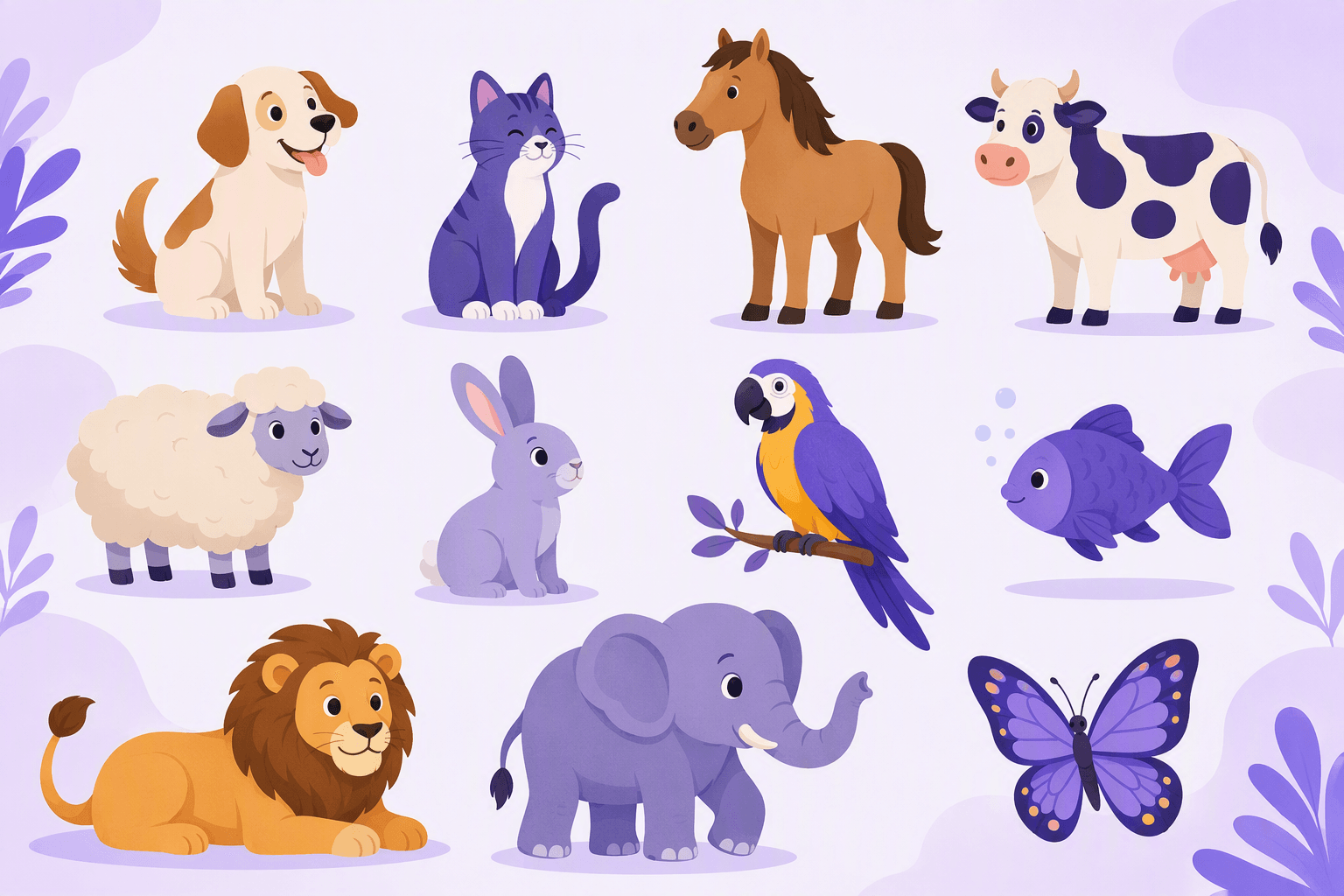
पालतू जानवर
शब्द pet अंग्रेज़ी में घर में रखे जाने वाले जानवर के लिए सामान्य शब्द है, यानी wild animal या farm animal के मुकाबले। इस विषय में British English और American English के बीच कुछ छोटे फर्क भी हैं, United Kingdom में छोटे तोते की कुछ किस्मों को आम तौर पर budgerigar या budgie कहा जाता है, जबकि American English में उसी पक्षी को अक्सर parakeet कहा जाता है।
| अंग्रेज़ी | उच्चारण | टिप्पणी |
|---|---|---|
| dog | dɒɡ | आम nicknames: doggy, pup |
| cat | kæt | आम nicknames: kitty, kitten |
| fish | fɪʃ | Plural: fish (आमतौर पर) या fishes (species के लिए) |
| rabbit | RÆB-ɪt | |
| hamster | HÆM-stər | |
| guinea pig | GIN-ee pɪɡ | यह pig नहीं है, लेकिन अंग्रेज़ी में नाम यही है |
| parrot | PÆR-ət | |
| turtle | TUR-tl | UK: tortoise (land), turtle (water) |
| goldfish | GOLD-fɪʃ | |
| budgie / parakeet | BUJ-ee / PÆR-ə-kiːt | UK: budgie, US: parakeet |
💡 शब्द 'pet' का उपयोग कैसे करें
Noun के रूप में, pet का मतलब घर में रखा जाने वाला जानवर होता है (I have two pets, I have two pets), लेकिन यह adjective की तरह भी इस्तेमाल होता है: pet dog (a pet dog), pet shop (a pet shop), pet name (a nickname, literally a 'pet name', प्यार से बुलाने का नाम)। वाक्यांश It's my pet hate का मतलब उल्टा होता है, यानी ऐसी चीज़ जो किसी को खास तौर पर नापसंद हो। Context पर ध्यान दें।
British English में, ज़मीन पर रहने वाले tortoise को tortoise (/TOR-təs/) कहा जाता है, और पानी वाले turtle को turtle (/TUR-tl/)। American English में, दोनों के लिए turtle ज़्यादा आम शब्द है। यह फर्क छोटा है, लेकिन British कंटेंट पढ़ते समय महत्वपूर्ण है (BBC प्रकृति डॉक्यूमेंट्री, British बच्चों की किताबें)।
खेत के जानवर
अंग्रेज़ी में खेत के जानवरों को farm animals कहा जाता है, और इस समूह में अंग्रेज़ी morphology की एक बहुत आम चुनौती आती है, irregular plurals और male/female के अलग शब्द। British Council की 2023 की एक स्टडी के अनुसार, sheep का irregular plural (sheep → sheep) intermediate English learners की सबसे आम गलतियों में से एक है।
| अंग्रेज़ी | उच्चारण | टिप्पणी |
|---|---|---|
| cow | kaʊ | Male: bull, young: calf |
| horse | hɔːrs | Male: stallion, female: mare, young: foal |
| pig | pɪɡ | Male: boar, female: sow, young: piglet |
| sheep / lamb | ʃiːp / læm | Sheep = adult, lamb = young |
| chicken / hen | CHIK-ɪn / hɛn | Male: rooster, young: chick |
| goat | ɡoʊt | Young: kid |
| duck | dʌk | Female: hen, male: drake, young: duckling |
| turkey | TUR-kee | |
| donkey | DONG-kee | Informal: ass, young: foal |
| rooster | ROO-stər | In British English: cock |
अंग्रेज़ी में irregular plural sheep → sheep को zero plural कहा जाता है, यानी singular और plural एक जैसे रहते हैं। यही बात deer → deer के लिए भी सही है और, ज़्यादातर मामलों में, fish → fish के लिए भी। इसके विपरीत, chicken का plural regular है (chickens), लेकिन food context में chicken uncountable होता है: Would you like some chicken? (मतलब chicken meat)।
अंग्रेज़ी में जानवरों की आवाज़ें
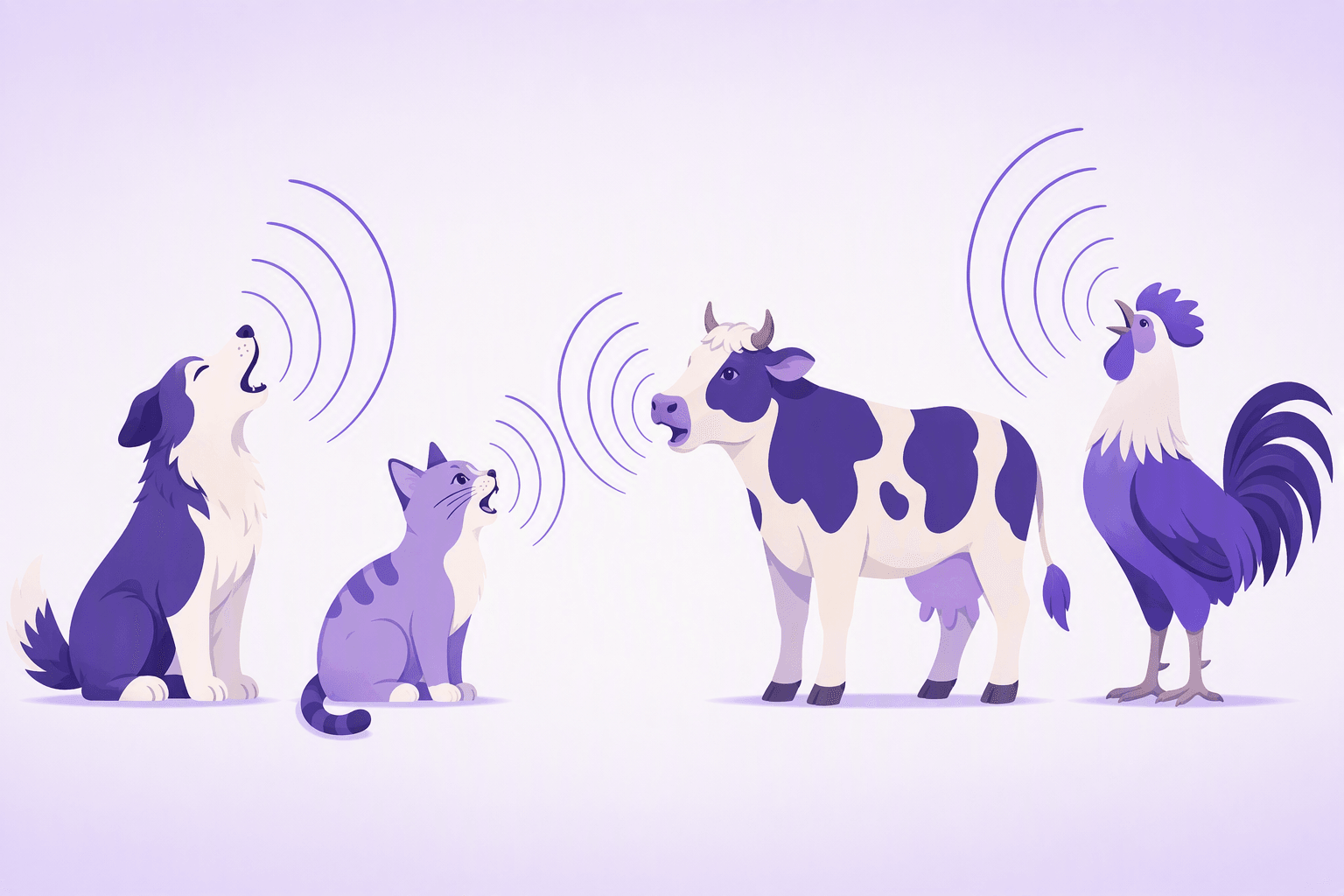
Animal sound words उन सबसे साफ क्षेत्रों में से हैं जहां भाषाएं बहुत अलग होती हैं। अंग्रेज़ी में, dog woof या bark करता है, cow moo करती है, और rooster cock-a-doodle-doo करता है। ये onomatopoeic शब्द translate नहीं होते, आपको इन्हें सीखना पड़ता है।
| हिन्दी | अंग्रेज़ी | उच्चारण | टिप्पणी |
|---|---|---|---|
| dog | dog, barks / woofs | bɑːrks / wʊfs | Verb: to bark, sound: woof, woof! |
| cat | cat, meows / purrs | miˈaʊz / pɜːrz | Meow: meows, purr: purrs |
| cow | cow, moos | muːz | Verb: to moo, sound: moo! |
| pig | pig, oinks | ɔɪŋks | Verb: to oink, sound: oink, oink! |
| horse | horse, neighs | neɪz | Verb: to neigh, sound: neigh! |
| sheep / lamb | sheep, bleats | bliːts | Verb: to bleat, sound: baa! |
| rooster | rooster, crows | kroʊz | Verb: to crow, sound: cock-a-doodle-doo! |
| frog | frog, croaks | kroʊks | Verb: to croak, sound: ribbit! |
| bee | bee, buzzes | bʌzɪz | Verb: to buzz, sound: buzz! |
| lion | lion, roars | rɔːrz | Verb: to roar, sound: roar! |
🌍 भाषाओं में जानवरों की आवाज़ें अलग क्यों होती हैं?
एक भाषा से दूसरी भाषा में जानवरों की आवाज़ों का 'अनुवाद' करना यह दिखाने का मज़ेदार तरीका है कि onomatopoeia पर संस्कृति का असर बहुत मजबूत होता है। उदाहरण के लिए, अंग्रेज़ी में dog woof होता है, जापानी में wan-wan, फ़्रेंच में ouaf-ouaf, और रूसी में gav-gav। हर मामले में इंसानी दिमाग वही असली आवाज़ सुनता है, लेकिन हर संस्कृति उसे अपने phonological system में अलग तरह से encode करती है। Merriam-Webster dictionary animal sounds को अलग lexical category मानता है, जो यह भी दिखाता है कि अंग्रेज़ी में ये कितने महत्वपूर्ण हैं।
जंगली जानवर, अफ्रीका और एशिया
अंग्रेज़ी में अफ्रीका और एशिया के जंगली जानवरों के नाम अक्सर Latin या Greek roots से आते हैं, और उनमें से कई दूसरे भाषाओं में भी मिलते जुलते रूप में दिखते हैं। elephant (/EL-ɪ-fənt/) Greek elephas से आता है, और rhinoceros (/raɪ-NOS-ər-əs/) का literal मतलब Greek में 'nose horn' है (rhino = nose, keras = horn)। ये etymologies आपको शब्द याद रखने में मदद करती हैं।
| अंग्रेज़ी | उच्चारण | टिप्पणी |
|---|---|---|
| lion | LAɪ-ən | Female: lioness, young: cub |
| elephant | EL-ɪ-fənt | There are African and Asian species |
| tiger | TAɪ-ɡər | |
| giraffe | dʒɪ-RÆF | |
| zebra | ZEE-brə (US) / ZEB-rə (UK) | British and American pronunciation differs |
| gorilla | ɡə-RIL-ə | |
| cheetah | CHEE-tə | |
| rhinoceros / rhino | raɪ-NOS-ər-əs / RAɪ-noʊ | Common short form: rhino |
| hippopotamus / hippo | hɪp-ə-POT-ə-məs / HIP-oʊ | Common short form: hippo |
| crocodile | KROK-ə-daɪl | Alligators and crocodiles are different species |
zebra का pronunciation animal names में British बनाम American का सबसे noticeable फर्क है। Americans ZEE-brə कहते हैं, और Brits ZEB-rə कहते हैं, जैसे ये अलग शब्द हों। अगर आप David Attenborough वाली BBC प्रकृति डॉक्यूमेंट्री देखते हैं, तो आपको British pronunciation सुनाई देगा। अगर आप American बच्चों की फिल्म देखते हैं, तो आपको American वाला सुनाई देगा। दोनों accepted हैं, लेकिन फर्क जानना उपयोगी है।
जंगली जानवर, यूरोप और अमेरिका
European और North American wildlife की vocabulary खास तौर पर उपयोगी है, अगर आप अंग्रेज़ी प्रकृति डॉक्यूमेंट्री देखते हैं या अंग्रेज़ी बोलने वाले देशों में यात्रा करते हैं।
| अंग्रेज़ी | उच्चारण | टिप्पणी |
|---|---|---|
| bear | bɛr | Grizzly, polar bear, black bear, by species |
| wolf | wʊlf | Plural: wolves, not wolfs |
| fox | fɒks | Plural: foxes |
| deer | dɪr | Plural: deer, not deers (zero plural) |
| hare | hɛr | Hare = hare, rabbit = rabbit |
| eagle | EE-ɡl | |
| owl | aʊl | |
| snake | sneɪk | |
| frog | frɒɡ | Toad: toad, a different species |
| bat | bæt |
hare और rabbit में एक महत्वपूर्ण फर्क है: hare (/hɛr/) एक जंगली hare होता है जो बड़ा होता है, उसके कान लंबे होते हैं, और वह बाहर रहता है। rabbit (/RÆB-ɪt/) छोटा होता है, उसके कान छोटे होते हैं, उसे pet के रूप में रखा जा सकता है, और वह अक्सर खेतों में छोटे समूहों में रहता है। March Hare अंग्रेज़ी में Lewis Carroll की Alice’s Adventures in Wonderland से मशहूर हुआ, एक hare character जो March में बहुत wild तरह से व्यवहार करता है। Rabbit वाक्यांश rabbit hole से भी जाना जाता है, जिसे लोग online तब इस्तेमाल करते हैं जब वे अंतहीन जानकारी में खो जाते हैं।
समुद्री जानवर
Ocean और sea animals की vocabulary अंग्रेज़ी प्रकृति डॉक्यूमेंट्री के जरिए बहुत प्रसिद्ध हुई, खासकर BBC series Blue Planet से। IUCN Red List डेटा के अनुसार, ocean species का लगभग one third किसी न किसी स्तर के threat का सामना करता है, इसलिए ये शब्द news और environmental articles में लगातार ज़्यादा दिखते हैं।
| अंग्रेज़ी | उच्चारण | टिप्पणी |
|---|---|---|
| fish | fɪʃ | Plural: fish (आमतौर पर), fishes (species के लिए) |
| shark | ʃɑːrk | |
| whale | weɪl | Blue whale, humpback whale, species |
| dolphin | DOL-fɪn | |
| octopus | OK-tə-pəs | Plural: octopuses (standard), octopi (Latin-style) |
| crab | kræb | |
| lobster | LOB-stər | |
| seal | siːl | |
| jellyfish | JEL-ee-fɪʃ | |
| seahorse | SEE-hɔːrs |
अंग्रेज़ी में octopus के plural को लेकर दशकों से बहस रही है। Merriam-Webster के अनुसार octopuses पूरी तरह regular और recommended form है, octopi Latin-style spelling है (और यह technically गलत etymology पर आधारित है, क्योंकि octopus Greek है, Latin नहीं), और octopodes Greek-correct form है जिसे लगभग कोई इस्तेमाल नहीं करता। रोज़मर्रा की अंग्रेज़ी में octopuses सबसे common और सबसे safe choice है।
पक्षी
अंग्रेज़ी में पक्षियों को birds कहा जाता है, और अंग्रेज़ी उन भाषाओं में से एक है जहां bird का मतलब सामान्य रूप से bird भी हो सकता है और, कुछ contexts में (informal British slang), woman भी। यह दूसरा उपयोग पिछले कुछ दशकों में कम common और कम accepted हो गया है।
| अंग्रेज़ी | उच्चारण | टिप्पणी |
|---|---|---|
| eagle | EE-ɡl | |
| owl | aʊl | अंग्रेज़ी बोलने वाली संस्कृति में wisdom का symbol |
| parrot | PÆR-ət | To imitate: to parrot |
| penguin | PENG-ɡwɪn | |
| flamingo | flə-MING-ɡoʊ | |
| crow | kroʊ | Raven: raven, बड़ा और पूरी तरह काला |
| swan | swɒn | |
| sparrow | SPÆR-oʊ |
शब्द parrot अंग्रेज़ी में verb की तरह भी काम करता है: to parrot something का मतलब होता है बिना समझे उसे दोहराना (She just parroted everything the teacher said, she repeated exactly what the teacher said)। Owl wisdom और night का symbol है, British और American दोनों folklore में, Harry Potter series में Hedwig the snowy owl से लेकर Winnie-the-Pooh में Owl तक।
कीड़े और छोटे जीव
अंग्रेज़ी में insects (insects, six-legged arthropods) और bugs (एक ढीला रोज़मर्रा का शब्द जो insects, spiders, और दूसरे छोटे जीवों के लिए भी इस्तेमाल हो सकता है) में फर्क किया जाता है। Bug ज़्यादा informal और broader है, जबकि insect scientifically precise है।
| अंग्रेज़ी | उच्चारण | टिप्पणी |
|---|---|---|
| bee | biː | Honeybee: honeybee, bumblebee: bumblebee |
| butterfly | BUT-ər-flaɪ | |
| ant | ænt | |
| spider | SPAɪ-dər | Spider insect नहीं है (8 legs), लेकिन लोग इसे 'bug' कह देते हैं |
| fly | flaɪ | |
| mosquito | mə-SKEE-toʊ | |
| worm | wɜːrm | |
| ladybug / ladybird | LAY-dee-bʌɡ / LAY-dee-bɜːrd | US: ladybug, UK: ladybird |
💡 Ladybug (USA) बनाम ladybird (UK)
Ladybug का नाम British बनाम American vocabulary differences का एक बेहतरीन उदाहरण है। United States में यह ladybug है। United Kingdom में यह ladybird है। दोनों उसी चमकीले लाल beetle को refer करते हैं जिस पर काले spots होते हैं। Prefix lady Virgin Mary से जुड़ी association से आया है (medieval folk belief में लाल रंग Mary के cloak को refer करता था), और ending bug या bird region के हिसाब से बदलती है। अगर आप British BBC documentary देखते हैं, तो आपको ladybird सुनाई देगा। अगर आप American nature show देखते हैं, तो आपको ladybug सुनाई देगा।
अंग्रेज़ी में animal idioms
Animal idioms अंग्रेज़ी में vocabulary के सबसे productive क्षेत्रों में से एक हैं। Cambridge Dictionary के अनुसार, रोज़मर्रा की बातचीत में अंग्रेज़ी में 200 से ज़्यादा common animal idioms हैं, और इनके बिना natural native content, खासकर journalistic और literary English, समझना मुश्किल हो सकता है।
„It's raining cats and dogs" Literally: it is raining cats and dogs. Meaning: बहुत तेज़ बारिश हो रही है। इसका exact origin uncertain है, लेकिन यह 17th century तक जाता है। इसका पहला known written example 1651 की एक proverb collection edition में मिलता है। The forecast says it's going to rain cats and dogs this weekend, The forecast says it will pour this weekend.
„The elephant in the room" Literally: the elephant in the room. Meaning: वह obvious problem या awkward fact जिसे सब जानते हैं, लेकिन कोई mention करने की हिम्मत नहीं करता। Nobody mentioned the budget cuts, it was the elephant in the room, Nobody mentioned the budget cuts, it was the elephant in the room.
„A wolf in sheep's clothing" Literally: a wolf in sheep’s clothing. Meaning: एक dangerous या evil व्यक्ति जो innocent होने का नाटक करता है। यह phrase Bible (Matthew 7:15) से आता है। Be careful, he seems friendly, but he might be a wolf in sheep's clothing, Be careful, he seems friendly, but he might be a wolf in sheep’s clothing.
„Birds of a feather (flock together)" Literally: birds of one feather (flock together). Meaning: similar लोग साथ रहते हैं। Those two are always together, birds of a feather, I suppose, Those two are always together, birds of a feather, I suppose.
„To let the cat out of the bag" Literally: to let the cat out of the bag. Meaning: गलती से कोई secret reveal कर देना। She let the cat out of the bag about the surprise party, She accidentally revealed the secret about the surprise party.
„To kill two birds with one stone" Literally: to kill two birds with one stone. Meaning: एक action से दो काम करना। I'll stop by the post office on the way to the gym, kill two birds with one stone, I will stop by the post office on the way to the gym, kill two birds with one stone.
असली अंग्रेज़ी कंटेंट के साथ अभ्यास
Animal vocabulary authentic English content से सीखना खास तौर पर आसान है। David Attenborough की narration वाली BBC nature documentaries (Planet Earth, Blue Planet, Netflix पर Our Planet) सबसे अच्छे sources में से एक हैं। वे इन animal names और related vocabulary को natural, clearly pronounced British English में पेश करती हैं।
अंग्रेज़ी सीखने के लिए सबसे अच्छी फिल्मों और series की हमारी सूची में आपको ऐसा कंटेंट मिलेगा जहां pets से लेकर wild animals तक, animal vocabulary natural context में आती है। Animated movies (Finding Nemo, The Lion King, Zootopia) basic vocabulary देती हैं, जबकि nature documentaries और documentaries ज़्यादा advanced vocabulary देती हैं।
Wordy interactive subtitles के साथ English content समझने में आपकी मदद करता है: अगर आप कोई animal name सुनते हैं और समझ नहीं पाते, तो आप एक tap में pronunciation, meaning, और context सीख सकते हैं। इस तरह animal vocabulary आपकी memory में real English sentences के जरिए टिकती है, isolated word lists के जरिए नहीं।
अक्सर पूछे जाने वाले सवाल
अंग्रेज़ी में सबसे आम पालतू जानवरों को क्या कहते हैं?
अंग्रेज़ी में जानवरों की आवाज़ें कैसे बोली जाती हैं?
अंग्रेज़ी में 'sheep' और 'lamb' में क्या फर्क है?
अंग्रेज़ी में जंगली जानवरों के नर और मादा को क्या कहते हैं?
अंग्रेज़ी में जानवरों के irregular plurals कौन से हैं?
स्रोत और संदर्भ
- Crystal, David (2019). The Cambridge Encyclopedia of the English Language. Cambridge University Press.
- Merriam-Webster Dictionary (2026). merriam-webster.com.
- Oxford English Dictionary (2025). oed.com, जानवरों से जुड़ी प्रविष्टियाँ।
- British Council (2023). English Language Teaching: Global Research Report.
Wordy के साथ सीखना शुरू करें
असली मूवी क्लिप्स देखें और चलते-चलते अपना शब्द-भंडार बढ़ाएँ। डाउनलोड मुफ़्त है।


