תשובה מהירה
אנגלית היא שפת הטיולים, בשדות תעופה, במלונות ובמסעדות ברחבי העולם אפשר לתקשר באנגלית. ביטויים מרכזיים כוללים: 'Where is...?' (/wɛr ɪz/), 'How much does this cost?' (/haʊ mʌtʃ dʌz ðɪs kɒst/), 'Could I have the bill, please?' (/kʊd aɪ hæv ðə bɪl/) ו 'I need help, please.' (/aɪ niːd hɛlp/).
התשובה הקצרה
אנגלית היא השפה הגלובלית של טיולים, אם אתם יודעים משפט אחד באנגלית, תוכלו לתקשר כמעט בכל מקום. המשפט הכי חשוב הוא: "Could you help me, please?" (/kʊd juː hɛlp miː pliːz/), הוא מיד מראה שאתם צריכים עזרה ושאתם מנומסים, בכל שדה תעופה, מלון, או ברחוב.
לפי Ethnologue 2024, כמעט 1.5 מיליארד אנשים משתמשים באנגלית לתקשורת יומיומית, מה שהופך אותה ללינגואה פרנקה הנפוצה ביותר בעולם. הבלשן David Crystal (The Cambridge Encyclopedia of the English Language, Cambridge University Press, 2019) אומר שאנגלית היא השפה היחידה שהיא רשמית או בשימוש רחב בכל יבשת. היא גם השפה הסטנדרטית בפועל בתעופה, בתיירות ובתעשיית המלונאות.
"אנגלית היא לא רק שפה, היא הקוד שבו משתמשים מטיילי העולם כדי לתקשר זה עם זה. כל מי שלומד כמה ביטויים מנומסים הופך מיד לחלק מהשיחה הגלובלית הזו."
(British Council, English Language Teaching: Global Research Report, 2023)
המדריך הזה כולל יותר מ-50 ביטויי טיול חיוניים באנגלית, מקובצים לפי מצב: שדה תעופה ומכס, מלון, מסעדה, תחבורה, קניות ומקרי חירום. לכל משפט תקבלו הגייה, משפט דוגמה אמיתי והקשר תרבותי. זה עוזר להבין מתי ואיך להשתמש בו.
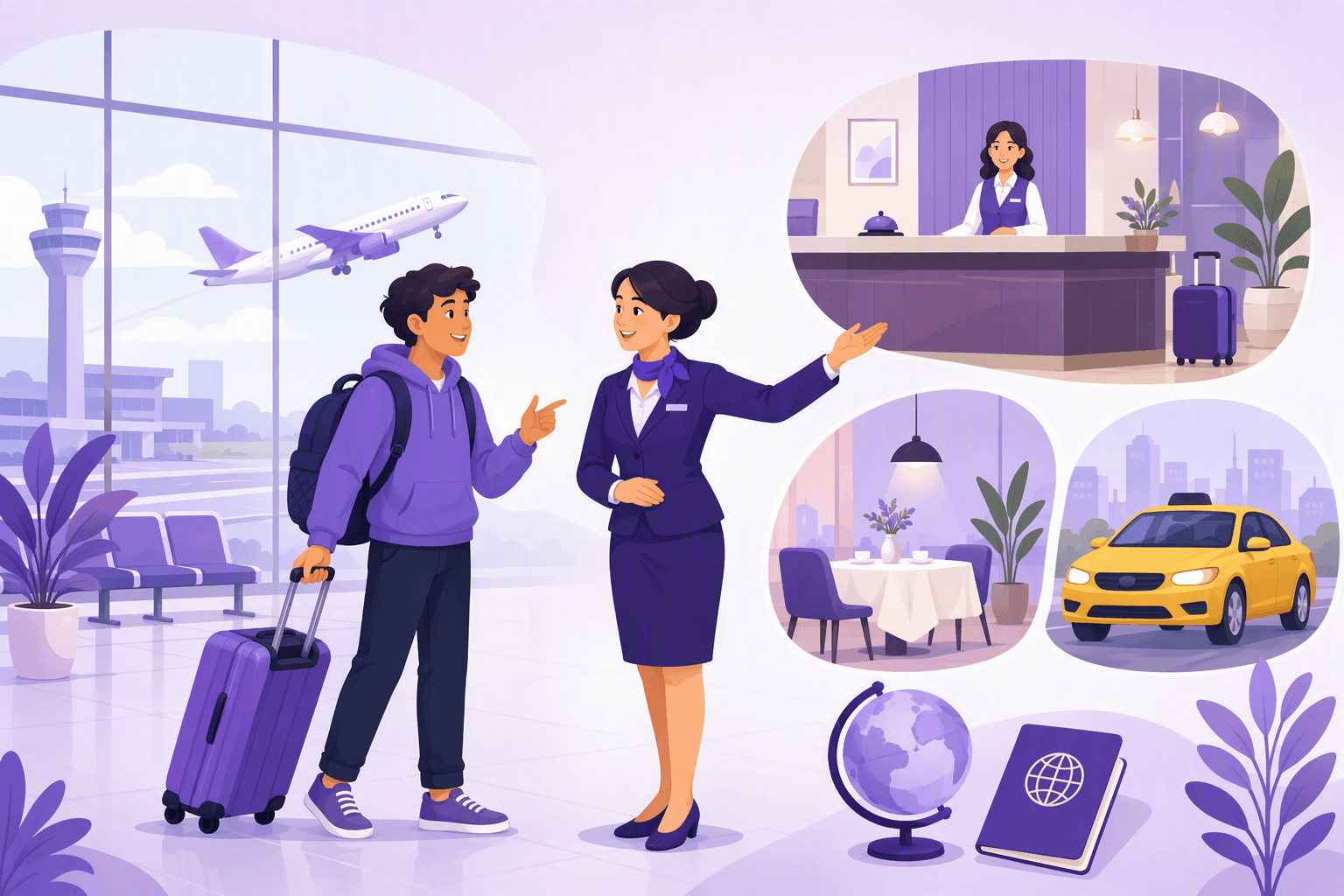
סקירה מהירה: 12 ביטויי הטיול החשובים ביותר באנגלית
| אנגלית | הגייה | רשמיות |
|---|---|---|
| Where is...? | /wɛr ɪz/ | polite |
| How much does this cost? | /haʊ mʌtʃ dʌz ðɪs kɒst/ | polite |
| Could you help me, please? | /kʊd juː hɛlp miː pliːz/ | polite |
| I have a reservation | /aɪ hæv ə rɛzərˈveɪʃən/ | formal |
| Could I have the bill, please? | /kʊd aɪ hæv ðə bɪl pliːz/ | polite |
| I don't understand | /aɪ doʊnt ʌndərˈstænd/ | polite |
| Please speak more slowly | /pliːz spiːk mɔːr ˈsloʊli/ | polite |
| I need a doctor | /aɪ niːd ə ˈdɒktər/ | polite |
| Help! | /hɛlp/ | casual |
| Thank you | /θæŋk juː/ | polite |
| Please | /pliːz/ | polite |
| Excuse me | /ɪkˈskjuːz miː/ | polite |
שדה תעופה ומכס
בשדות תעופה מודרניים יש שלטים באנגלית כמעט בכל מקום. ועדיין, כמה משפטי מפתח הופכים אתכם ליותר עצמאיים. זה חשוב במיוחד במכס ובביקורת גבולות, שם פקידים שואלים לעיתים קרובות שאלות באנגלית. ה-British Council אומר שאנגלית היא שפת התקשורת העיקרית בכל שדות התעופה הבינלאומיים הגדולים.
Where is the gate?
//wɛr ɪz ðə ɡeɪt//
משמעות מילולית: Where is the gate?
“Excuse me, where is gate B12?”
Excuse me, where is gate B12?
At the airport, 'gate' means the boarding gate, not the entrance. If you are lost, ask the staff. Airport workers are used to international passengers.
המבנה Where is...? הוא הדרך הכי גמישה לבקש הכוונה באנגלית. פשוט מחליפים את המקום: Where is the baggage claim?, Where is the customs?, Where is the exit?.
Is this seat taken?
//ɪz ðɪs siːt ˈteɪkən//
משמעות מילולית: Is this seat taken?
“Excuse me, is this seat taken? Can I sit here?”
Excuse me, is this seat taken? Can I sit here?
You can use this in a waiting area, on a bus, or on a plane. If the seat is free, the answer is: 'No, go ahead.' If it is taken: 'Yes, sorry.'
Do you have anything to declare?
//duː juː hæv ˈɛniθɪŋ tə dɪˈklɛr//
משמעות מילולית: Do you have anything to declare?
“Do you have anything to declare?, No, just personal items.”
Do you have anything to declare?, No, just personal items.
Customs officers ask this question. A standard answer is: 'No, just personal belongings.' Stay calm and brief. Customs officers ask routine questions.
💡 מילים שימושיות בשדה התעופה
כמה מונחים מרכזיים שתראו על שלטים: Departures, Arrivals, Boarding, Gate, Baggage claim, Customs, Immigration, Transit. אתם לא חייבים להגיד אותם. אתם רק צריכים לזהות אותם, ואז תתמצאו עם יותר ביטחון.
מלון ולינה
צוות מלון דובר אנגלית, בין אם בלונדון, ניו יורק או דובאי, רגיל לאורחים בינלאומיים ושמח לעזור. תהליך הצ'ק-אין כמעט זהה בכל מקום. אתם נותנים את השם שלכם, מציגים דרכון ומקבלים מפתח.
I have a reservation
//aɪ hæv ə rɛzərˈveɪʃən//
משמעות מילולית: I have a reservation
“Good evening. I have a reservation under the name Kovács.”
Good evening. I have a reservation under the name Kovács.
At reception, greet first: 'Good morning / afternoon / evening.' This is basic politeness in English and sets a positive tone. The phrase 'under the name' means the booking is in that name.
Could I have a room for two nights?
//kʊd aɪ hæv ə ruːm fər tuː naɪts//
משמעות מילולית: Could I have a room for two nights?
“Could I have a double room for two nights, please?”
Could I have a double room for two nights, please?
'Could I have...?' is a basic polite request in English. Room types: 'single room', 'double room', 'twin room', 'suite'.
What time is check-out?
//wɒt taɪm ɪz tʃɛk aʊt//
משמעות מילולית: What time is check-out?
“What time is check-out? Can I leave my luggage here?”
What time is check-out? Can I leave my luggage here?
Check-out is usually between 11 a.m. and 12 p.m. If you want to stay longer, ask: 'Is a late check-out possible?' They usually allow it for an extra fee.
Could I have an extra towel?
//kʊd aɪ hæv ən ˈɛkstrə ˈtaʊəl//
משמעות מילולית: Could I have an extra towel?
“Excuse me, could I have an extra towel and some more soap?”
Excuse me, could I have an extra towel and some more soap?
In hotels, requests work best with 'Could I have...' or 'Could you bring me...'. Avoid 'Give me...'. It sounds rude in English.
🌍 טיפים במלונות במדינות דוברות אנגלית
בארצות הברית נהוג לתת טיפ לסבל ולצוות הניקיון: $1 עד $2 לכל תיק, ו-$2 עד $5 ליום עבור ניקיון החדר. בממלכה המאוחדת זה פחות מצופה, אבל עדיין מעריכים את זה. באוסטרליה ובניו זילנד טיפ לא נדרש, אבל מקבלים אותו.
מסעדה ובית קפה
תרבות המסעדות במדינות דוברות אנגלית יכולה להרגיש שונה, במיוחד בארצות הברית. מלצרים חוזרים לשולחן לעיתים קרובות. החוויה יותר אינטראקטיבית. כמה משפטים מספיקים כדי להזמין ולשלם בביטחון.
I'd like a table for two
//aɪd laɪk ə ˈteɪbl fər tuː//
משמעות מילולית: I'd like a table for two
“Hi, I'd like a table for two, please. Do you have a reservation?”
Hi, I'd like a table for two, please. Do you have a reservation?
In the United States and the United Kingdom, many restaurants require a reservation. If you do not have one: 'We don't have a reservation, do you have anything available?'
Could I see the menu?
//kʊd aɪ siː ðə ˈmɛnjuː//
משמעות מילולית: Could I see the menu?
“Could I see the menu, please? And could we get some water?”
Could I see the menu, please? And could we get some water?
In the United States, the menu is often already on the table, and the server usually brings free water automatically. In the United Kingdom and Australia, this is less automatic, so it is worth asking.
I'll have...
//aɪl hæv//
משמעות מילולית: I'll have...
“I'll have the grilled salmon and a side salad, please.”
I'll have the grilled salmon and a side salad, please.
'I'll have...' is the natural way to order. 'I want...' is correct, but it can sound too direct in a restaurant. 'I'll have...' sounds more polite and natural.
The bill, please / Check, please
//ðə bɪl pliːz / tʃɛk pliːz//
משמעות מילולית: The bill, please
“Excuse me, could we get the bill, please?”
Excuse me, could we get the bill, please?
Important cultural difference: in the United Kingdom and Australia people say 'bill'. In the United States and Canada people say 'check'. Both are understood everywhere. In the United States, the server often brings the check without you asking.
🌍 טיפים במסעדות: ארצות הברית מול הממלכה המאוחדת
בארצות הברית טיפ במסעדה הוא 18 עד 20%. זה המינימום המקובל, כי מלצרים מסתמכים על טיפים לחלק גדול מההכנסה שלהם. החישוב פשוט: מכפילים את החשבון ב-0.2. בממלכה המאוחדת 10 עד 12% נפוץ. לפעמים מוסיפים דמי שירות אוטומטית, בדקו את החשבון לפני התשלום. באוסטרליה ובניו זילנד טיפ לא נדרש, אבל אנשים שמחים לקבל אותו.
תחבורה
תחבורה ציבורית בערים דוברות אנגלית, בין אם הרכבת התחתית של לונדון, הסאבווי של ניו יורק או אוטובוסים בסידני, משתמשת בשלטים באנגלית ובדרך כלל גם בהכרזות באנגלית. כמה משפטים עוזרים אם פספסתם חיבור או לא מצאתם את התחנה שלכם.
How do I get to...?
//haʊ duː aɪ ɡɛt tuː//
משמעות מילולית: How do I get to...?
“Excuse me, how do I get to the city centre?”
Excuse me, how do I get to the city centre?
This is the most natural way to ask for directions in English. You can add: 'Is it far from here?', 'Can I walk?' or 'Should I take the bus or the subway?'
Where is the nearest...?
//wɛr ɪz ðə ˈnɪərɪst//
משמעות מילולית: Where is the nearest...?
“Where is the nearest ATM / pharmacy / subway station?”
Where is the nearest ATM / pharmacy / subway station?
With the word 'nearest', you can find almost anything. Useful places: 'ATM', 'pharmacy', 'hospital', 'taxi stand', 'bus stop'.
Could you take me to...?
//kʊd juː teɪk miː tuː//
משמעות מילולית: Could you take me to...?
“Could you take me to this address, please?”
Could you take me to this address, please?
One of the most useful sentences in a taxi. If you are not sure about pronunciation, show your phone with the destination. In the United States and the United Kingdom, Uber and Lyft or Bolt are very common. With these apps, you often do not need to say anything.
How much does it cost?
//haʊ mʌtʃ dʌz ɪt kɒst//
משמעות מילולית: How much does it cost?
“How much does it cost to get to the airport by taxi?”
How much does it cost to get to the airport by taxi?
In a taxi, ask the price before you leave, especially if there is no meter, or if the driver offers a 'flat rate'. With Uber and similar apps, you see the price before booking, which makes things easier.
קניות
ממרכזי קניות ועד שווקים פתוחים במדינות דוברות אנגלית, המחירים בדרך כלל מוצגים ומיקוח לא נפוץ. יוצאים מן הכלל כוללים חנויות עתיקות, שווקי פשפשים וחלק מהשווקים לתיירים. המשפטים האלה יעזרו לכם לקנות.
How much is this?
//haʊ mʌtʃ ɪz ðɪs//
משמעות מילולית: How much is this?
“Excuse me, how much is this? And is it on sale?”
Excuse me, how much is this? And is it on sale?
'How much is this?' and 'How much does this cost?' mean the same, but the first sounds a bit more casual. 'Is it on sale?' helps you check for a discount. 'On sale' means discounted. 'For sale' means available to buy.
Do you have this in...?
//duː juː hæv ðɪs ɪn//
משמעות מילולית: Do you have this in...?
“Do you have this in a larger size / in blue?”
Do you have this in a larger size / in blue?
Clothing sizes vary by country: S, M, L, XL, or numeric sizes. If you do not know your size, ask: 'Could I try this on?'
Can I try this on?
//kæn aɪ traɪ ðɪs ɒn//
משמעות מילולית: Can I try this on?
“Can I try this on? Where is the fitting room?”
Can I try this on? Where is the fitting room?
'Fitting room' (US: 'dressing room') is where you try clothes on. Some stores limit how many items you can take in at once. If they say 'maximum 6 items', it is a normal policy, not personal.
בקשת עזרה ומקרי חירום
אף אחד לא מתכנן מצב חירום, אבל המשפטים האלה יכולים להציל חיים ברגע קריטי. בארצות הברית מספר החירום הוא 911, בממלכה המאוחדת הוא 999, באוסטרליה וברוב המדינות דוברות האנגלית הוא 000 / 112.
I need help!
//aɪ niːd hɛlp//
משמעות מילולית: I need help!
“I need help! Please call an ambulance!”
I need help! Please call an ambulance!
In an urgent situation, this is the simplest and most effective sentence. If you can only say 'Help!' (/hɛlp/), that is enough. People understand it immediately in English-speaking countries.
I don't understand
//aɪ doʊnt ʌndərˈstænd//
משמעות מילולית: I don't understand
“I'm sorry, I don't understand. Could you repeat that?”
I'm sorry, I don't understand. Could you repeat that?
Do not be afraid to say this. Native speakers are used to learners and will often repeat or simplify. 'I'm sorry, my English is not very good' is also a helpful opener. It often makes the other person more patient.
Please speak slowly
//pliːz spiːk mɔːr ˈsloʊli//
משמעות מילולית: Please speak more slowly
“Could you speak more slowly, please? I'm still learning English.”
Could you speak more slowly, please? I'm still learning English.
דוברי שפת אם רבים, במיוחד אמריקאים, מדברים מהר ומבליעים צלילים. אנשים בדרך כלל מגיבים בנחמדות ל-'Could you speak more slowly?' גם 'Could you write it down?' מאוד שימושי.
I've lost...
//aɪv lɒst//
משמעות מילולית: I've lost...
“I've lost my passport. Where is the nearest police station?”
I've lost my passport. Where is the nearest police station?
אם איבדתם מסמכים, גשו מיד לתחנת המשטרה הקרובה ובקשו דוח אבידות. חברת הביטוח והשגרירות שלכם עשויות לבקש אותו. שמרו צילום של הדרכון בנפרד.
Call the police!
//kɔːl ðə pəˈliːs//
משמעות מילולית: Call the police!
“Call the police! I've been robbed!”
Call the police! I've been robbed!
ארצות הברית: 911, הממלכה המאוחדת: 999, אוסטרליה: 000, קנדה: 911. אם אתם לא יכולים להתקשר, צעקו: 'Help! Call the police!' אנשים סביבכם יפעלו. 'I've been robbed' ו-'I've been attacked' גם חשובים במקרי חירום.
טיפים תרבותיים
🌍 הממלכה המאוחדת מול ארצות הברית: אנגלית שונה, הרגלים שונים
לממלכה המאוחדת ולארצות הברית יש הרבה הבדלים תרבותיים ולשוניים. כמטיילים, זה יכול להפתיע אתכם. בריטים משתמשים לעיתים קרובות בנוסחאות נימוס פורמליות יותר. 'Could I possibly...' ו-'Would you mind...' נפוצים יותר מאשר בארצות הברית. בריטי לא יידחף בתור. ה-'queue' כמעט קדוש בממלכה המאוחדת. להפריע לו זו עבירה חברתית רצינית.
בארצות הברית התקשורת ידידותית וישירה יותר. אפילו קופאי יכול לשאול 'How are you today?' זו לא שאלה אמיתית. זו נוסחת נימוס. תשובה טובה היא: 'I'm great, thanks! And you?' בריטים לפעמים מרגישים שהפתיחות הזו מוגזמת. ההעדפה שלכם תלויה ברקע התרבותי שלכם.
מספרי חירום: ארצות הברית וקנדה: 911, הממלכה המאוחדת: 999, אוסטרליה: 000, ניו זילנד: 111, אירלנד: 112 / 999.
💡 אנגלית בריטית מול אנגלית אמריקאית: הבדלים מרכזיים למטיילים
כמה מילים שכדאי להכיר בשתי הגרסאות:
| אנגלית | אנגלית בריטית | אנגלית אמריקאית |
|---|---|---|
| Restroom | Toilet / Loo | Restroom / Bathroom |
| Subway | Underground / Tube | Subway |
| Restaurant bill | Bill | Check |
| Vacation | Holiday | Vacation |
| Pharmacy | Chemist / Pharmacy | Drugstore / Pharmacy |
| Elevator | Lift | Elevator |
| Gas station | Petrol station | Gas station |
| Luggage | Luggage / Baggage | Luggage / Baggage |
מבינים את שתי הגרסאות בשתי המדינות. אם תשתמשו במילים בריטיות בארצות הברית, או להפך, אף אחד לא יופתע.
שיחון טיולים: סיכום מהיר
| מצב | ביטוי שימושי באנגלית | משמעות בעברית |
|---|---|---|
| שדה תעופה | Where is the gate? | איפה השער? |
| מכס | Just personal belongings. | רק חפצים אישיים. |
| צ'ק-אין במלון | I have a reservation under... | יש לי הזמנה על שם... |
| בקשה במלון | Could I have an extra...? | אפשר לקבל עוד... ? |
| צ'ק-אאוט | What time is check-out? | באיזו שעה הצ'ק-אאוט? |
| מסעדה | I'll have... / The bill, please. | אני אקח... / חשבון, בבקשה. |
| הכוונה | How do I get to...? | איך מגיעים ל... ? |
| מונית | Could you take me to...? | אתה יכול לקחת אותי ל... ? |
| קניות | How much is this? | כמה זה עולה? |
| מדידת בגדים | Can I try this on? | אפשר למדוד את זה? |
| עזרה | I need help! / Help! | אני צריך עזרה! / עזרה! |
| חירום | Call the police! | תתקשרו למשטרה! |
| תקשורת | Please speak more slowly. | בבקשה דברו יותר לאט. |
| חזרה | Could you repeat that? | אפשר לחזור על זה? |
תרגול עם תוכן אמיתי באנגלית
הדרך היעילה ביותר לזכור את הביטויים האלה היא לשמוע ולראות אותם בהקשר אמיתי. סרטים, סדרות ופודקאסטים באנגלית לא רק מבדרים, הם גם מלמדים הגייה טבעית, קצב ודימויים תרבותיים.
בדקו את המדריך שלנו ל-הסרטים הכי טובים ללימוד אנגלית, עם המלצות נבחרות מהפקות בריטיות ואמריקאיות. אם אתם רוצים להשתפר בזמן הטיול, האפליקציה שלנו עוזרת לכם ללמוד מילים וביטויים בצורה טבעית בעמוד ללמוד אנגלית עם Wordy, בזמן שאתם צופים בסדרה האהובה עליכם.
בנוסף, קראו את המדריכים שלנו על ביטויי ברכה חיוניים באנגלית. טיול הוא לא רק משפטים, הוא גם קשרים.
שאלות נפוצות
מה המשפטים הכי חשובים באנגלית לטיול בחו"ל?
איך שואלים באנגלית 'איפה נמצא...?'
איך מזמינים מלון באנגלית?
איך מבקשים עזרה באנגלית במקרה חירום?
איך אומרים באנגלית 'אני לא מבין, אפשר לחזור על זה'?
מקורות והפניות
- Crystal, David (2019). האנציקלופדיה של Cambridge לשפה האנגלית. Cambridge University Press.
- British Council (2023). הוראת השפה האנגלית: דוח מחקר עולמי.
- Merriam-Webster Dictionary (2026). merriam-webster.com.
- Ethnologue (2024). אנגלית: מעמד כשפה עולמית, מהדורה 27.
התחילו ללמוד עם Wordy
צפו בקטעים אמיתיים מסרטים ובנו את אוצר המילים שלכם תוך כדי. הורדה בחינם.


